Survey Finds Rising Support For Political Violence — A University of Chicago–linked CPOST survey reported by Robert Pape shows 25% of U.S. adults (about 65 million) and 44% of self-identified Democrats say force could be justified to stop Donald Trump from becoming president. Pape warns the post-counting period through the seating of winners in January is the highest-risk window for unrest. The survey finds varied definitions of “force,” with 55% of those endorsing force associating it with lethal measures, and also documents growing reciprocal threats across the political spectrum.
Survey: 25% Of Americans — 44% Of Democrats — Say Force Could Be Justified To Stop Trump
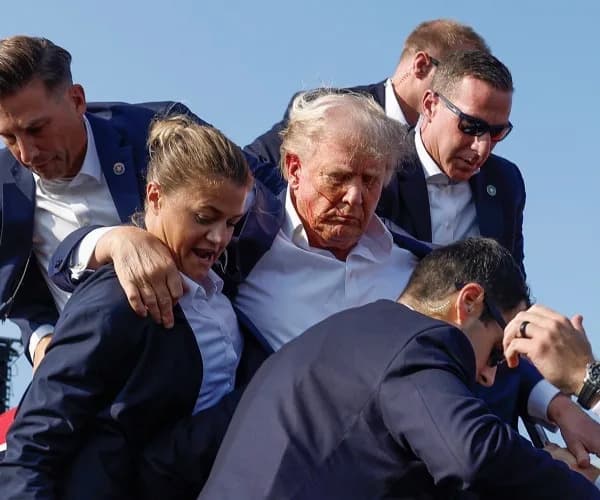
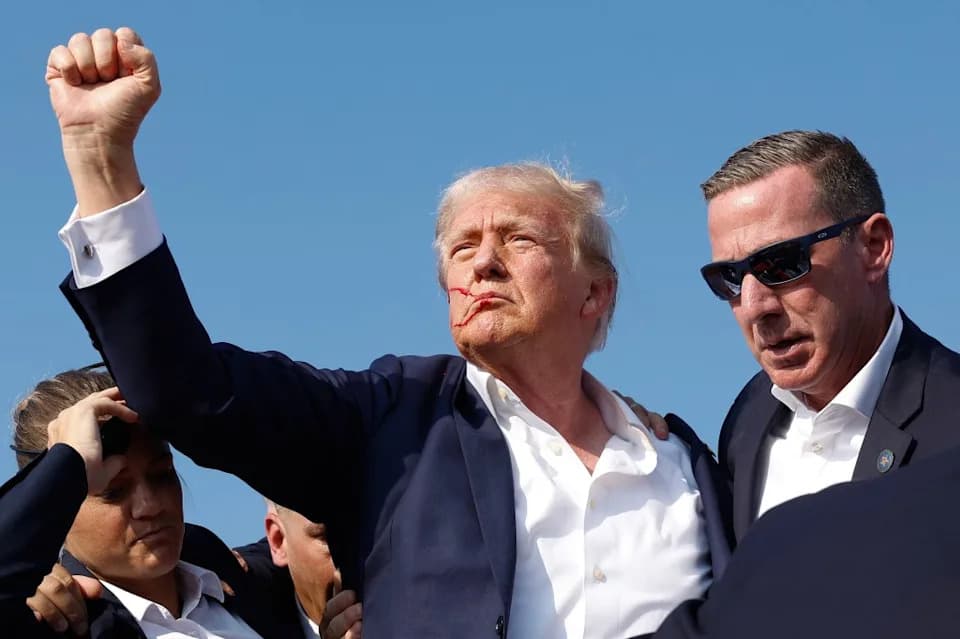
Then-Republican presidential candidate former President Donald Trump is rushed offstage by U.S. Secret Service agents after being grazed by a bullet during a rally on July 13, 2024 in Butler, Pennsylvania. (Anna Moneymaker/Getty Images)
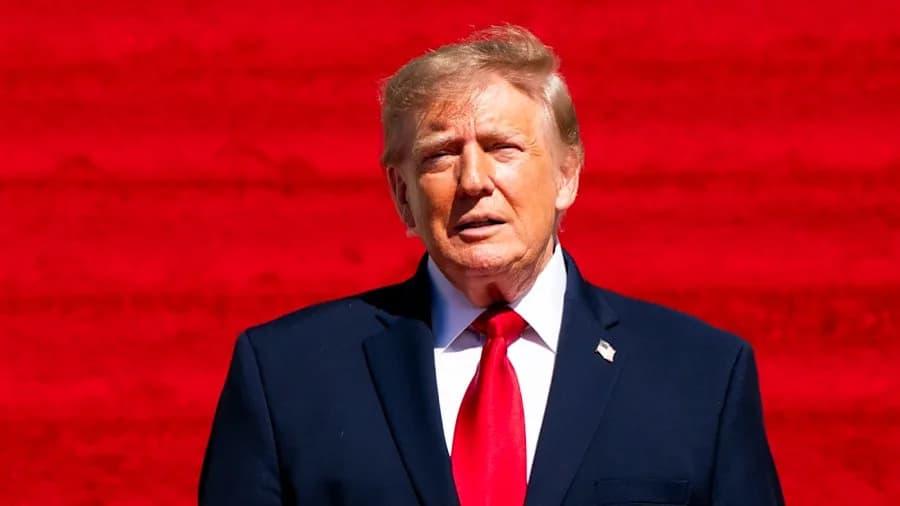
A University of Chicago–linked survey reported by political scientist Robert Pape finds rising public acceptance of political violence: roughly 25% of American adults — about 65 million people — say they would support using force to prevent Donald Trump from becoming president, and 44% of self-identified Democrats endorse that position.
Who conducted the research? The finding comes from the Chicago Project on Security and Threats (CPOST), directed by Robert Pape, which has tracked U.S. attitudes toward political violence since 2021. CPOST’s nationally representative surveys are conducted with NORC at the University of Chicago.
Key Findings
Pape highlighted several worrying trends: a sharp rise in respondents who say force can be justified for political ends, broadening acceptance of coercive tactics on both sides of the political divide, and respondents’ varied interpretations of “force.” Among those who endorsed force against Trump, 55% associated it with lethal measures such as assassination; others envisioned riot-style or nonlethal coercion. Separately, 16% of respondents said they would back Trump using the military to suppress Democratic protesters.
Trends Over Time
Pape noted the trend has accelerated: earlier readings were roughly 9% at one point and 14% in September 2025, with a May 2025 CPOST survey showing 39% of Democrats earlier agreeing that force could be justified to remove Trump. The latest 44% figure is five points higher.
Why This Matters
Pape warned that the period after votes are counted through the formal seating of winners in January — not necessarily Election Day itself — represents the highest risk window for clashes, especially if losing candidates or their supporters refuse to accept results. He described the phenomenon as part of a broader era of "violent populism," where social-media amplification, economic anxiety, rapid social change and deep partisan hostility combine to increase the risk of politically motivated violence.
Context And Examples
Historically, research has recorded more ideologically motivated killings by far-right extremists than far-left extremists since 1990. A National Institute of Justice–funded tally counted more than 520 deaths in far-right extremist attacks since 1990, versus 78 in far-left attacks. But Pape argues the landscape is shifting toward more reciprocal threats and attacks across the spectrum.
Recent violent incidents and plots cited in the reporting include the July 13, 2024, shooting at a Trump rally in Butler, Pennsylvania, in which attendee Corey Comperatore was killed and former President Trump was struck by a bullet; the arrest and later conviction of Ryan Wesley Routh, who was sentenced to life in prison in February 2026 for attempting to assassinate Trump; and several alleged online threats and plots charged in 2025 and 2026.
Pape and CPOST also cite a rise in threats against members of Congress: nearly 400 charged threats between 2001 and 2024, with threats jumping about 600% from 2016 to 2017 and remaining elevated thereafter.
Implications
Pape’s central concern is not only which side initiates violence but the erosion of social taboos that historically limited political violence. He warns that as more ordinary citizens view violence as a legitimate political tool, the likelihood of violent outcomes rises — particularly during contested post-election periods.
Source: CPOST surveys conducted with NORC at the University of Chicago; reporting and compilation by Newsmax (© 2026 Newsmax).
Help us improve.