The article warns against designing the Air Force around "affordable mass"—large numbers of cheap, attritable aircraft—arguing that such a strategy risks substituting attrition for decisive combat power. It contrasts Ukraine’s effective use of cheap drones in an attritional conflict with the very different demands of a peer fight, where range, survivability, sensors, and autonomy are essential. The author urges measuring platforms by cost per effect, using autonomous systems to enable high-end forces rather than replace them, and building capability from mission requirements backward, not from price forward.
There Is No Virtue in ‘Affordable’ Failure: Design the Air Force to Win
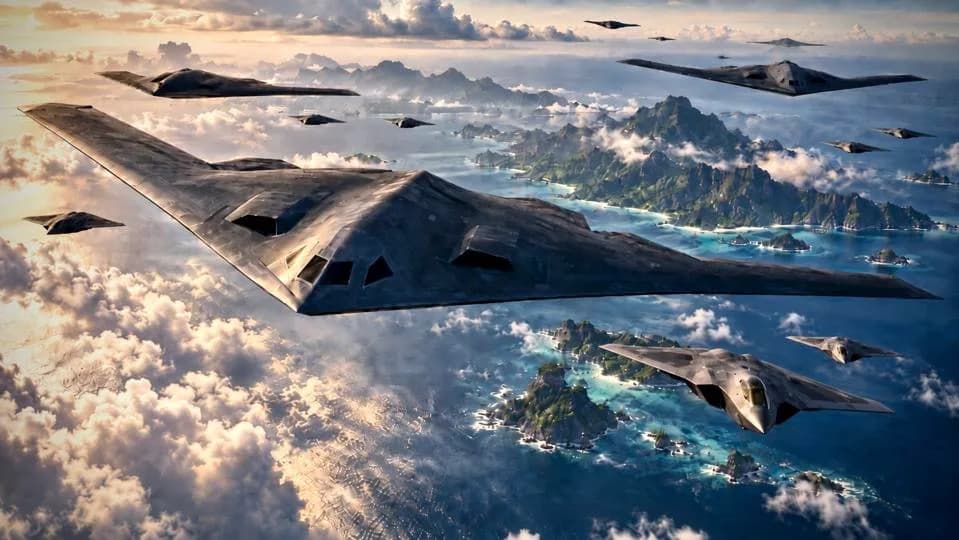
Illustration of B-21s and F-47s over the PacificImage by David A. Deptula/OpenAI
An influential argument among some military futurists proposes building tomorrow’s Air Force around vast fleets of low-cost, uninhabited aircraft—so-called "affordable mass" or "optionally attritable" platforms. Proponents argue that high volumes of inexpensive airframes can overwhelm adversaries while minimizing risk to aircrews.
Why Cheap Isn’t Always Better
There are missions where attritable systems make sense—especially when unmanned systems function more like munitions than full combat aircraft. But taken too far, this logic risks organizing the Air Force to accept losses rather than to generate decisive, sustainable effects. Combat aircraft do not become more capable by becoming cheaper; lower unit price usually reflects tradeoffs in survivability, range, payload, sensors, electronic warfare, propulsion, redundancy, reliability, and structural life.
Lessons From Ukraine—and Their Limits
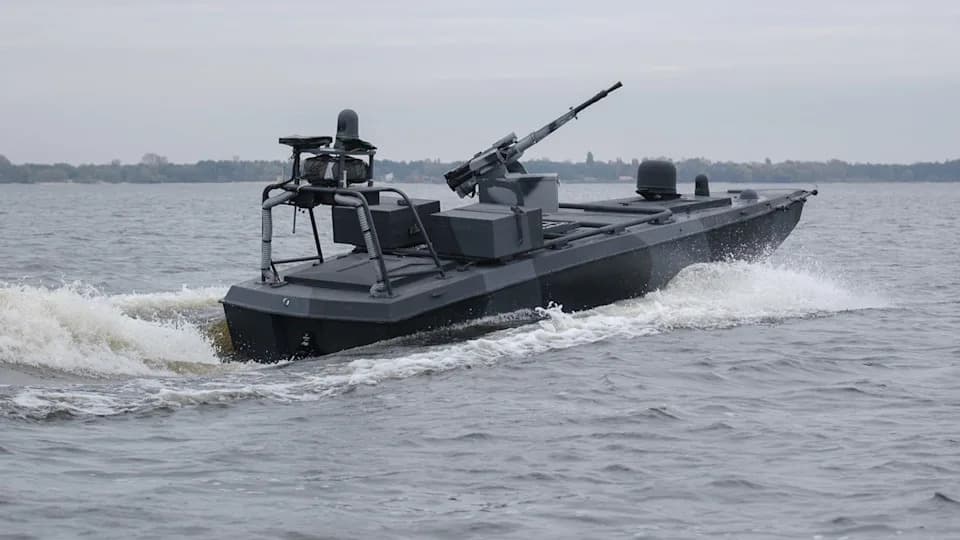
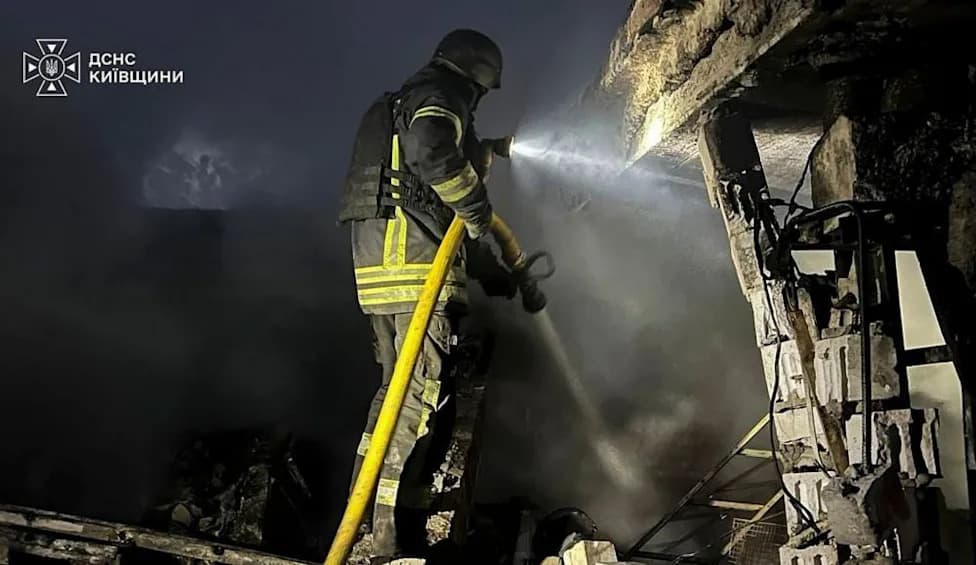
Ukraine’s resistance to Russian forces has relied heavily on large numbers of inexpensive, attritable systems. Small drones have accounted for a substantial share of battlefield effects, and Operation Spider Web demonstrated how modest weapons can yield outsized results against Russian bombers. But that success was achieved in a grinding attritional conflict shaped by Ukraine’s specific operational constraints—most notably the absence of a modern, fully capable air force—and by Russian employment of airpower.
Those conditions differ markedly from the high-end, peer contest the United States must deter, where the priority should be to rapidly secure air superiority, project decisive effects at long range, and prevent a war from devolving into industrial attrition.
Measure Cost By Effect, Not Unit Price
The proper metric for combat aircraft—crewed or uninhabited—is cost per desired effect. A $10 million aircraft that must fly in formations of twenty to match one $100 million platform, and then suffers heavy losses, is not truly cheaper. Platforms such as stealth fighters and bombers often achieve disproportionately large effects per sortie. In Desert Storm, stealthy F-117s flew under 2% of sorties yet struck more than 40% of fixed targets, often without the force protection conventional jets required.
Industrial Capacity and Sustainment Matter
Large inventories of attritable systems introduce logistical burdens—storage, maintenance, obsolescence—and demand an industrial elasticity the United States may not be able to provide in wartime. As former Secretary Donald Rumsfeld put it,
"You go to war with the force you have, not the force you want."
An aircraft lost on day three cannot be replaced on day four simply because it was inexpensive: engines, sensors, munitions, trained personnel, and distribution networks constrain rapid regeneration. Scalable production helps, but it is no substitute for survivability.
Autonomy Should Enable, Not Substitute
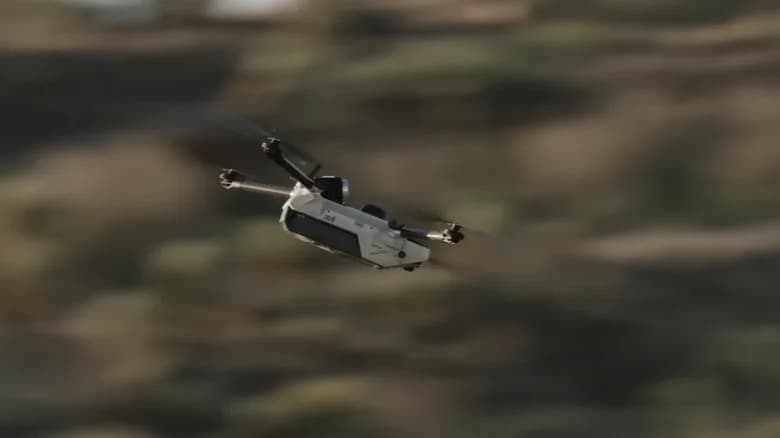
Autonomous systems and Collaborative Combat Aircraft (CCA) have transformational potential—extending sensing, carrying weapons, conducting electronic warfare, complicating enemy targeting, relaying communications, and performing missions that would otherwise risk crews. Operation Epic Fury showed MQ-9 Reapers providing persistent presence and strike despite losses; however, MQ-9s cost roughly $30–40 million each and are not disposable munitions.
As CCAs gain the sensors, autonomy, and survivability needed for contested airspace, costs rise and the simple affordability-and-mass argument weakens. The strongest case for CCAs is as force enablers—multiplying the effectiveness of crewed platforms—not as one-for-one substitutes for them.
Build From Mission Backward
Procurement and design should start with the required operational effects: what range, payload, survivability, sensing, autonomy, networking, and weapons are necessary to defeat an adversary? Only then should affordability be optimized. Reverse that order—set a price first and design capability to fit—and the result risks being aircraft whose primary virtue is that they are cheap enough to lose. There is no virtue in affordable failure.
Practical Recommendations
- Use cost-per-effect as the central metric for force design.
- Invest in survivable, high-capability platforms while procuring enablers (CCA, MMA) that expand force reach and resilience.
- Increase production to amortize development and lower unit costs across more realistic fleet sizes.
- Design unmanned systems for mission enablement and degraded communications environments, not for continuous connectivity alone.
The Air Force’s mission is to control the air and generate decisive effects quickly and sustainably. Recent conflicts suggest the service needs greater capacity, including autonomous systems, but attrition must never replace survivability, nor affordability replace capability. The real question is not how cheaply America can afford to lose aircraft—it is whether those aircraft can accomplish their mission, survive when possible, and return to fight again so conflicts can be ended rapidly and decisively.
Help us improve.