Jacob Coxon’s resignation from Anthropic has sharpened concerns about AI risk, but defense leaders at the Air and Space Cyber Conference focused on building operational trust in AI-enabled defenses. Michael Hiatt of Epirus warned that for operators facing mass UAS attacks the critical issue is "magazine doubt" — confidence that systems will neutralize threats quickly while preserving scarce interceptors. He argued directed-energy systems can help, but only if validated and trusted. Panelists urged rapid testing, doctrine development, and training as adversaries may deploy fast, unregulated AI agents.
‘It's Not Science Fiction’: Air Force Must Build Trust in AI to Counter Drone Threats
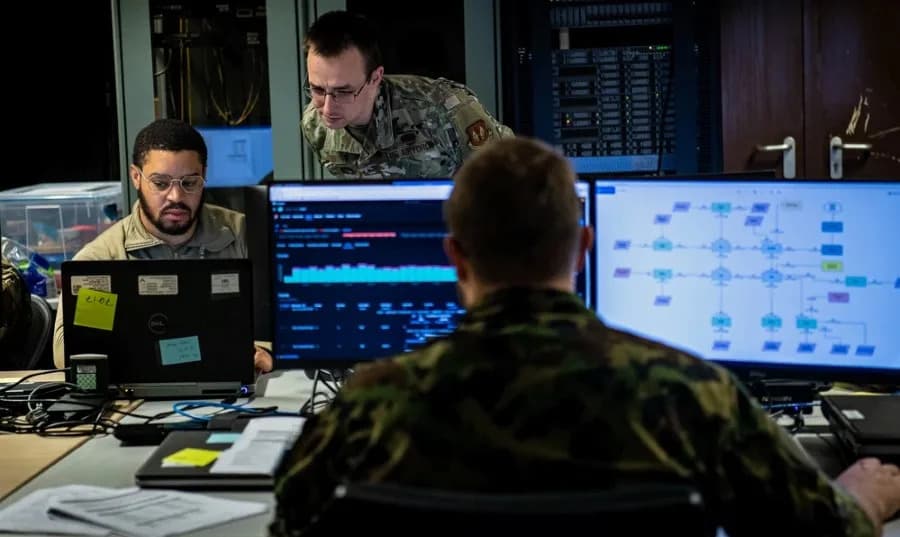
Tacet Venari participants analyze metadata to identify any suspicious activity on the network during exercise Tacet Venari at Ramstein Air Base, Germany, May 12, 2022. (U.S. Air Force photo by Airman 1st Class Jared Lovett)
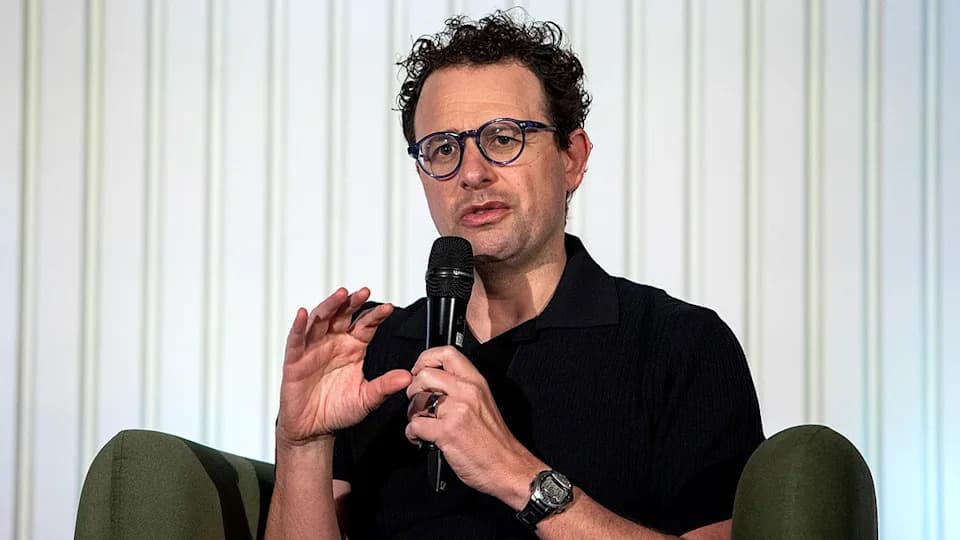
Jacob Coxon’s resignation from Anthropic has intensified debate about the risks posed by advanced AI. Coxon warned that "the people building AI earnestly believe that it could kill us all by the end of the decade." At the same time, industry and military leaders at the Air and Space Cyber Conference pushed a complementary message: the U.S. military must build operational trust in AI-enabled defenses now, or risk being outpaced on the battlefield.
Why Trust, Not Just Tech, Matters
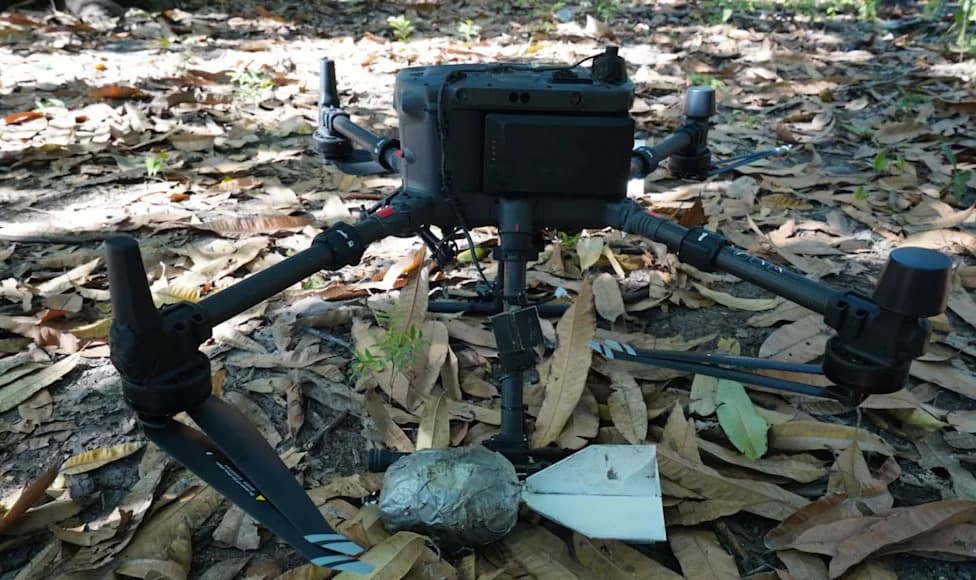
At a panel on counter-drone defenses, Michael Hiatt, chief technology officer of Epirus, argued that conversations often focus on "cost asymmetry" but miss the urgent human factor in the field. For a battle captain making split-second decisions, Hiatt said, the real problem is "magazine doubt" — uncertainty about whether scarce interceptors will be preserved and whether a chosen system will reliably defeat mass unmanned aerial system (UAS) attacks in seconds.
"When you have a problem like UAS threats, they're coming in mass... Trust in an airman's system is crucial when the threat time has been cut down to seconds," Hiatt said.
Directed Energy and Operational Confidence
Hiatt emphasized that directed-energy (DE) systems can offer operational advantages when properly engineered and validated: low collateral effects, low cost per engagement, and the ability to preserve limited kinetic interceptors. "I know that my DE weapons are gonna be able to take it out, and do so in a low-collateral way, in a very low cost per shot way," he said, adding that these benefits only matter if operators trust the system under pressure.
AI Architectures: From Human-In-The-Loop To Human-Initiated
Panelists discussed a staged role for AI: initially keeping humans firmly "in the loop" for target assessment and engagement decisions, while evolving architectures so humans start processes and can step outside direct actuation as confidence, testing, and governance mature. Building that confidence requires engineering, rigorous testing, clear doctrine, and robust training.
"It's not science fiction. It's physics fact," Hiatt said, underscoring that technological solutions exist but require validation and operator trust.
Strategic Imperative
Panelists also warned that adversaries may deploy fast, unregulated AI agents and autonomous tactics without the same oversight. "The military must continue to evolve, because the threat is evolving," said Colton Wood, CTO of Digital Force Technologies. "If we don't evolve our defenses to basically counter that, we're just gonna always be on our heels."
The discussion pointed to a clear roadmap: accelerate development of reliable AI-enabled defensive systems, validate them through testing and doctrine, train operators to trust and use them under stress, and pair technical progress with governance to manage broader AI risks.
Help us improve.