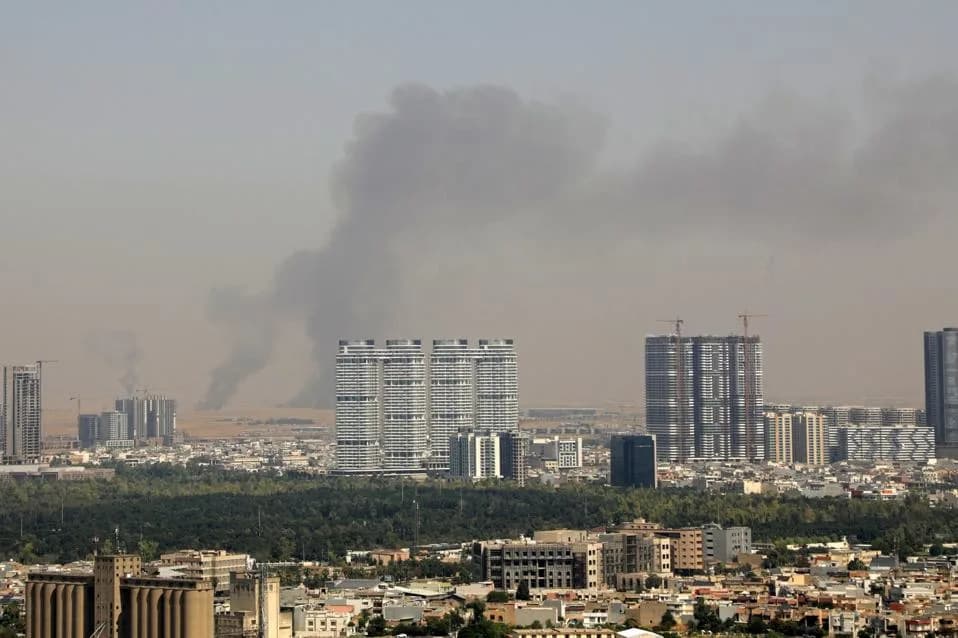
Masrour Barzani, prime minister of Iraq’s Kurdistan Region, has condemned the planned withdrawal of US troops as "shameful," saying it will leave Erbil exposed without adequate air defences. He noted that only Baghdad can procure heavy air-defence systems for the region. The US pullout is due to be completed by 30 September 2024, and the Kurdistan Region has faced hundreds of rocket and drone attacks since February, including strikes on a multinational base and on Barzani’s office.
Kurdish Prime Minister Calls US Troop Withdrawal ‘Shameful,’ Warns Region Will Be Exposed
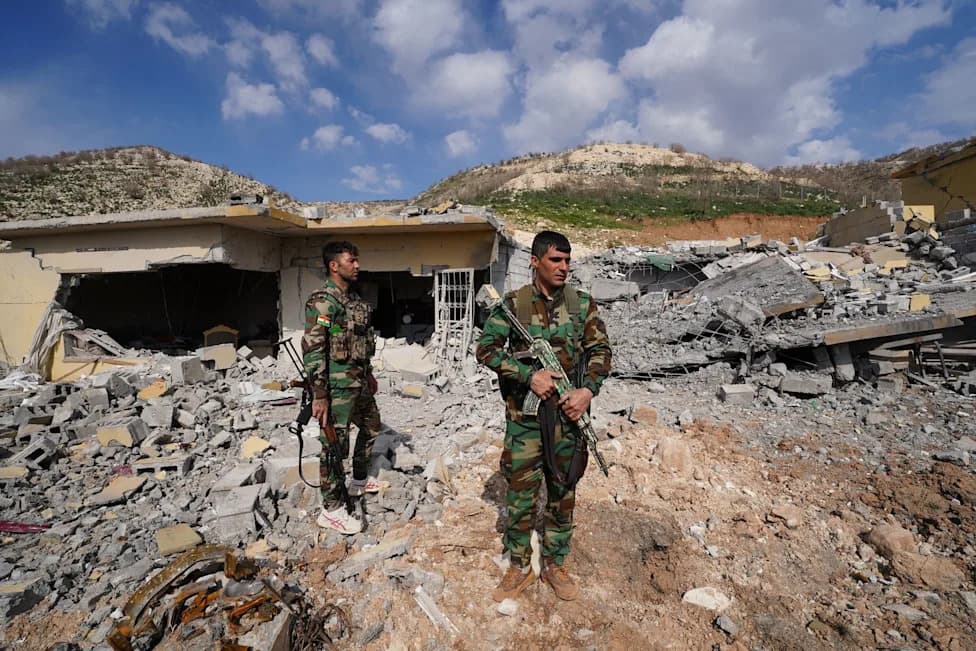
PAK Peshmerga members stand stand amidst the debris at the PAKShar camp in Erbil's Ashkawt Saqa district. The Kurdistan Freedom Party (PAK) is a prominent opponent of the Iranian regime based in the Kurdistan Region. (is associated with: «Kurdish leader in Iraq slams 'shameful' withdrawal of US forces») Ismael Adnan/dpa
Masrour Barzani, prime minister of Iraq’s autonomous Kurdistan Region, has strongly condemned the planned withdrawal of US forces, calling the decision “shameful” and warning that it will leave his region exposed to further attacks.
"The threat is real - we are vulnerable, we are being attacked. Now, to be left alone without any, let's say, appropriate defensive system, it's shameful." — Masrour Barzani, to the Financial Times
Barzani said the Kurdistan regional government cannot independently purchase heavy air-defence systems because such procurements must be handled by Iraq’s central government in Baghdad. He warned that without those capabilities and with the US pullout, Erbil will face increased security risks.
What’s Happening
The withdrawal of US forces from Iraq is scheduled to be completed by 30 September 2024. The move follows an agreement reached in 2024 after the US combat mission against the extremist group Islamic State was declared over in 2021. US forces first entered Iraq in 2003 after the fall of Saddam Hussein, withdrew in 2011, and returned in 2014 to help defeat Islamic State.
Security Concerns
Since February, the Kurdistan Region has been struck by hundreds of rocket and drone attacks, including an assault on Barzani’s office. Erbil hosts a multinational base where US and German troops have been stationed; that base has also been targeted, and US forces have at times repelled attacks.
Iran regards the Kurdistan Region as an area of Western and Israeli influence on Iraqi soil, contributing to regional tensions that have translated into periodic strikes on Kurdish and international installations.
Context And History
The Kurds are an ethnic group of roughly 30 million people across Iraq, Iran, Syria and Turkey. They have long sought greater autonomy or statehood and were systematically persecuted under regimes in Iraq and Iran. The semi-autonomous Kurdistan Region of Iraq emerged in the aftermath of Saddam Hussein’s fall in 2003; before that, the area benefited from a US-enforced no-fly zone established in 1991.
Relations between Erbil and Baghdad remain fraught, shaped by disputes over budgetary allocations, resource control and security responsibilities — including who can procure and deploy heavy defence systems for the region.
Help us improve.