New research finds fewer than 3% of U.S. sickle cell patients have documented receipt of automated red blood cell exchange, despite 91% of providers reporting access. Providers cite coordination problems, limited donated blood and staff unfamiliarity as common barriers; only 5% reported no barriers. Experts call for more comprehensive sickle cell centers, better provider education, and regional networks to expand equitable access—especially for rural and underserved communities.
Underused Lifesaving Therapy: Fewer Than 3% Of U.S. Sickle Cell Patients Receive Automated Red Blood Cell Exchange, Survey Finds
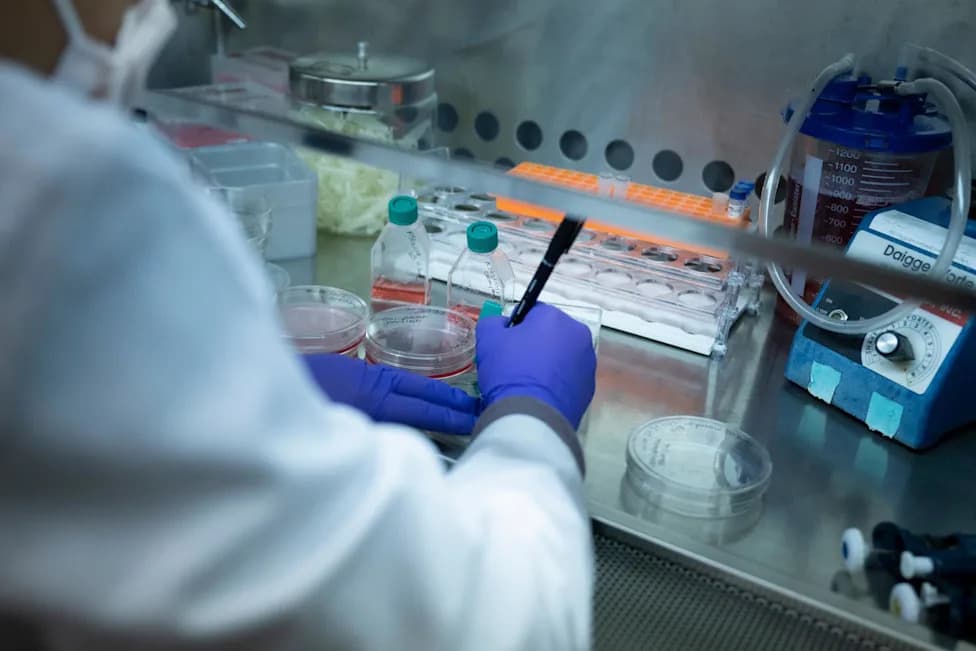
Researchers work at the National Heart, Lung, and Blood Institute on 8 February 2024 in Bethesda, Maryland.Photograph: Brendan Smialowski/AFP/Getty Images
New research shows an alarming gap between availability and use of automated red blood cell exchange for sickle cell disease in the United States. Although most hospitals report access to the technology, very few patients appear to receive the procedure.
What Is Automated Red Blood Cell Exchange?
Automated red blood cell exchange is a transfusion-based procedure that removes a patient's damaged, sickled red blood cells while returning the patient's plasma, platelets and white blood cells together with donor red blood cells. The process rapidly lowers the proportion of sickled cells in circulation and can prevent or reduce complications of sickle cell disease.
Survey Findings
A nationally representative survey of 100 U.S.-based health care providers who actively manage at least one patient with sickle cell disease found that fewer than 3% of patients were documented as having received an automated red blood cell exchange, despite 91% of surveyed providers reporting access to the procedure.
Respondents reported multiple barriers to offering automated exchange. The most common barriers were:
- Coordination challenges across departments (hematology, transfusion services, apheresis)
- Limited supplies of donated blood
- Staff unfamiliarity or lack of training with the exchange process
Only 5% of providers said they experienced no barriers to offering the treatment. Patients also reported concern about whether their insurance would cover the therapy.
Why This Matters
Sickle cell disease — also called sickle cell anemia — is an inherited disorder of hemoglobin. Normal red blood cells are disc-shaped and flexible; sickle cells are crescent-shaped and rigid, which can block blood flow and cause severe pain, organ damage and other complications. The condition affects more than 100,000 people in the U.S. and disproportionately affects people of color: roughly 90% of diagnosed patients are non-Hispanic Black or African American, and an estimated 3%–9% are Hispanic or Latino.
Voices From the Field
"Patients with sickle cell disease benefit from coordinated access to hematologists, transfusion and apheresis specialists, nurse educators, care coordinators, and other support services," said Dr. Aaron Haubner, lead author and researcher at the University of Kentucky College of Pharmacy. "In many communities—outside of dedicated centers of excellence—these resources simply aren't available."
Dr. Edward Donnell Ivy, chief medical officer at the Sickle Cell Disease Association of America, emphasized both patient and system-level barriers: many patients don't know to ask about available treatments, many providers lack up-to-date training, and roughly 80% of patients are on Medicaid and face socioeconomic vulnerabilities.
Dr. Shannon Kelly, medical director of the apheresis program at UCSF Benioff Children's Hospital Oakland, noted that larger centers often receive referrals from other institutions that lack dedicated apheresis services. "The shortage of sites offering the therapy forces some patients to travel long distances to receive care," she said.
Paths Forward
Experts recommend several steps to expand equitable access:
- Grow the number of comprehensive sickle cell centers that centralize expertise and support services.
- Improve provider training and awareness of automated exchange and published care guidelines.
- Build regional provider networks so smaller hospitals can coordinate care and refer patients efficiently.
- Address blood supply issues and insurance coverage barriers to reduce access gaps.
The survey highlights a striking mismatch: access to technology does not guarantee patient use. Addressing logistical, educational and financial barriers is essential to expand use of an effective therapy and improve outcomes for people living with sickle cell disease.
Help us improve.