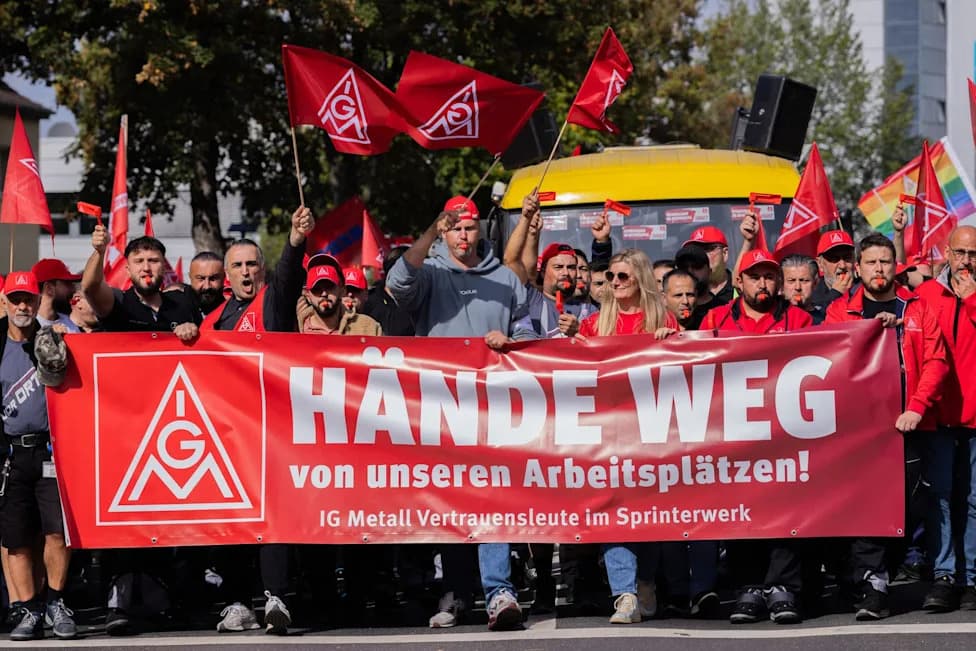
Trade unions say roughly 175,000 people rallied in 15 German cities to protest proposed cuts to social services and reforms to working hours and pensions. DGB leader Yasmin Fahimi and other union heads warned against diluting the eight-hour day and ending penalty-free early retirement after 45 years of contributions. The demonstrations come amid job fears in the automotive sector and political pressure on Chancellor Friedrich Merz, while employers accused unions of resisting necessary reform.
175,000 Rally Across Germany To Defend Welfare State Against Planned Cuts
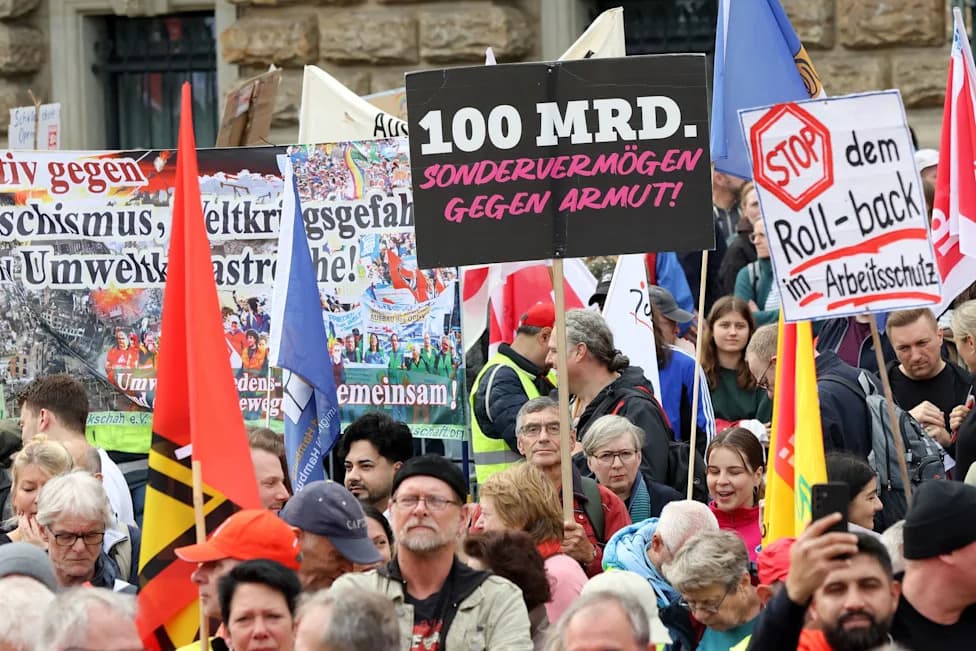
Participants stand with flags and banners at the German Trade Union Confederation (DGB) rally on Rathausmarkt. On 26 September, the DGB and its member unions are calling for rallies in 15 major German cities to advocate for a strong welfare state, secure jobs, good working conditions and the protection of workers' rights. (is associated with: «Mass protests against cuts to social services in Germany») Bodo Marks/dpa
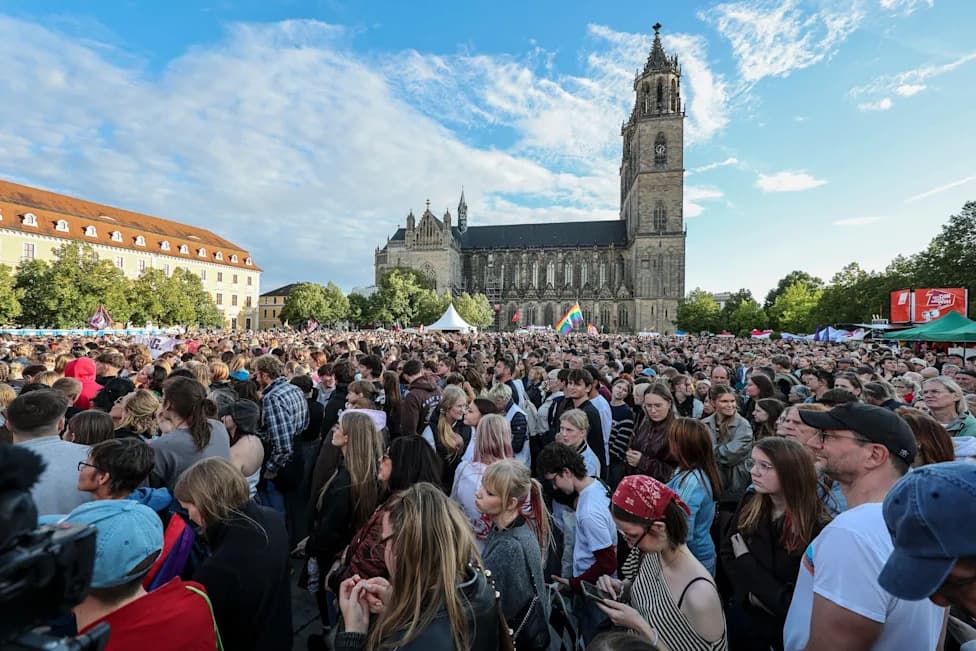
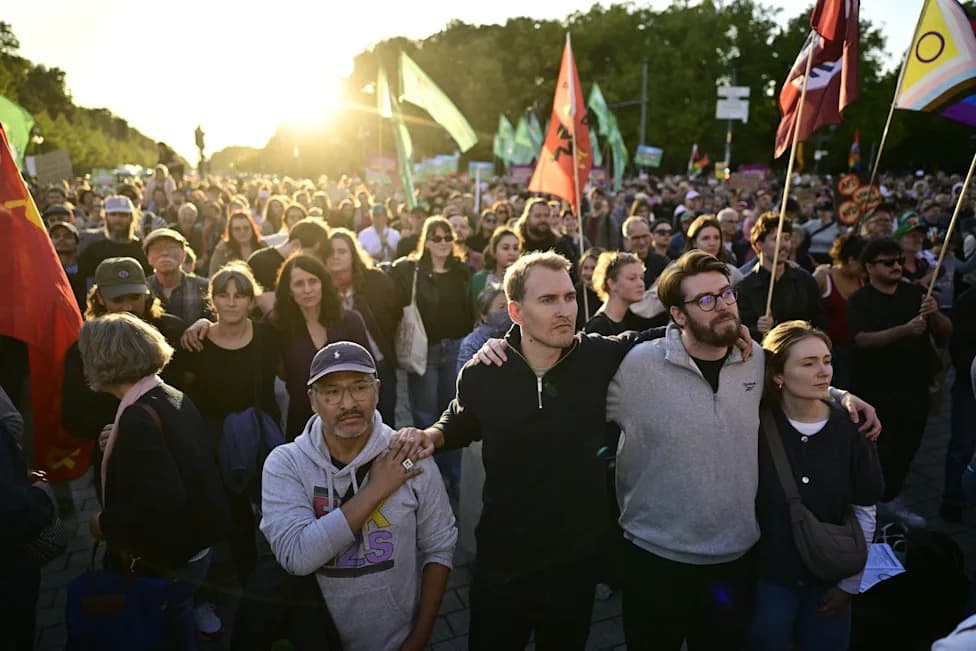
Hundreds of thousands of people rallied across Germany on 26 September to demand a strong welfare state and to oppose government plans to cut social services, with trade unions estimating about 175,000 participants in 15 major cities.
Union Leaders Sound Alarm
Speaking in Essen, Yasmin Fahimi, leader of the German Trade Union Confederation (DGB), criticised proposals from Chancellor Friedrich Merz's coalition to reform working hours and pensions and warned against reductions in social security benefits. Under the slogan "Hard-earned! Your work. Your health. Your pension," demonstrators marched to defend secure jobs, decent working conditions and workers' rights.
"We will not simply allow what we have built up over many years in terms of social standards to be taken away from us," Fahimi said in Essen, while also calling for cooperation and faster public investment in infrastructure to support economic renewal.
Where Protests Took Place
Police and organisers reported large turnouts in several cities: Nuremberg estimated between 20,000 and 25,000; Stuttgart about 16,000; Frankfurt around 15,000; Hanover roughly 13,000; Essen about 12,000; Freiburg 4,500; and Berlin 5,500. Thousands more joined rallies in Hamburg, Kiel, Rostock, Magdeburg, Leipzig, Erfurt and Saarbrücken. By mid-afternoon the DGB put the total at around 175,000.
Context And Reactions
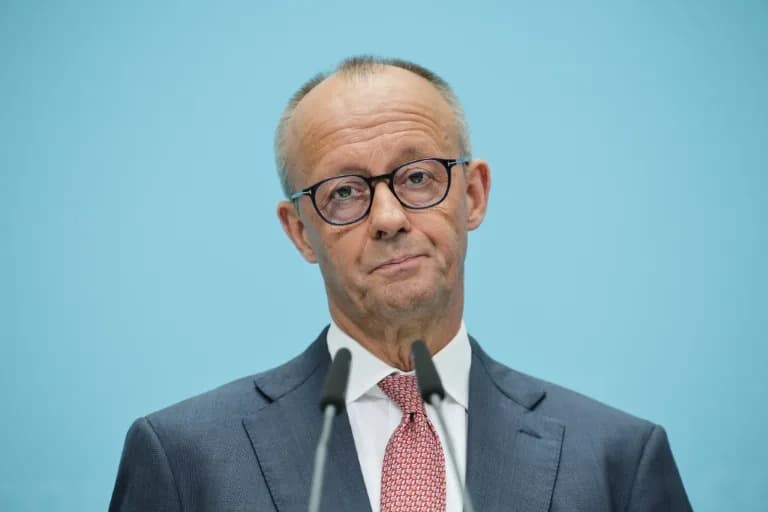
The demonstrations come amid anxiety over job losses in sectors such as the automotive industry and growing political pressure on Chancellor Merz after poor results for his party in recent regional elections. Merz has insisted that "the reforms must go ahead," a stance that union leaders say threatens social protections.

A banner reading "Youth Against Social Cuts" is displayed at a demonstration held in conjunction with the German Trade Union Confederation (DGB) rally on Rathausmarkt. On 26 September, the DGB and its member unions are calling for rallies in 15 major German cities to advocate for a strong welfare state, secure jobs, good working conditions and the protection of workers' rights. (is associated with: «Mass protests against cuts to social services in Germany») Bodo Marks/dpa
Union figures reiterated their opposition to plans perceived as weakening workers' rights. Fahimi specifically warned against calls to lengthen working hours or dilute the eight-hour day and reaffirmed resistance to ending penalty-free early retirement after 45 years of contributions. Frank Werneke of Verdi described the protests as an answer to an "attack" on workers' rights, while Christiane Benner of IG Metall cautioned that social safeguards are essential during industrial restructuring.
Business groups pushed back. Steffen Kampeter, CEO of the Confederation of German Employers' Associations (BDA), accused unions of reflexively rejecting many reforms and of clinging to the past.
The DGB had announced the rallies in July; organisers said the turnout was intended as a clear signal to government policymakers.
Photo credit: Bodo Marks/dpa
Help us improve.