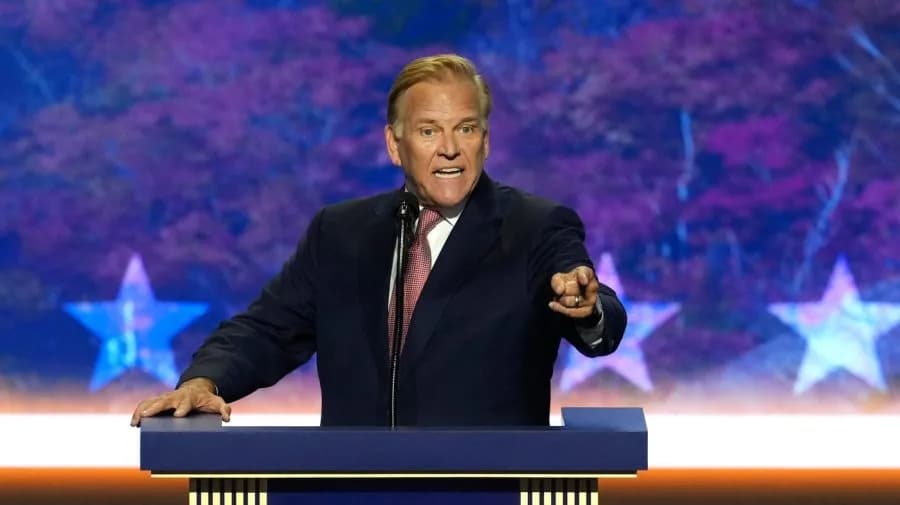
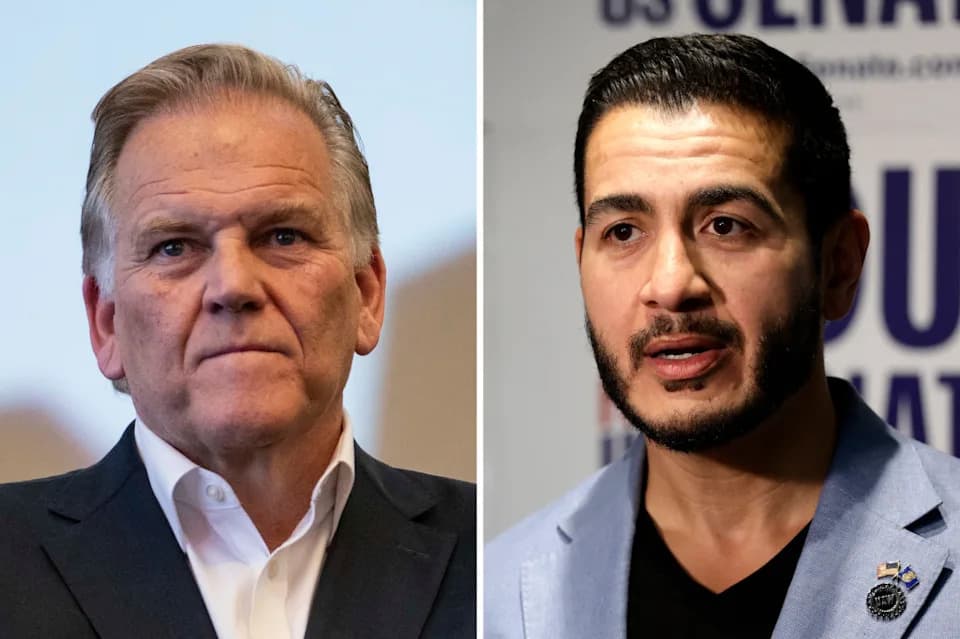
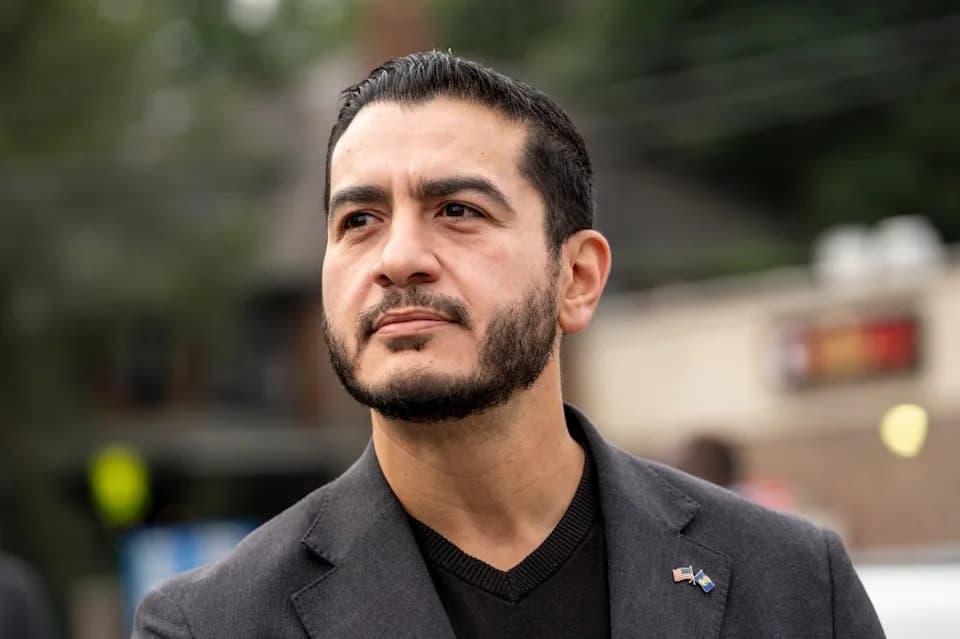
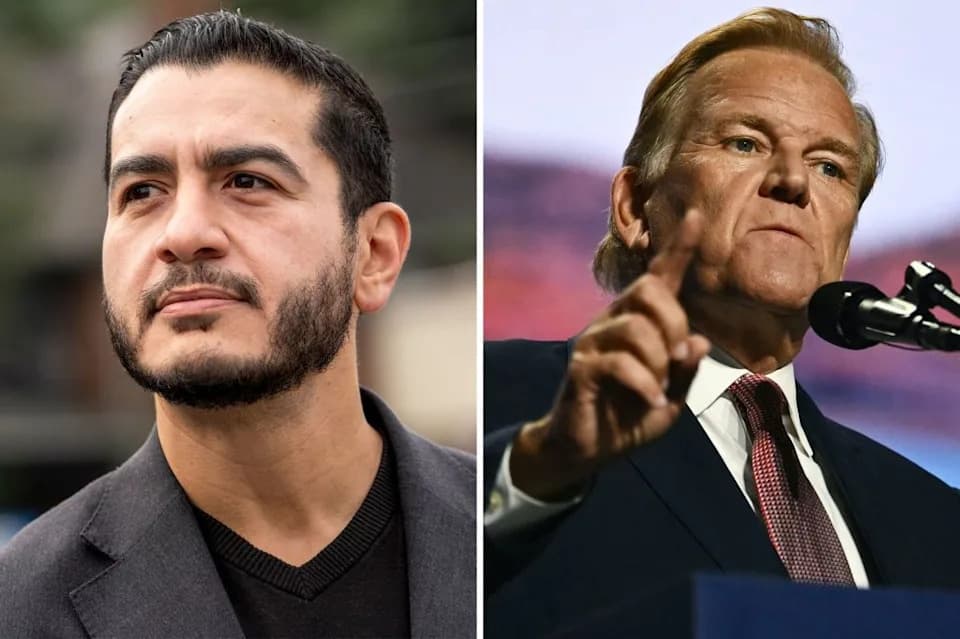
Republicans Are Door-Knocking In Michigan to frame Democrat Abdul El-Sayed as a far-left candidate while promoting Mike Rogers as a pragmatic conservative. Canvassers with Americans for Prosperity Action found mixed reactions: some voters accepted the message, but many were skeptical or more concerned with everyday costs. Rogers' operation aims for 6–8 million door knocks; Democrats say their volunteers will make 1.4 million final-week contacts. Polls show Democrats currently more enthusiastic to vote, complicating GOP turnout plans.
Door-to-Door in Michigan: Republicans Push 'Democrats-As-Extremists' Pitch — Voter Response Mixed
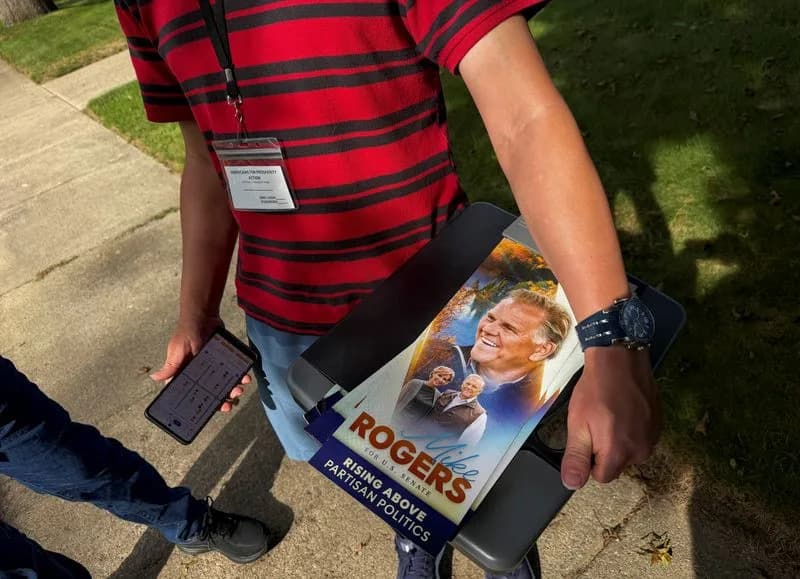
A canvasser for Americans for Prosperity Action, a conservative super PAC, holds a leaflet for Republican U.S. Senate candidate Mike Rogers while door knocking in Livonia, Michigan, U.S., September 14, 2026. Picture taken with a mobile phone. REUTERS/Nathan Layne
LIVONIA, Michigan — Republican canvassers are fanning out across Michigan neighborhoods to cast Democrat Abdul El-Sayed as a far-left, big-government candidate, while positioning Republican Mike Rogers as a pragmatic, common-sense conservative. The strategy, deployed in this battleground state and elsewhere, aims both to persuade undecided voters and to mobilize less-engaged Republicans ahead of November's midterms.
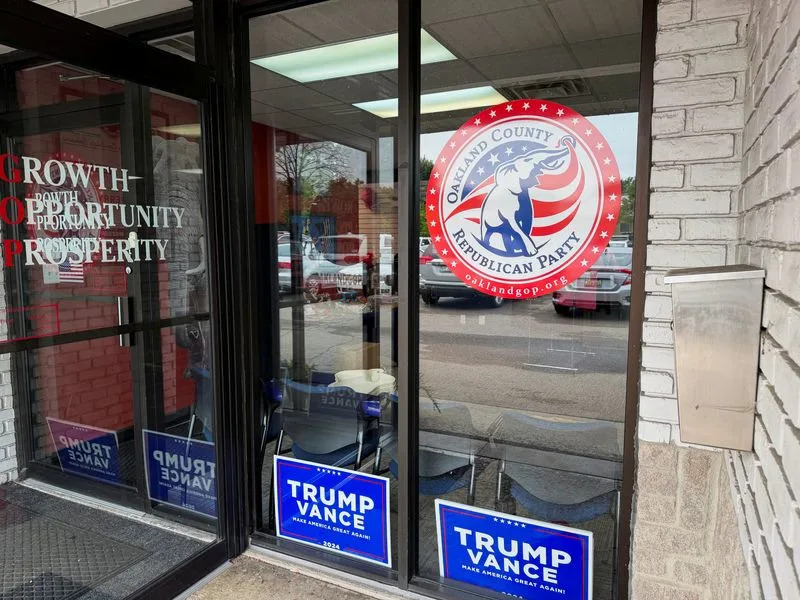
The entrance to the headquarters of the Oakland County Republican Party in Bloomfield Hills, Michigan, U.S., September 15, 2026. Picture taken with a mobile phone. REUTERS/Nathan Layne
Reuters accompanied volunteers from Americans for Prosperity Action, the super PAC arm of the Charles Koch-backed conservative network, as they knocked on doors in Livonia. The encounters illustrated the strengths and limits of the message: some voters accepted the framing, but many were skeptical or more focused on everyday pocketbook issues than ideological labels.
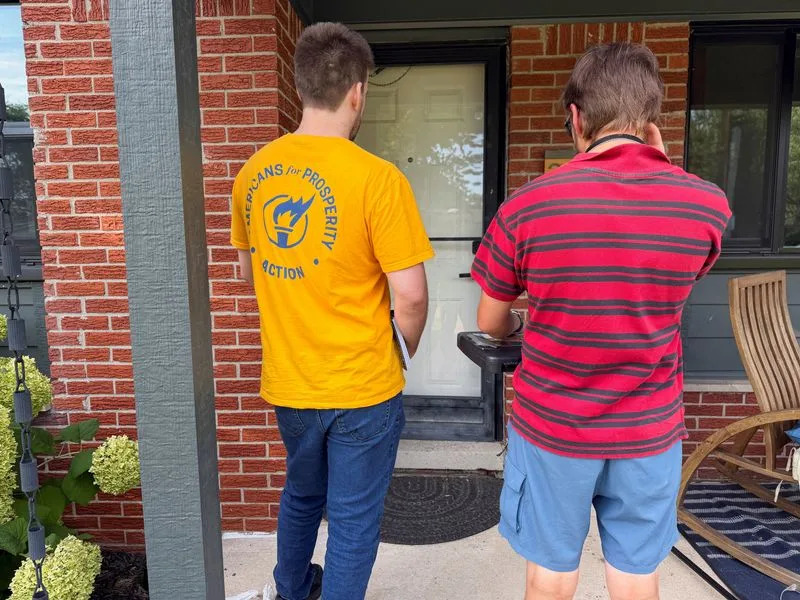
Canvassers with Americans for Prosperity Action, a conservative super PAC, stand outside a house as they knock on doors for Republican U.S. Senate candidate Mike Rogers in Livonia, Michigan, U.S., September 14, 2026. Picture taken with a mobile phone. REUTERS/Nathan Layne
A close, telling exchange. Nick Delise, a 32-year-old three-time Trump voter, told canvassers he was likely to support Rogers but rejected the assertion that Democrats were controlled by the far left. Standing in front of a modest, single-story home with an American flag and a “Thin Blue Line” banner in the garage, Delise said he typically skips midterms and is influenced by family members in law enforcement. "I'm not hardcore like I have to vote Republican," he told Reuters, adding he "would be open" to a Democrat.
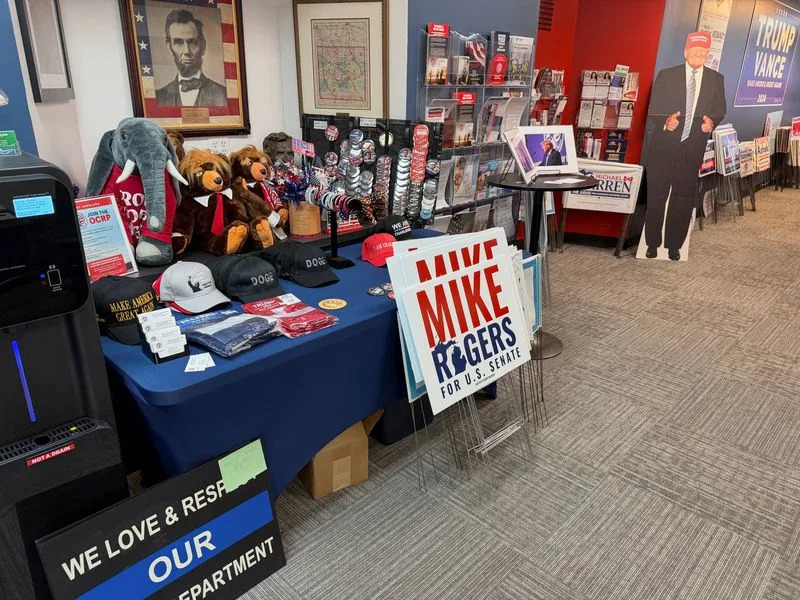
Signs for U.S. Senate candidate Mike Rogers and other Republican campaign materials are displayed at the headquarters of the Oakland County Republican Party in Bloomfield Hills, Michigan, U.S., September 15, 2026. Picture taken with a mobile phone. REUTERS/Nathan Layne
Other interactions were more straightforward turnout plays: some households were already committed to Rogers; others said they opposed what they saw as a socialist shift among Democrats. El-Sayed has pushed back on the socialist label, calling himself a capitalist and pointing to a grassroots operation his campaign says includes more than 21,000 volunteers.
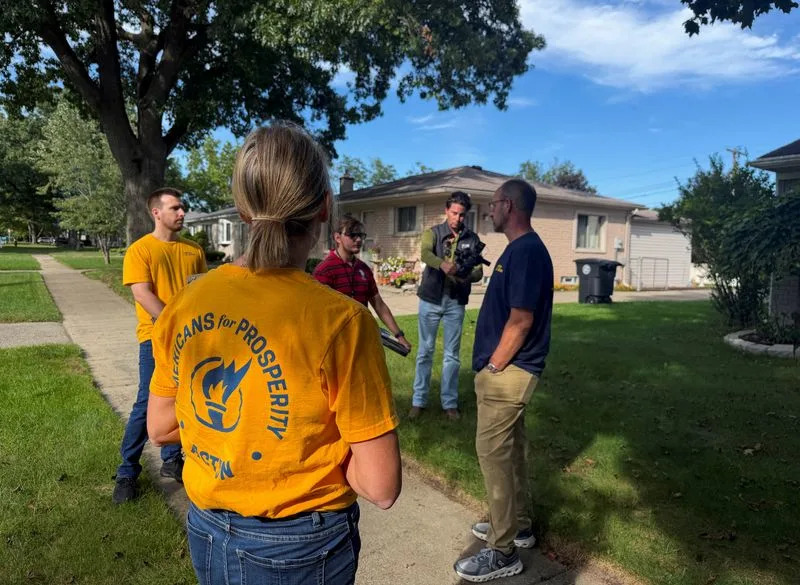
Canvassers for Americans for Prosperity Action, a conservative super PAC, talk during door-to-door campaigning for Republican U.S. Senate candidate Mike Rogers in Livonia, Michigan, U.S., September 14, 2026. Picture taken with a mobile phone. REUTERS/Nathan Layne
Messaging and the Trump variable. Republicans have leaned into recent primary victories by left-leaning Democrats as evidence that the party is tilting too far left, a message Democratic leaders reject as fearmongering. At the same time, former President Donald Trump has urged Republicans to center him in efforts to energize the base — a risky move given his weak approval ratings and absence from the ballot.
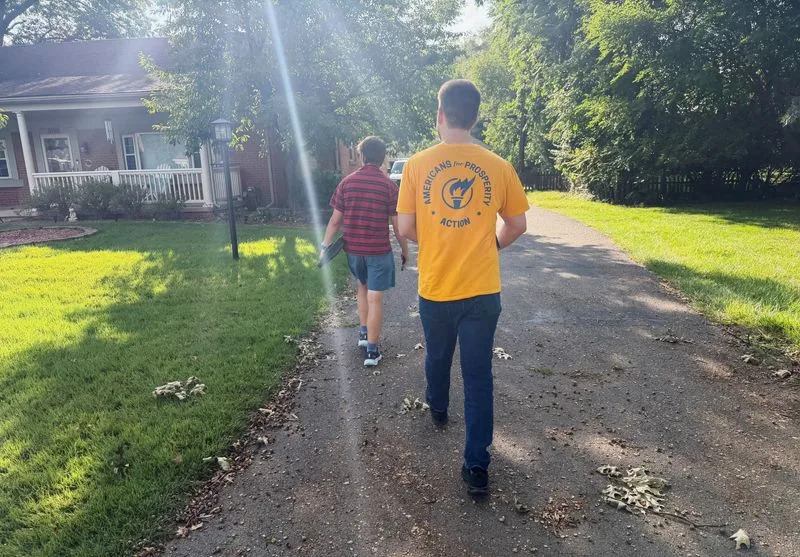
Canvassers with Americans for Prosperity Action, a conservative super PAC, walk outside a house as they knock doors for Republican U.S. Senate candidate Mike Rogers in Livonia, Michigan, U.S., September 14, 2026. Picture taken with a mobile phone. REUTERS/Nathan Layne
That dynamic magnified a potential vulnerability for Republicans: an enthusiasm gap. Polling cited by Reuters and Ipsos shows 42% of self-identified Democrats are "very enthusiastic" about voting, versus 28% of Republicans. Some GOP volunteers have publicly complained about low energy on the ground, though local party officials in key counties say enthusiasm remains strong and point to planned Trump visits to boost turnout.
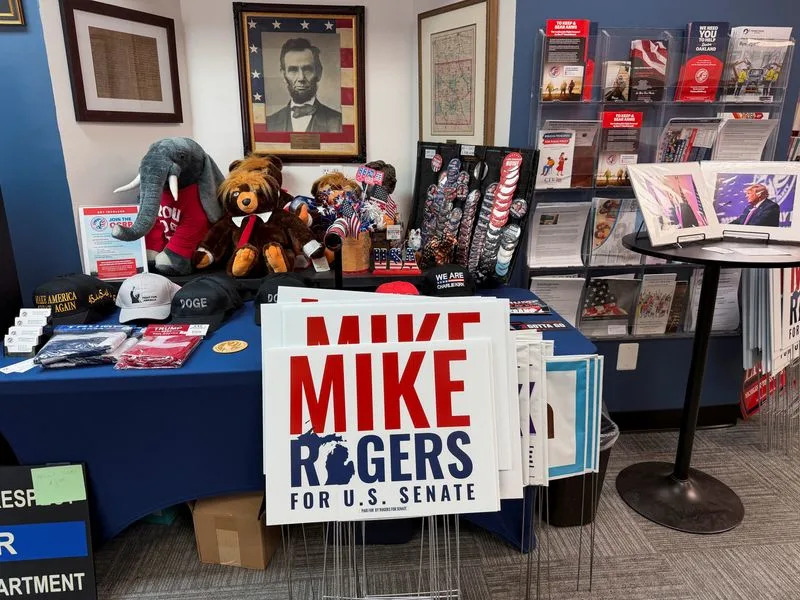
Signs for U.S. Senate candidate Mike Rogers and other Republican campaign materials are displayed at the headquarters of the Oakland County Republican Party in Bloomfield Hills, Michigan, U.S., September 15, 2026. Picture taken with a mobile phone. REUTERS/Nathan Layne
Scale and stakes. Rogers' campaign, aided by outside groups, plans an aggressive ground game — aiming for roughly six million to eight million door knocks by Election Day, about double the outreach in 2024 when Rogers lost the Senate race by 19,000 votes. Nationally, Republicans hold an estimated $637 million cash advantage across super PACs and party committees, which could underwrite larger turnout operations. Democrats counter that money won’t decide the outcome and say their volunteer ranks in Michigan have surged since the primary; the state party plans roughly 1.4 million door contacts in the campaign’s final four weeks.
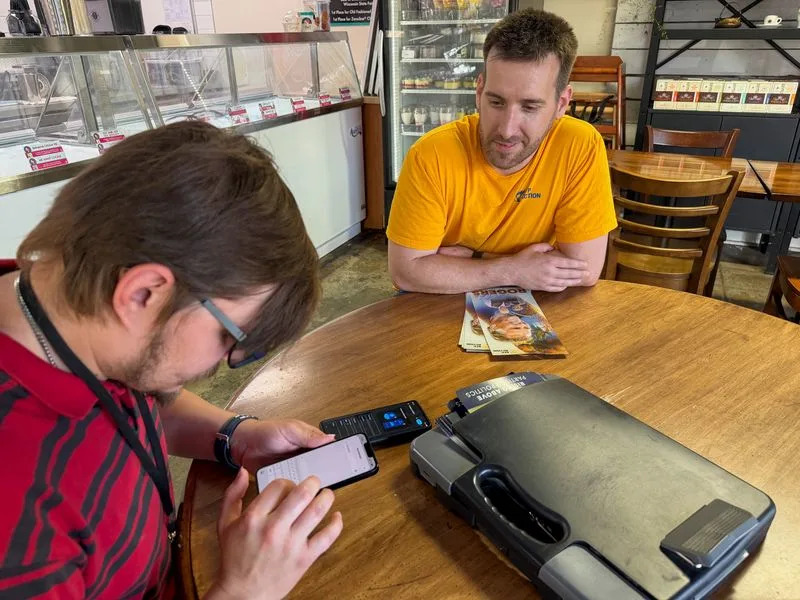
Canvassers with Americans for Prosperity Action, a conservative super PAC, gather after door-to-door campaigning for Republican U.S. Senate candidate Mike Rogers in Livonia, Michigan, U.S., September 14, 2026. Picture taken with a mobile phone. REUTERS/Nathan Layne
What it means. The Michigan door-to-door effort underscores a larger national tactic: combine ideological framing of Democrats with intensive voter contact to lift turnout among less-engaged Republicans. But the Livonia conversations suggest the approach has mixed appeal — many voters remain motivated more by the cost of living and local concerns than by the label "socialist." In tight races, that divide between message and material concerns may prove decisive.
"People aren't super happy with the situation in the world right now," said Tim Golding, senior adviser to AFP Action in Michigan. "But we try to pivot off that conversation and go back to the policies and the agenda that our candidates have."
Reporting by Nathan Layne. Editing by Ross Colvin and Alistair Bell.
Help us improve.