U.S. Air Force General Alexus Grynkewich, NATO's SACEUR, says the United States will continue to provide "critical but more limited capabilities" as European allies expand their defence roles. NATO has increased intelligence-sharing after recent sabotage-linked incidents, and Denmark warns of an escalating Russian hybrid campaign with a "low but growing" risk of limited attacks on border states. Grynkewich called the incidents concerning but said the alliance is prepared and confident it can deter aggression.
US to Keep "Critical but More Limited" Support for NATO as Europeans Assume Larger Defense Role, SACEUR Says
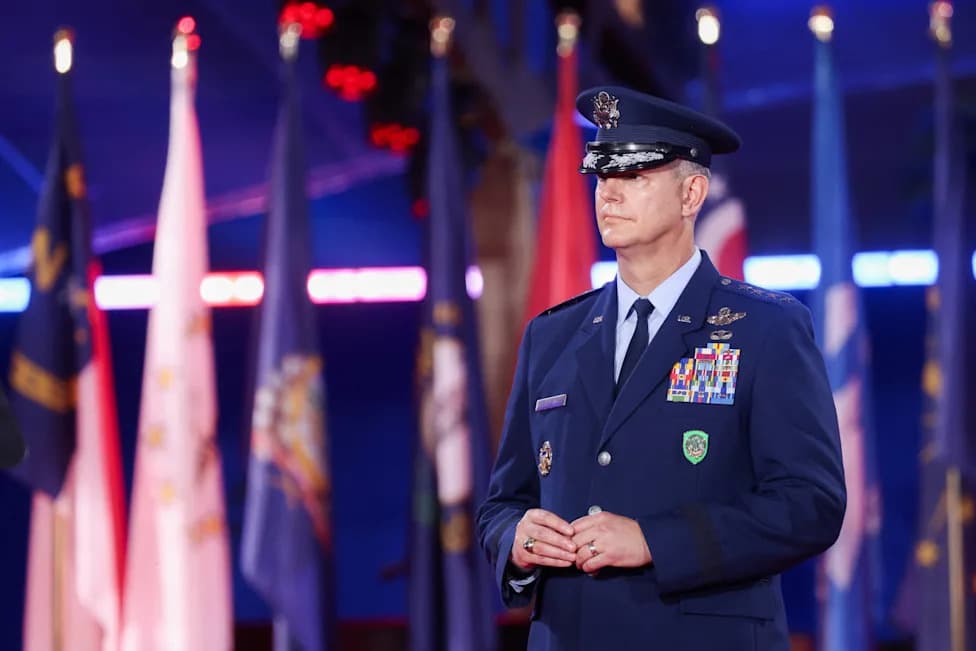
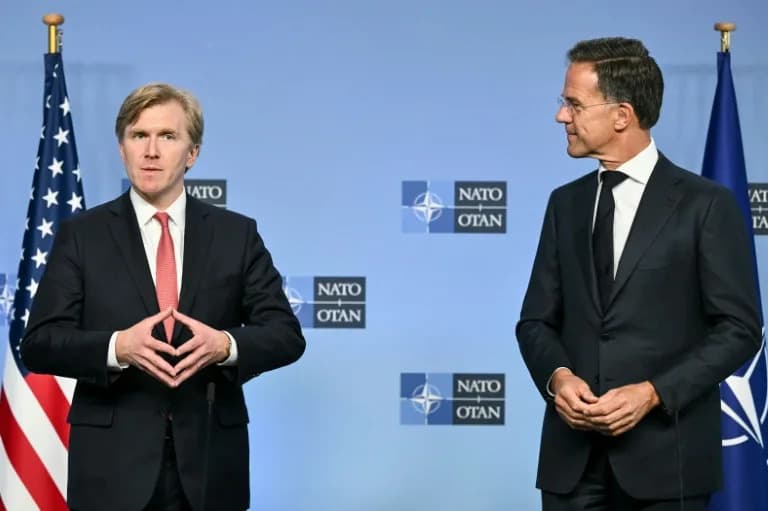
Commander of the U.S. European Command Alexus Grynkewich, June 28, 2026. (Nicolas Economou/Reuters)
U.S. Air Force General Alexus Grynkewich, NATO's Supreme Allied Commander Europe (SACEUR), said the United States will continue to provide "critical but more limited capabilities" to the alliance as European members take on a greater share of continental defence responsibilities.
Grynkewich made the remarks in a phone interview with Reuters while traveling to a change-of-command ceremony at NATO Joint Force Command Norfolk, where a British army general will replace a U.S. Navy vice admiral. The transfer is part of a wider realignment intended to give European allies a larger operational role.
Heightened Intelligence Sharing and Regional Concerns
NATO has recently stepped up intelligence-sharing after a series of sabotage and security incidents that Western officials have linked, at least in part, to Russia. Denmark's defence intelligence service warned that Moscow is likely to intensify a hybrid campaign in the coming months and said there is a "low but growing risk" of limited military attacks against NATO members bordering Russia.
Responding to those warnings, Grynkewich described the recent incidents—which include an attempted drone attack at Leipzig/Halle Airport and a Russian vessel firing flares toward a Danish military helicopter—as concerning but manageable.
"We should be calm and confident that we as an alliance, the most powerful alliance in history, have the tools and mechanisms needed to manage the risk here," Grynkewich said.
Readiness and Deterrence
Asked about the possibility of a limited Russian attack on NATO territory, Grynkewich called it "unlikely but something we can't rule out," emphasizing that the alliance remains prepared for contingencies. He also rejected suggestions that Moscow could exploit U.S. usage of long-range precision munitions elsewhere, warning that any aggression would be met with firm deterrence.
"Absolutely not. He better not try it on my watch," Grynkewich said, adding that NATO is positioned to defend every inch of allied territory and that he has the authorities needed to deter aggression if new threats emerge.
Grynkewich sought to reassure European partners amid a U.S. force posture review, saying Washington will continue to supply key capabilities while Europeans scale up. He stressed there is "no predetermined outcome" regarding the number of U.S. troops or which capabilities might be relocated; roughly 80,000 U.S. personnel are currently based in Europe.
Moscow has repeatedly denied involvement in sabotage or hybrid operations against NATO members and says it does not seek confrontation.
Help us improve.