Mahmoud Abbas delivered a pre-recorded address to the U.N. General Assembly after the Palestinian delegation was again denied U.S. entry visas. He reiterated Palestine's commitment to international law, nonviolence and reform, condemned actions in Gaza as a humanitarian catastrophe and warned of an existential threat to Palestinians. Abbas called for reunification of Gaza and the West Bank under Palestinian authority and appealed for a peace based on international legitimacy. Israeli Prime Minister Benjamin Netanyahu arrived in New York and remains opposed to a two-state solution.
Abbas Addresses U.N. Remotely After Visa Denial, Warns of 'Existential' Threat to Palestinians
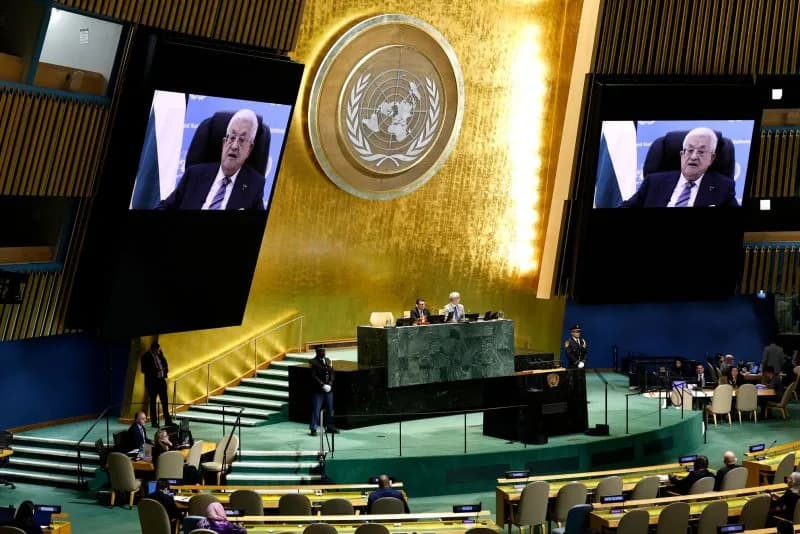
President of Palestine Mahmoud Abbas gives his pre-recorded speech on large screens at the United Nations General Assembly 81st session General Debate on Thursday in New York City. Photo by Peter Foley/UPI
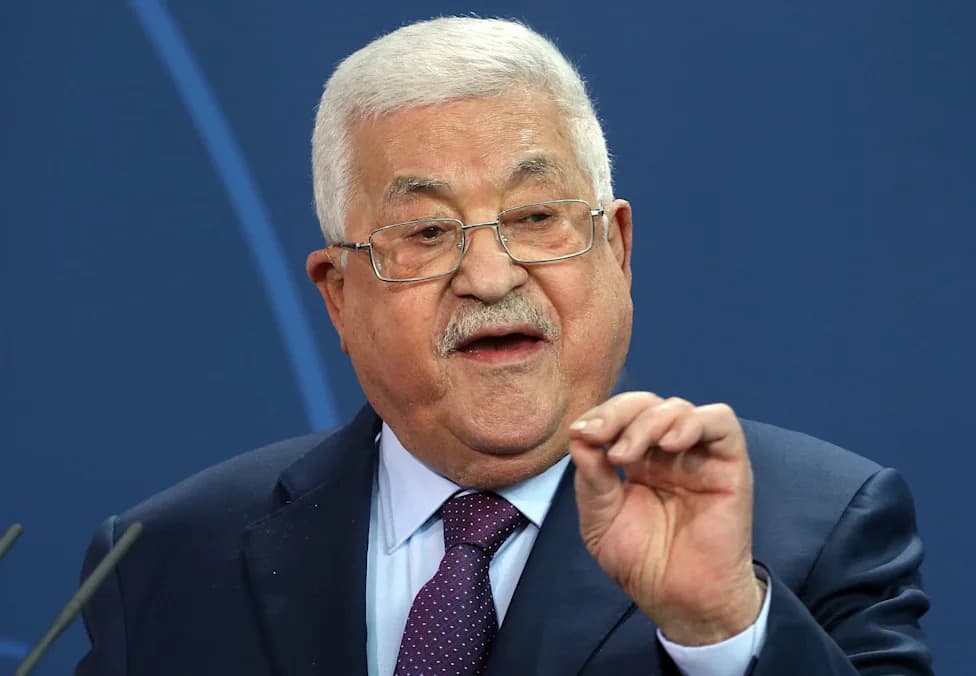
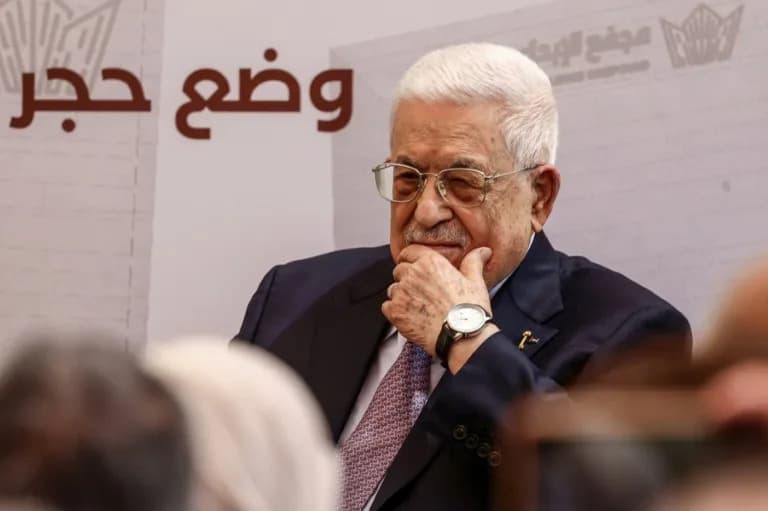
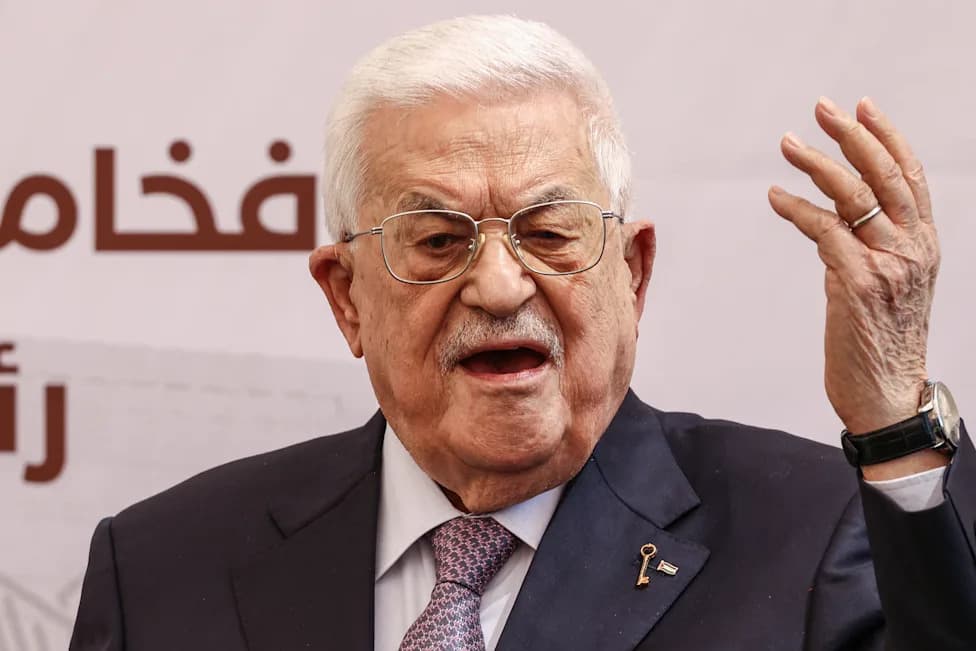
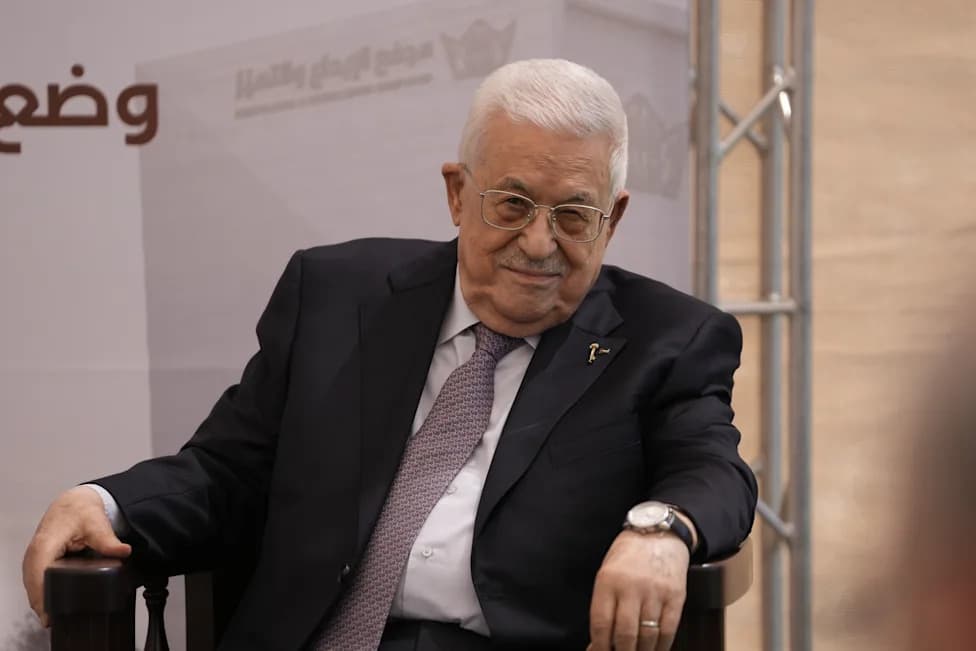
Mahmoud Abbas, President of the State of Palestine, delivered a pre-recorded statement to the United Nations General Assembly on Thursday after the Palestinian delegation was denied U.S. entry visas for the second consecutive year and could not attend in person.
"For the second consecutive year, the Palestinian delegation was denied the entry visas required to reach New York and participate in the meetings of the United Nations General Assembly in person. We reject these unlawful punitive measures, and we reject the accusations and justifications on which they were based," Abbas said through a translator.
Abbas reiterated his government's commitment to institutional reform and to resolving disputes through international law. He emphasized that the Palestinian leadership has "fulfilled our obligations, carried out a comprehensive national reform program, and upheld our commitment to international law, to shunning violence and terrorism, and to the two-state solution, and to peace on the basis of resolutions of international legitimacy."
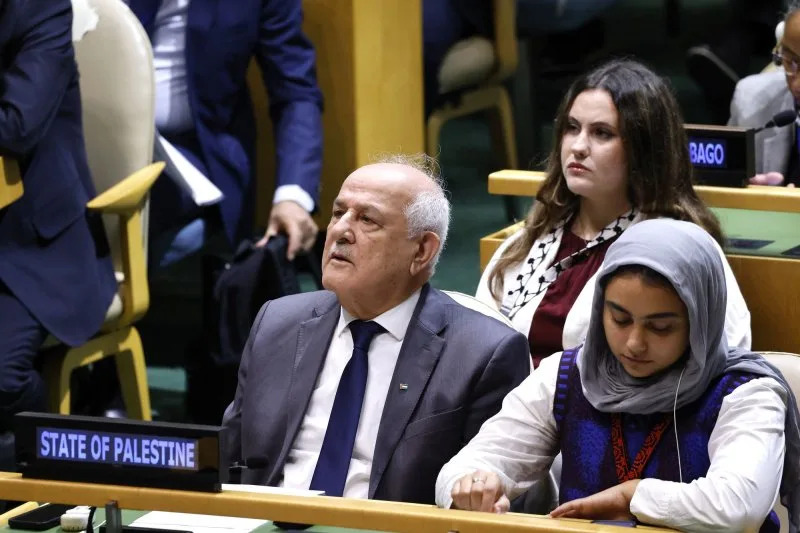
Ambassador Dr. Riyad Mansour, Permanent Observer of the State of Palestine to the United Nations, center, listens to President of Palestine Mahmoud Abbas give his pre-recorded speech on large screens at the U.N. General Assembly 81st session General Debate. Photo by Peter Foley/UPI
"We also affirm that the Palestinian people and its leadership should not be punished for demanding an end to the occupation or for turning to the U.N., the International Court of Justice, and the International Criminal Court. Our choice to invoke international law and its institutions is a peaceful and civilized choice, and not an act that runs counter to peace," he said.
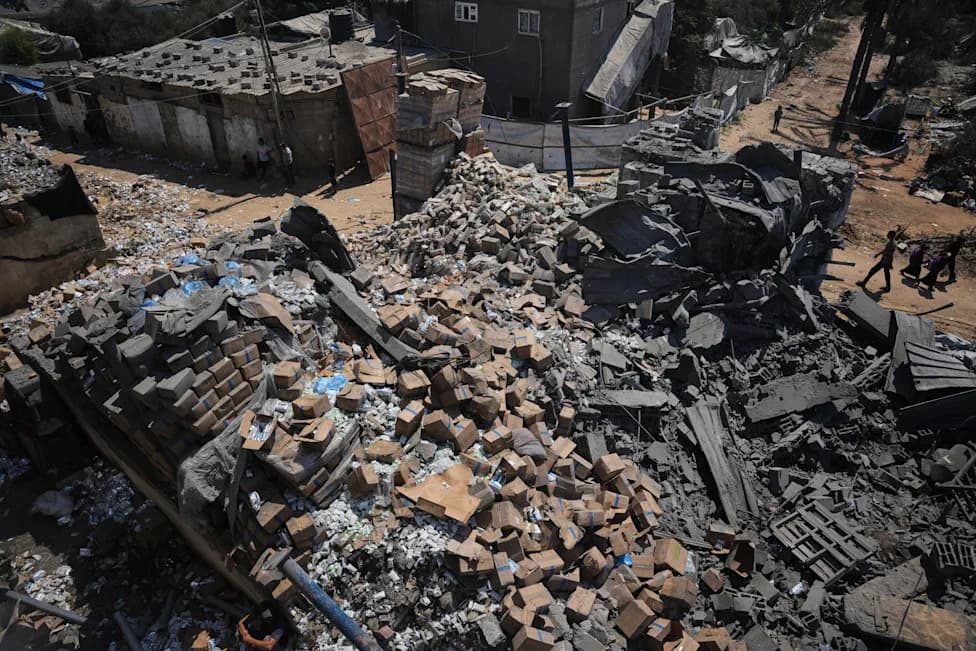
Turning to conditions in Gaza, Abbas condemned what he described as a devastating campaign by Israeli forces. He accused the occupation of causing widespread killing, destruction, starvation and displacement, calling the assault "a genocidal war" that has produced an unprecedented humanitarian catastrophe.
Abbas warned that if current trends continue, the situation risks becoming a "permanent or open-ended situation without any clear time bound political horizon," undermining prospects for a negotiated settlement.
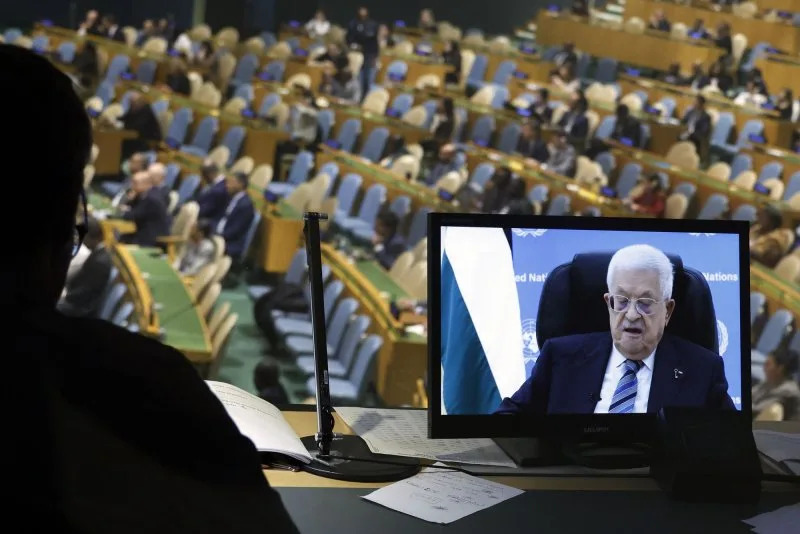
President of Palestine Mahmoud Abbas gives his pre-recorded speech seen on a TV monitor at the U.N. General Assembly 81st session General Debate in U.N. General Assembly Hall at the United Nations Headquarters on Thursday, September 24, 2026 in New York City. Photo by Peter Foley/UPI
"Rather, it must lead to the reunification of the Gaza Strip and West Bank, including East Jerusalem, under the authority of the State of Palestine, in accordance with the principle of one state, one government, one law, and one legitimate entity authorized to bear arms," Abbas said, calling for unified Palestinian governance across the territories.
He also framed recent events in Gaza, the West Bank and East Jerusalem as part of what he called "a malicious colonial scheme" intended to make Palestinians' lives untenable and to push them from their homeland — a danger, he warned, that threatens the "very life and existence of the Palestinian people on their homeland."
Concluding his remarks, Abbas said: "We will extend our hands to a peace based on international legitimacy, so that our freedom and independence can be achieved, and so that everyone in the region may live in security, peace and good neighborliness."
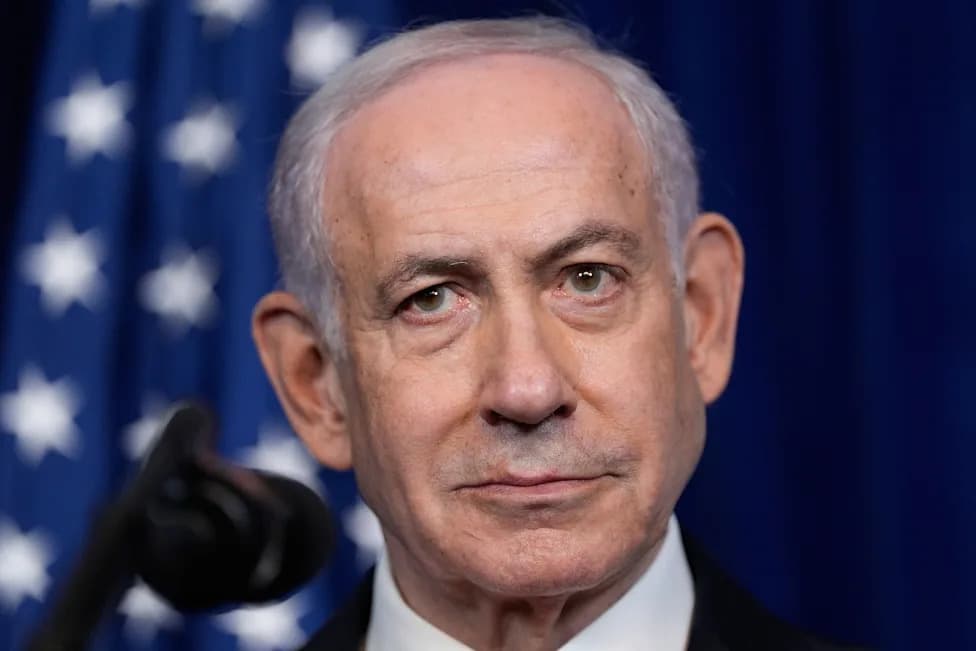
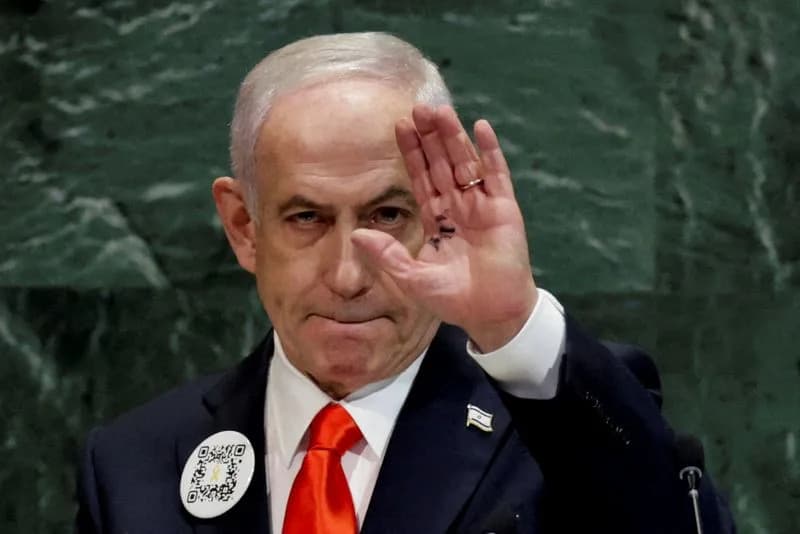
The address was delivered while Palestinian Permanent Observer Ambassador Riyad Mansour and other delegates watched the pre-recorded speech on large screens in the General Assembly hall. Separately, Israeli Prime Minister Benjamin Netanyahu landed at Stewart International Airport north of New York to deliver remarks later in the day; his government has publicly said it will not accept a two-state solution.
The speech underscores competing international legal and diplomatic approaches: Abbas defended recourse to the U.N., the ICJ and the ICC as lawful and peaceful, while tensions on the ground and political positions in Jerusalem and Ramallah continue to complicate prospects for negotiated peace.
Help us improve.