Schmidt Sciences, founded by Eric and Wendy Schmidt in 2024, will invest up to $20 million to support eight new Schmidt Polymaths. Each recipient may receive up to $2.5 million over five years in flexible funding to pursue interdisciplinary, high-risk research. The 2026 cohort — the sixth intake and part of a 35-member community — will explore topics from invertebrate immunity and climate-resilient crops to AI-driven neuroscience and quantum approaches to cosmology.
Schmidt Sciences Pledges $20M to Eight New 'Polymaths' to Fund Ambitious Interdisciplinary Research
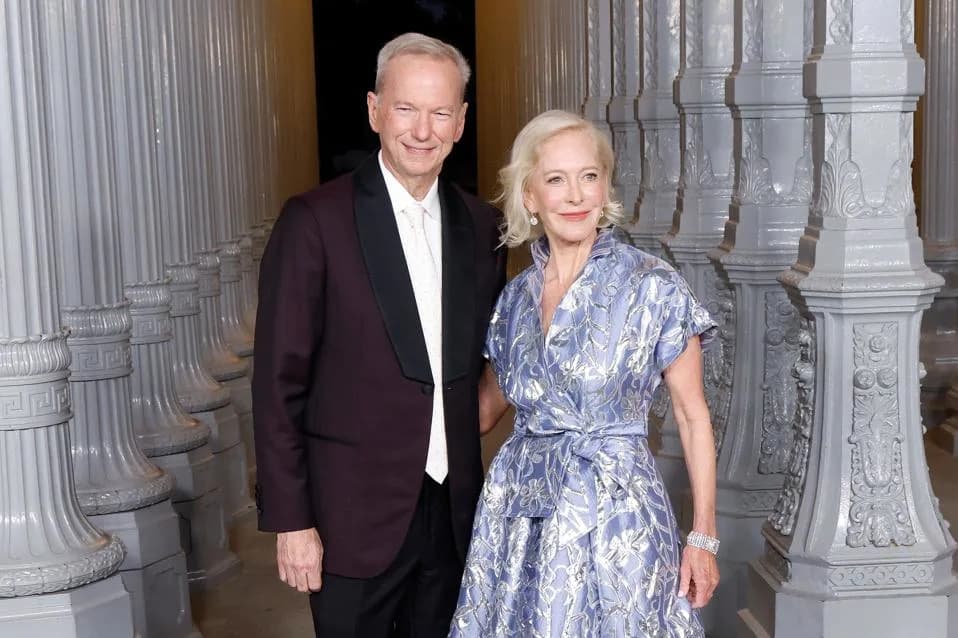
Schmidt Sciences, founded in 2024 by Eric and Wendy Schmidt, is investing $20 million in a new cohort of polymaths. (Photo by Taylor Hill/FilmMagic)FilmMagic
Schmidt Sciences, founded in 2024 by Eric and Wendy Schmidt, is committing up to $20 million to support a new cohort of eight Schmidt Polymaths — established researchers given flexible funding to pursue ambitious, cross-disciplinary projects.
The program targets scientists who have demonstrated excellence across multiple fields and are ready to tackle problems outside their primary areas of expertise. Each awardee may receive up to $2.5 million over five years in flexible support designed to enable high-risk, high-reward research that typical grant mechanisms may not cover.
This intake is the sixth Schmidt Polymath cohort, expanding a community that now includes 35 researchers. Past recipients have pursued a range of unconventional projects, from heat-powered rechargeable molecular computers to using wastewater food DNA to assess community diets and discovering new mathematical formulas with the aid of AI.
Selection and Eligibility
To qualify, candidates must have achieved tenure (or an equivalent career milestone) within the previous three years and demonstrate a research record spanning more than one area of expertise. Nominees come from institutions worldwide and are evaluated on both documented accomplishments and bold plans for future work.
2026 Schmidt Polymaths (Projects)
Allon Klein, Professor of Systems Biology, Harvard Medical School — Will map invertebrate immune systems at single-cell resolution to uncover defense strategies that evolved independently of vertebrates.
Blake Richards, Associate Professor (Computer Science; Neurology & Neurosurgery), McGill University — Plans to collect human behavioral data to train AI models aimed at advancing computational neuroscience and understanding cognition.
Bo Wang, Associate Professor of Bioengineering, Stanford University — Will investigate why warm-bloodedness arose independently in birds and mammals and how thermoregulation shaped nervous, metabolic, and immune systems.
Grace X. Gu, Associate Professor of Mechanical Engineering, UC Berkeley — Will examine how food structure and processing affect taste, texture, and nutrition, combining food science, AI, and manufacturing to design personalized edible products.
Hernan Garcia, Associate Professor of Molecular & Cell Biology & Physics, UC Berkeley — Will apply gene-editing and screening approaches to develop crops with greater resilience to climate stress.
Lauren Zarzar, Professor of Chemistry, Pennsylvania State University — Will study chemical reactions in confined microenvironments (e.g., thin films, cellular compartments) to discover new synthetic pathways for molecules and materials.
Nicholas Bellono, Professor of Molecular & Cellular Biology, Harvard University — Will investigate how closely associated organisms sense and respond to one another by identifying receptors and signaling mechanisms that mediate interspecies communication.
Zohreh Davoudi, Associate Professor of Physics, University of Maryland — Will use quantum sensing and simulation techniques to probe early-universe evolution and advance cosmological understanding.
“Each of these researchers has already shown real range and originality in their work. Now they're ready to bring that to an entirely new set of questions,” said James Ricci, director at Schmidt Sciences. “The award gives them the freedom and runway to make that leap and see where it leads.”
Originally published on Forbes.
Help us improve.