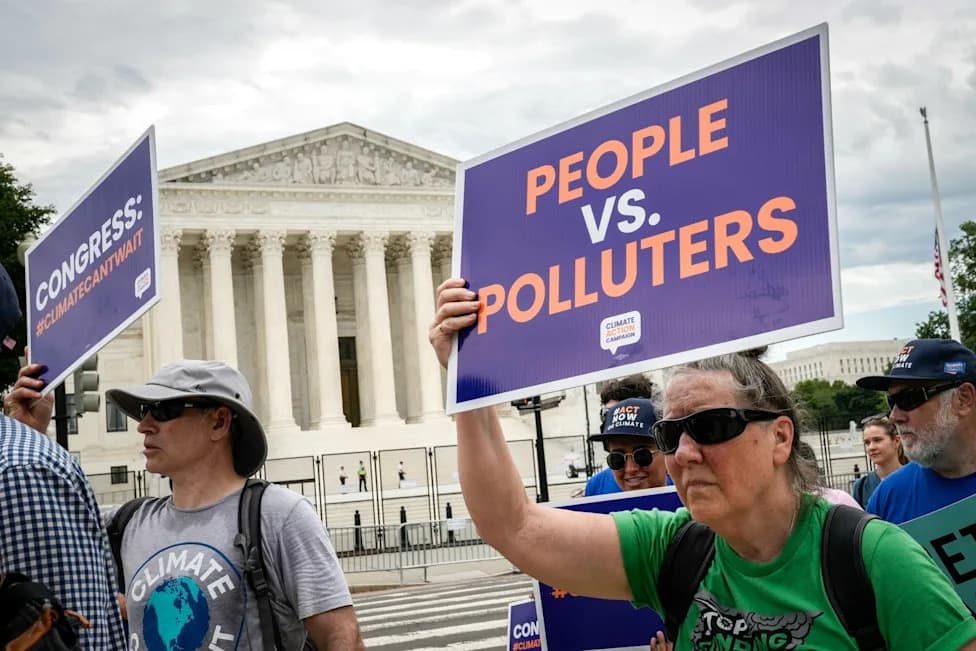
After large federal cuts to climate research, a coalition of experts formed Climate Reserve to rehire laid-off scientists and preserve critical projects. The initiative funds fellowships, places specialists at nonprofits and universities, and has revived tools such as EJScreen while supporting international projects. By prioritizing collaboration and protecting some placements for safety, Climate Reserve aims to preserve institutional knowledge and make climate science more resilient to political shifts.
How a Secret Network Rehired Laid-Off Climate Experts and Rescued Critical Projects

Trump cut their climate jobs. This secretive network found them new ones.
Last year’s sweeping federal cuts to climate science left many researchers and program managers suddenly out of work. In response, a coalition of climate specialists created Climate Reserve — a discreet network that has rehired dozens of experts, relaunched stalled projects and placed vital data and research into new homes so the work can continue despite political uncertainty.
From Shock to Action
"People were in shock," said Aparna Shrivastava, who served as a senior climate official in the Biden administration. After Donald Trump took office, federal funding for climate research was sharply reduced: billions in grants were scrapped and thousands of positions across agencies such as the Environmental Protection Agency and the National Oceanic and Atmospheric Administration were cut. Many climate professionals reached out to Shrivastava and to one another, asking, "What can we still do to address this?"
Conversations moved from private chats to a July workshop at the Aspen Global Change Institute in Colorado, where more than 30 experts coalesced around a practical solution: fund temporary positions and relocate critical projects so institutional knowledge would not be lost. That idea became Climate Reserve, an initiative now supported by tens of millions of dollars and led by Shrivastava.
Mission and Methods
Climate Reserve operates as a nimble placement network. Its mission is to identify high-priority climate work left in limbo and find alternative homes for people and projects — at nonprofits, universities or through independent partnerships. Sometimes the group funds fellows who join an organization; other times it helps revive federal tools that lost budget support.
So far, Climate Reserve has funded more than two dozen positions and expects to place 50 fellows by the end of this month. Fellows now work at organizations including the Environmental Protection Network and the University of Minnesota. The initiative has also helped resuscitate projects such as EJScreen, the Environmental Protection Agency’s mapping tool that highlights communities facing the greatest pollution burdens.
International Reach and Discretion
The network’s work extends beyond U.S. borders: projects include mapping sea-level rise on islands in Panama and measuring greenhouse-gas emissions across five African countries. Some placements and projects remain undisclosed. Organizers say discretion helps shield fellows who still depend on federal grants or who may seek federal funding in the future from political retaliation.
A Culture of "Movement Generosity"
Climate Reserve prioritizes collaboration over competition. Brittany Janis of the Open Environmental Data Project described the name as evoking both a nature reserve and an Army Reserve — a pool of trained people available in an emergency. The group practices what founders call "movement generosity": sharing resources, splitting experts’ time across organizations to reduce redundancy, and emphasizing collective goals.
Ben Poulter, who leads an emissions-monitoring program at the nonprofit Spark, said the approach prevents further fragmentation of the climate community as scarce resources are squeezed. Spark is in the process of hiring two Climate Reserve fellows to coordinate measurements of warming-sensitive ecosystems and translate findings into policy guidance for partner countries.
Saving the Unsexy But Essential Work
Sonia Wang of the Data Foundation noted that many saved projects are technical and low-profile but vital: standardizing data models, reconciling differences between satellite methane estimates, and maintaining the datasets policymakers and scientists depend on. The Data Foundation has taken on four Climate Reserve-funded experts to improve data reliability.
"How can we thoughtfully parachute people to the right places so we don't lose that institutional knowledge and the critical foundation for climate action in the U.S.?" Janis asked.
Looking Ahead
Organizers say Climate Reserve is not trying to replace government support; rather, it is a stopgap to preserve capacity until federal funding returns. Leaders hope the network will make the climate research ecosystem more collaborative and resilient to political shifts. "The need is only going to get stronger every year," said John Balbus, a Climate Reserve fellow who now works at the Federation of American Scientists.
As the network becomes more visible to attract additional funding, its founders acknowledge a balance between transparency and protection for vulnerable fellows. For now, Climate Reserve’s blend of discretion, practical placements and cross-organizational cooperation aims to keep essential climate work alive during turbulent times.
Help us improve.