At the U.N. General Assembly, Iranian President Masoud Pezeshkian accused the United States and Israel of causing global instability and of illegal attacks, displaying images he said showed child victims. He vowed Iran would resist "until our last breath" and rejected U.S. allegations that Tehran sponsors terrorism. The speech followed President Trump's warning to "annihilate the Islamic republic," and came amid a U.N. fact-finding report that said a March Tomahawk strike may have amounted to war crimes. Tehran also presented diplomatic preconditions, including an end to a naval blockade and the release of frozen assets.
Iranian President Accuses U.S. and Israel of Illegal Attacks at U.N., Shows Photos of Child Victims
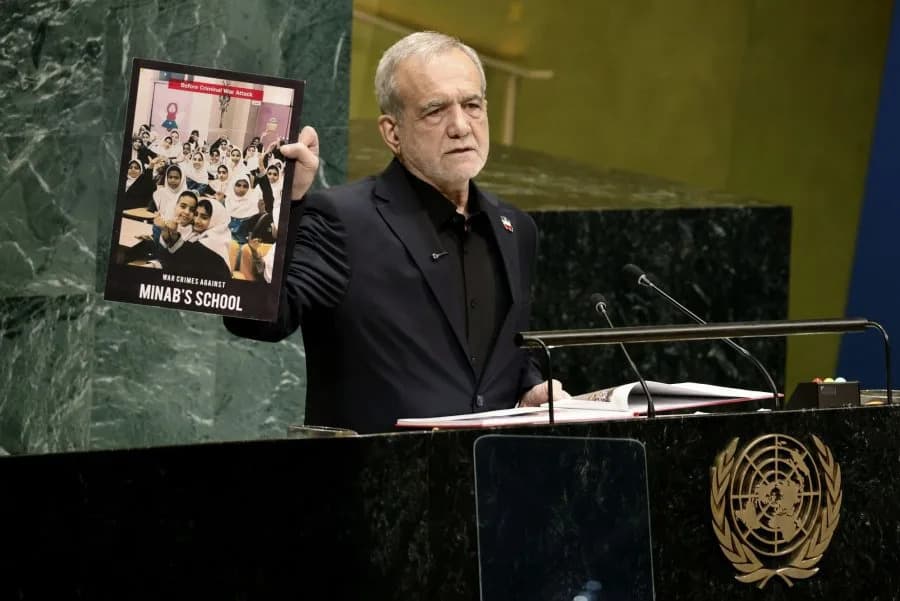
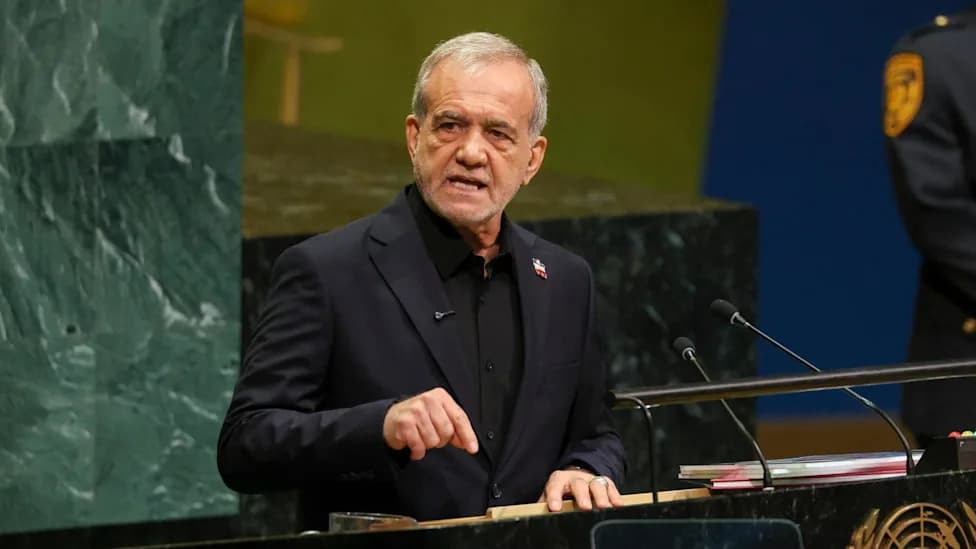
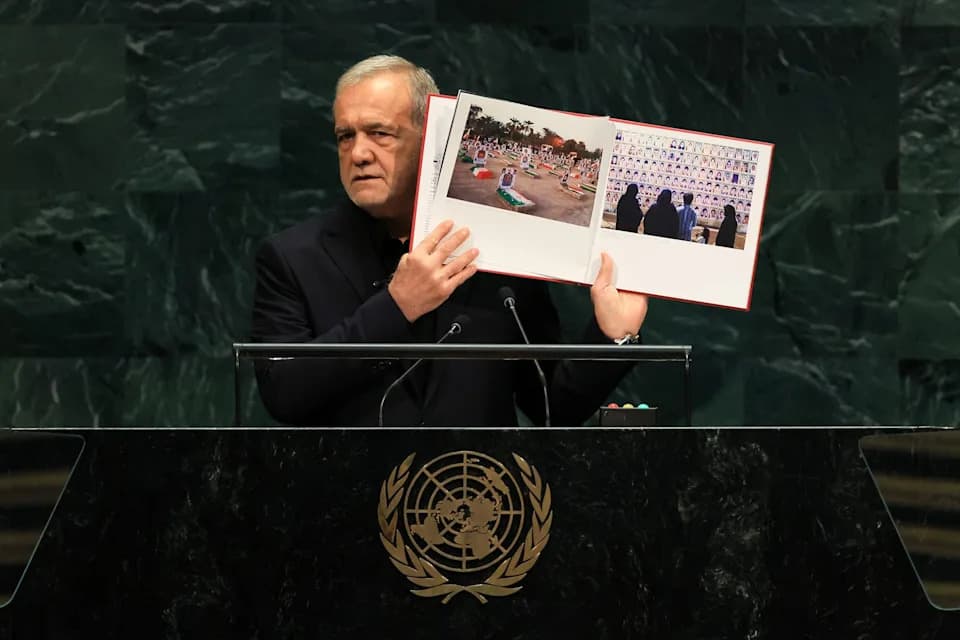
President of Iran Masoud Pezeshkian holds a picture of the school children killed during a U.S. airstrike in Iran as he speaks at the United Nations General Assembly in New York City. Photo by Peter Foley/UPI
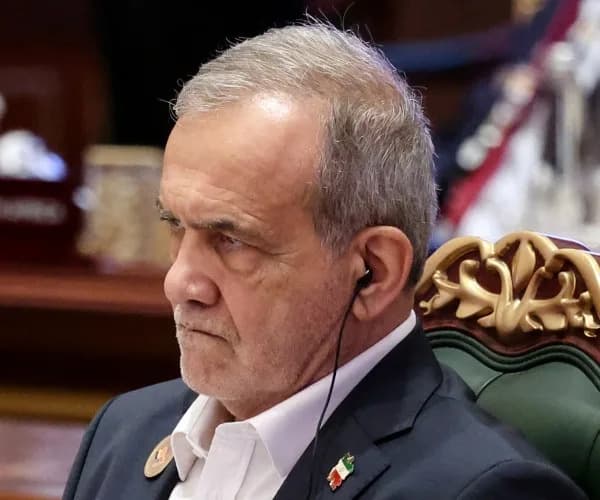
In a forceful address to the U.N. General Assembly on Sept. 23, Iranian President Masoud Pezeshkian accused the United States and Israel of fomenting global instability and carrying out illegal strikes against Iran. He opened his remarks by displaying images he said showed children killed by U.S. and Israeli bombs and vowed that Iran would resist "until our last breath."
Clash of Narratives at the U.N.
Pezeshkian rejected U.S. labels that describe Iran as a sponsor of terrorism. "The United States president described us as terrorists. We have been the victims of terrorism," he said, challenging Washington's portrayal of Tehran.
"Are we the sources of instability? We only seek to live independently," Pezeshkian asked the assembly. "Those who are committing terrorism and committing crimes, are they the protectors of peace and stability?"
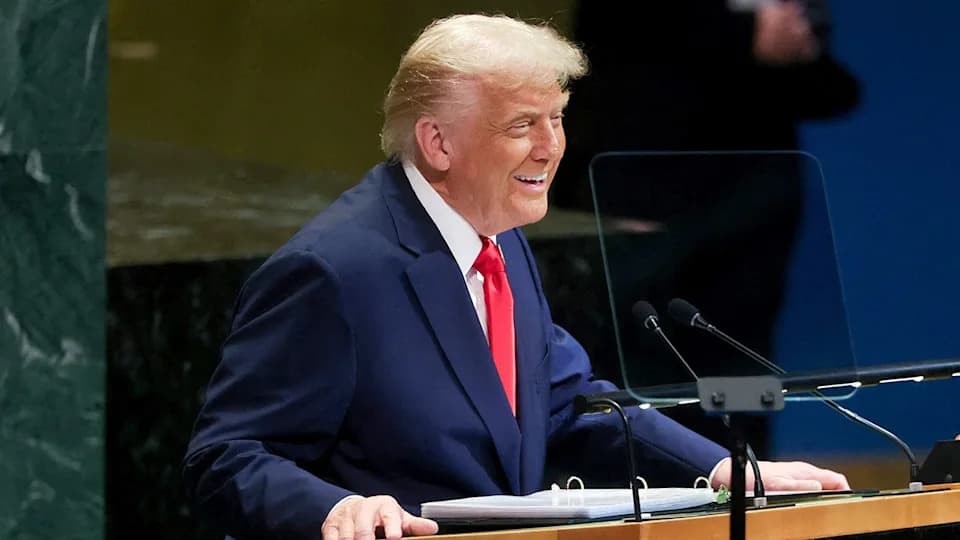
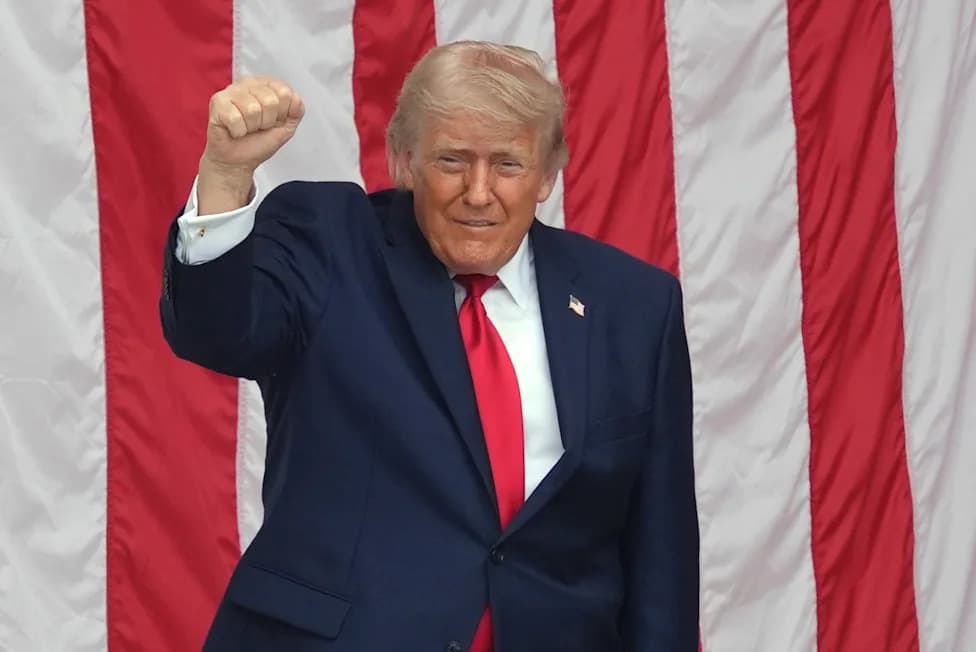
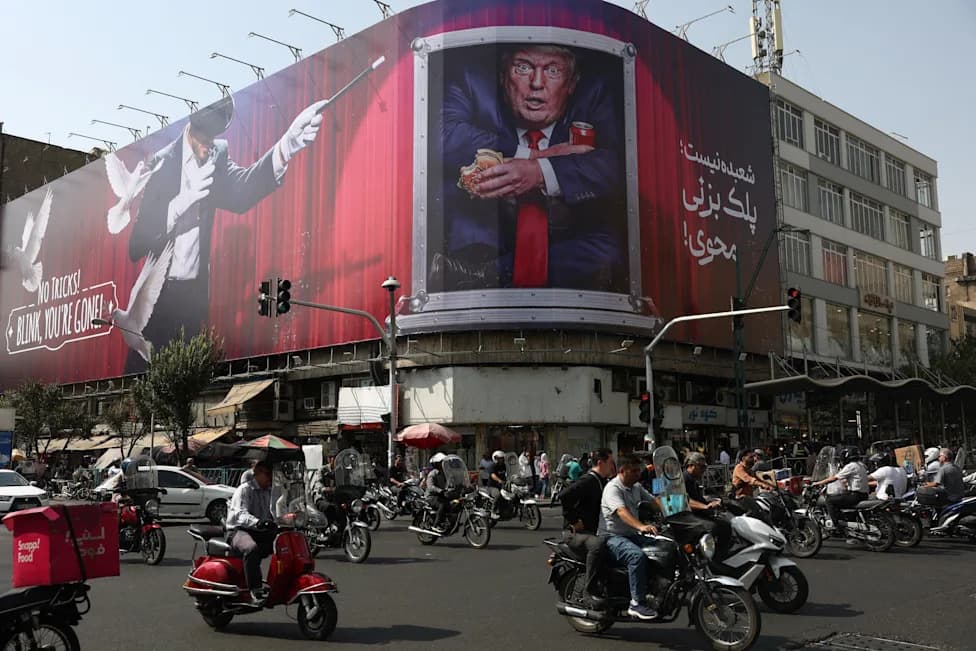
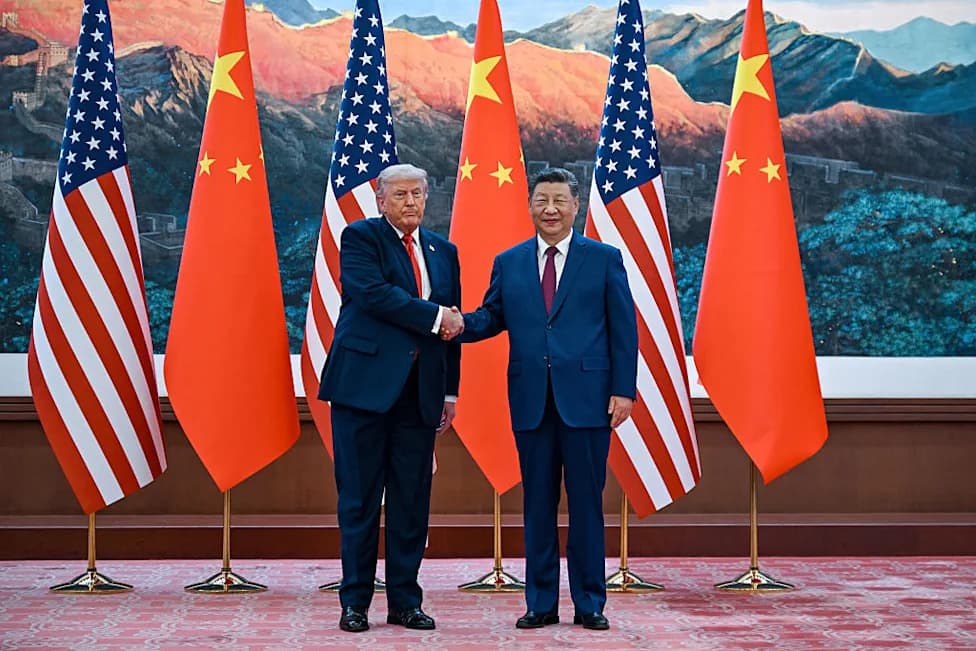
The speech followed a provocative statement by U.S. President Donald Trump a day earlier, when he said he must make a deal with Iran or "annihilate the Islamic republic," and questioned whether he should "drive them into hell with no chance of survival and no hope of future greatness or generations." Iranian military officials called those remarks "a sign of strategic desperation." Trump did not attend the General Assembly that day; he remained in Washington preparing for Chinese President Xi Jinping's state visit.
Diplomatic Overture and Preconditions
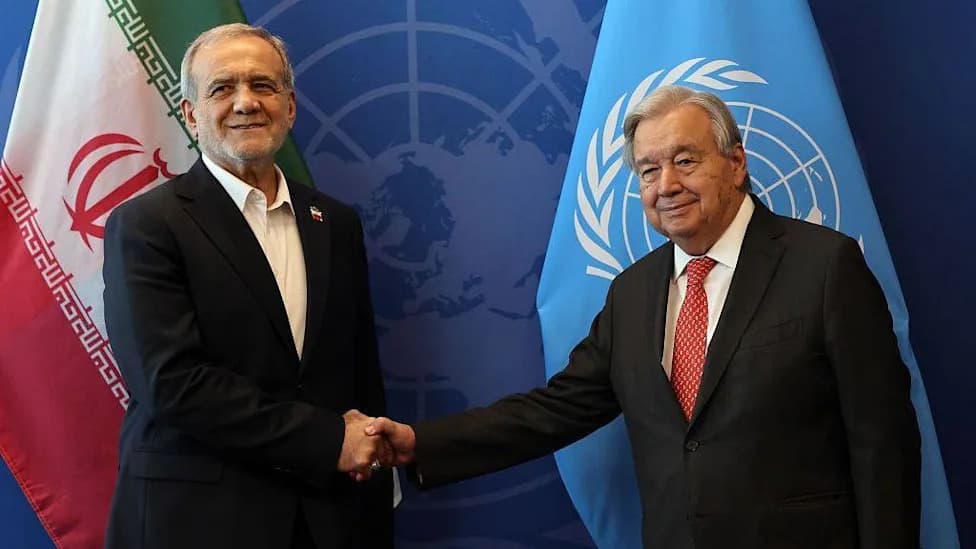
Despite the heated rhetoric, U.S. officials and Iranian envoys held a meeting on the sidelines of the U.N., which President Trump described as productive. Iranian Foreign Ministry spokesman Esma Baghaei posted on X that Tehran presented "clear and transparent" conditions for diplomacy, including an end to aggressive U.S. actions such as a naval blockade, the lifting or release of frozen assets, cessation of hostilities on all fronts, and agreement on safe shipping routes between the two coastal governments.
Civilian Casualties and a Fact-Finding Report
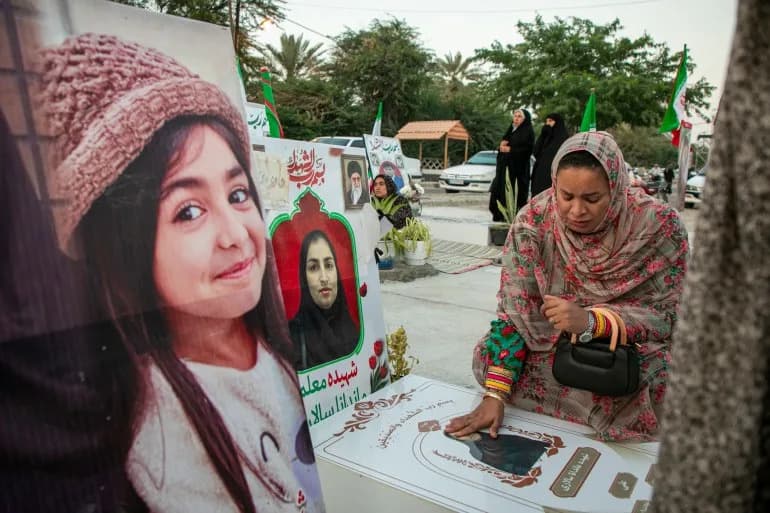
As Pezeshkian described civilian casualties, the only U.S. representative in the hall walked out. The president referenced a Tomahawk missile strike in March that hit a primary school in Minab, which he said killed more than 150 people, including about 120 children. He cited a recent U.N. Independent International Fact-Finding Mission on Iran that found U.S. forces may have committed war crimes in that attack.
Pezeshkian also reiterated Tehran's insistence on preserving the right to peaceful nuclear technology. "In order to defend our country, we do not seek anyone's permission," he said. "We will not bow our heads and give up the right that is inherently ours. We say it clearly: No nuclear weapons and no limitations to new peaceful nuclear technology." He framed peaceful nuclear capability as essential to Iran's development.
Context: The address highlighted the widening diplomatic divide and underscored both Tehran's red lines and the fraught environment for negotiations amid public accusations and allegations of wartime misconduct.
Help us improve.