Independent blood tests in Thornton-Cleveleys found very high levels of the carcinogen PFOA in residents living near the AGC Chemicals plant. Of 49 people tested, 70% exceeded US and German guideline levels that could raise health risks; two allotments have been closed after soil, eggs and vegetables tested positive. More than 100 residents are considering group legal action, and experts are calling for wider community testing and medical screening.
Independent Tests Find Very High PFOA Levels Near AGC Chemicals — Residents Warned Of Increased Cancer Risk

Residents like Sam told the BBC they were shocked by their blood test results [Tony Jolliffe/BBC]
Independent blood testing has revealed alarmingly high concentrations of the carcinogenic "forever chemical" PFOA in residents of Thornton-Cleveleys, Lancashire, raising concerns about long-term health risks for those living near the AGC Chemicals site.
What the tests found
Manchester Metropolitan University carried out blood tests, funded by investigative groups Watershed and Law for Change, on 49 local volunteers. Using benchmark guidance from the US and Germany, researchers found that 70% of those tested had PFOA levels that could place them at an increased risk of adverse health effects. Ten people also showed the presence of a replacement chemical, EEA-NH4, in their blood.
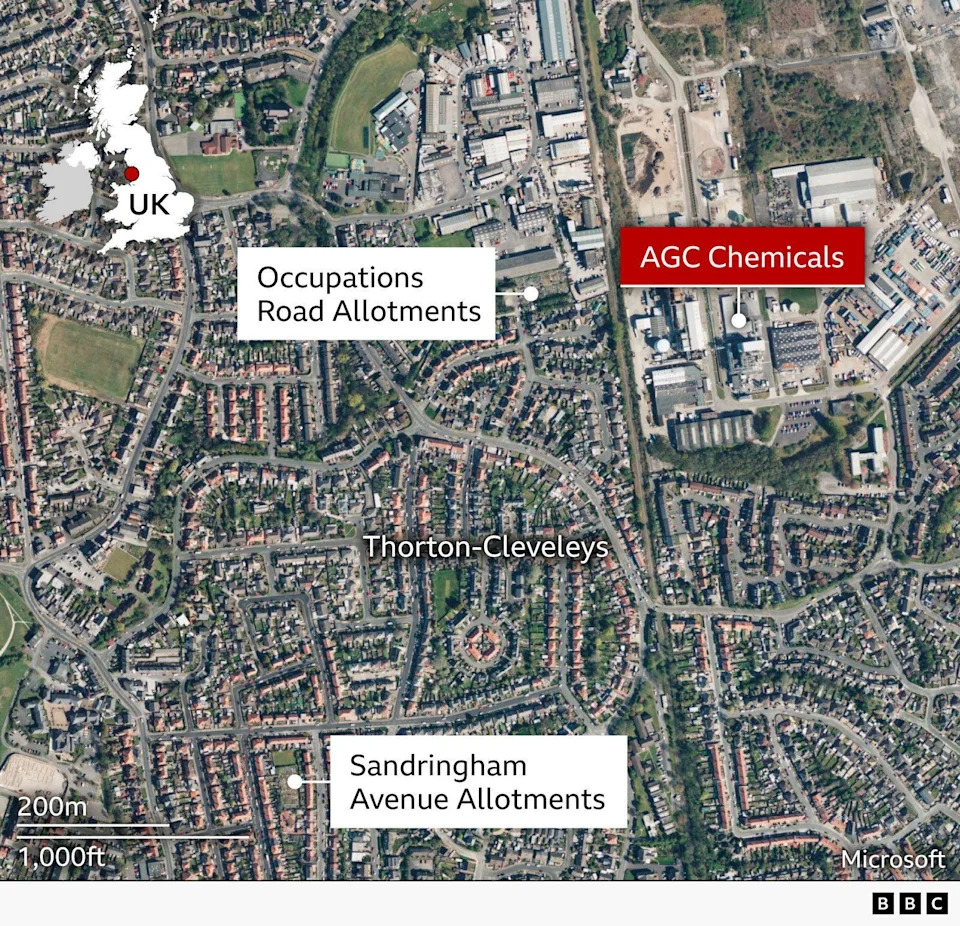
Two allotments in Thornton-Cleveleys have been closed and are due to be classified as contaminated land [BBC]
Local contamination and likely source
The Environment Agency and Wyre Council have been investigating soil and food contamination around the former manufacturing site since 2024. Elevated PFOA was detected in soil, locally produced eggs and homegrown vegetables. Two allotment sites have closed and are due to be designated as contaminated land. Investigators concluded that airborne dispersal from the nearby AGC Chemicals factory — which used PFOA in manufacture of non-stick pan coatings until 2012 — is the most likely source.
Voices from the community
“When we opened the results... it was like, my God, that is ridiculously off the scale,” said one local resident, known as Sam, who also expressed distress about potentially passing contaminants to her children during breastfeeding.
“It was quite emotional, a shock... I feel constricted, like I'm in a cage now,” said Mario Panteli after receiving one of the highest results.
Residents who tested positive are being urged to discuss their results with their GP to ensure findings are recorded and to consider further screening where appropriate.

Andrew Molloy expected his results would be normal [Tony Jolliffe/BBC]
Health implications
PFOA belongs to a group of persistent chemicals called PFAS. The World Health Organization has classified PFOA as a Group 1 carcinogen, and the UK banned its use in 2020. Associations reported in scientific literature and by health authorities include increased risks of reduced thyroid function, elevated cholesterol, pre-eclampsia, ulcerative colitis, and certain cancers (notably kidney and testicular). Higher blood levels increase population risks but do not guarantee that a given individual will develop these conditions.
Legal and regulatory developments
More than 100 residents are considering a group legal action against AGC Chemicals. Leigh Day, representing some residents, says compensation could be sought for property devaluation, loss of enjoyment of land, and health-related risks. AGC Chemicals has said the site made chemicals long before the company's ownership, that the multi-agency investigation is ongoing, and that it cannot speculate on outcomes. The company has also announced plans to close the factory later this year.
Expert commentary and next steps
Dr David Megson, who conducted the testing, described the results as far higher than expected and said they indicate a serious local exposure event. Public health specialist Dr Steve Hajioff noted that PFOA levels may have been higher in the past and that even a substantial relative increase in risk for a rare disease leaves an individual's absolute risk low. Researchers and local campaigners are calling for broader community blood testing and follow-up medical screening for people with elevated levels. A previous PFAS report in Jersey recommended options including cholesterol-lowering drugs and therapeutic phlebotomy for some people with high levels.
Wyre Borough Council said it recognises PFAS as an emerging area of scientific research and will continue to press for updated health guidance as evidence develops.
Help us improve.