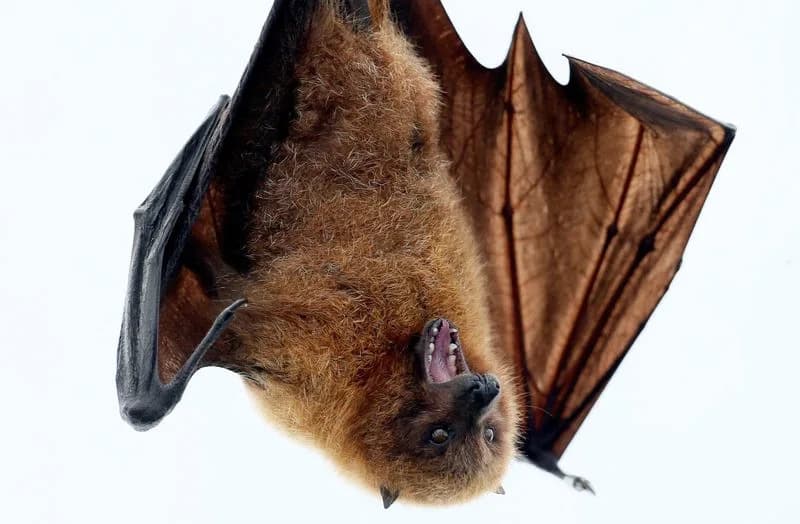
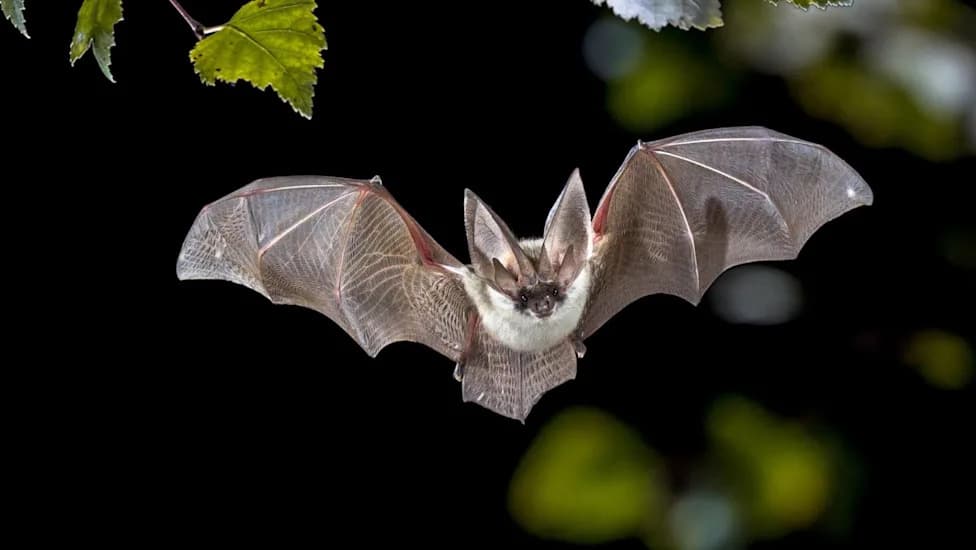
This landmark study, published in Nature, combines 103 bat genomes and 44 fossils to conclude that bats originated in Europe about 65 million years ago. The team finds that powered flight and advanced echolocation were already in place by ~50 million years ago, prior to the major diversification of modern bats. Researchers suggest a Europe–Africa hub drove global dispersal, and the genomic resource could help unlock the genetic basis for bats' unusual longevity and disease resistance.
Landmark Genome Study Shows Bats First Evolved in Europe Around 65 Million Years Ago
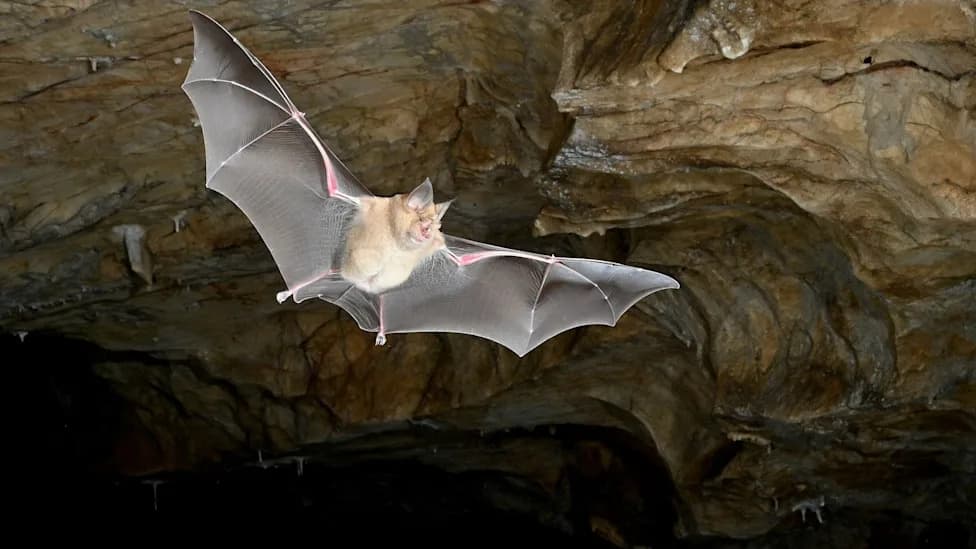
A greater horseshoe bat flying in a cave.
New, large-scale genetic and fossil evidence reveals that bats likely originated in Europe about 65 million years ago and spread worldwide from a Europe–Africa hub. The study, published in Nature on Sept. 23, combines the largest-ever genomic dataset for bats with an extensive fossil record to produce a strongly supported evolutionary tree for the order Chiroptera.
What the Researchers Did
An international team of 137 scientists, many working under the Bat1K initiative, generated 41 new high-quality bat genome assemblies and analyzed them alongside 62 existing genomes. The final dataset includes 103 bat genomes and 44 fossil specimens, representing all 21 recognized bat families and many remarkable species, such as the tiny bumblebee bat (Craseonycteris thonglongyai) and Madagascar’s sucker-footed bat (Myzopoda aurita).
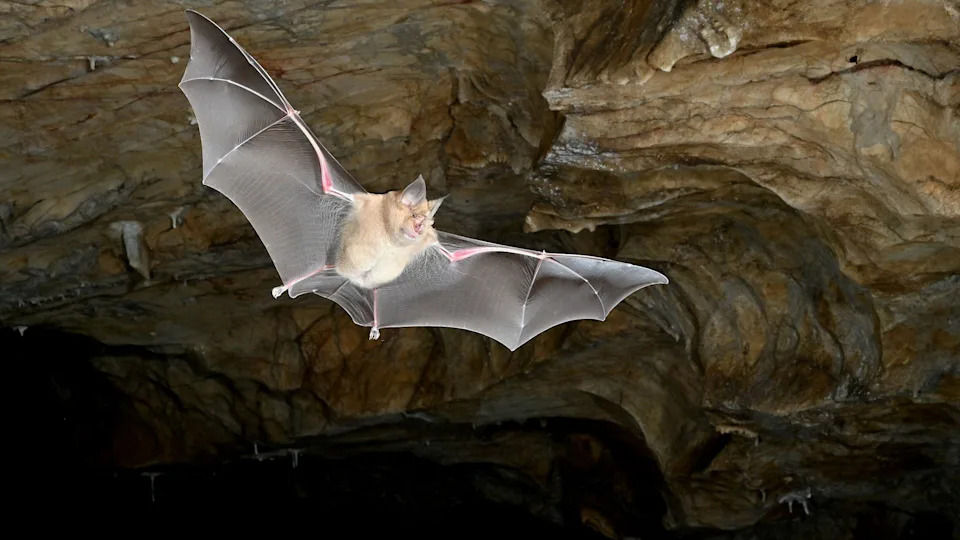
Bats evolved in Europe roughly 65 million years ago before spreading around the world, new research finds. | Credit: Daniel Whitby
Key Findings
The integrated genomic and paleontological analysis produced several important conclusions:
- European Origin: Bats most likely arose in Europe roughly 65 million years ago, contradicting earlier hypotheses that placed their origin in Asia, Africa or North America around 50 million years ago.
- Early Flight and Echolocation: Evidence indicates that powered flight and advanced echolocation were already present by about 50 million years ago, before the major diversification of modern bat groups. The placement of the 50-million-year-old fossil Vielasia sigei from southern France within the deepest branch of the bat tree supports this timing.
- Rapid Dispersal: After originating in Europe, bats quickly dispersed into Africa and from a Europe–Africa hub expanded into Asia, the Americas and Australia, leading to the more than 1,500 species we see today.
- Life-History Traits: Many bat species live far longer than similarly sized mammals—often eight to ten times longer—and show notable resistance to aging and certain diseases. The genomic resource from this study opens avenues to explore the genetic basis for longevity and disease resilience.
"It is extraordinary," said Emma Teeling, professor of molecular evolution at University College Dublin. "After decades of research and conflicting findings, we finally have uncovered how and when bats evolved."
Why This Matters
By combining unparalleled genomic data with fossils across time, the study delivers a robust bat family tree and biogeographic history that had been elusive for decades. That clearer evolutionary framework will help scientists study the origins of flight, echolocation, longevity and disease resistance in bats—and could inform conservation strategies and biomedical research.

With a body length of about 1 inch, the bumblebee bat (Craseonycteris thonglongyai) is thought to be the smallest mammal on Earth. It occurs in western Thailand and southeast Myanmar. | Credit: Daniel Whitby
As co-author Sonja Vernes from the University of St Andrews put it, getting the evolutionary tree right makes it easier to understand how bats evolved their extraordinary traits. The authors have also begun reconstructing the genome of the common ancestor of all living bats, but they emphasize that this is an ongoing effort.
Published: Nature, Sept. 23. Project contributors: 137 scientists, Bat1K consortium. Dataset: 103 genomes, 44 fossils, 21 bat families.
Help us improve.