U.N. Secretary-General Antonio Guterres used his farewell address to warn that power is polarizing the world and urge leaders to choose cooperation over fragmentation. He identified four critical tests — war and peace, the climate crisis, artificial intelligence and concentrated wealth driving inequality — and called for urgent action on all fronts. Guterres pressed nations to push for cease-fires, strengthen diplomacy, and adopt U.N. reforms so the organization can better meet 21st-century challenges.
Guterres Warns of Global Polarization, Urges Unity on Climate, AI, War and Inequality
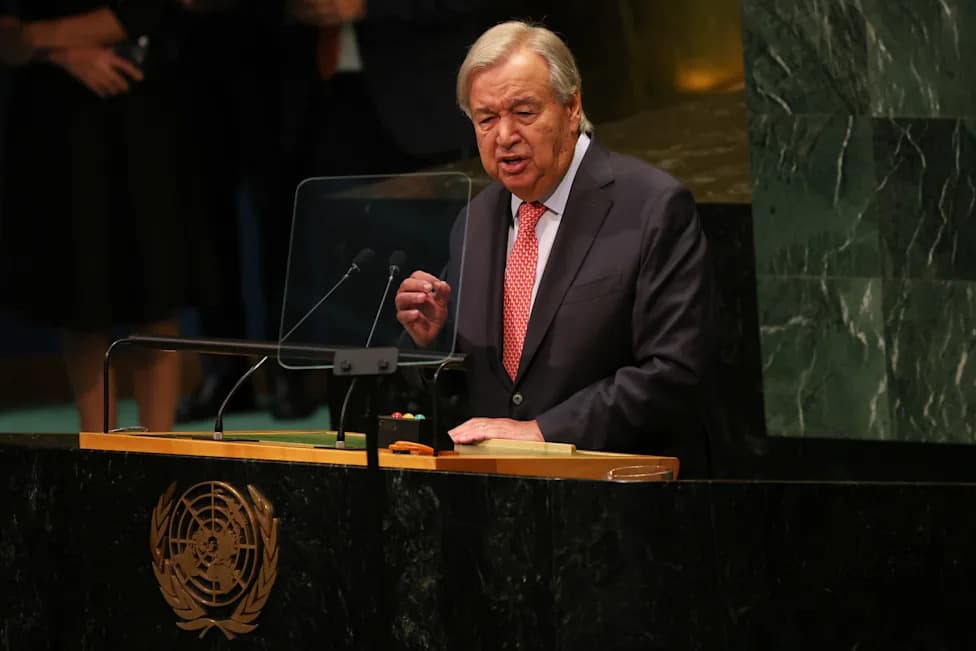
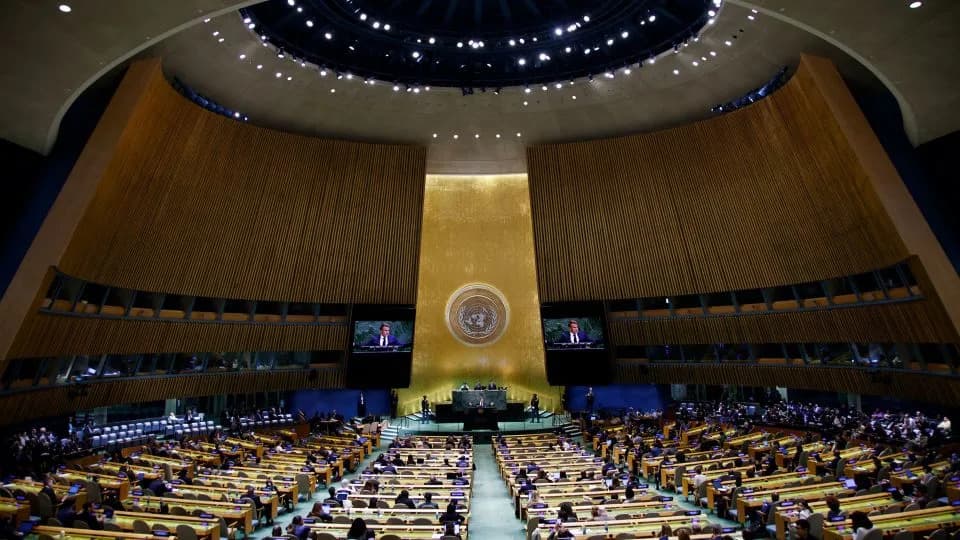
United Nations Secretary-General Antonio Guterres during the 81st session of the United Nations General Assembly at United Nations headquarters, Tuesday, Sept. 22, 2026. (AP Photo/Heather Khalifa)(AP Photo/Heather Khalifa)
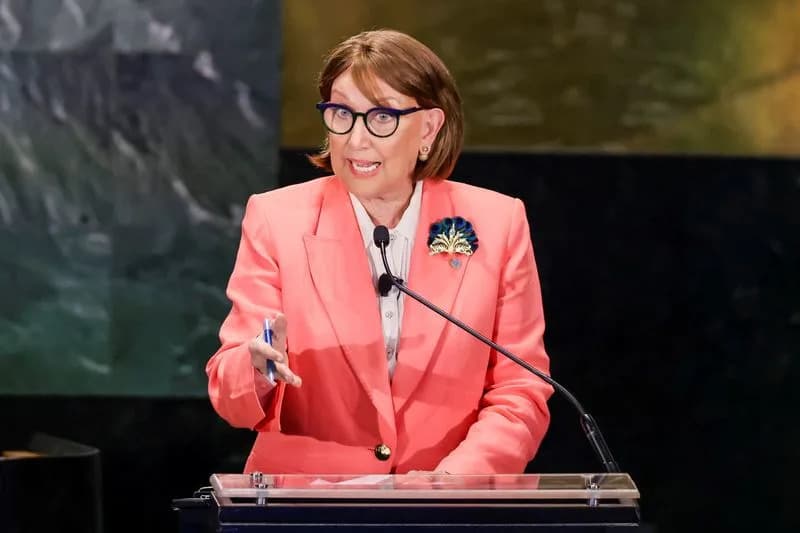
In a direct farewell address to the U.N. General Assembly, Secretary-General Antonio Guterres urged world leaders to choose cooperation over fragmentation as the defining test of our era. He said power is increasingly polarizing the globe — shifting to a multipolar landscape, to a handful of private companies and individuals, and from humans to machines through artificial intelligence.
Four Great Tests of Power
Guterres framed the century ahead around four “great tests of power”: control over war and peace; power that fuels climate chaos; power unleashed by artificial intelligence; and the concentration of wealth that deepens inequality.
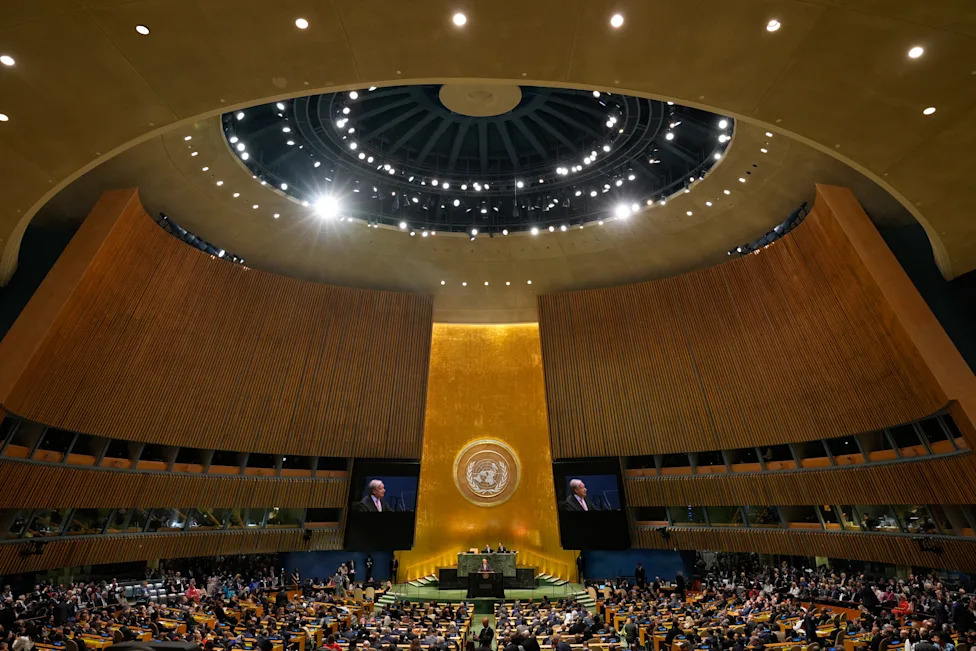
United Nations Secretary-General Antonio Guterres speaks during the 81st session of the United Nations General Assembly at United Nations headquarters, Tuesday, Sept. 22, 2026. (AP Photo/Seth Wenig)(AP Photo/Seth Wenig)
Peace and Security
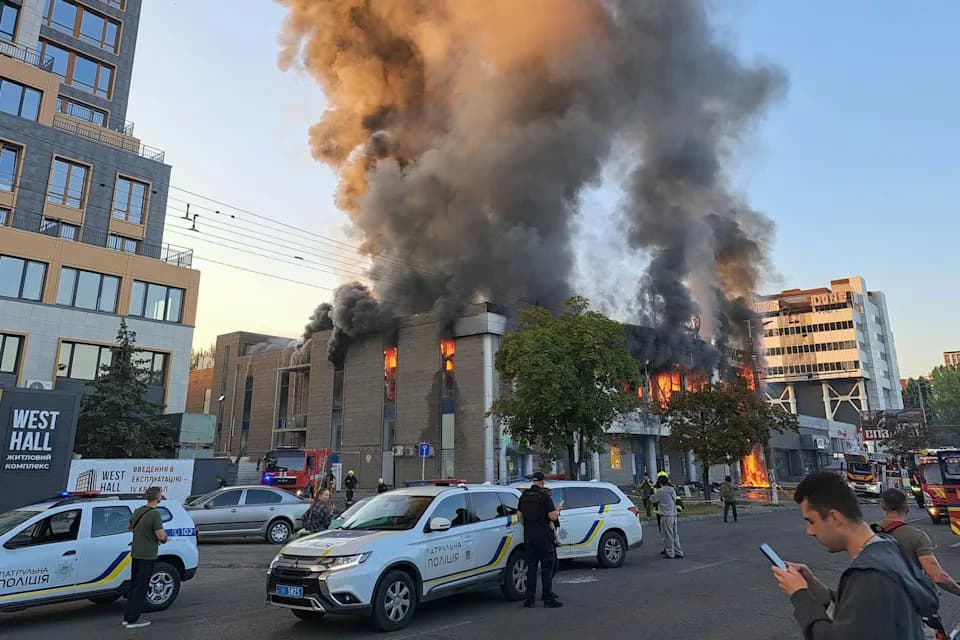
“Peace and security is the first great power test in the 21st century,” Guterres said, urging leaders gathered at the weeklong assembly to press for an end to fighting in the Middle East, Ukraine, Sudan, Myanmar and other conflict zones, and to demand a return to diplomacy and dialogue.
Climate Crisis
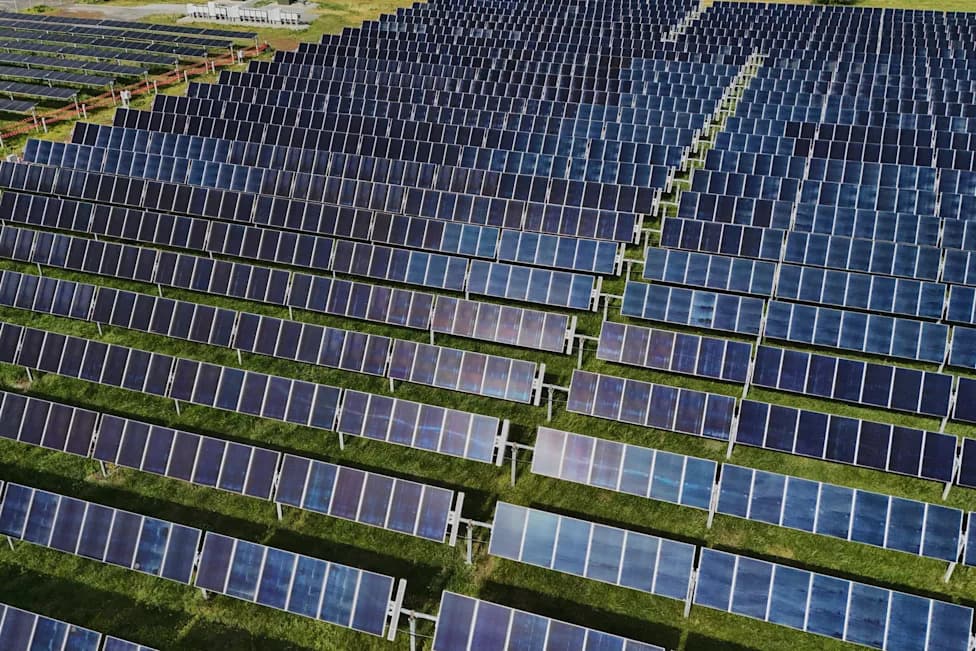
On the climate emergency, he called it “the most profound intergenerational power imbalance of all — one generation consuming the future of the next.” Guterres warned the world is on track to breach the 1.5°C (2.7°F) threshold set to avoid the most dangerous effects of warming, but he also highlighted hope: the last decade has seen “one of the most promising shifts in power of our time” toward clean energy.
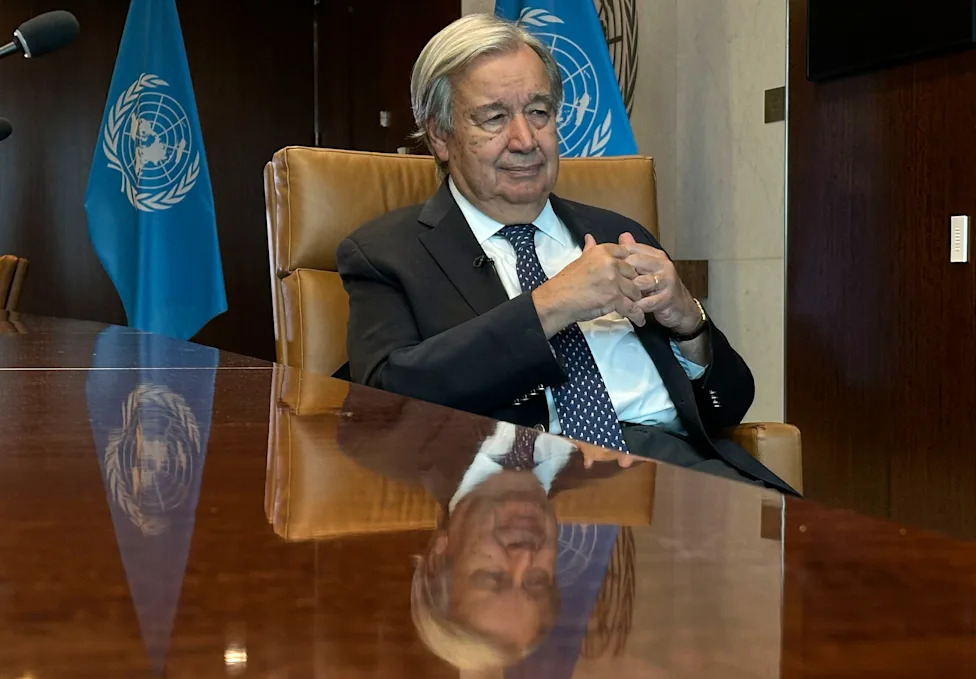
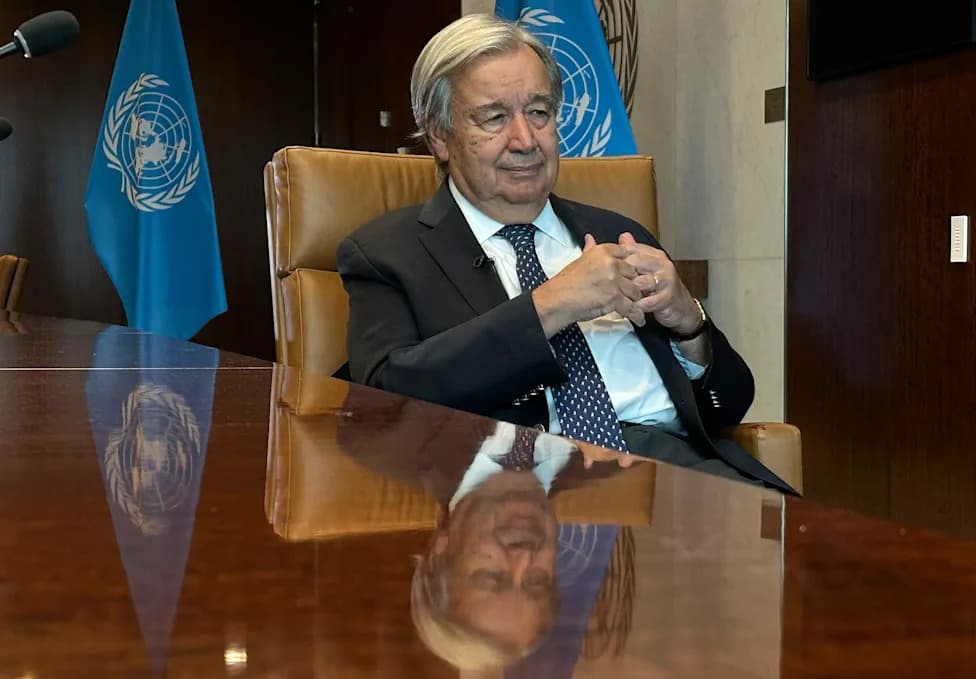
The United Nations Secretary-General Antonio Guterres speaks during an interview with The Associated Press at the United Nations headquarters, Thursday, Sept. 17, 2026. (AP Photo/David R Martin)(AP Photo/David R Martin)
Artificial Intelligence
Addressing artificial intelligence, he said the risk is not the technology itself but “technology without accountability,” noting that even developers are raising alarms. He urged rival AI powers to cooperate — as Cold War adversaries later did — to manage shared existential risks. “Let us resolve that life-and-death decisions must never be surrendered to machines,” he said. “Killer robots must have no place in our future.”
Inequality
Guterres characterized inequality as a form of concentrated power: “Never has humanity possessed so much wealth, knowledge and technological capability. Yet for billions, progress remains out of reach.” He warned that billions still lack food, clean water, education, decent work, health care and dignity, and that many U.N. goals to end poverty and promote development are unlikely to be met by 2030.
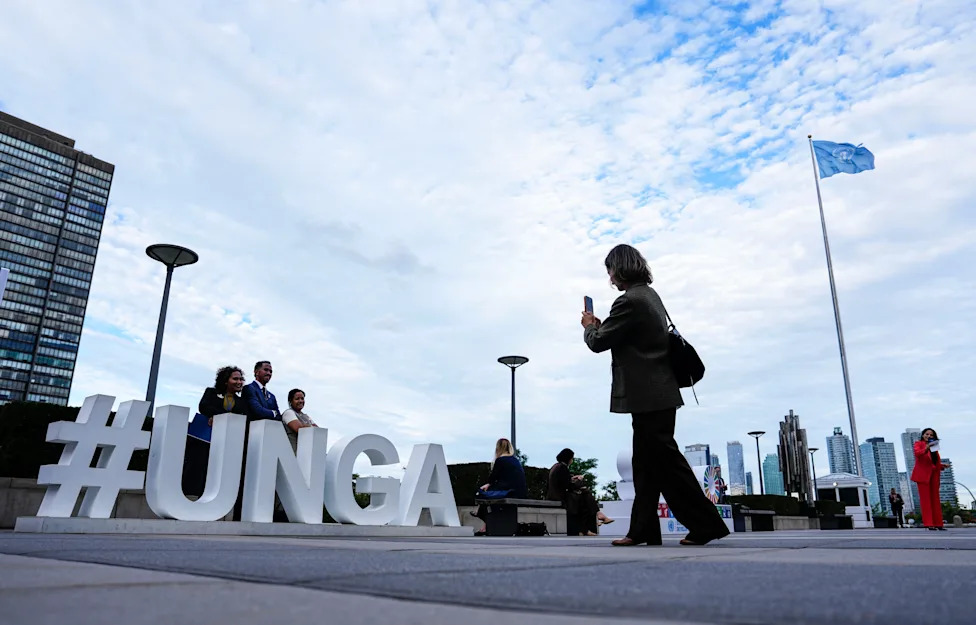
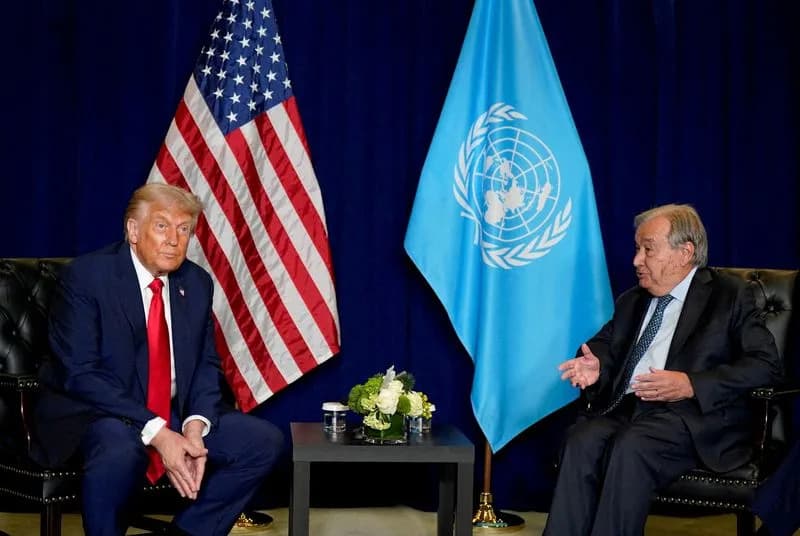
People pose as they arrive for the United Nations General Assembly (UNGA) at the UN headquarters, Monday, Sept. 21, 2026. (Justin Tang/The Canadian Press via AP)(Justin Tang/The Canadian Press via AP)
Reform, Law and Leadership
Guterres said the United Nations Charter remains the backbone for the legitimate and responsible exercise of power—anchored in international law, human dignity and the pursuit of justice. At the same time, he pressed the 193 member states to implement a broad reform package so the 81-year-old U.N. can better reflect today’s geopolitical realities.
He also noted that his second five-year term ends on Dec. 31 and that the United Nations faces an uncertain leadership transition: after three Security Council straw polls among eight contenders, no clear successor has emerged.
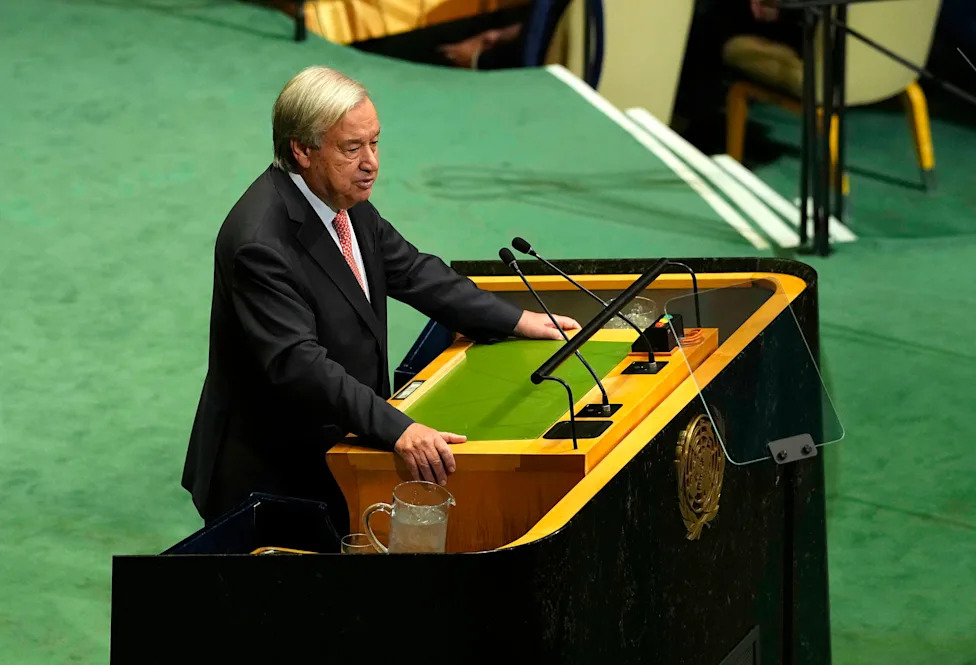
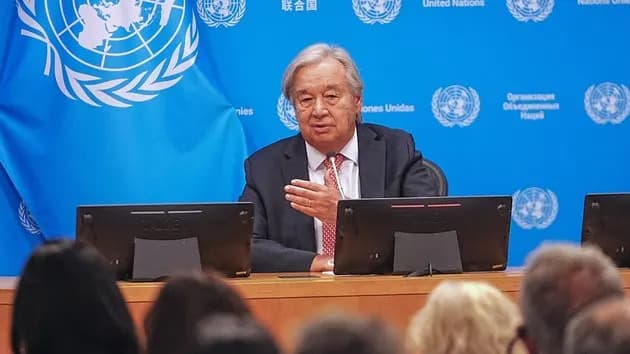
Secretary-General of the United Nations António Guterres speaks at the United Nations General Assembly (UNGA) at the UN headquarters on Tuesday, Sept. 22, 2026. (Justin Tang/The Canadian Press via AP)(Justin Tang/The Canadian Press via AP)
“Never, ever give up,” Guterres said with rising emotion. “Wherever I will be, whatever I will be doing, I will keep championing the conviction that peace is possible.”
He left the rostrum to a sustained standing ovation, placing his hand over his heart.
Byline: David Rising Lederer has covered international affairs for The Associated Press for more than a half century. Jennifer Peltz contributed to this report.
Help us improve.