First Lady Melania Trump unveiled the Fostering The Future Together initiative to expand children's access to AI, EdTech and digital-skills training, announcing corporate commitments from Google, Amazon, Adobe, Intel, N50, Starlink and Zoom across some 57 countries. While supporters highlight opportunity and workforce readiness, researchers at MIT and Carnegie Mellon and many instructors warn that overreliance on AI assistants can erode critical thinking, memory and mastery. Educators are responding with more in-class, handwritten and oral assessments; policymakers face the task of balancing digital access with preserving core learning outcomes.
Melania Trump’s Push to Bring AI Into Classrooms Sparks Debate Over Learning Loss
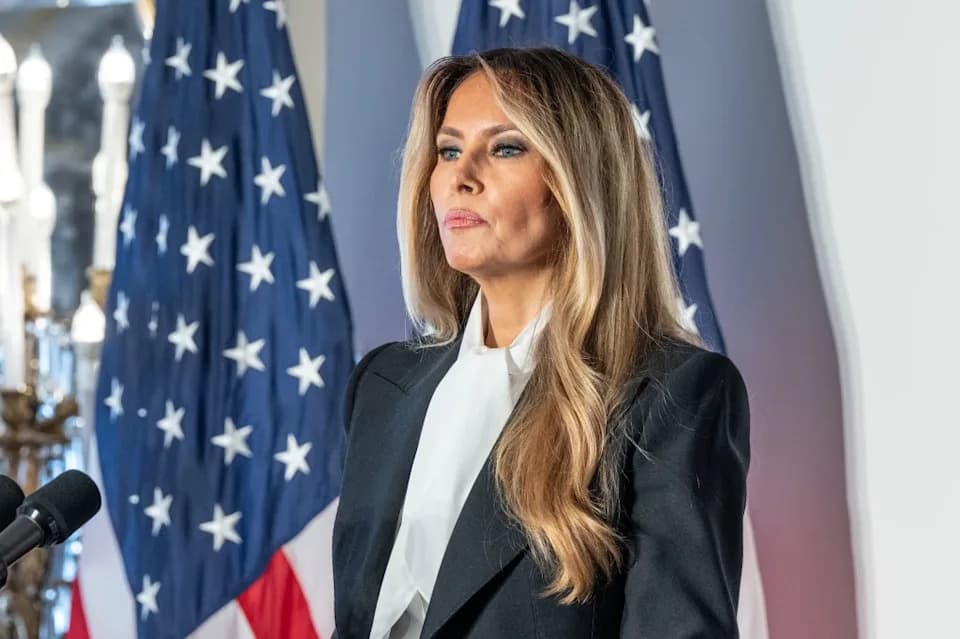
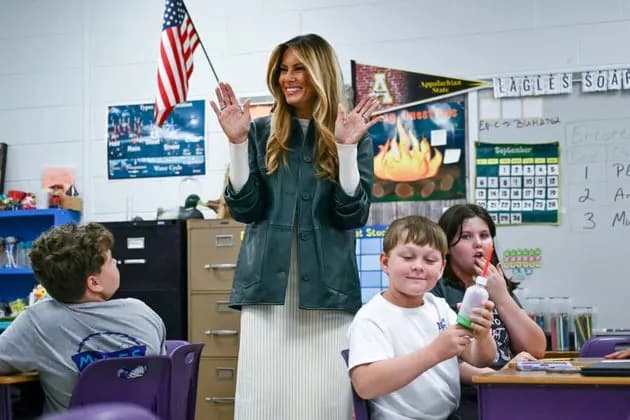
First lady of the United States Melania Trump speaks during press event on 'Fostering the Future Together with New Private Sector Partnerships and 2026 International Events' at The St. Regis in New York, NY on September 22, 2026. (Photo by Lev Radin/Sipa USA via AP Images)
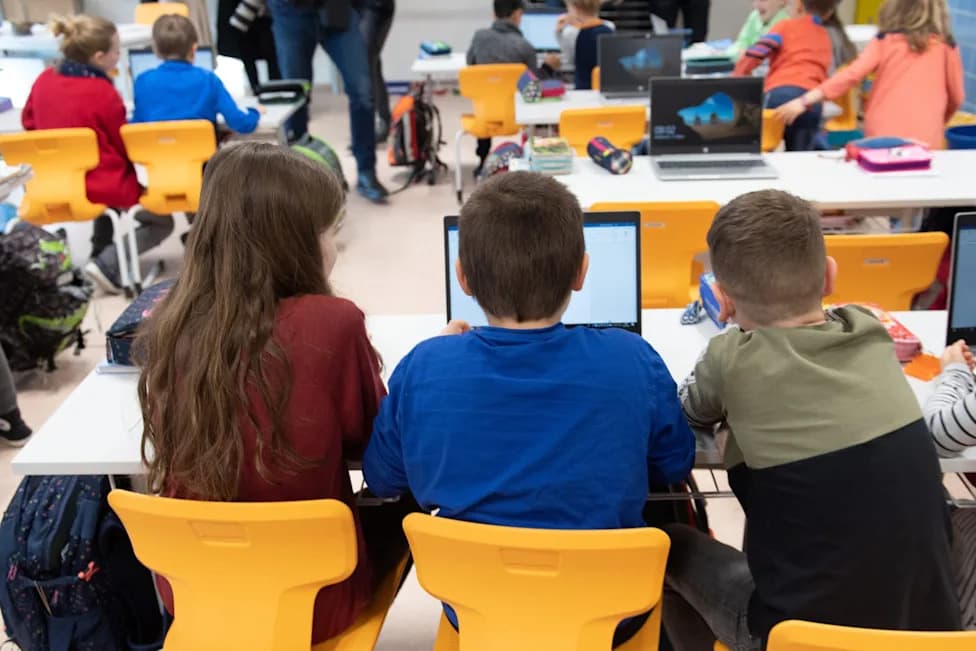
First Lady Melania Trump is promoting a global effort to expand children’s access to artificial intelligence and educational technology — a move that has prompted both praise for opportunity and concern from educators worried about learning loss.
Fostering The Future Together
Speaking on the sidelines of the United Nations General Assembly, Melania outlined her Fostering the Future Together initiative, which aims to unite governments and major technology firms to broaden access to devices, digital skills and EdTech. 'We are living in an extraordinary moment in human history,' she said, 'We stand together at the threshold of a technological revolution. Access alone is not empowerment. We must give our children the tools and teach them how to use those tools wisely.'
Corporate Commitments
The program focuses on four priorities: integrating AI into education, expanding EdTech tools, strengthening online protections and improving digital skills training. According to the State Department, partnerships span at least 57 countries. Companies announced include Google, Amazon, Adobe, Intel, N50, Starlink and Zoom.
Key commitments highlighted at the announcement include:
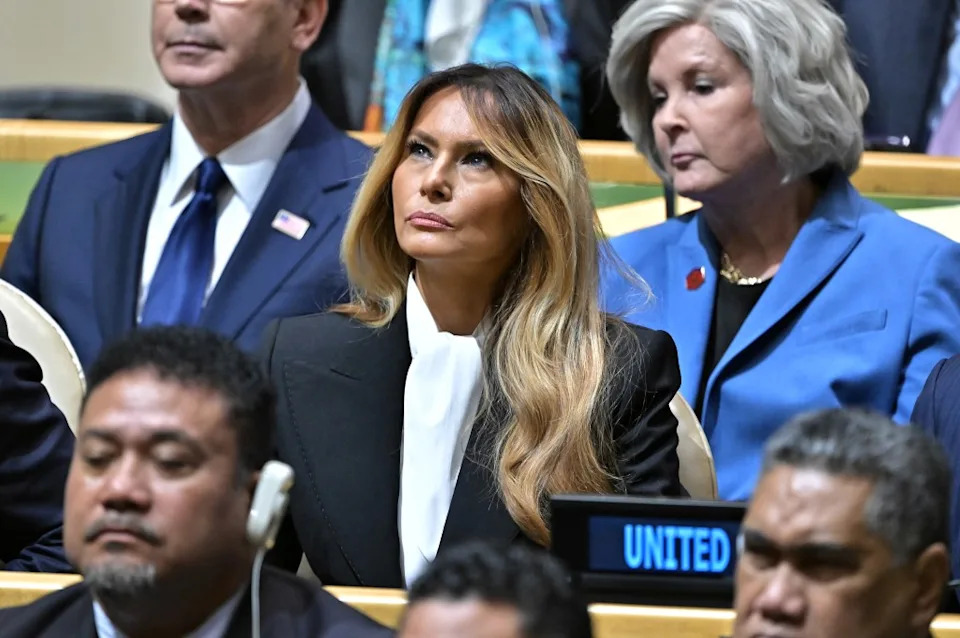
First Lady Melania Trump watches U.S. President Donald Trump deliver remarks at the 81st United Nations General Assembly (UNGA81), United Nations Headquarters, NY, September 22, 2026. (Photo by Anthony Behar/Sipa USA)(Sipa via AP Images)
- Google: $4 million to expand its AI Educator Series and free teacher training.
- Amazon: Expanded free access to its Kiro AI software-engineering agent across 132 universities.
- Adobe: Expanded free AI-powered study and creation tools for students.
- Intel: Expanded AI education and digital literacy programs across 10 countries.
- N50: An AI education-device pilot in Uganda serving more than 10,000 students and about 200 teachers.
- Starlink: Working with Papua New Guinea to expand internet access.
- Zoom: $2.75 million in new grants for education, workforce development and nonprofit AI readiness.
Research And Classroom Concerns
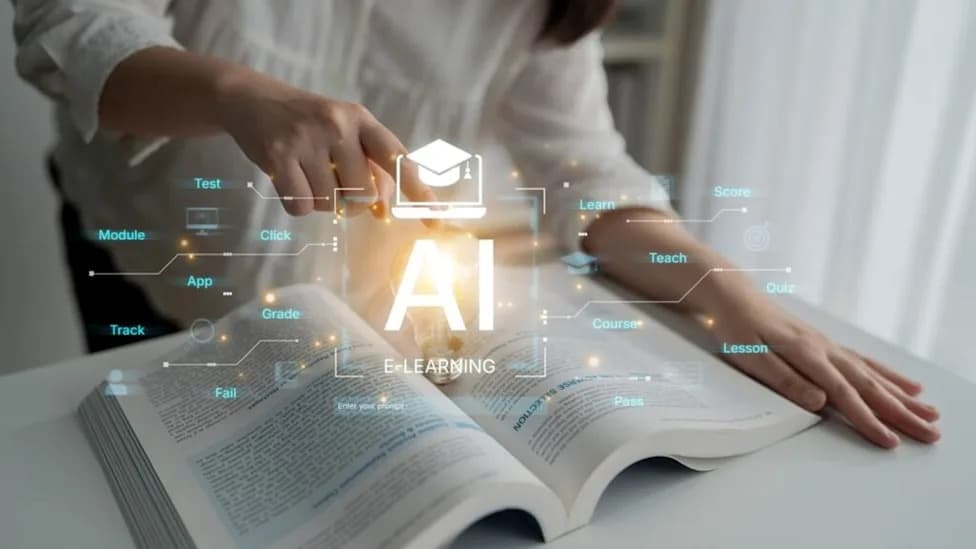
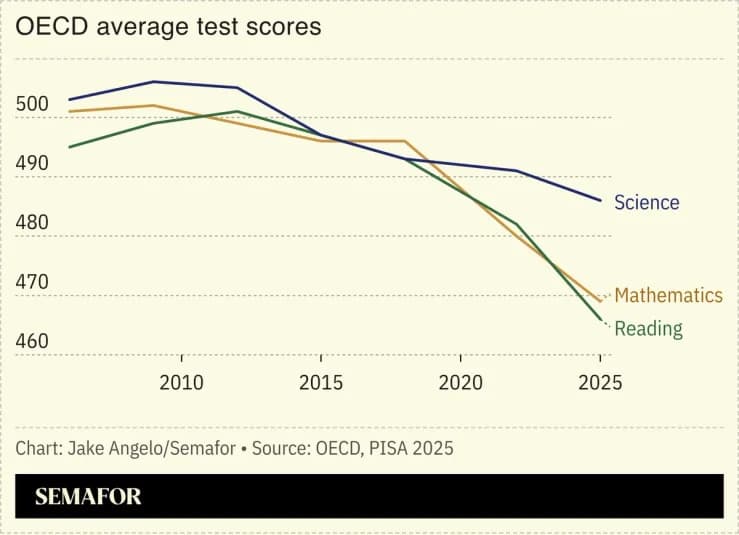
At the same time, researchers and classroom instructors are raising early warnings about heavy reliance on AI assistants. MIT researcher Eric Klopfer described an "illusion of learning," and an MIT committee cited early evidence that overreliance on chatbot tools may be linked to diminished critical thinking, weaker memory, eroded confidence and undermined mastery.
A Carnegie Mellon study found that people who used AI for problem solving later performed worse and gave up more quickly when the assistance was removed. Another academic paper reported changes in brain connectivity among students who used large language models for essay writing compared with peers who wrote without AI support.
Teachers report students submitting polished AI-generated essays and code that pass automated tests but cannot explain the ideas or logic behind their work. In response, some educators have reintroduced handwritten assignments, in-class essays, oral exams and removed some take-home work to preserve assessment integrity.
Policy Context
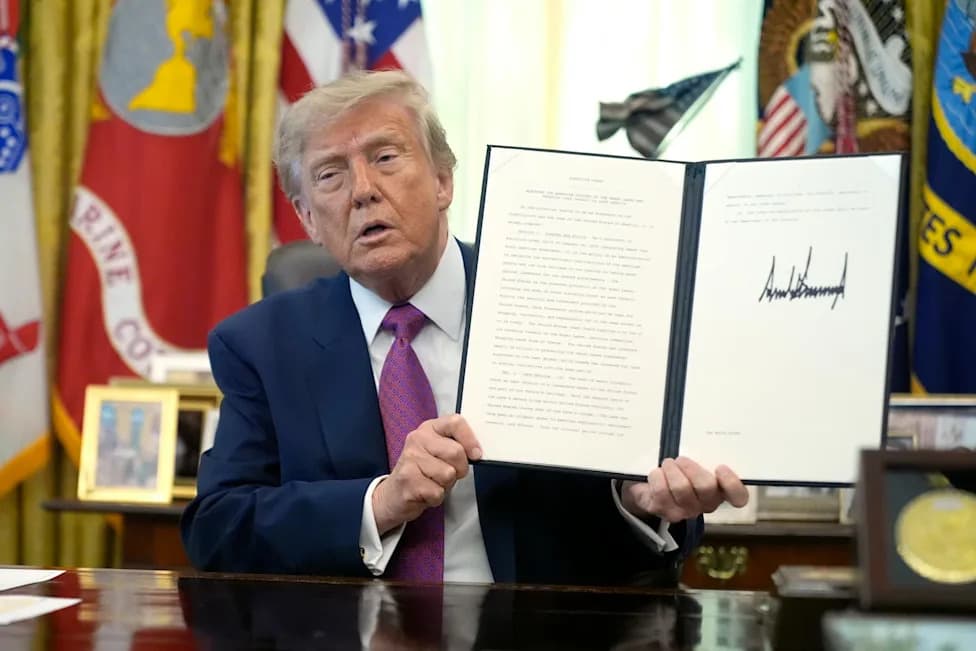
The White House has made accelerating AI development a national priority, emphasizing competition with China and resisting broad restrictions that could slow innovation. President Trump has proposed new structures, including an 'AI Force' modeled on the Space Force and a senior AI official to coordinate policy. The Justice Department says it is monitoring AI and coordinating with agencies, including the Department of Defense, though officials declined to provide detailed examples.
Balancing Opportunity And Risk
Melania framed the initiative as preparing young people for an increasingly digital economy: 'True empowerment begins by giving a child the confidence to believe that their mind has value,' she said. The central challenge for educators and policymakers will be how to equip students with AI-enabled tools and digital skills while ensuring that those tools do not supplant core learning, critical thinking and mastery.
Note: This article summarizes public announcements and early academic findings. Research on long-term effects of classroom AI use is still developing.
Help us improve.