The Cherokee Nation proposes the Artist Resiliency Act to convert pandemic-era recovery support into permanent funding for tribal artists. The 2022 Artist Recovery Act invested $4 million, resulting in 3,800+ hours of instruction and more than 600 works acquired from 100+ artists. The new bill would create recurring $3 million three-year funding cycles (adjusted for inflation), add accountability measures, establish an official artist designation and fund public monuments honoring Cherokee leaders.
Cherokee Nation's Artist Resiliency Act Seeks Permanent Support for Tribal Artists
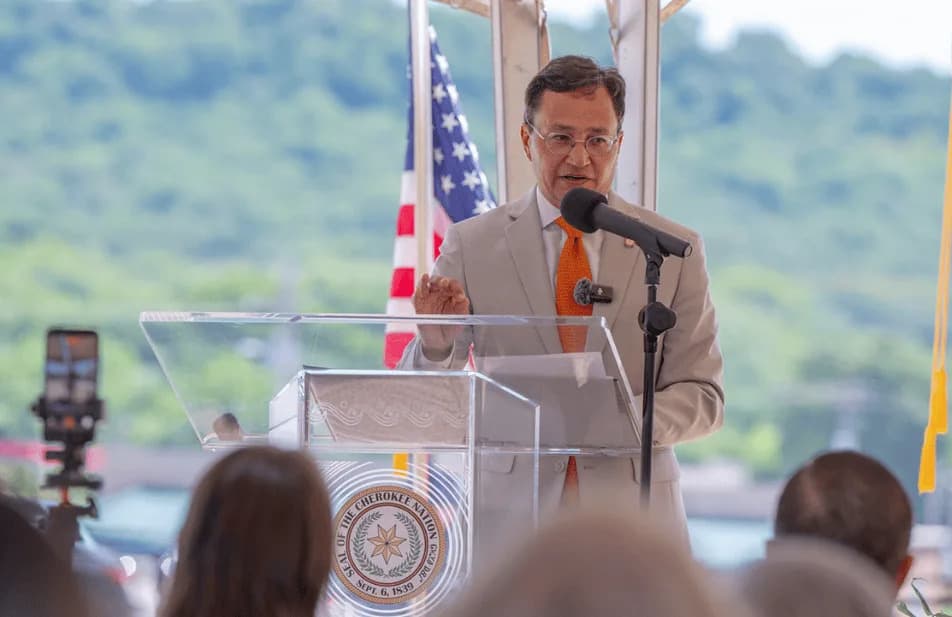
Cherokee Nation Principal Chief Chuck Hoskin, Jr. speaming at the dedication of Ani Art Center. (Photo/Cherokee Nation)
If you visit the Ani Art Center in Stilwell, our tribal headquarters in Tahlequah, or any Cherokee Nation health center across the reservation in northeast Oklahoma, you will encounter the inspiring work of contemporary Cherokee artists. Their work is at the heart of a cultural renaissance—proof that Cherokee traditions are alive, evolving and shaping our future.
Background
In 2022, the Hoskin–Warner administration and the Council of the Cherokee Nation established the historic Artist Recovery Act to respond to pandemic-era financial hardship. Cherokee artists suffered from canceled shows, closed markets and lost income, and the tribe stepped in to help.
Results So Far
Through the Artist Recovery Act, Cherokee Nation invested $4 million to fund art instruction, purchase Cherokee artwork, expand access to commercial markets and competitions, and support capital projects such as the Ani Art Center. The initiative supported more than 3,800 hours of art instruction and acquired over 600 works from more than 100 Cherokee artists. These acquisitions will remain in the tribe's permanent collections and be displayed in public spaces for future generations.
What the Artist Resiliency Act Would Do
Deputy Chief Bryan Warner and Principal Chief Chuck Hoskin Jr. have proposed the Artist Resiliency Act to make this support permanent. Key features include:
- Recurring $3 million funding cycles every three years, with adjustments for inflation in future cycles.
- Continued investment in art instruction, acquisitions and economic opportunities for citizen artists.
- Enhanced planning, accountability and public reporting to ensure transparent use of funds.
- Creation of an official Cherokee Nation Artist designation and an identification card for artists who wish to be recognized.
- Administration of the program by Cherokee Nation Businesses' Cultural Tourism team to connect artists with markets and cultural tourism opportunities.
- Authorization for new public statues honoring Chief John Ross and Sequoyah in Tahlequah, joining monuments that honor former Principal Chief Wilma Mankiller and commemorate Cherokee Freedmen.
Why It Matters
Cherokee artists are not only preserving tradition; they are actively defining the Nation's cultural identity and economic future. The Artist Resiliency Act aims to protect that momentum by turning a pandemic-era recovery program into a sustained, accountable investment in creativity, heritage and community well-being.
"Supporting creativity and artistry is not a temporary response; it is a long-term investment in our culture and the strength of this Nation for generations to come." — Chuck Hoskin Jr., Principal Chief of the Cherokee Nation
Help us improve.