Record summer wildfires in Washington and Oregon destroyed homes, timber and cultural heirlooms on tribal lands, with roughly 200,000 acres burned on the Colville Reservation and about 900,000 acres statewide by mid-September. Smoke exposure and evacuation stress have produced acute respiratory and perinatal health concerns, and long-term behavioral health needs are expected. Tribes warn that funding shortfalls, regulatory hurdles to prescribed burns and climate-driven longer fire seasons complicate prevention and recovery efforts.
Wildfires Ravage Tribal Lands in Washington and Oregon — Health, Cultural and Economic Toll Mounts
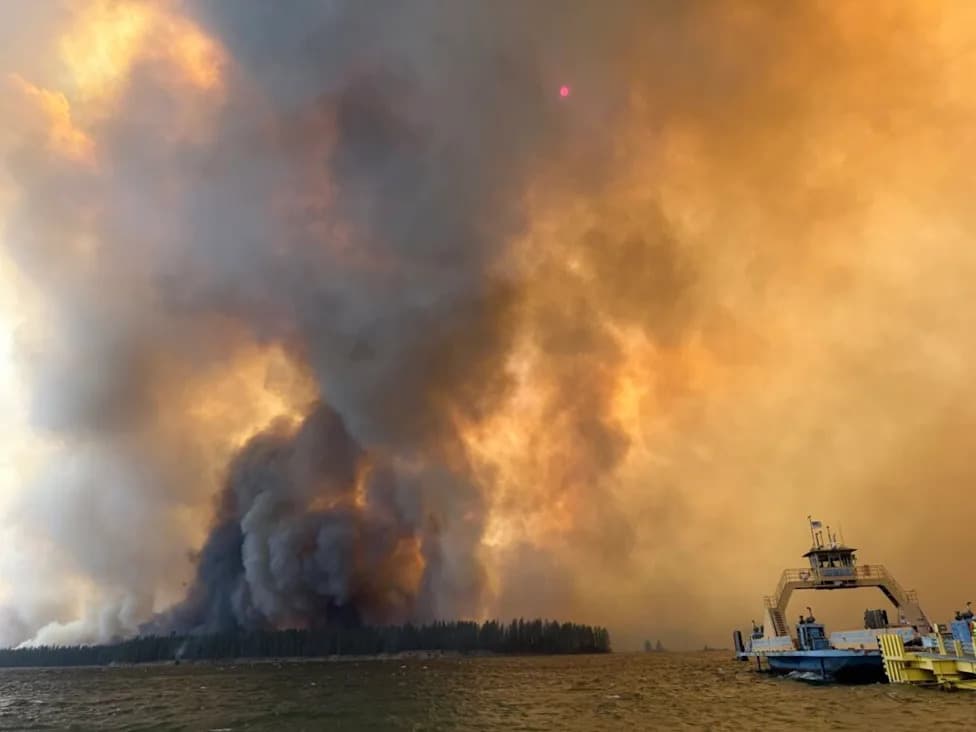
The Columbia Princess Ferry stays on the Gifford side of the Columbia River as the Modrite Fire exhibits extreme fire behavior just south of Inchelium, Washington. Fires in the state hit tribes particularly hard this year. (Photo courtesy of Colville Tribal Broadcasts, News and Information)
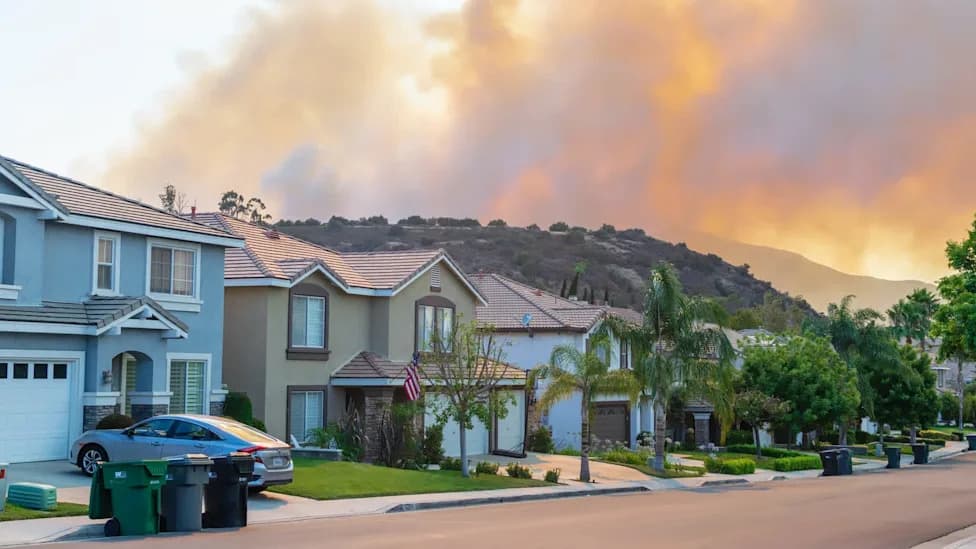
Record-setting wildfires this summer devastated tribal communities across Washington and Oregon, destroying homes, scorching timber and cultural resources, threatening traditional food systems and creating new and ongoing health risks.
Devastation on Tribal Lands
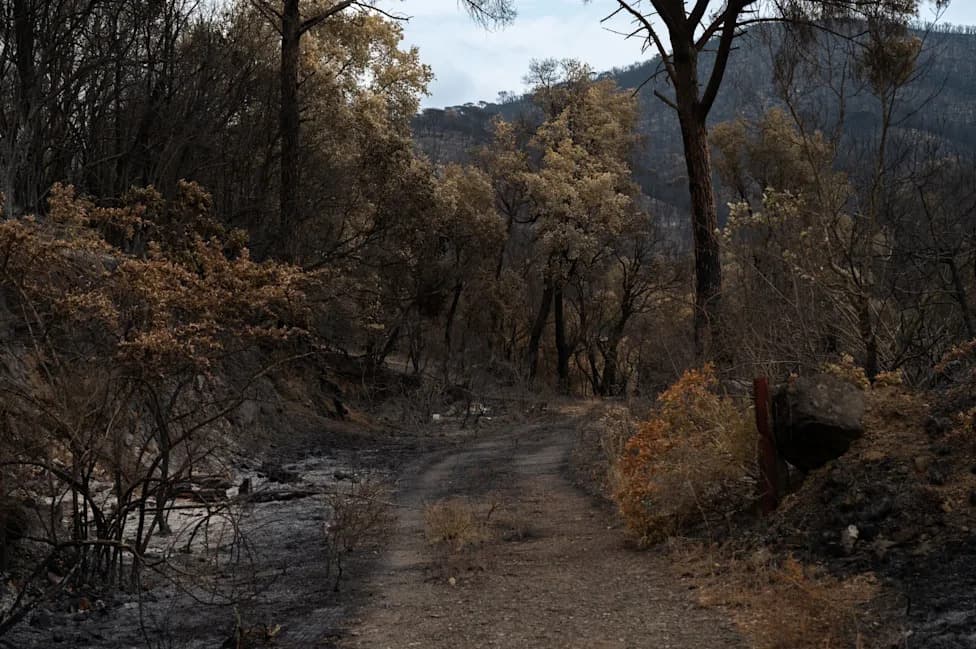
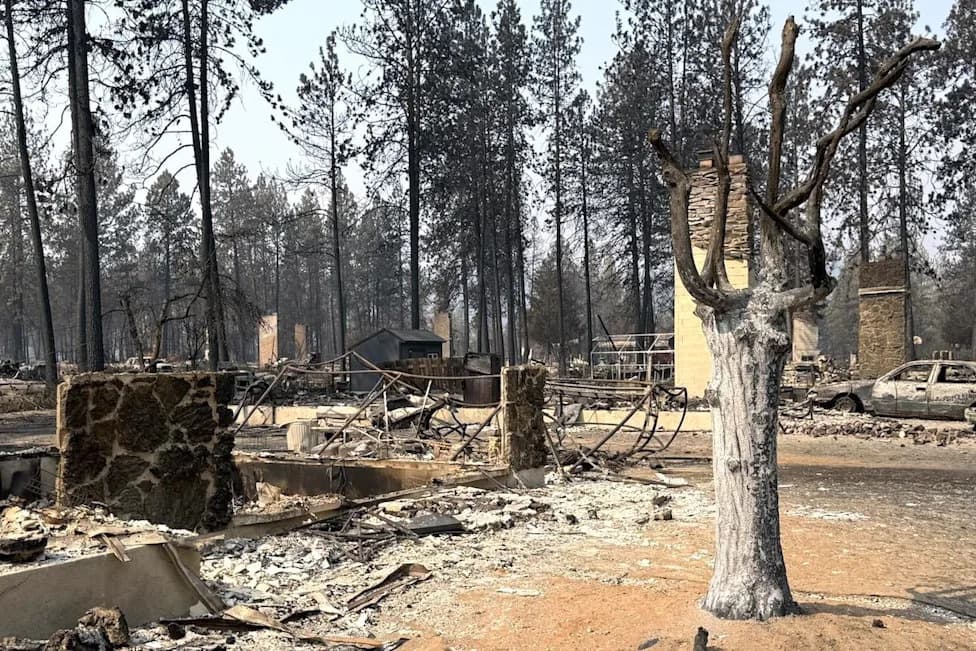
On the Colville Reservation, a lightning strike in mid-July ignited the Kaiser Canyon Fire, which destroyed the brightly painted log home of Matilda Bob — known locally as the "rainbow house" — along with 42 other residences and roughly 100 outbuildings. Since July, about 200,000 acres burned on the Colville Reservation alone: the Kaiser Canyon Fire scorched more than 138,000 acres and the Modrite Fire burned over 57,000 acres. By mid-September, roughly 900,000 acres had burned across Washington, the worst total since 2015.
Health Impacts and Community Strain
Tribal leaders and health providers describe immediate health problems from smoke exposure and evacuation stress and warn of long-term behavioral health needs. Wildfire smoke worsens respiratory illnesses such as asthma and chronic obstructive pulmonary disease (COPD), which are already more prevalent in American Indian and Alaska Native populations. Faith Zacherle-Tonasket, founder of xa?xa? Indigenous Birth Justice, reported that three perinatal clients went into early labor during this year's fires; her team suspects evacuation stress played a role, and emerging research links wildfire smoke to adverse pregnancy outcomes.
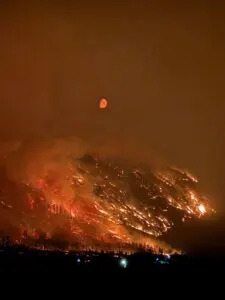
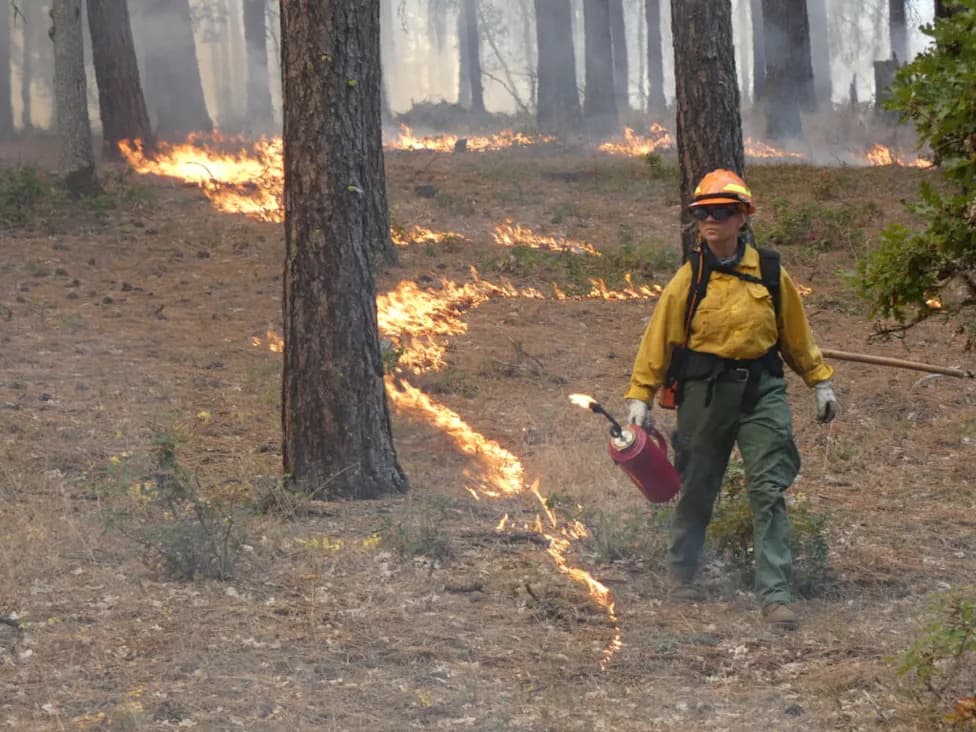
Nighttime view of the Kaiser Canyon Fire during firing operations on Whitmore Mountain. (Photo courtesy of Colville Tribal Broadcasts, News and Information)
Power outages left families without refrigeration for hunted or gathered foods, and some elders and low-income residents lost perishable subsistence harvests. Tribal health leaders also warn that volunteers cleaning ash and debris may face exposure to hazardous materials, heavy metals or asbestos.
Economic, Cultural and Environmental Losses
Fires burned timber that many tribes rely on for income and damaged traditional food plants such as huckleberries, bitterroot and camas used in ceremony and subsistence. Cultural heirlooms — including beadwork, a century-old berry basket and powwow regalia — were lost in some homes. In Oregon, more than 60,000 acres burned on the Confederated Tribes of Warm Springs reservation and the Wrights Spring Fire consumed about 55,000 acres across Klamath County, national forest and tribal lands.
Tribes working to restore salmon runs after dam removals are particularly concerned. The Klamath Tribes had recorded early signs of salmon recovery following removal of four dams; high-severity fires raise the risk of sedimentation into streams, which could undermine spawning habitat and reverse recent gains.
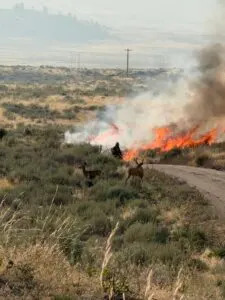
Deer stand near firing operations on the western perimeter of the Kaiser Canyon Fire, near Omak Lake Road and Coyote Creek Road area on July 25, 2026. (Photo courtesy of Colville Tribal Broadcasts, News and Information)
Barriers to Prevention and Recovery
Tribal leaders and fire experts emphasize that climate-driven warmer, drier conditions have lengthened fire seasons and increased wildfire intensity. They also point to regulatory barriers that limit prescribed burns and the use of traditional Indigenous burning practices. Funding shortfalls compound the problem: the Indian Forest Management Assessment Team found that Indian trust forest lands receive roughly one-third of the per-acre funding allotted to comparable federal forests.
Community Response and Needs
Local organizations and neighbors have mobilized to deliver medications, secure shelter for elders and coordinate donations. Nonprofits such as the River Warrior Society have helped arrange shelter placements and food assistance; leaders say air purifiers and additional support for respiratory and behavioral health services are urgent needs. Many residents lack homeowners insurance or cannot afford fire-resistant construction materials, leaving recovery slower and more precarious for low-income and elder households.
Voices From the Ground
"I couldn't believe that it had happened. It went so fast,"
— Matilda Bob, whose home was destroyed.
"We must look at cumulative effects and invest in climate and wildfire mitigation strategies that include Indigenous knowledge,"
— Melinda Adams, University of Kansas assistant professor and cultural fire practitioner.
Despite losses, tribal communities emphasize resilience and cultural continuity: families continue ceremonies and mutual support as they rebuild on ancestral lands.
Help us improve.