Researchers cultured stem-cell–derived brain organoids for nearly six years and used genetic, imaging and electrophysiological methods—including DNA-based epigenetic clocks—to show these tissues mature in ways comparable to developing human brains. Organoids produced astrocytes and oligodendrocytes, retained sizable neuronal populations, and required sustained neural activity plus a CNS-like medium for improved survival. When dissociated and reassembled into "chimeroids," cells preserved a molecular memory of their prior developmental age, implying a cell-intrinsic timing mechanism. The work creates a platform to experimentally probe postnatal human brain maturation.
Scientists Grow Miniature Brain Organoids That 'Sense' and Remember Developmental Time
Various sections of a brain-like organoid. (Irene Faravelli and Noelia Antón Bolaños)
Researchers have cultivated stem-cell–derived brain organoids that survive and mature for nearly six years, and have shown these miniature tissues can record and recall how long they've been developing.
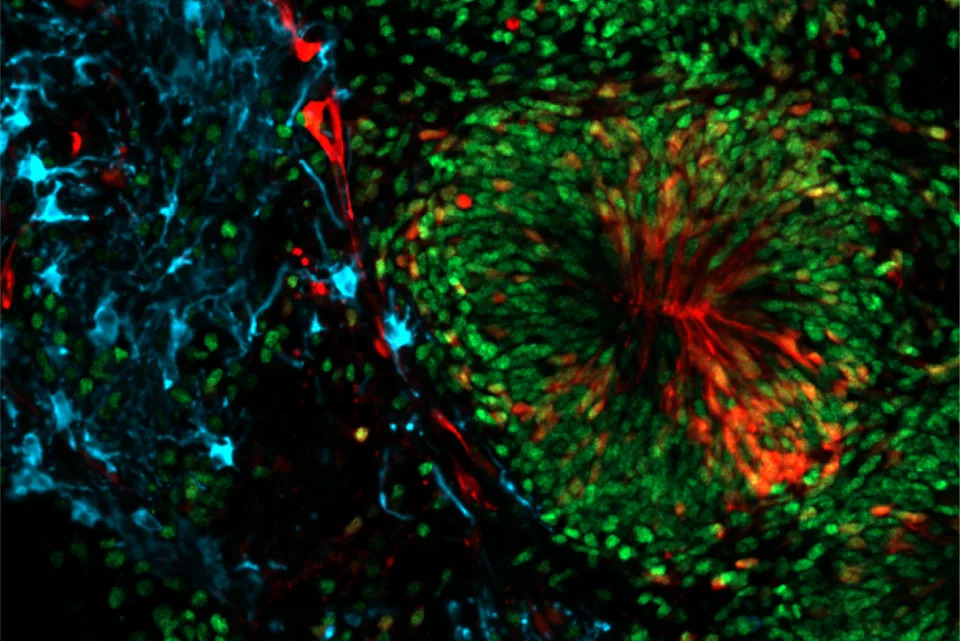
A close-up of anorganoidimmunolabelled for different cell type markers. (Irene Faravelli and Noelia Antón-Bolaños)
Long-lived brain models
Human brains contain roughly 86 billion neurons and trillions of synapses that produce coordinated waves of electrical and chemical activity. Because the brain develops inside the skull and takes decades to fully mature, many stages of human brain development are difficult to study directly. To address this, scientists have created lab-grown brain organoids—three-dimensional collections of neural cells derived from stem cells—as experimental models.
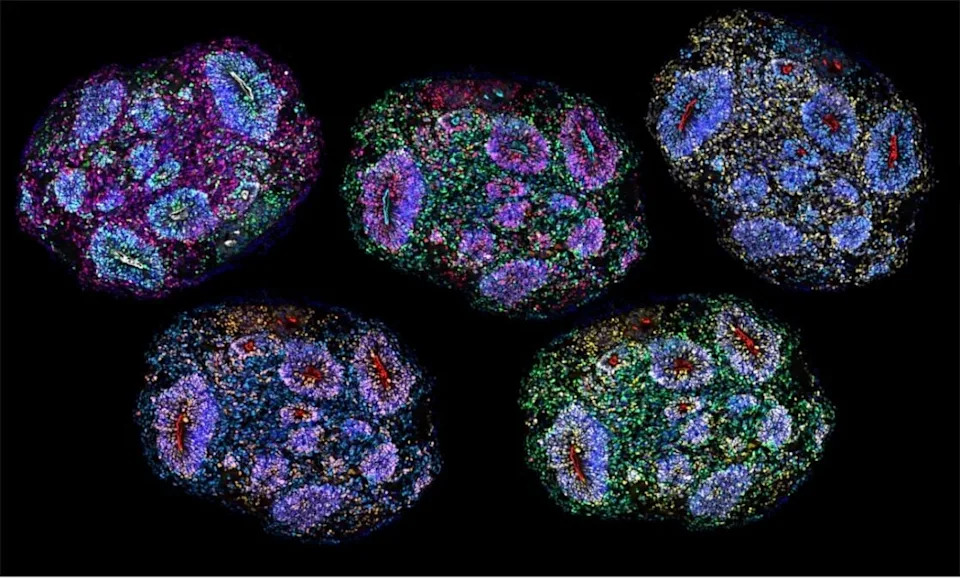
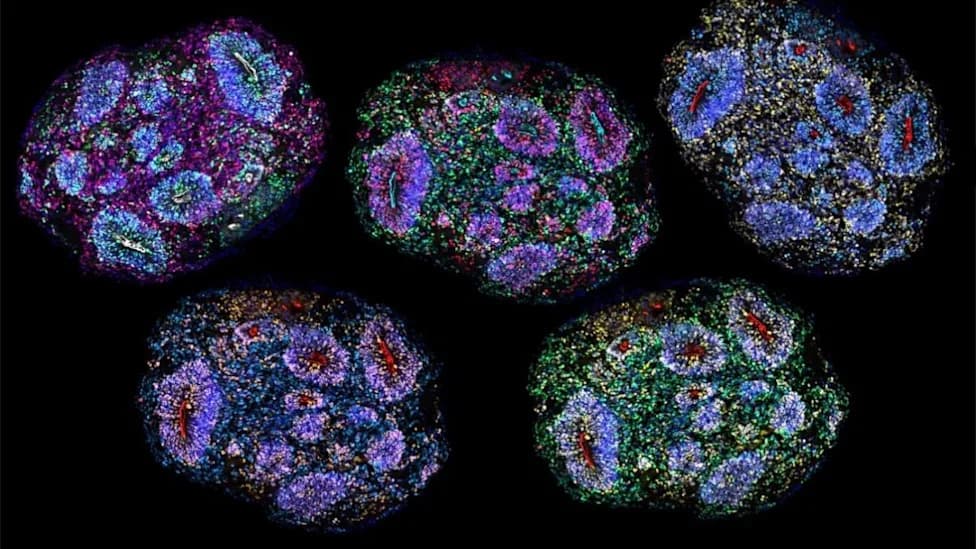
Various sections of an organoid, developed to simulate brain maturation processes. (Irene Faravelli and Noelia Antón Bolaños)
Unprecedented timescale and multimodal measurements
In a study published in Nature (2026), investigators cultured dozens of organoids for almost six years—far longer than the weeks or months typical of prior experiments. Using genetic profiling, imaging and electrophysiological recordings, the team tracked cellular maturation across these extended timelines. They also applied DNA-based epigenetic clocks to demonstrate that the organoids progressed through molecular stages similar to those seen in developing human brains in vivo.
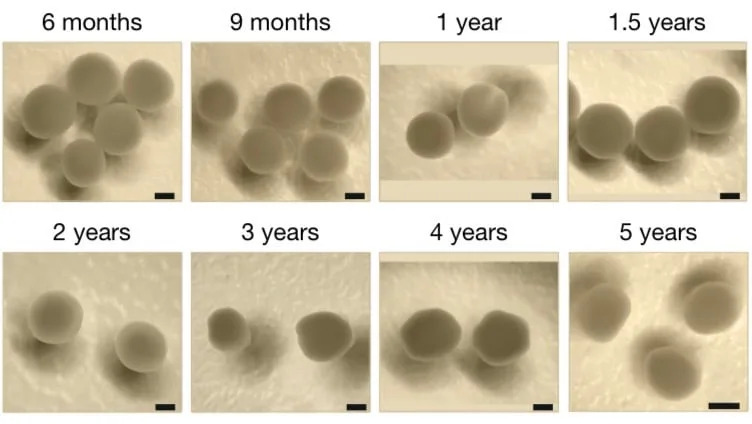
Organoid evolution across time. (Faravelli et al.,Nature, 2026)
Cell types, survival, and interventions
Most major brain cell classes continued to show molecular maturation over time, including star-shaped astrocytes, which support neural tissue and contribute to the blood–brain barrier, and oligodendrocytes, which form myelin sheaths around axons. The researchers observed a gradual decline in some fragile, electrically active neurons, but significant populations of neurons nonetheless persisted in culture for nearly six years.

Subscribe to ScienceAlert's free fact-checked newsletter
To improve neuronal survival, the team preserved spontaneous neural firing and used a specialized culture medium that better mimics the central nervous system environment. The authors likened ongoing neural activity to exercise for muscles—helping prevent functional decline.
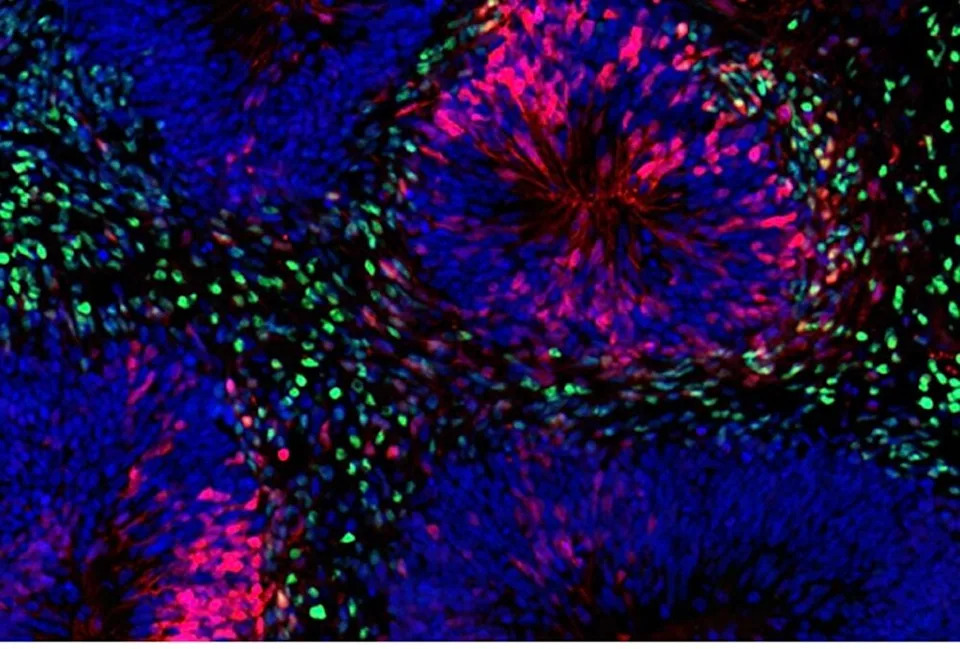
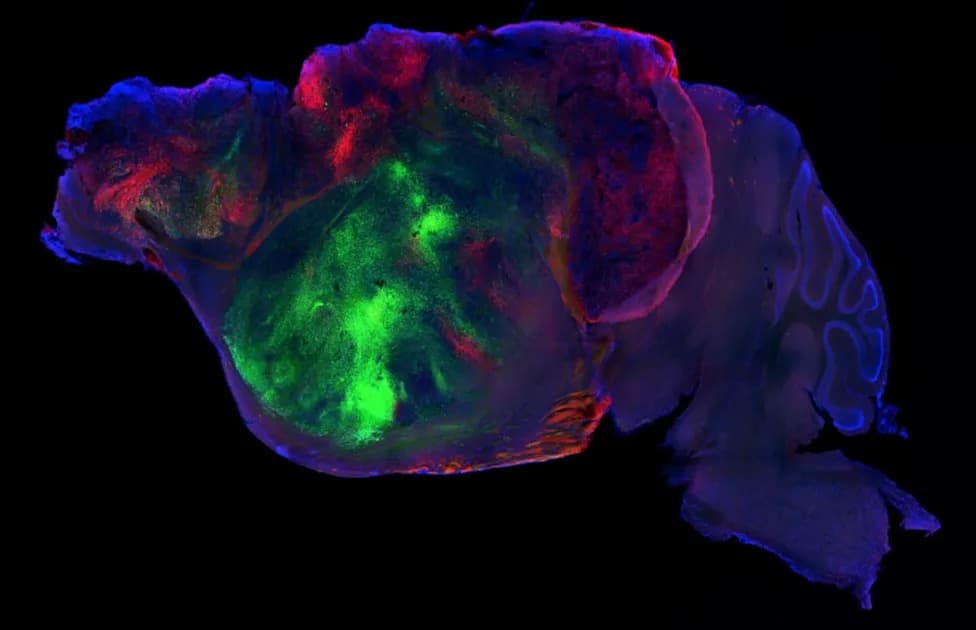
An image of an organoid made from younger and older cells. The younger cells, derived from an organoid 15 days after re-aggregation, are shown in red, deep-layer neurons in green, and nuclei in blue. (Faravelli et al.,Nature, 2026)
Cell-intrinsic timing and "chimeroids"
Perhaps the most striking result is evidence that brain cells carry a cell-intrinsic timing mechanism that paces development. To test this, researchers dissociated organoids of different ages into single cells and reassembled mixtures into "chimeroids"—reaggregated constructs containing cells of varying ages. These chimeroids retained molecular signatures of the component cells' prior developmental ages.
For example, chimeroids made primarily from older cells produced age-appropriate progeny such as astroglia within 15 days after reassembly, even though the reconstituted tissue itself had existed only briefly. When older and younger cells were combined, the chimeroids shifted somewhat toward younger states but still preserved evidence of their previous history—older progenitors effectively skipped steps they had already completed and generated later-stage cell types far earlier than naïve younger tissue would.
"Organoids cultured over extended timelines, together with the multimodal data they provide, represent a powerful experimental system and a source of information to probe the largely unexplored mechanisms governing human brain neoteny, maturation and evolution," the authors conclude.
Implications
By showing that organoids can be maintained and analyzed over multi-year timescales, the study opens an experimental window onto postnatal human brain–cell maturation that has been largely inaccessible. These long-lived organoids provide a platform to study molecular, structural and functional features of development and may help researchers investigate developmental disorders, neural aging, and evolutionary questions about human brain growth.
Image credits: Irene Faravelli and Noelia Antón-Bolaños (as cited in the original paper).
Help us improve.