OpenAI has been named the winner of Justin Sun’s $1 million prize for a claimed AI proof of the three‑dimensional Navier‑Stokes equations but has not claimed the award. OpenAI says a group of 10,000 AI agents worked 88 hours and GPT‑6 Astra verified the logic for 17 hours; two mathematicians allege the submission drew on their unpublished research, which OpenAI denies. Justin Sun’s bounty rewards machine‑checkable formalizations and credits the translator for preexisting results; the Navier‑Stokes entry is marked solved but the prize remains unclaimed.
OpenAI Named Winner Of Justin Sun’s $1M Navier‑Stokes Prize — But Won’t Claim It
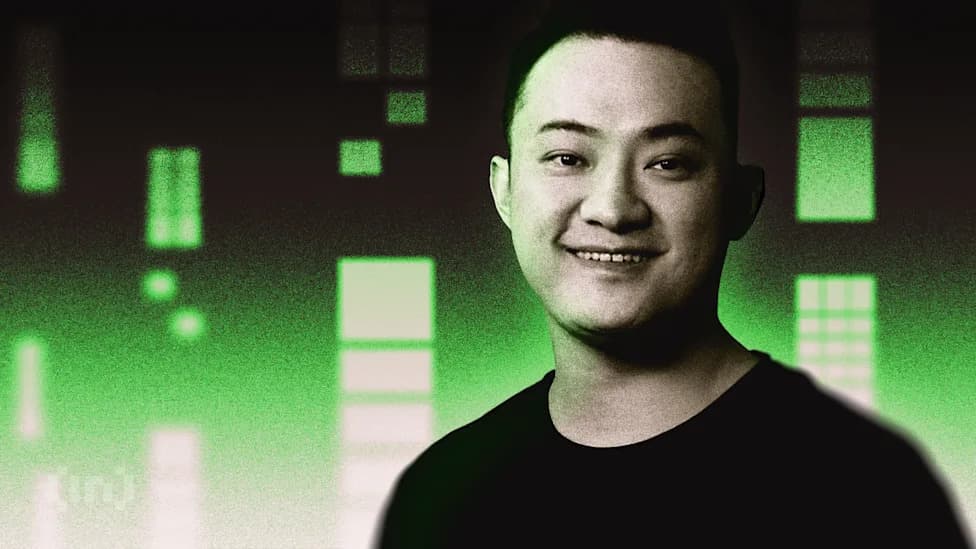
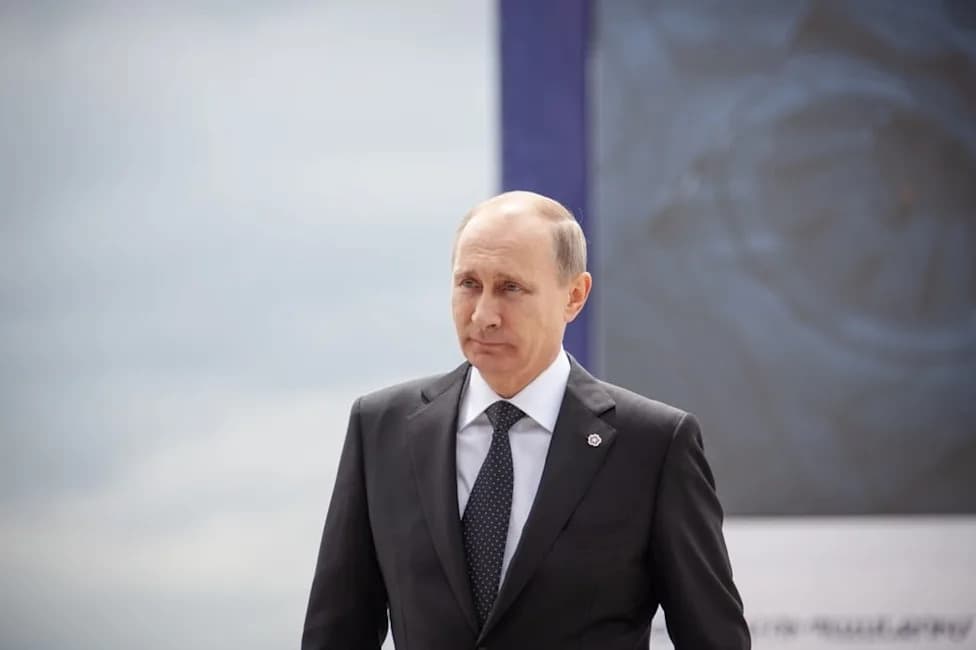
Justin Sun, TRON founder. Photo by BeInCrypto
OpenAI has been credited with a claimed AI proof of the three‑dimensional Navier‑Stokes equations and named the winner of Justin Sun’s inaugural $1 million prize — yet, as with an earlier $1 million offer from the Clay Mathematics Institute, the company has not claimed the funds.
The Navier‑Stokes problem is one of the most famous questions in fluid dynamics and is listed among the Clay Mathematics Institute’s Millennium Prize Problems. OpenAI published its account of a proposed solution on September 8, saying a swarm of roughly 10,000 AI agents worked on the problem for 88 hours and that a separate model, GPT‑6 Astra, then spent 17 hours checking the argument’s logical consistency.
Shortly after the announcement, two mathematicians alleged that OpenAI’s submission drew on their unpublished research, an allegation OpenAI has denied. The dispute intensified scrutiny of both the claimed proof and how AI systems use training data.
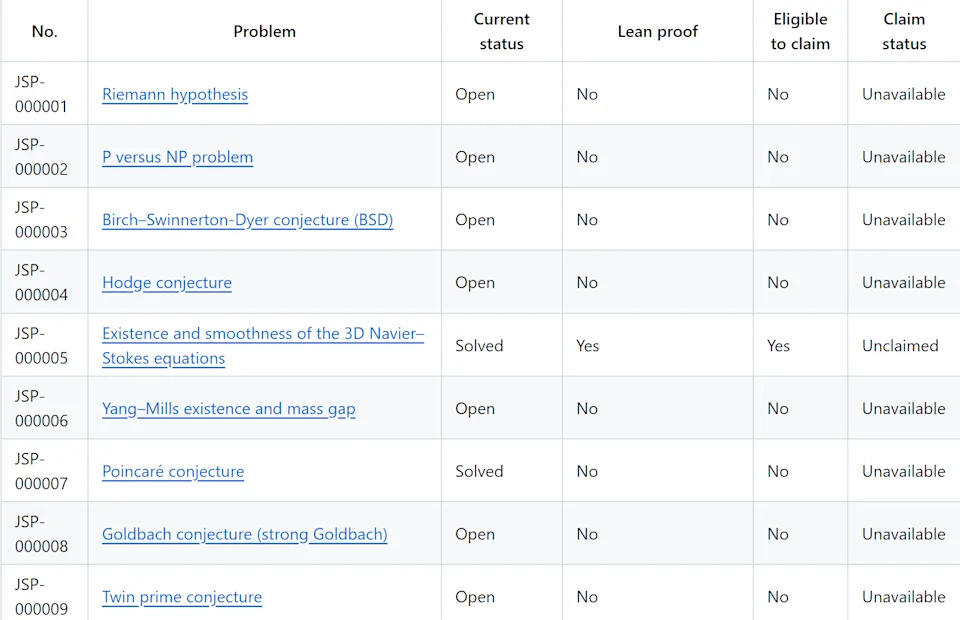
Justin Sin Problem Index. Source: GitHub
“I do not know what their model did, or how. I do not know whether our data was used. I am not accusing anyone of anything,” said Tristan Buckmaster, a professor at New York University, describing uncertainty about whether his team’s unpublished results contributed to the claimed proof.
Days after these questions surfaced, Justin Sun’s office unveiled the Justin Sun Prize, a bounty-style program that rewards machine‑checkable, formalized proofs rather than relying exclusively on traditional peer review. Under Sun’s rules, each prize can pay out twice: once to the person who proves a result and again to whoever formalizes the proof as machine‑verifiable code. If a result predates its listing on Sun’s index, the payout goes to the translator who converts it into a formal, machine-checkable proof.
The Navier‑Stokes entry is the fifth problem on Sun’s list. It is marked as "solved," credited to OpenAI’s research team, and eligible for payout — but the $1 million remains unclaimed. Sun’s listing also cautions that OpenAI’s announcement does not constitute peer review and that acceptance by the wider mathematics community has not been confirmed.
A public snapshot of the Justin Sun Problem Index is available on GitHub, where each entry displays its status, credits, and any warnings about community acceptance or verification.
Why This Matters
The episode highlights several broader issues at the intersection of AI and scientific research: attribution and the provenance of training data, the role of formal, machine‑verifiable proofs versus conventional peer review, and how prizes and incentives should adapt when machines participate in discovery. Whether the claimed proof will earn broad mathematical acceptance — and whether OpenAI or another party will claim the monetary award — remains unresolved.
Help us improve.