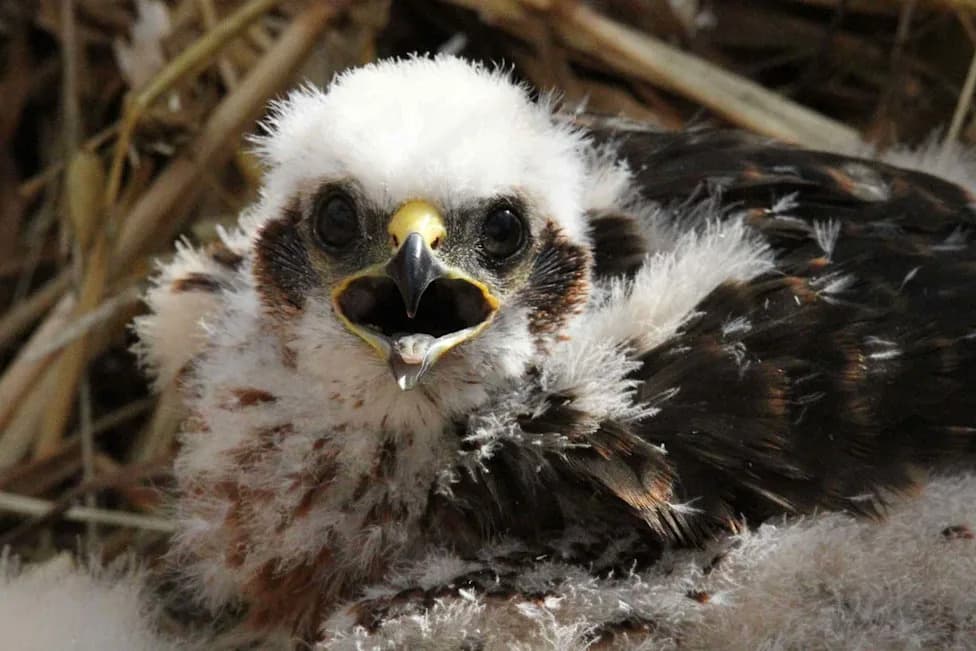
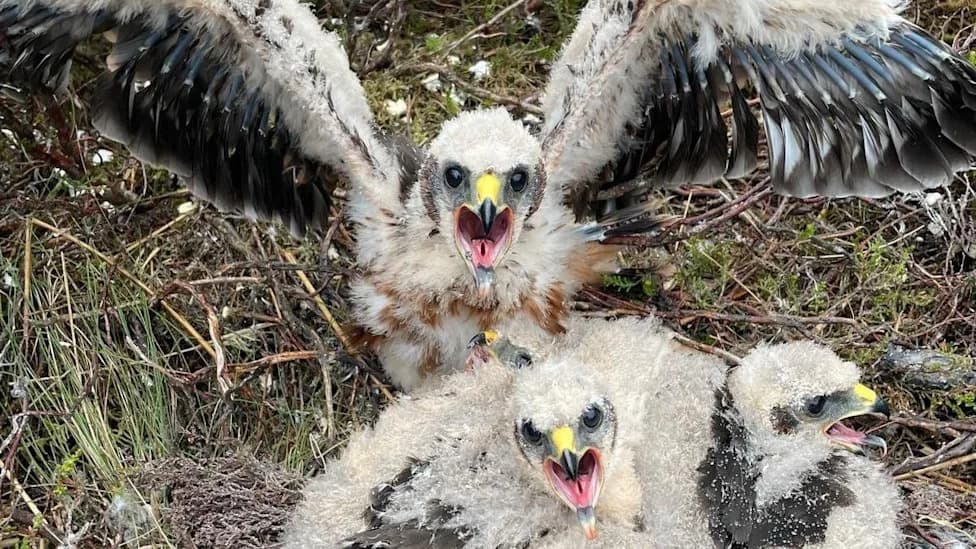
White‑tailed eagle chicks have fledged from wild nests in England for the fourth consecutive year, with one chick in Dorset and two in Sussex. The Forestry England and Roy Dennis Wildlife Foundation reintroduction has led to nine wild‑born birds since 2019 and 56 released juveniles overall. Conservationists called the results a significant milestone for a species driven to extinction in England by human persecution in the 18th century. Teams will continue close monitoring as the young eagles begin to range more widely.
White‑Tailed Eagle Chicks Fledge in England for Fourth Consecutive Year
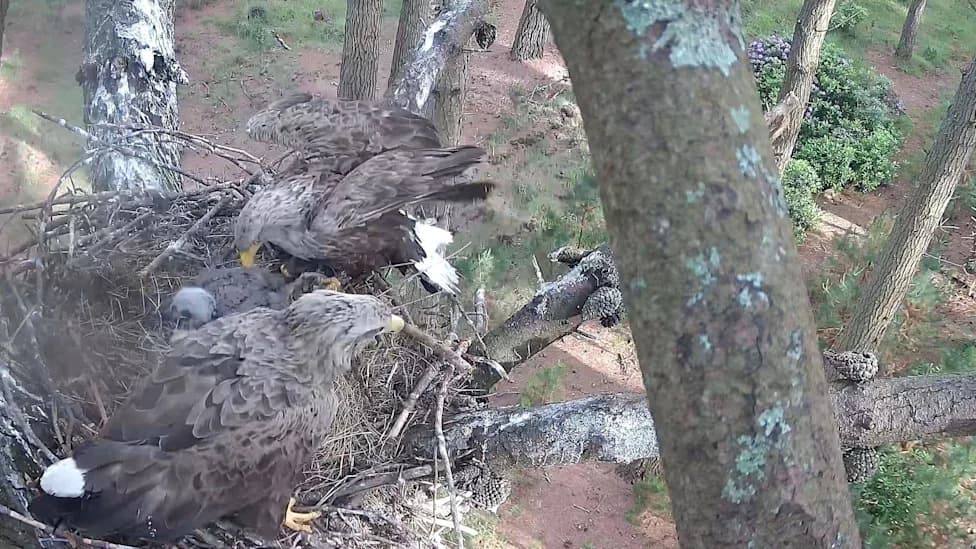
The reintroduction project began in 2019 and has since released 56 white-tailed eagles [Forestry England]
White‑tailed eagle chicks have fledged from wild nests in England for the fourth year running, marking another steady advance for the reintroduction programme.
Two of the five pairs released by the project bred successfully this season: one chick fledged from a nest in Dorset and two fledged in Sussex. The programme, led by Forestry England in partnership with the Roy Dennis Wildlife Foundation, has so far recorded nine wild‑born white‑tailed eagles since releases began in 2019 and has released a total of 56 juveniles into the wild.
“This year's breeding success is another important milestone in the return of this lost species to England; it shows what can be achieved by very skilled wildlife managers,”
said Roy Dennis OBE of the foundation. The foundation described the recent breeding attempts as “remarkable,” noting that one of the adult males involved in the project has been surviving on one leg after losing the other five years ago.
Why This Matters
White‑tailed eagles were driven to extinction in England by human persecution—the last known breeding pair in southern England was recorded in 1780. Restoring a top predator is a long‑term effort that depends on the support of landowners, farmers and local communities, as well as ongoing monitoring by conservation teams.
Monitoring and Next Steps
Steve Egerton‑Read, White‑Tailed Eagle Project Officer for Forestry England, said the team were “delighted” that all three chicks survived the vulnerable fledging period and that they will be closely monitored as they begin to explore wider landscapes. This year also saw, for the first time, an additional release of six birds at Exmoor National Park in partnership with the Exmoor National Park Authority.
The project will continue to track released and wild‑born birds, assess breeding success, and work with local stakeholders to reduce threats and support further natural recruitment.
Help us improve.