Storelectric's Teesside Compressed Air Energy Storage (TeesCAES) would use underground salt caverns at Seal Sands to store surplus renewable electricity as compressed air. The project has received a "minded to" approval from Ofgem's Long Duration Storage scheme, with a final decision expected in the autumn. Proponents say cavern storage could reduce renewable curtailment and provide long-lived, large-scale energy storage, and Storelectric is also exploring underground hydrogen storage at Wilton.
Teesside 'Underground Battery': Compressed-Air Energy Storage Planned in Salt Caverns
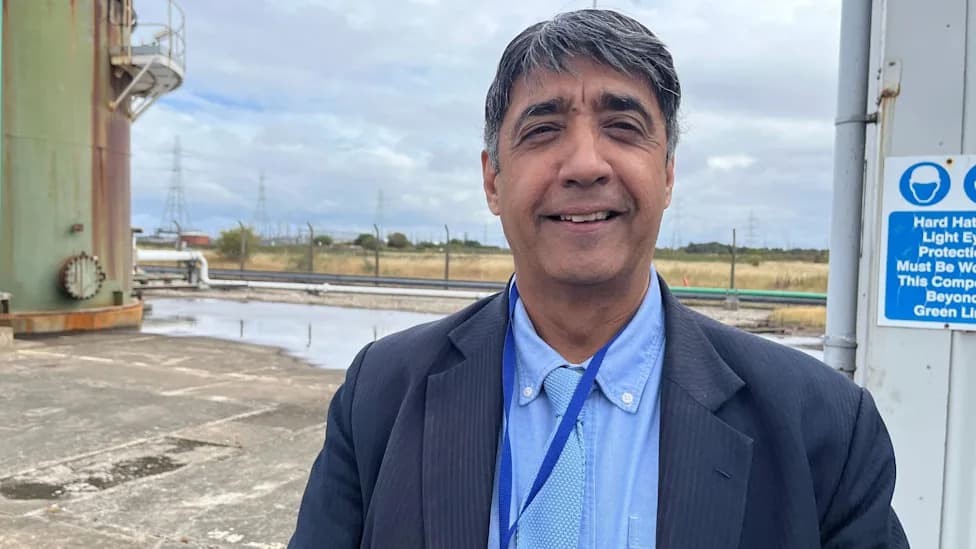
Tallat Azad said the project, if approved would help towards the transition to net zero emissions [BBC]
Storelectric has proposed a large-scale energy storage project on Teesside that would use underground salt caverns to store surplus renewable electricity as compressed air. The Teesside Compressed Air Energy Storage (TeesCAES) scheme has received a "minded to" approval from regulator Ofgem under its Long Duration Storage framework, with a final funding decision expected in the autumn.
Project Overview
Storelectric has acquired hundreds of acres at Seal Sands, near Billingham, and also holds land at Wilton. TeesCAES aims to capture excess output from wind farms and solar arrays when demand is low, compress that electricity into stored air in deep salt caverns, and release the energy through turbines back to the grid when needed.
How the Storage Works
Salt caverns are created by injecting water into deep salt deposits, producing large, stable voids that are already used worldwide to store fuels and gases. On Teesside there are about 110 industrial caverns, with a combined capacity often described as roughly equivalent to 200 Olympic swimming pools.
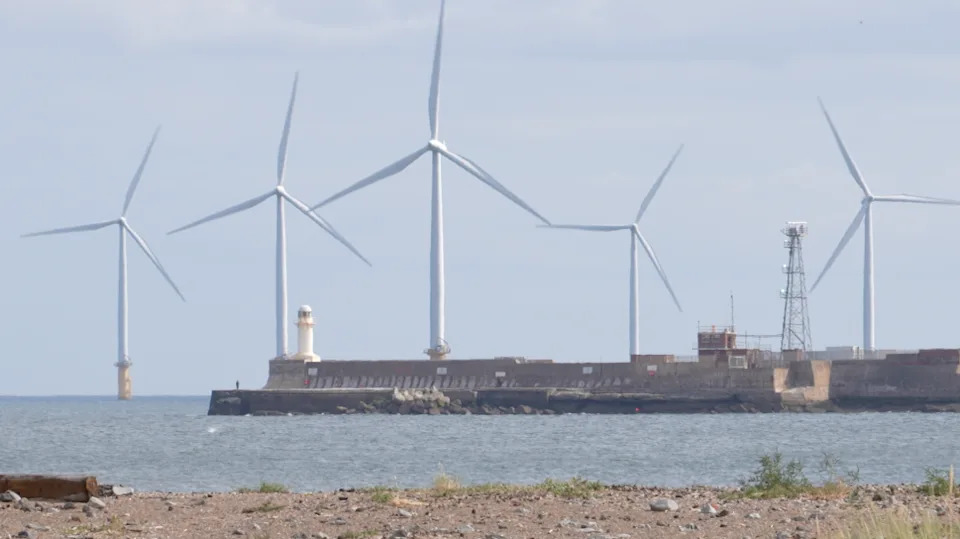
Energy firm Storelectric has acquired hundreds of acres of land at Seal Sands, near Billingham [BBC]
"We really need to make sure we can continue to deploy renewable energy to meet the green transition to net zero emissions," said Storelectric's executive director Tallat Azad. "What we do is take that renewable energy when it is not needed and store it underground in salt caverns."
Azad used a simple analogy: the stored compressed air is like a blown-up balloon that has not been tied — the energy is held underground until it is released to generate electricity through a turbine and return to the grid.
Why It Matters
Installing long-duration storage can reduce curtailment (when windfarms or solar arrays must be switched off because the grid cannot absorb their output), help integrate more renewables, and support the transition to net-zero emissions. Professor Nash Dawood of Teesside University's Zero Industrial Innovation Centre noted that cavern-based storage may complement or, in some contexts, offer advantages over conventional batteries, which have finite lifecycles and disposal challenges.
Storelectric has also indicated plans to explore underground hydrogen storage at its Wilton site, highlighting a potential route for multi-vector energy storage on Teesside.
The Ofgem "minded to" decision is an important step for TeesCAES under the Long Duration Storage programme. A final list of supported projects is expected in the autumn, after which the company would move toward detailed design, permitting and construction stages if funding is confirmed.
Help us improve.