Kenya has ordered the closure of small retail shops run by foreign nationals and restricted hawking after President William Ruto directed enforcement from September 7. The measure targets low-capital trading while encouraging larger foreign investment that brings capital and jobs and accompanies the proposed Local Content Bill, 2025. Officials say foreign nationals with valid permits remain legally protected, but uncertainty over implementation has raised concerns that unpredictable enforcement could deter investment and raise costs.
Kenya Orders Closure Of Foreign-Run Small Shops And Hawkers From Sept. 7 — What You Need To Know
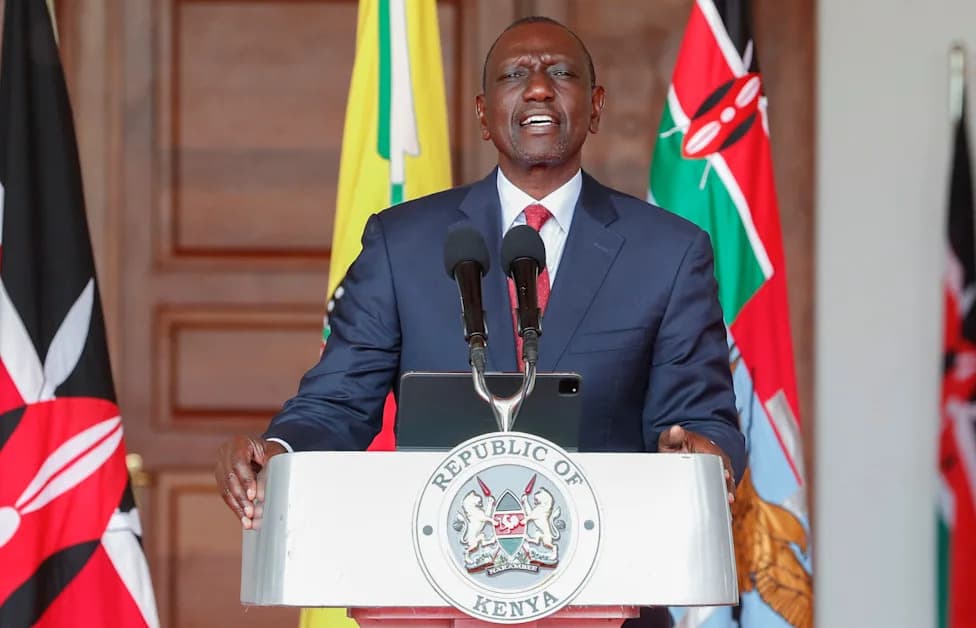
Kenyan President William Ruto has said foreign investment is welcome in activities requiring greater capital, but foreign nationals should not compete with Kenyans in small-scale businesses such as hawking and retail [Thomas Mukoya/Reuters]
Kenya has begun enforcing a directive to close small retail shops operated by foreign nationals and to curb hawking after President William Ruto instructed authorities to begin shutting down such operations from September 7. The move, announced on September 2 at State House in Nairobi, targets low-capital trading activities while signalling that larger foreign investment that brings capital and jobs is welcome.
Background and Government Action
President Ruto told micro, small and medium-sized enterprise (MSME) traders that hawking and small-scale retail should be reserved for Kenyans. He asked officials to take administrative action as Parliament considers the proposed Local Content Bill, 2025, and instructed National Assembly Majority Leader Kimani Ichung'wah and Trade Cabinet Secretary Lee Kinyanjui to accelerate the bill's passage.
Legal Uncertainty And Permits
The government has not published a comprehensive list of businesses covered by the directive or estimated how many foreign nationals may be affected. Ruto also asked Ichung'wah to consult the State Department for Immigration's principal secretary to establish the requirements governing permits issued to foreign investors and traders. As a result, it remains unclear how the directive will apply to foreign nationals who already hold business permits.
Foreign Affairs Principal Secretary Korir Sing'Oei said on September 6 that foreigners who meet Kenya's legal requirements — including valid work permits and licences — remain legally protected. He added that the president's remarks were made in the context of the Local Content Bill.
Why Supporters Back The Move
Supporters, including Hesbon Hansen Owilla, a professor at Aga Khan University, argue the measure protects Kenyan traders from being displaced by low-capital foreign sellers who do not contribute enough to local job creation. International business consultant Solomon Kinyanjui said the issue is not rejecting foreign investment altogether but distinguishing between investment that complements Kenyan enterprise and activity that displaces it.
Concerns And Risks
Critics warn that unpredictable enforcement could discourage broader foreign investment, raise business costs and lead to higher consumer prices. Journalists and analysts also caution the move may strain relations with foreign communities if not implemented fairly and transparently.
Economic Context And Data
Kenya's 2024 Foreign Investment Survey from the Kenya National Bureau of Statistics reported a stock of foreign direct investment (FDI) of Ksh 1.458 trillion (≈ $11.27bn) at the end of 2023, up 8.5% from 2022. Surveyed foreign-invested enterprises employed 224,769 people in June 2024, of whom 221,267 were Kenyan; foreign employees accounted for about 1.6% of that workforce. These figures cover FDI across the economy and are not limited to small-scale trading.
The Tata Chemicals Magadi Dispute (Separate Issue)
Separately, the government suspended mining operations at Tata Chemicals Magadi on July 28, citing alleged non-compliance with mining laws. On September 3, President Ruto said he had ordered Tata to leave Kenya and proposed inviting new companies to establish glass and chemical manufacturing facilities in the area. Tata says it has submitted requested information and seeks resolution through legal and regulatory channels.
What To Watch Next
Key developments to monitor include: how immigration and trade authorities interpret and implement the directive; the progress and final content of the Local Content Bill, 2025; and any clarifying guidance on permit-holders already operating in Kenya. The balance the government strikes between protecting local traders and maintaining an attractive environment for productive foreign investment will shape economic and social outcomes.
Note: The directive specifically referenced hawking and small retail. It does not target larger, capital-intensive foreign investments that the government says it welcomes.
Help us improve.