The author describes how his 77-year-old mother — diagnosed with Alzheimer’s and Parkinson’s in 2023 — has spent 17 days in hospital despite being medically fit for discharge. Systemic blockages, limited community-hospital capacity and lengthy placement waits leave nearly one in six NHS beds occupied by people with dementia, costing about £12m a day. Families who can self-fund may speed discharge; others face prolonged hospitalisation that can accelerate decline and erode dignity. The piece calls for urgent policy action to fix care capacity and funding gaps.
My Mother’s Dementia Ordeal Exposes Britain’s Broken Social Care System

Writer Ben East with his parents whose lives have been reshaped by dementia
Mum lies in a hospital bed, her face contorted as she reaches with difficulty for a sip of water. Once an energetic primary school teacher, she now lives with severe dementia and is often unable to speak. Her movements are painfully slow and her fragility makes her appear far older than her 77 years.
A hospital stay that should not be permanent
My father, my brother and I all agreed she should be in a care home rather than a hospital. Yet almost one in six NHS beds is now occupied by people with dementia, at an estimated cost of about £12m a day — a symptom of Britain’s wider social care crisis.
Since Mum was diagnosed with Alzheimer’s and Parkinson’s in 2023, she managed at home in Norfolk with a brilliant domiciliary care team and my father’s daily support. When she was admitted to Norfolk and Norwich University Hospitals in July with complications from gastrointestinal and urinary infections, we expected a short stay on the Acute Medical Unit. Instead she was moved to the dementia ward and, on her first morning there, was found on the floor with a head wound after becoming disoriented.
When medical stability does not mean safe discharge
Four days later a doctor called to say a DNR order was in place and to tell me she was in the "final stages of dementia." That may be true — but a busy hospital ward is not the right place for late-stage dementia. Hospitals are designed to treat acute medical problems, not to provide the constant personal care, tailored stimulation and reassurance that people with advanced Alzheimer’s and Parkinson’s need. Even specialist dementia wards often lack the resources for sustained, individualized support.
“We’ve got to get her out of here. She can’t die in hospital.”
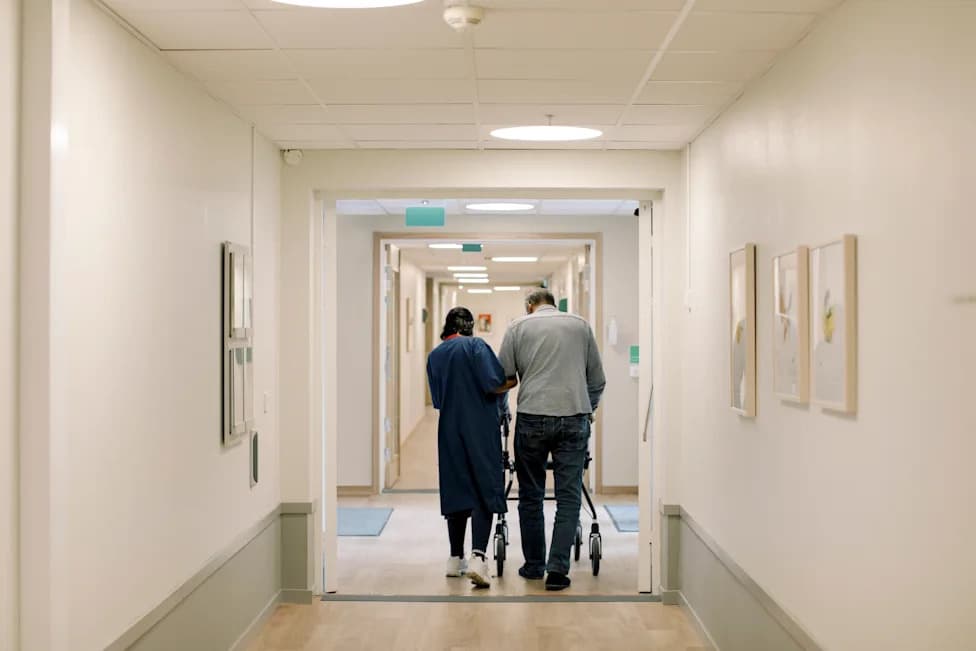
Thousands of people with dementia remain in hospital because of systemic blockages. Ideally, once medically stable, patients should transfer to a small community hospital for assessment, rehabilitation and planning — with a view to returning home with support or moving to a care or nursing home. But community hospitals frequently have no spare capacity, and finding an appropriate long-term placement can take weeks — especially for families who cannot self-fund a care-home bed.
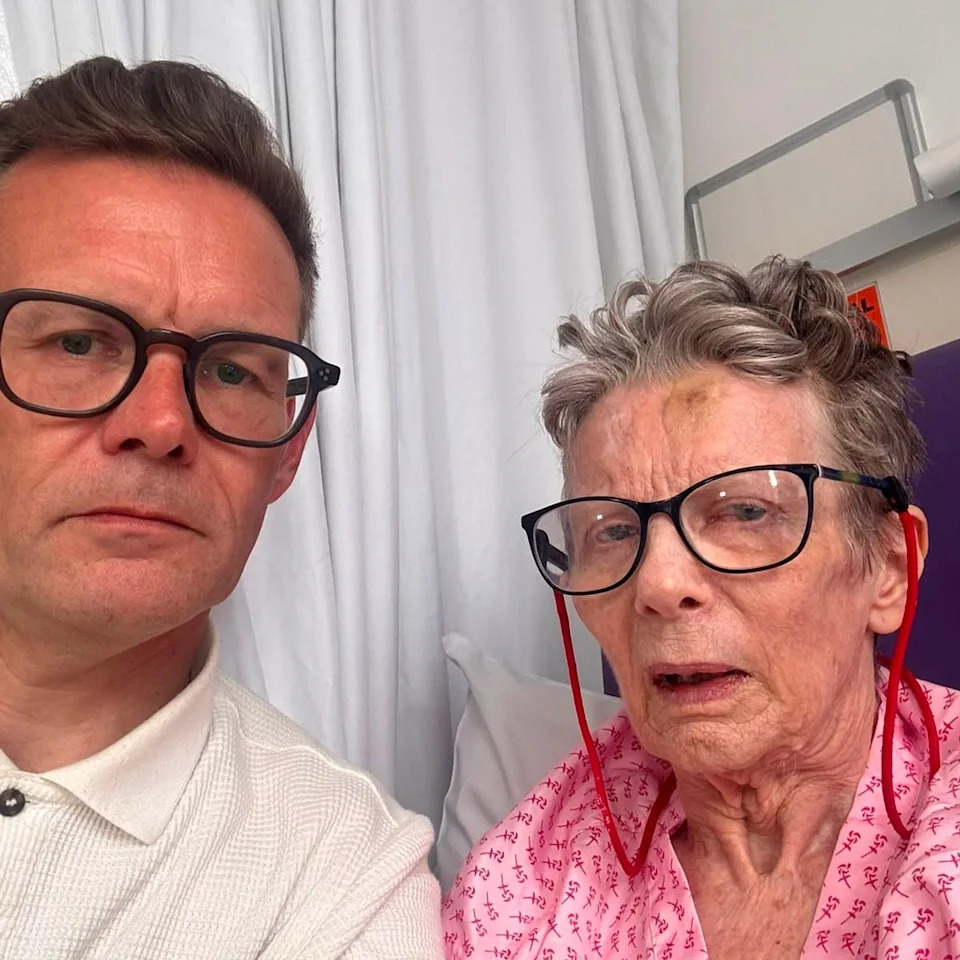
Writer Ben East with his mother, Barbara, in hospital, where she remained despite being medically ready for discharge
Costs, consequences and cruel waiting
The statistics are stark: dementia patients are five times more likely than others to remain in hospital when medically fit for discharge, and hospital stays can accelerate decline — 45.8% of people with dementia develop delirium on wards. In Norfolk, a county the size of my mother’s, there are only seven community hospitals — roughly 200 beds — to meet all discharge and rehabilitation needs. I was told Mum was 24th on the waiting list for a community hospital; in practice that can mean weeks more, possibly a month, in hospital.
During her 17-day stay, family and friends have tried to keep her comfortable and engaged: my brother and I play the Songs of Praise soundtrack she likes, and Dad tries to spoon-feed her the yogurt she will eat. But ward routine and noise are corrosive. Her hair went unwashed for days until her home carers came out of kindness to help — small acts that moved us to tears.
The hidden option: self-funding and unequal access
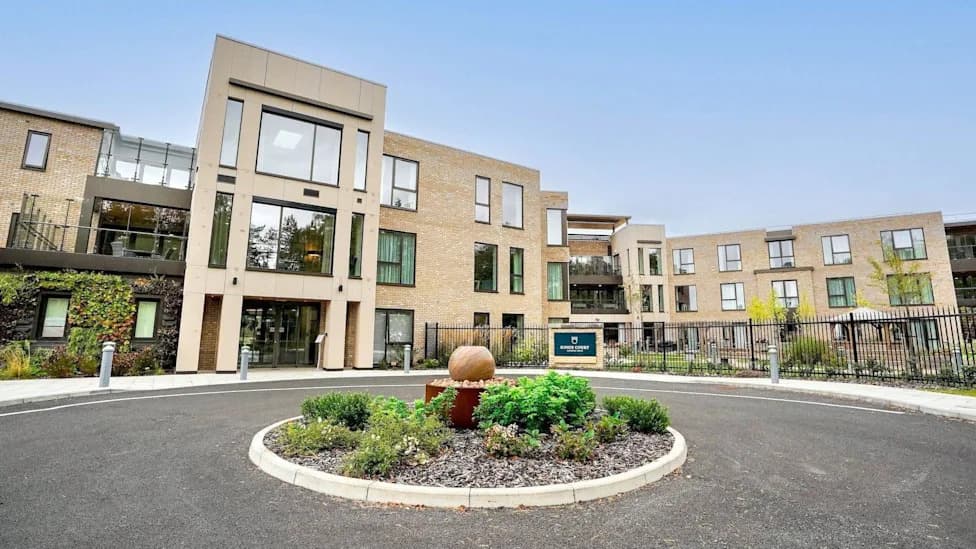
We discovered — via a single helpful call from a care-home worker, not from the hospital — that if we could self-fund a placement the home could assess Mum directly and work with the discharge team to speed transfer. After being passed between hospital numbers, we learned she was deep on the waiting list. A member of staff said: "If you are self-funding, we probably just need to speak to social services and make sure they are happy with the plan." The relief was instant. Then Dad asked the question that hangs over the whole system: "What would happen if you weren’t fortunate enough to be able to self-fund?" The unspoken answer is chilling: some patients may languish in hospital until death.
What this family learned — and what needs to change
We now hope Mum will move to the care home we have selected next week. It has been one of the most painful months of our lives. With dementia there is rarely a tidy or happy ending, but a quieter, purpose-built setting offers greater dignity and a better chance of slower decline than a crowded ward.
This personal story highlights broader failures: underfunded community beds, long waits for appropriate placements and unequal access for families who cannot afford to pay privately. The result is a system that is costly for the NHS and devastating for patients and their families. Policymakers must address the capacity gaps and funding structures that leave vulnerable people trapped in hospitals where they are not best cared for.
Organisations approached for comment: East of England Community Health and Care NHS Trust, NHS Norfolk and Waveney ICB and NHS England.
Help us improve.