The EU has approved IRIS², a sovereign satellite constellation that will begin launches in 2029 with an initial 66 satellites, expanding the planned fleet to 348 spacecraft across LEO and MEO. The system—managed by the SpaceRISE consortium of SES, Eutelsat and Hispasat—is intended primarily to secure resilient communications for EU governments and military users, while allowing commercial capacity where available. Funding comes from a mix of EU and member-state contracts, with Spain, Poland and Hungary among early backers. IRIS² provides a layered redundancy approach, with 330 LEO satellites and 18 MEO satellites for broader-area coverage.
EU Approves IRIS²: A Sovereign Satellite Constellation To Secure Government And Military Communications

Rahayu footage/Shutterstock
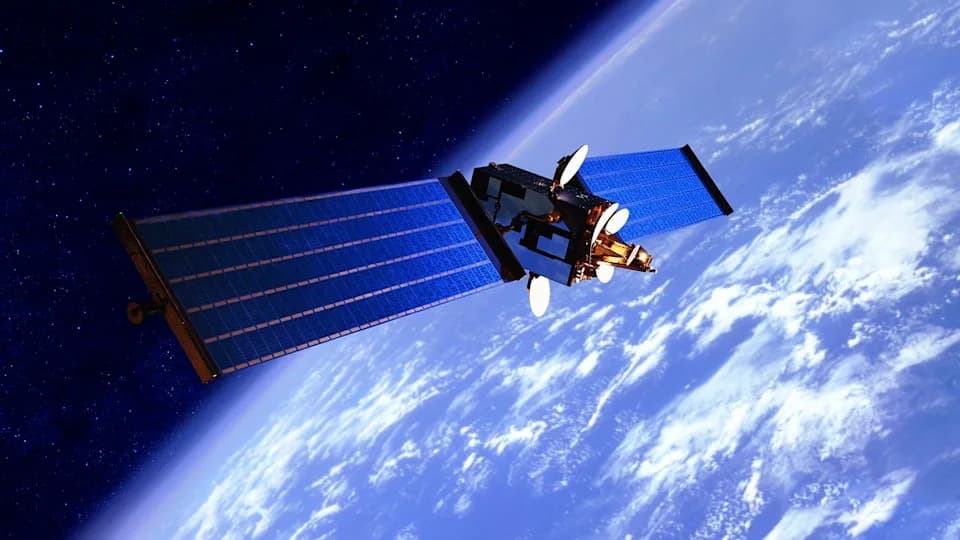
The European Union has approved IRIS², a sovereign satellite constellation intended to strengthen resilient communications for EU governments and military users. Deployments will begin in 2029 with an initial batch of 66 satellites, bringing the planned fleet to 348 spacecraft distributed across low-Earth orbit (LEO) and medium-Earth orbit (MEO).
What IRIS² Will Do
IRIS² is designed as a redundancy and resilience layer for critical communications—particularly for public-sector and defence needs—so that the EU is not wholly reliant on commercial constellations. While commercial systems such as SpaceX's Starlink have provided important services in recent conflicts, EU officials want sovereign capacity that can be prioritised for government and military use.
Technical Overview
The programme envisions 330 satellites in LEO, where many broadband constellations operate, and 18 satellites in MEO to provide wider-area coverage and an additional redundancy layer. MEO altitudes planned for similar systems typically sit around 20,000–22,000 kilometres (approximately 12,400–13,700 miles), a regime that offers broader regional coverage per satellite and is less congested than the lower orbits.

buradaki/Shutterstock
Who Is Leading It
IRIS² will be managed and delivered through the SpaceRISE consortium—a purpose-built partnership of European operators SES, Eutelsat and Hispasat—using a public–private model. While the project prioritises public and defence access, participating companies may sell capacity commercially when available.
Funding And Political Context
Funding comes from a mix of EU-level budgets and national contributions from member states, with Spain, Poland and Hungary cited as early backers. The decision reflects a broader strategic push by the EU to develop independent space capabilities and reduce reliance on external partners and commercial operators for critical security infrastructure.
Timeline And Purpose
Initial launches are set to begin in 2029. The constellation is intentionally modest compared with large commercial fleets, with IRIS² intended primarily as a resilient backup to ensure continuity of critical communications in case of outages caused by natural events, technical failures, or hostile actions.
Bottom line: IRIS² is a targeted, sovereign capability aimed at guaranteeing resilient communications for EU governments and militaries while allowing commercial use where appropriate—part of a larger European effort to build independent and reliable space infrastructure.
Help us improve.