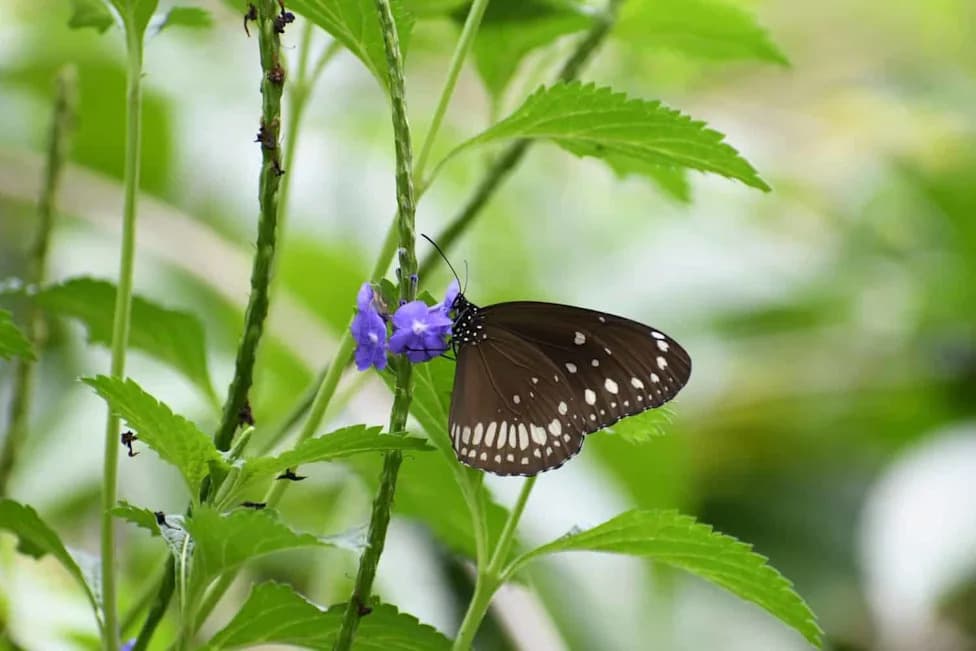
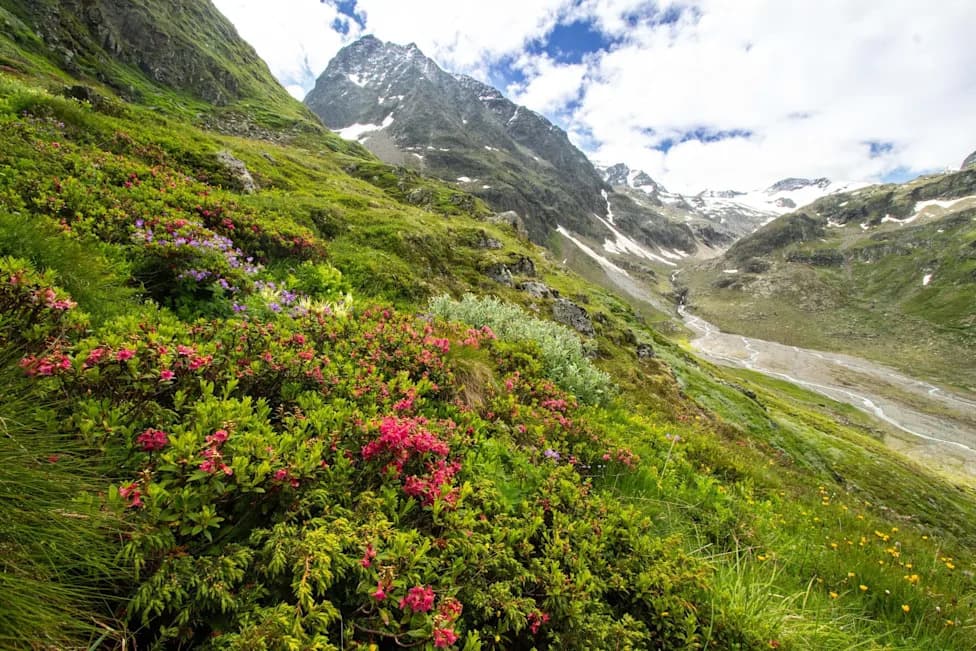
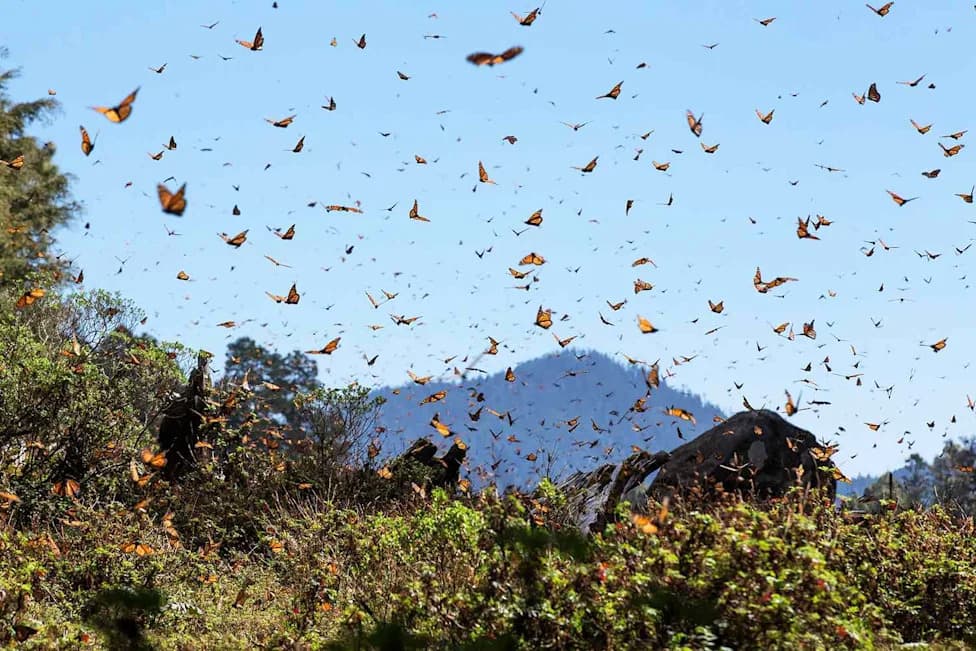
A global analysis of more than 1,700 butterfly species across 105 countries found almost 80% of observed range shifts were linked to climate change and extreme weather. About 80% of species showed range expansions while 27% contracted, and only 22% moved to higher elevations. The authors warn detection bias and sparse data—only 1 in 10 species has documented trends—mask risks and call for habitat protection, corridors, improved monitoring and urgent action to limit warming.
Butterflies on the Move: Climate Warming Reshapes Ranges of 1,700 Species
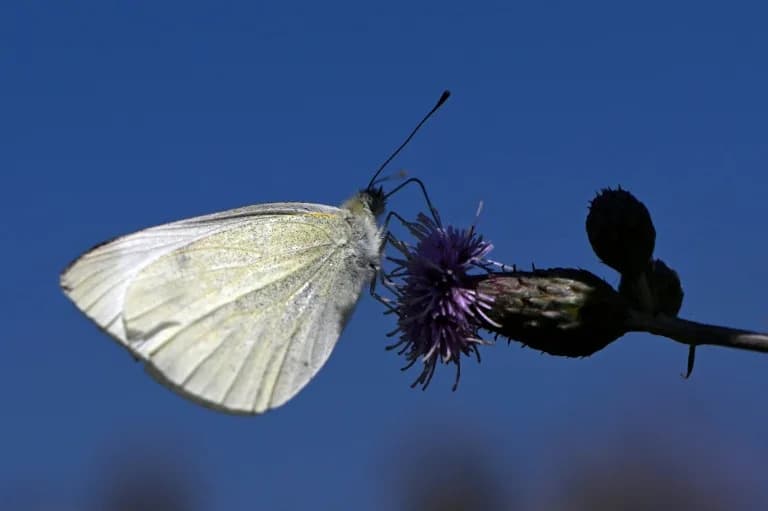
Butterflies are adapting to climate change by adjusting the geographic range where they live and breed. (Ina FASSBENDER)
A comprehensive global study published in Nature Ecology & Evolution finds that climate change and extreme weather are driving widespread shifts in where butterflies live. Researchers analysed distribution data for more than 1,700 species across 105 countries and territories and documented large, complex changes in range boundaries.
The team found that nearly 80% of reported range shifts were linked to climate change and extreme weather events. While many species are colonising new areas—resulting in range expansions for roughly 80% of species—about 27% experienced range contractions. Only 22% of species showed measurable shifts to higher elevations.
Study co-author Jonathan Lenoir of France's CNRS highlighted both encouraging and worrying signals. He noted that range expansions demonstrate a capacity to move, but cautioned that expansions are easier to detect than losses and that detection bias may overstate apparent gains.
"This is rather good news as it proves that butterfly species are capable of migrating and shifting their range to adapt to changes," said Lenoir. He added that beyond certain warming thresholds, some species could experience "much more rapid and sudden upheavals" or even local extinctions.
The researchers flagged several non-climatic drivers that also reshape distributions, including altered land use, intensive agriculture, urbanisation, habitat fragmentation and invasive species. Many observations came from citizen scientists and were concentrated in lowlands and near urban centres, potentially skewing geographic coverage and detection of declines.
Island and mountain-endemic species are especially vulnerable. The study and related research warn that species limited to high-elevation or island habitats may become effectively "trapped" as suitable climates disappear and options to shift are exhausted. A 2024 paper in Global Ecology and Biogeography estimated that about 84% of ~270 European species could shrink their ranges by 2080 under continued warming.
To limit future losses the authors call for strengthened conservation policies: protect and restore habitats, create ecological corridors and microclimatic refuges, curb other human pressures, and expand biodiversity monitoring—notably through improved citizen-science coverage in underrepresented regions such as the tropics.
Finally, the study highlights large knowledge gaps: only about one in ten butterfly species has documented data on range changes, and tropical regions remain poorly studied. The authors stress that limiting global warming remains essential to reduce the risk of rapid declines and extinctions.
Help us improve.