The Eastern Egg Rock research team confirmed a record 200 active Atlantic puffin burrows this season after carefully observing birds deliver fish to chicks. The count reached 192 on July 24 and rose to 200 after further searching. In a related first, observers documented a razorbill pair feeding a chick and found an unhatched egg; the chick fledged on July 4. These findings highlight a major conservation success for Project Puffin amid regional warming and widespread seabird declines.
Record 200 Active Puffin Burrows Found on Eastern Egg Rock — Plus a Razorbill Nesting First
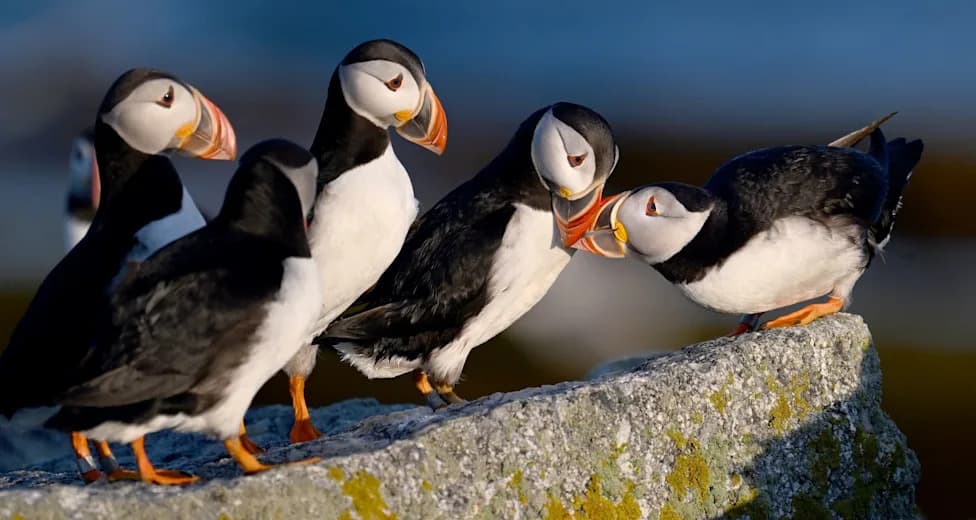
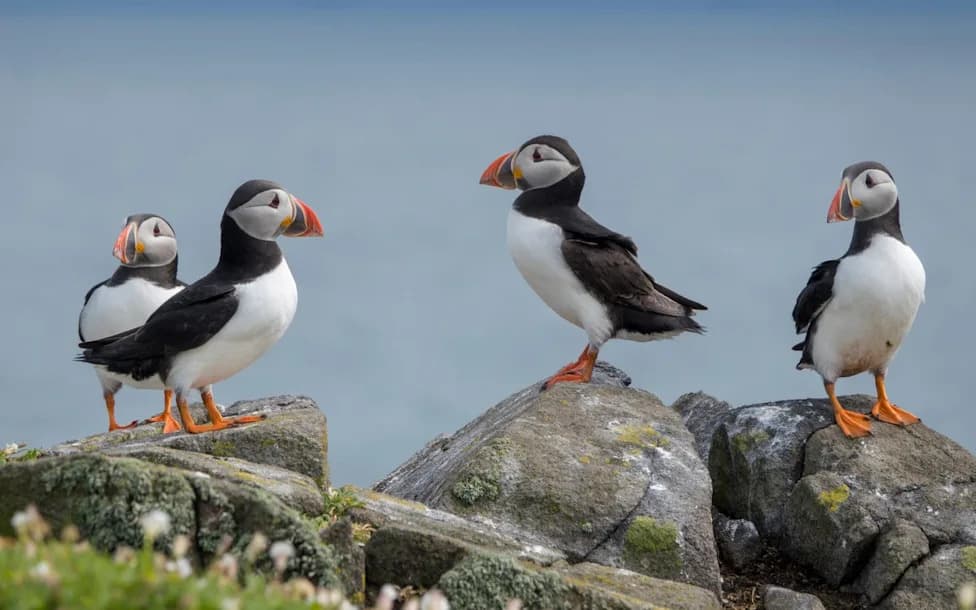
Puffins on Eastern Egg Rock in July 2026. Photo by Derrick Z. Jackson.
Field crews on Eastern Egg Rock confirmed a record 200 active Atlantic puffin burrows this season after weeks of watching birds carry fish to hungry chicks. The tally reached 192 on July 24 and rose to 200 after additional searching uncovered eight more occupied burrows.
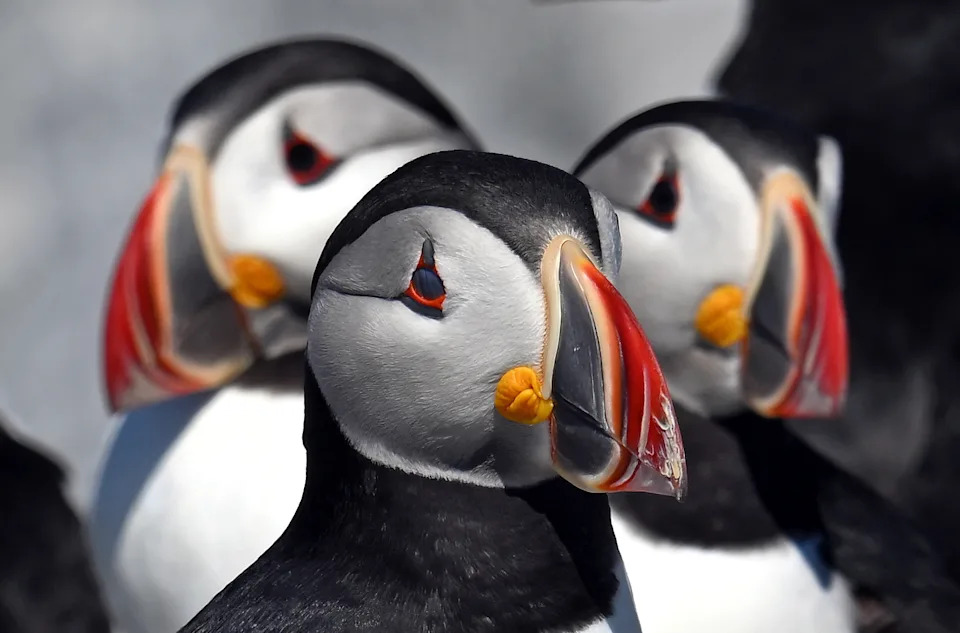
Left: Puffins on Eastern Egg Rock. Right: A puffin returns to Eastern Egg Rock with two herrings. Photos by Derrick Z. Jackson.
“A Massive Easter Egg Hunt”
Alison Ballard, the wildlife biologist supervising the project, called the effort "a massive Easter egg hunt." "It was kind of like a slow burn," she said. "Every day I asked the crew, 'Did you see new burrows?' 'Did you look for puffins with fish?'" Ballard led a team of undergraduate and graduate students — Victoria Smith, Eily Buchanan, Sydney Kuipers and Savanna Pierce — who spread out across the island's granite boulders to confirm nests by observing feeding runs.

Puffins on Eastern Egg Rock. Photo by Derrick Z. Jackson.
How The Count Is Made
Confirming burrows is painstaking work. Atlantic puffins raise a single chick inside burrows beneath boulders; many nests are recessed so deeply that researchers cannot reach chicks to band them in a technique called "grubbing." Last year Ballard's crew grubbed a record 37 chicks, but most confirmations still come from patient observation: noting the instant a puffin disappears under a rock with fish in its bill.
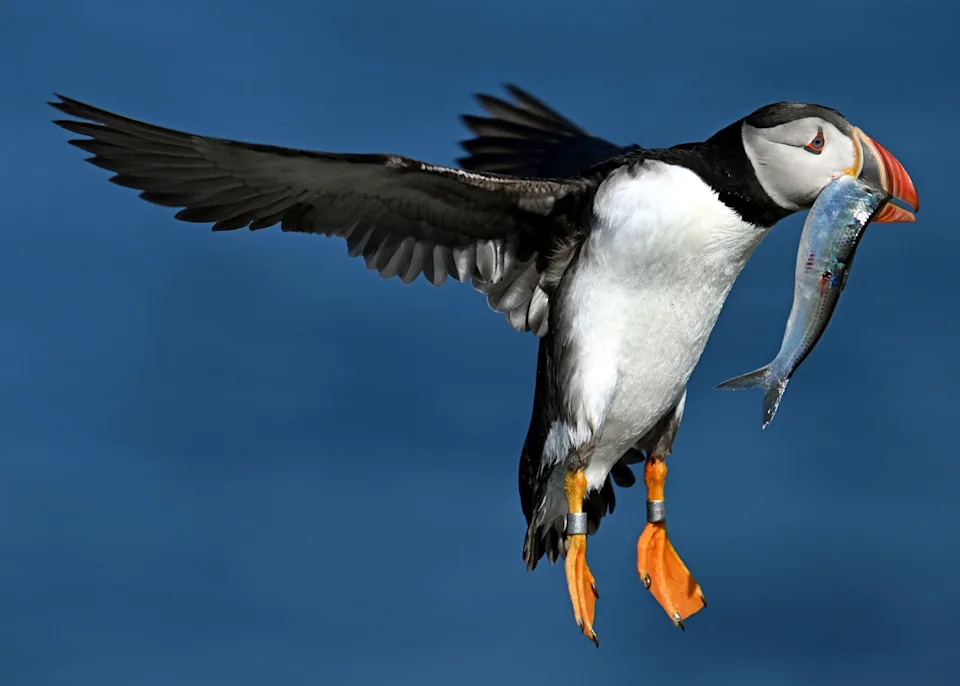
Puffins returning to Eastern Egg Rock with herring for their chicks. Photos by Derrick Z. Jackson.
That task is challenging because puffins are fast — they can flap up to 400 times per minute and fly 50–60 mph. After diving offshore for fish, they often return low and fast, sometimes slipping into burrows so quickly that observers catch only the final wingbeats. Laughing gulls also complicate matters by attempting midair thefts of a puffin's catch.
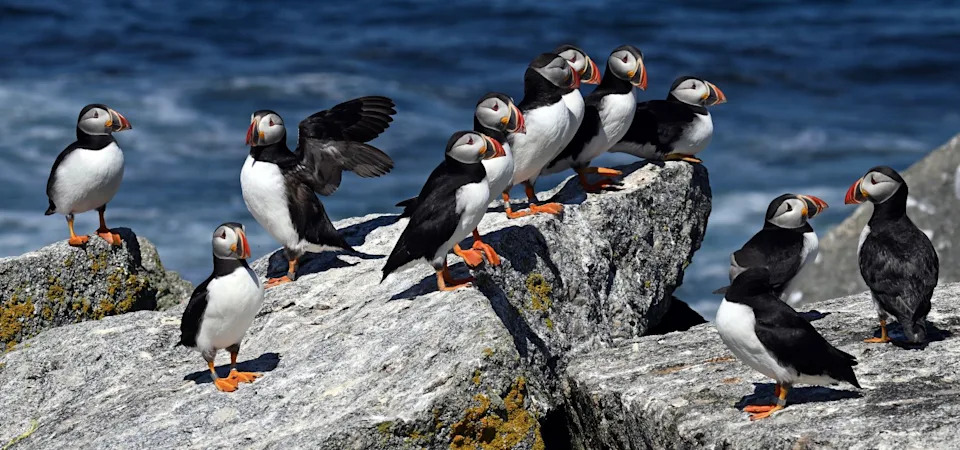
Puffins on Eastern Egg Rock. Photo by Derrick Z. Jackson.
Conservation Success: Project Puffin
Eastern Egg Rock, a treeless seven-acre island in outer Muscongus Bay about six miles off Pemaquid Point in midcoast Maine, is the long-running centerpiece of Project Puffin (now managed by the Audubon Seabird Institute). Beginning in the 1970s, researchers translocated puffin chicks from Newfoundland to re-establish a population after the species had been hunted off the island in the 1880s. That effort is recognized as the world's first documented success in returning a seabird to an island where it had been eliminated by humans.
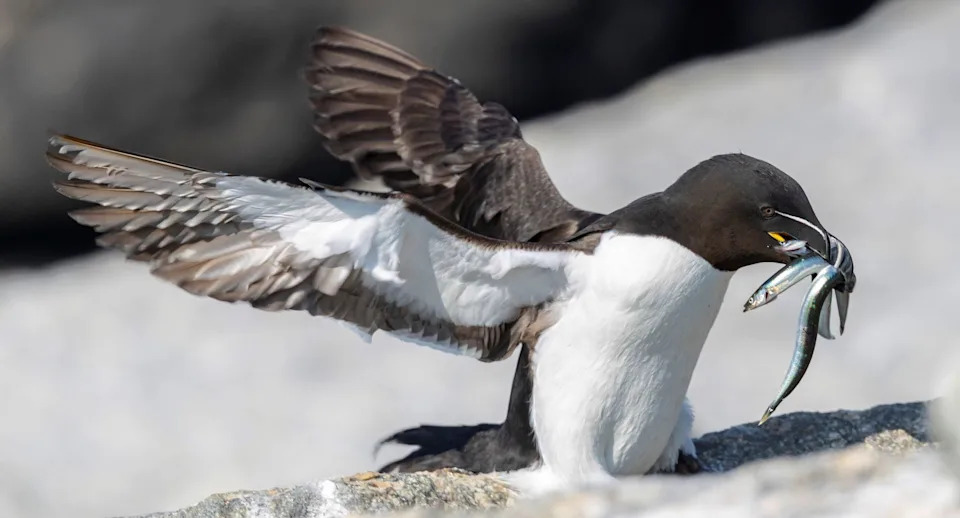
A razorbill carrying sand lance lands on Eastern Egg Rock. Photo by Jean Hall.
A Razorbill Nesting — A Notable First
Sharing the season's spotlight was a razorbill pair that appeared to successfully breed on Eastern Egg Rock. On June 19, observers Eily Buchanan and Sydney Kuipers both saw a razorbill circling the island with fish; Ballard and Victoria Smith then located a burrow, recorded chick vocalizations, and found an unhatched egg that may have been laid previously. The razorbill chick later fledged into the ocean on July 4.
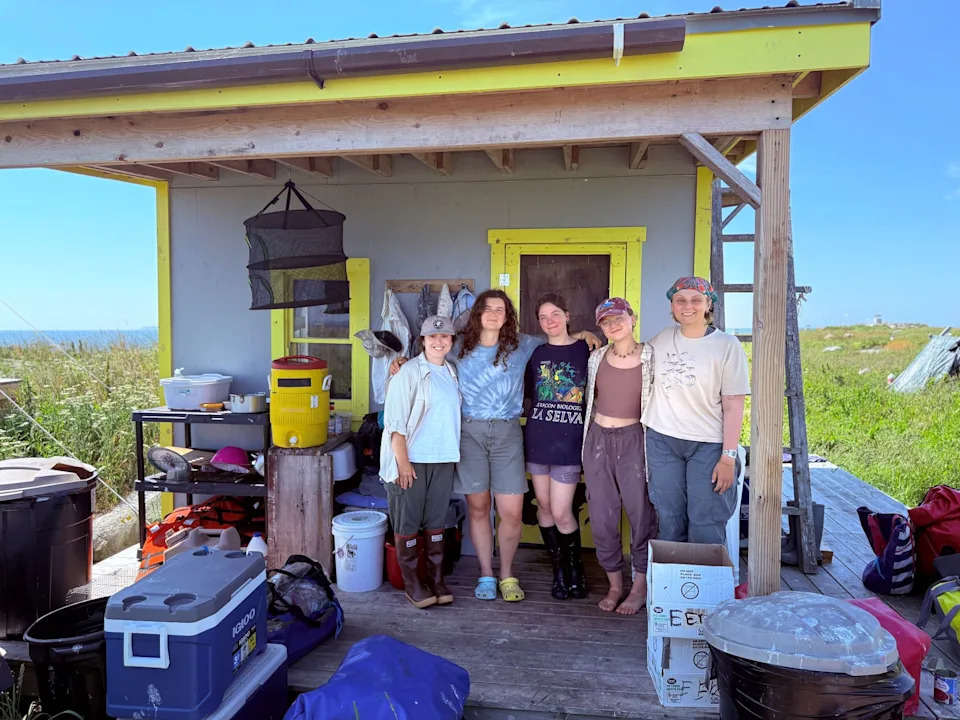
The research crew on Eastern Egg Rock. From left: Savanna Pierce, Alison Ballard, Eily Buchanan, Sydney Kuipers and Victoria Smith. Photo by Derrick Z. Jackson.
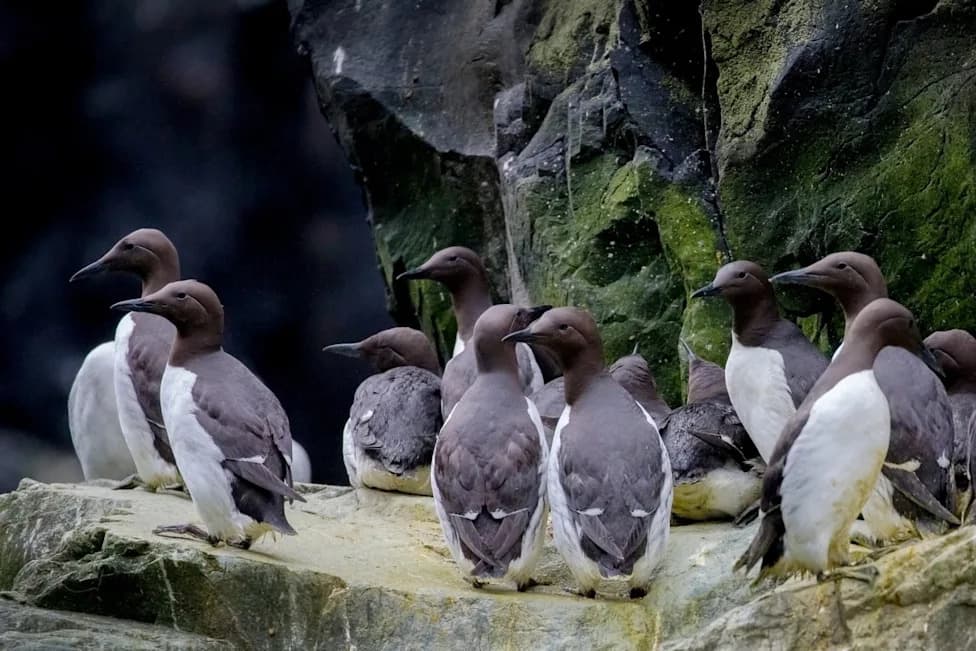
Razorbills are larger, stockier relatives of puffins and the closest living kin to the extinct great auk. Although razorbills have long been seen flying around Eastern Egg Rock, there had been no verified record of them nesting there; the nearest known breeding site was Matinicus Rock, nearly 30 miles to the east.
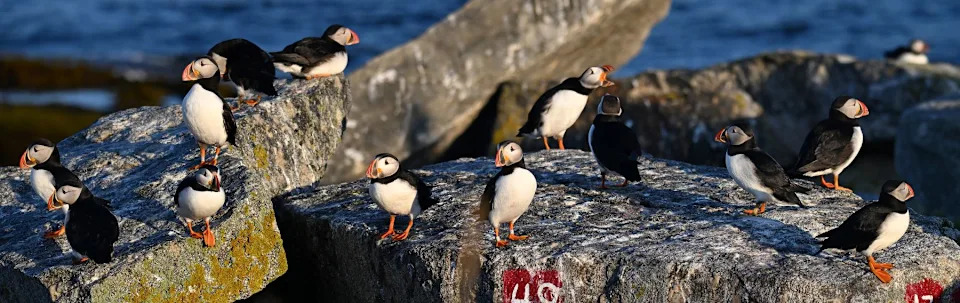
Puffins gather on the rocks on Eastern Egg Rock. Photo by Derrick Z. Jackson.
Context And Hope
The two developments — a record number of active puffin burrows and a likely first razorbill nest — arrive amid long-term concerns for seabirds. Seabird populations declined roughly 70% from 1950 to 2010 due to human impacts, and the Gulf of Maine is warming rapidly. Yet the puffin recovery in Maine shows what sustained conservation can achieve: from just two puffins in Maine in 1902 to an estimated 1,400 pairs today across several islands.
"It just goes to show what can result from 50-plus years of hard work and collective effort," Ballard said. "It shows you how resilient these birds are."
Photographs: Derrick Z. Jackson and Jean Hall (puffins and razorbill pictures documented during fieldwork).
Help us improve.