Seabird researchers reported a strong 2026 breeding season in the Gulf of Maine: Seal Island documented a record 127 active razorbill nests, and puffin burrows reached new highs at multiple islands. Improved prey availability — including sand lance, herring and river herring after restoration work — and a temporary pause in regional warming helped many colonies recover. Some species, notably Arctic terns, still experienced breeding failures, highlighting uneven impacts of changing marine conditions.
Seabird Comeback: Record Razorbill Year and Puffin Gains Across the Gulf of Maine
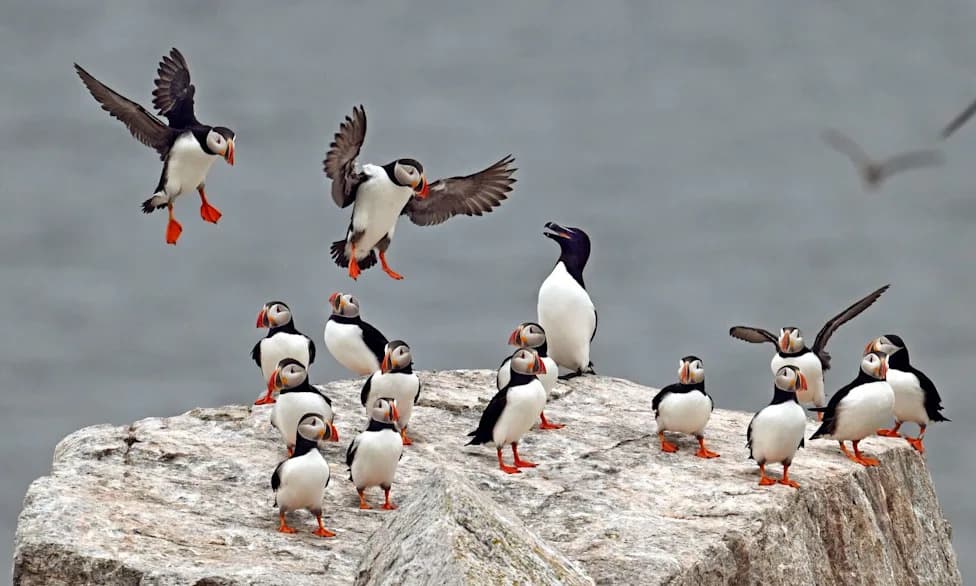
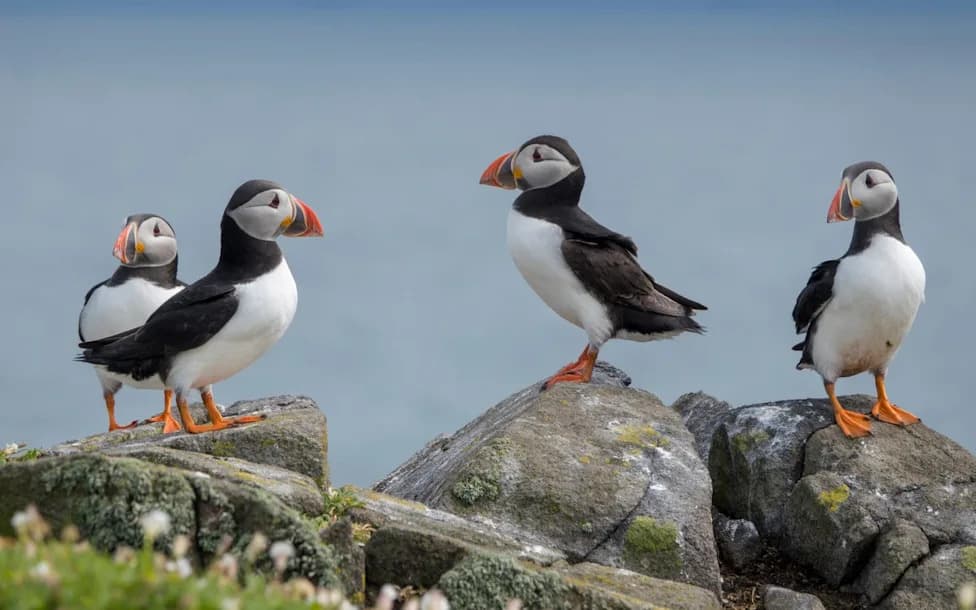
Puffins and a razorbill on Seal Island in July 2026. Photo by Derrick Z. Jackson.
In a small cabin on Seal Island, about 21 miles off Rockland, field biologist Coco Faber thumbed through last year’s island report and paused at a chart that tracks confirmed active razorbill burrows over time. The long-term dataset told a bright story: 2026 was a record year for razorbills on Seal Island and a strong season for puffins across the region.
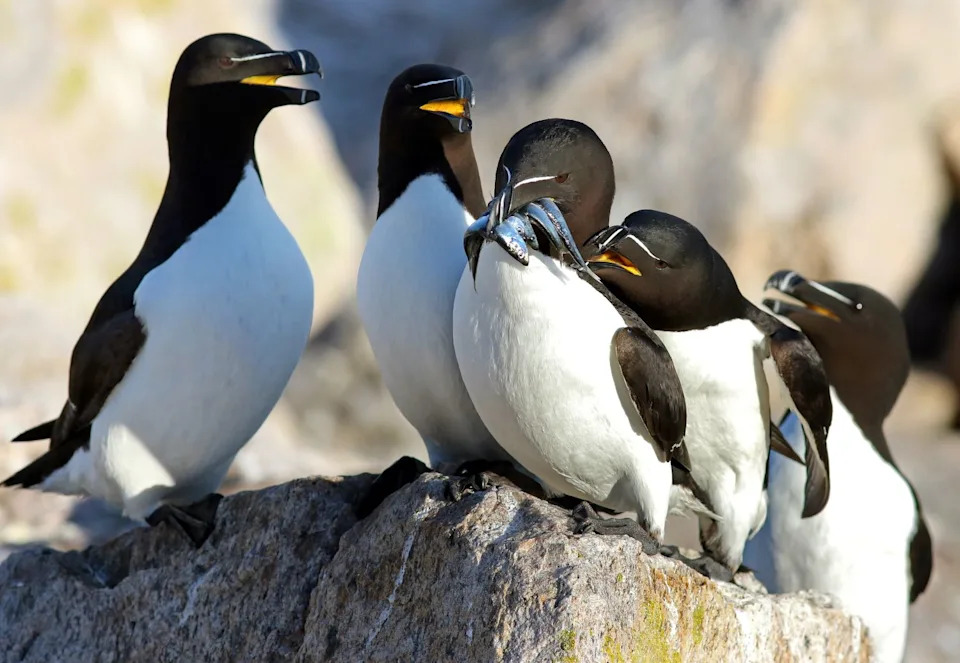
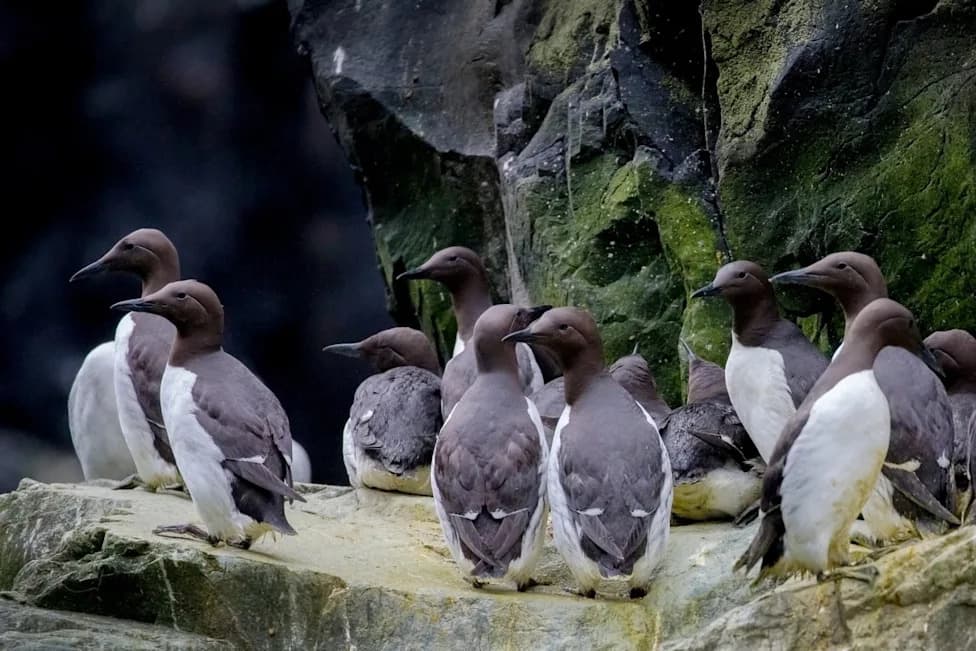
Razorbills on Seal Island in June 2026. Photo courtesy Juliana Ramirez.
Razorbills, chunky black-and-white seabirds roughly 16 inches tall and the closest living relatives of the extinct great auk, first began nesting on Seal Island in 1999. After a slow start — only one breeding pair for several years and more than a decade to exceed 10 pairs — the population accelerated after 2017. Faber and her crew — Juliana Ramirez, Leah Volak, Claudia Halbreiner and Eden Reck — documented a record 127 active razorbill nests on Seal Island in 2026.
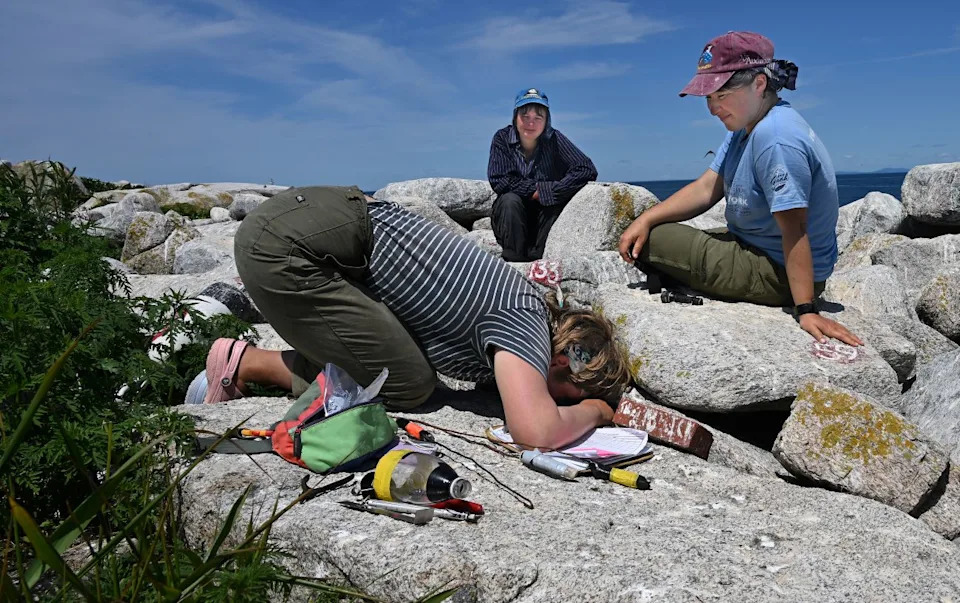
Left: Coco Faber grubbing, or searching for a puffin chick, with Leah Volak (center) and Juliana Ramirez (right) waiting to measure it, on Seal Island in July 2026. Right: Dr. Stephen W. Kress, founder of Project Puffin, and Coco Faber examining a baby puffin. Photos by Derrick Z. Jackson.
“It’s magical to see razorbills fly in with fish,” said Leah Volak. “They look all black and white, but when they open their mouth, the inside is bright yellow. It’s something to see.”
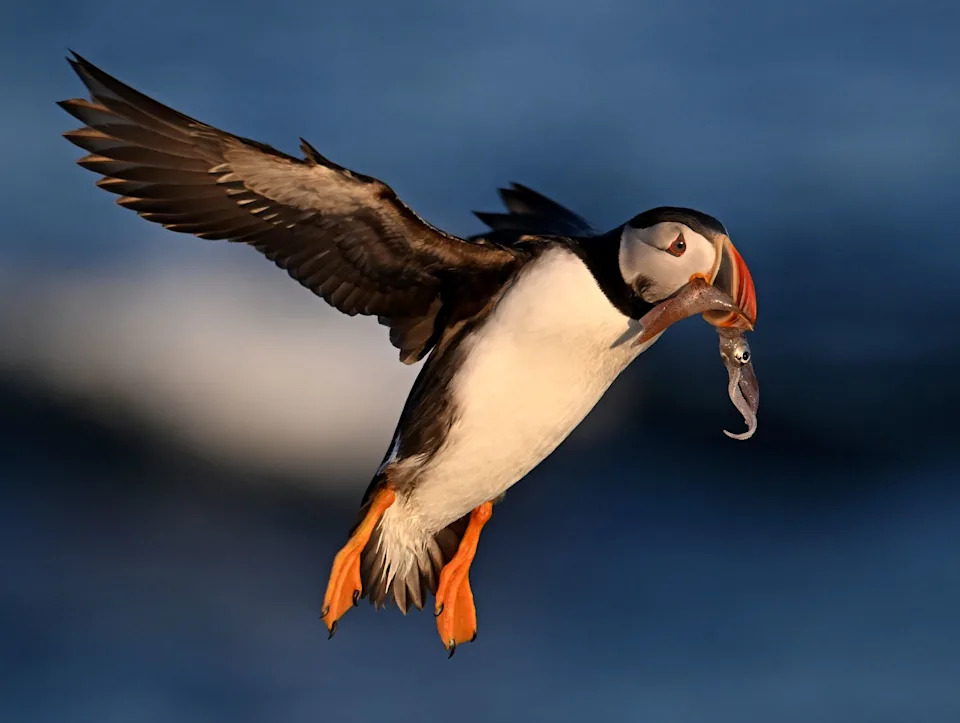
Puffins carrying a squid and a haddock. Photos by Derrick Z. Jackson.
At the Gulf of Maine Seabird Working Group conference, researchers from islands from Cape Cod to Nova Scotia shared season results. Puffin burrows hit new highs in multiple places: Eastern Egg Rock recorded 213 active puffin burrows, Petit Manan documented 103, and Faber’s Seal Island crew found nearly 100 new active puffin burrows. Razorbill records extended beyond Seal Island: Matinicus Rock counted a record 419 nests, Eastern Egg Rock recorded its first known razorbill nesting with a fledged chick, and Petit Manan reported eight razorbill burrows.
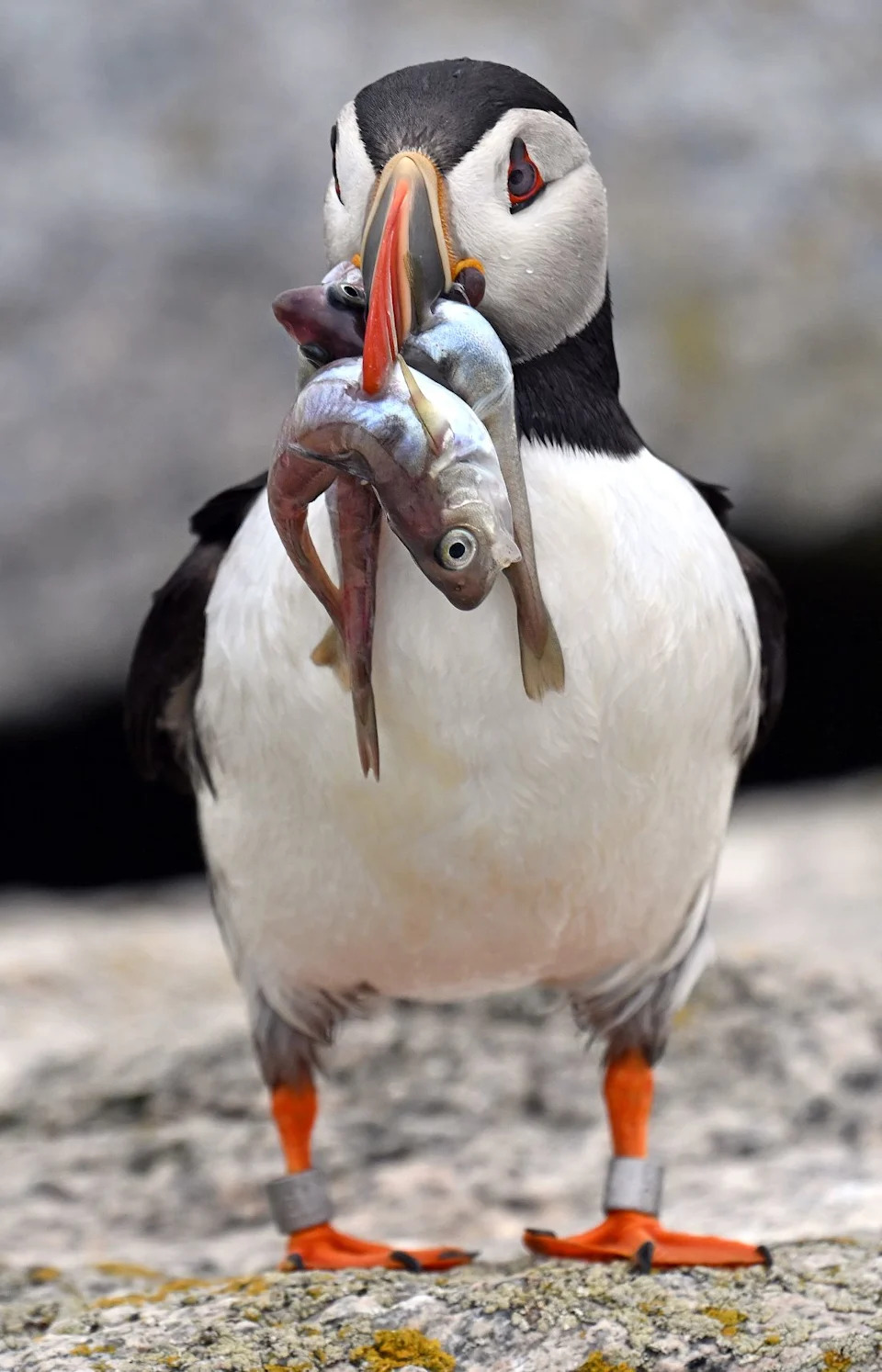
a puffin with two haddock in its beak
Researchers linked these population gains to improved prey availability and recent shifts in ocean conditions. The Gulf of Maine — which has warmed faster than 99% of the global ocean — experienced a temporary pause in warming over the past couple of years. Except for a July heat wave, many seabirds found abundant forage: razorbills fed on sand lance and Atlantic herring, while puffins consumed haddock, sand lance, hake, herring and an unusually high amount of squid. Observers on Eastern Egg Rock also reported puffins catching river herring for the second consecutive year.
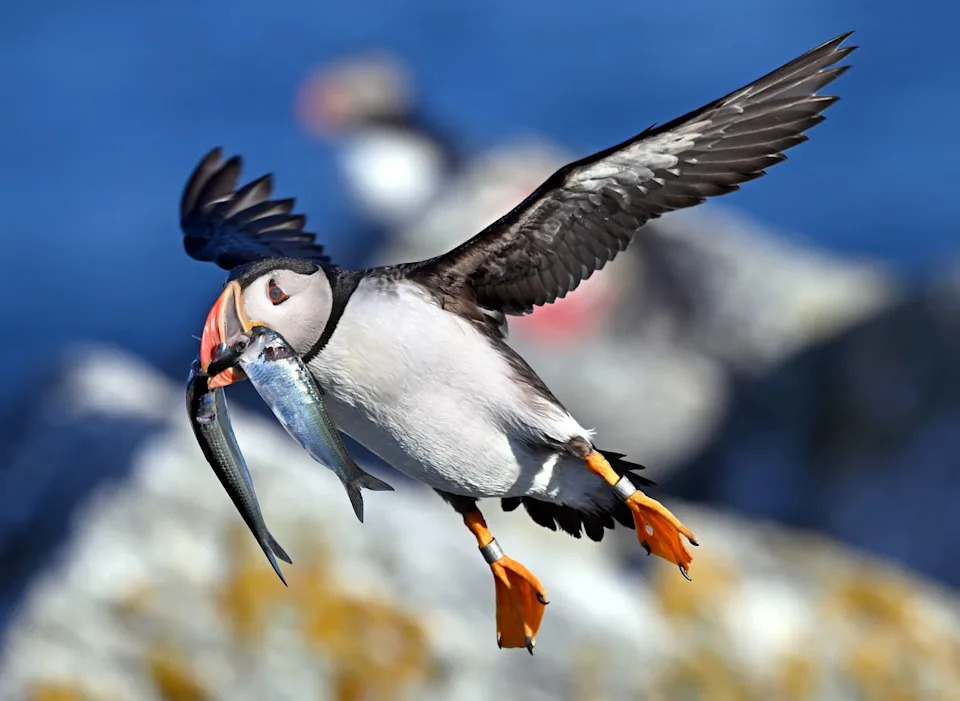
Puffins with haddock, squid and herring. Photos by Derrick Z. Jackson.
Michelle Staudinger, associate professor at the University of Maine School of Marine Sciences, suggested that the return of river herring to puffin diets could reflect dam removals and restoration of herring runs.
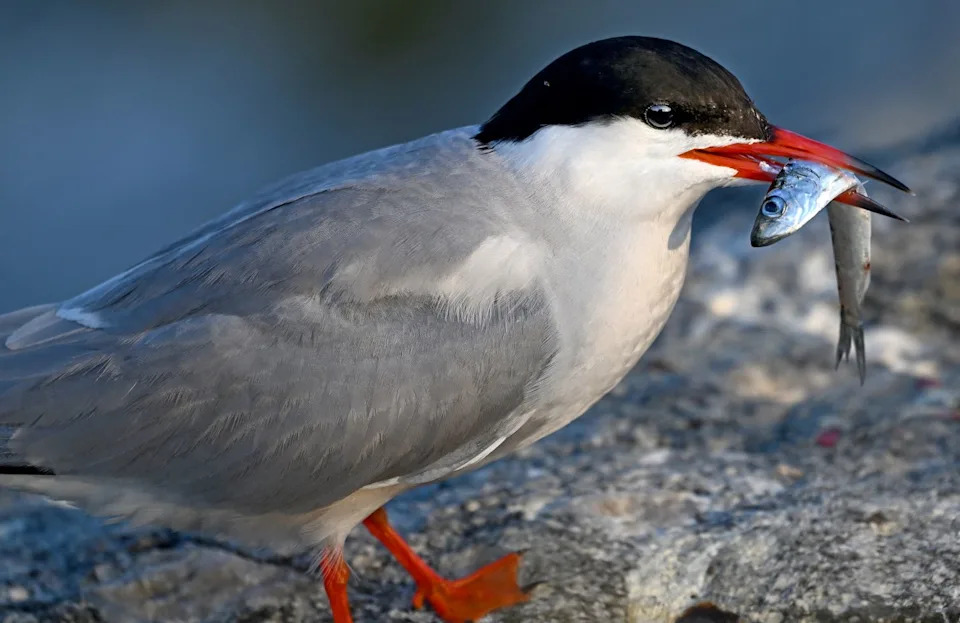
Left: A common tern with a herring. Right: A baby puffin. Photos by Derrick Z. Jackson.
Other species had mixed outcomes. Common terns and federally endangered roseate terns fared well: White and Seavey Islands reported a record number of roseate nests and their highest common tern counts in five years. Stratton Island recorded more than 200 nesting pairs of glossy ibis, the island’s first nesting of yellow-crowned night herons, and strong roseate numbers.
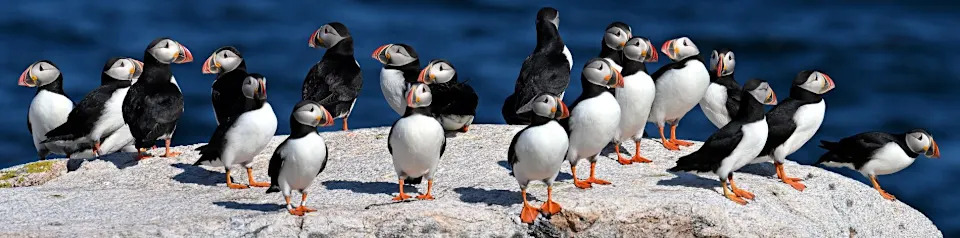
Puffins in July 2026. Photo by Derrick Z. Jackson.
Stratton Island also piloted a promising new protection for least terns, which are listed as endangered in Maine. After years of failed deterrents against black-crowned night herons, supervisors erected a slightly electrified fence around part of a least tern colony. The result: 31 chicks hatched inside the fenced area versus just 2 outside, and no predation inside the fence during the season.
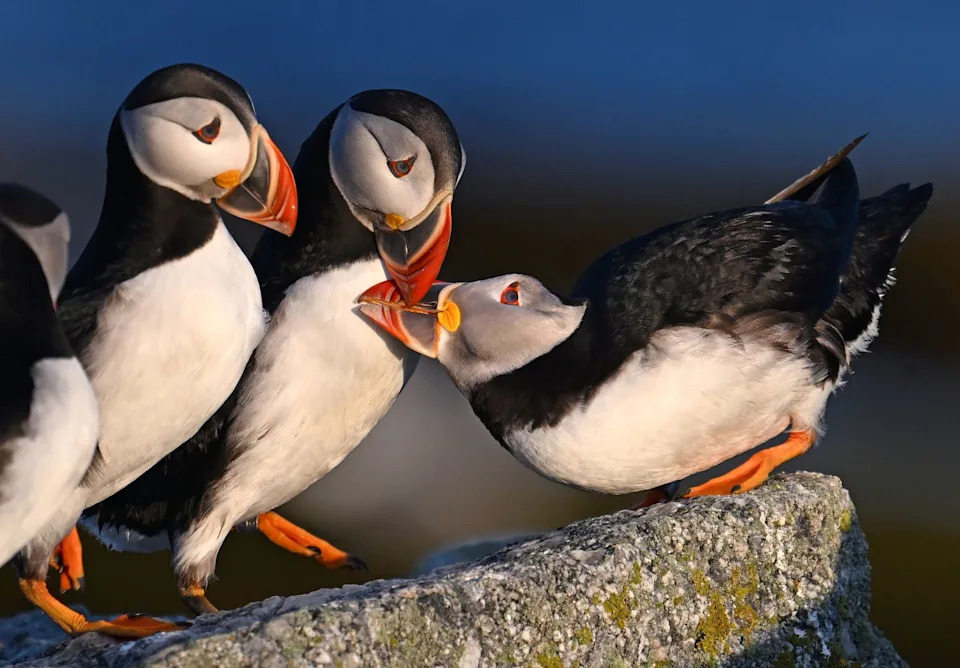
Left: Puffins in July 2026. Photo by Derrick Z. Jackson. Right: Razorbills in June 2026. Photo courtesy of Juliana Ramirez.
Not all news was positive. Arctic terns suffered a poor breeding season: for reasons not yet clear, parents were unable to consistently find food — even invertebrates — as summer warmed, and many chicks starved. Researchers called the decline baffling; unlike some years when Arctic terns arrive in poor condition, observers reported birds arrived in good feather and body shape but still failed to find adequate food locally.
Conference veteran Richard Podolsky, who authored a 1989 report that described razorbills as among the rarest continental U.S. breeding seabirds, called the recent rebound a “multigenerational success story.” He said the recovery demonstrates that sustained restoration efforts — including Project Puffin and broader habitat and fishery work — can change the trajectory for vulnerable species.
“This season shows how long-term monitoring, habitat protection and fisheries and watershed restoration can combine to help seabirds rebound,” Faber said. “There’s still more work to do, but it’s encouraging to see these gains.”
Help us improve.