A reef off the coast of Benin long thought dead has been rediscovered alive at mesophotic depths (~54 m). Using side-scan sonar, underwater cameras and an ROV between April and December 2025, researchers mapped two hard-bottom patches totaling about 7 km and found a coral garden dominated by octocorals and two types of black coral. The team recorded eight fish species, but only one patch was visually surveyed and no samples were collected, so identifications remain provisional. The discovery highlights how little is known about West Africa's offshore biodiversity and the need to map and protect mesophotic habitats.
Rediscovered: Living Mesophotic Coral Garden Found Off Benin After 60 Years
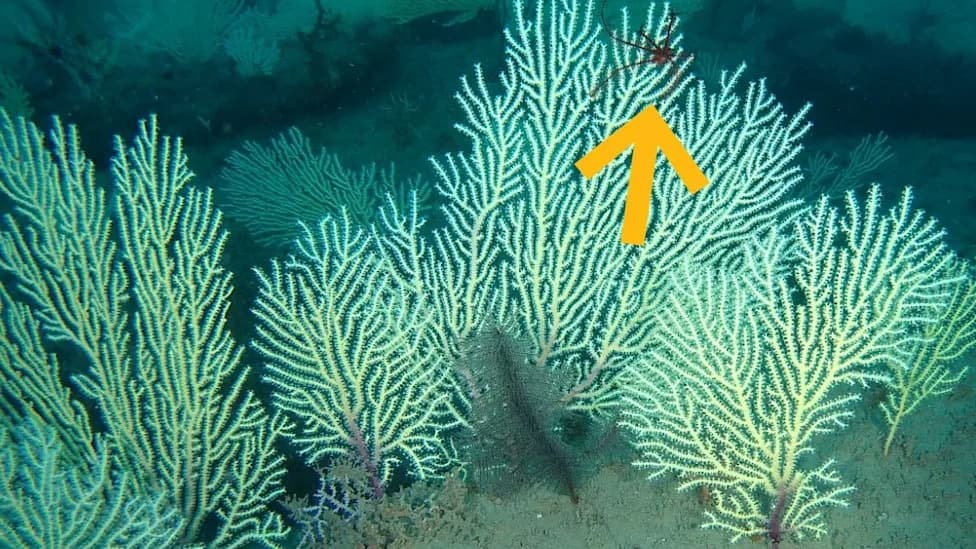
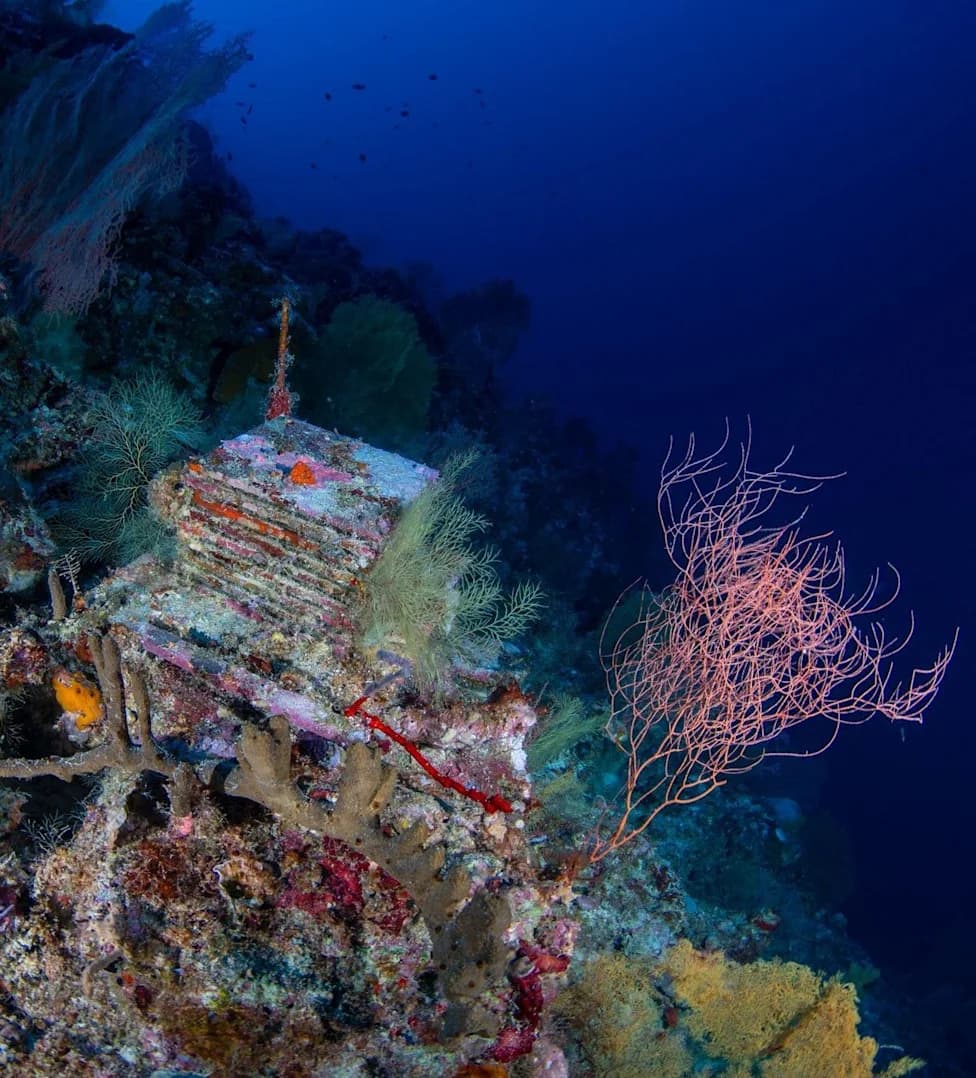
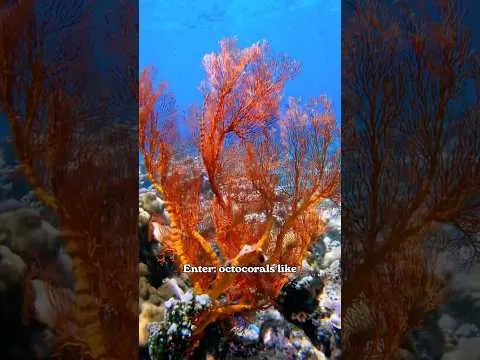
Researchers sighted patches of fern-like corals teeming with fish and other marine life. (Gérard Zinzindohoué)
There is nothing more welcome than good news for coral reefs. The author remembers snorkeling a Florida reef at age nine and returning years later to find it bleached and lifeless — a personal snapshot of a global trend: warming seas and repeated bleaching events have killed many shallow corals. So the recent discovery of a thriving reef off Benin, once presumed dead, is a rare piece of hopeful marine news.
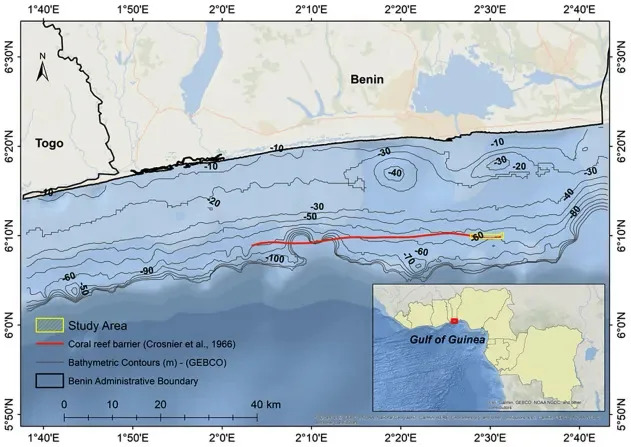
Map of the shelf sea and the continental slope south of Benin with the study area. (Zinzindohoué et al.Frontiers in Marine Science, 2026.)
Background
The newly documented coral community lies off the coast of Benin, a narrow West African nation on the Gulf of Guinea between Togo and Nigeria. While Benin is widely recognized for its cultural history and the Vodún tradition, its offshore waters have been little explored. A new study published in Frontiers in Marine Science reports that these waters may conceal previously overlooked mesophotic coral ecosystems — the ocean's "twilight reefs" that persist where limited sunlight still reaches.
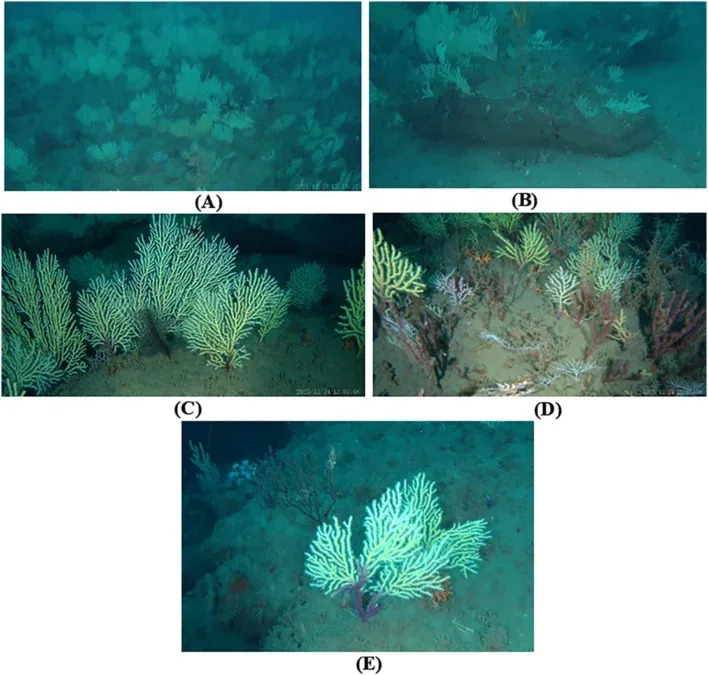
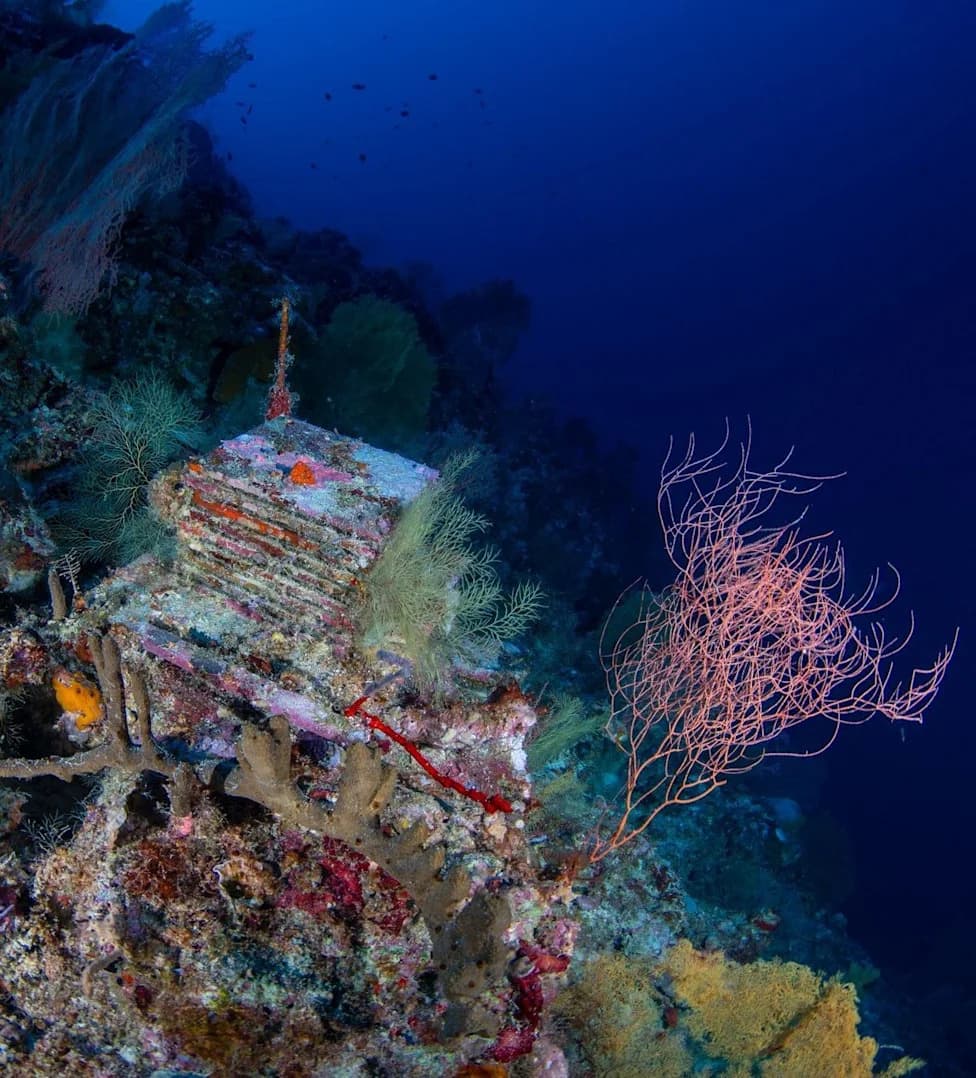
Photos the researchers took of the octocorals from their survey; the low light reflects the deeper location of these mesophotic (middle-light) corals. (Zinzindohoué et al.Frontiers in Marine Science, 2026.)
How the Reef Was Rediscovered
During fishing surveys in the early 1960s, researchers detected structures at 52–56 meters that were interpreted as dead reef formations based on dredge samples and early sonar. No one returned for roughly six decades. Between April and December 2025, a team led by oceanographer Gérard Zinzindohoué used modern side-scan sonar to remap the continental shelf and located two patches of hard-bottom habitat spanning roughly 7 kilometers (4.3 miles). They then deployed underwater cameras and a remotely operated vehicle (ROV) to inspect the sites.
YouTube Thumbnail
'It was not an easy field campaign,' said oceanographer Gérard Zinzindohoué of the Institut de Recherches Halieutiques et Océanologiques du Bénin and the study's lead author. 'It was a mix of long days at sea, technical problems, and a lot of uncertainty. But then we saw structures on the sonar that looked like they could be reef signatures, which gave us hope that we were close.'
Findings
ROV and camera footage revealed a lush mesophotic coral garden at about 54 meters (177 feet). Unlike many shallow tropical reefs built primarily by stony corals, this site is dominated by soft, fern-like octocorals and includes two types of black coral — long-lived species that create structured habitat. The team documented at least six distinct octocoral morphologies and recorded eight fish species using the area for shelter and feeding, including golden African snapper (Lutjanus fulgens), blackbar soldierfish (Myripristis jacobus), Guinean angelfish (Pseudupeneus prayensis), three-banded butterflyfish (Chaetodon robustus), and two species of damselfish.

Subscribe to ScienceAlert's free fact-checked newsletter
The habitat appears as isolated rocky patches colonized by corals rather than a single continuous reef — a pattern commonly seen in mesophotic systems, where scattered hard substrate is surrounded by sand.
Limitations and Conservation Context
The authors emphasize important limitations: only one of the two sonar-identified patches was visually surveyed because of budgetary and logistic constraints, and no coral samples were collected. Species identifications are therefore provisional, based on photographic and video evidence rather than specimen-based analysis. The team describes this work as a first glimpse rather than a complete inventory.
Even preliminary documentation is valuable. Continental shelf habitats across the world face growing pressures from bottom trawling and other human activities, while climate change continues to reshape marine ecosystems. Mapping mesophotic coral gardens is a crucial first step toward understanding and potentially protecting these understudied communities.
Publication: The findings are published in Frontiers in Marine Science (2026).
Help us improve.