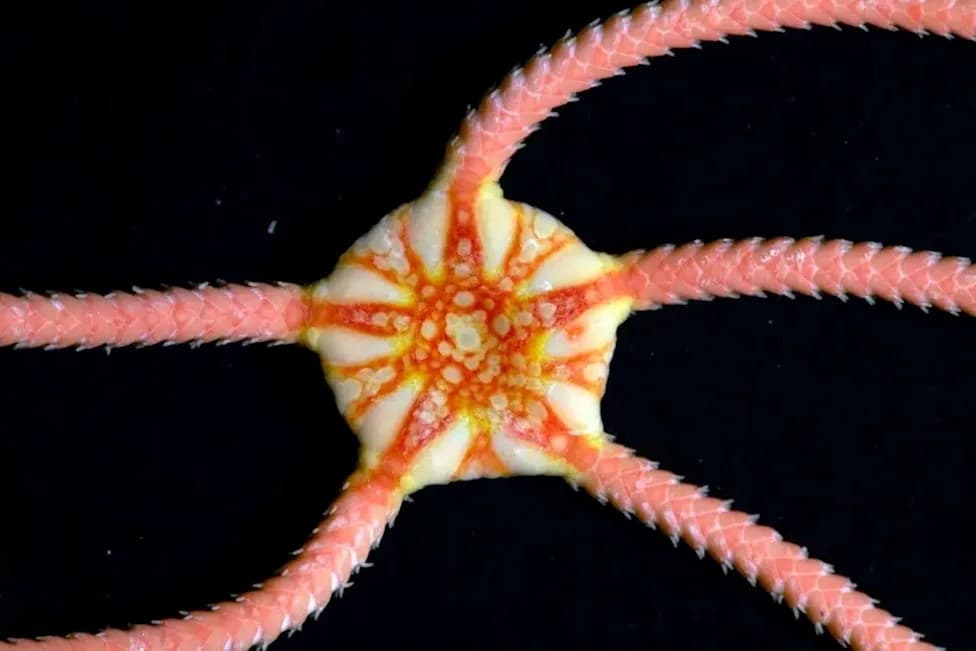
Researchers retrieved decade-old autonomous reef monitoring structures (ARMS) from mesophotic "deep reefs" (about 30–150 m) around Palau to study understudied twilight-zone communities. The standardized ARMS captured nearly 3,000 specimens — many cryptic or potentially new species — but only ~3% were identified to species so far pending DNA sequencing. Beyond species lists, the project reveals ecological relationships and provides standardized, long-term snapshots that will help scientists understand energy flow, food webs, and climate vulnerability in deep reefs.
Inside the Quest to Unlock the Ocean’s Mysterious ‘Deep Reefs’
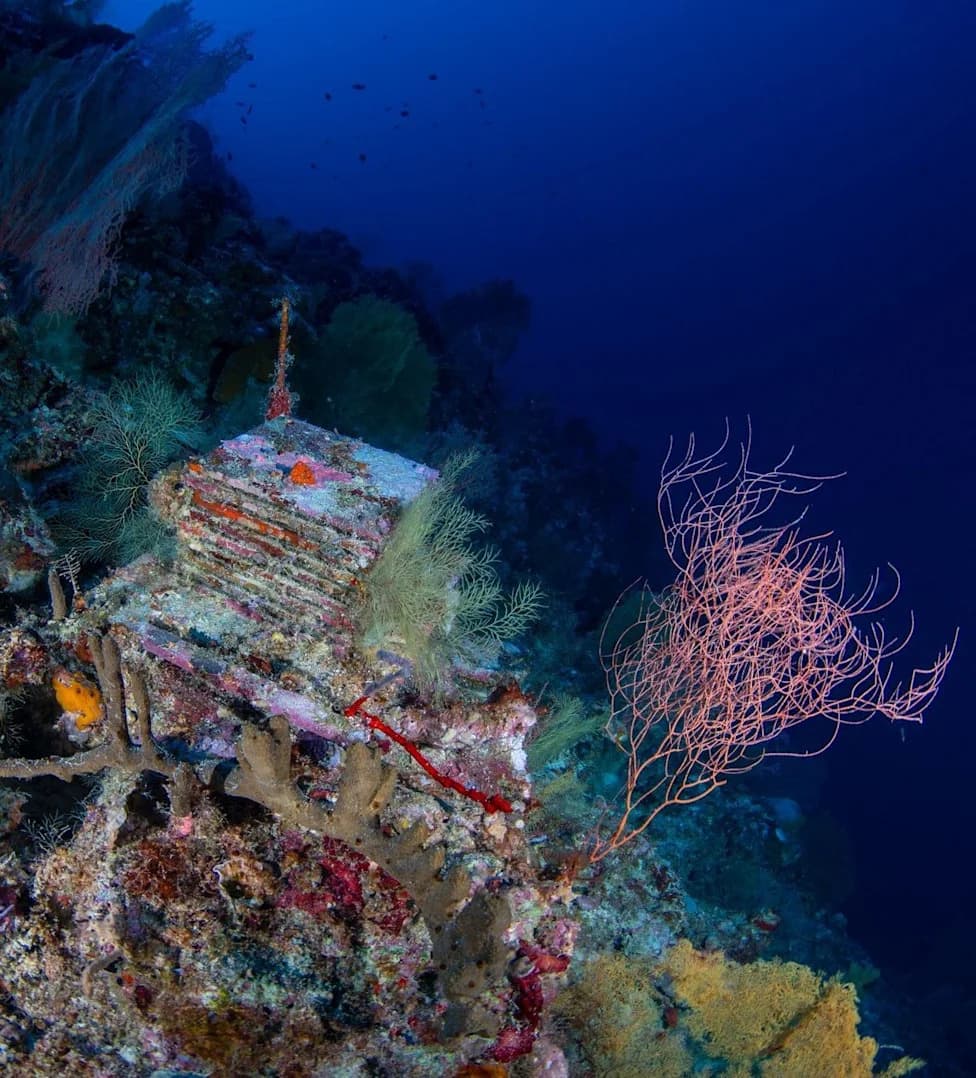
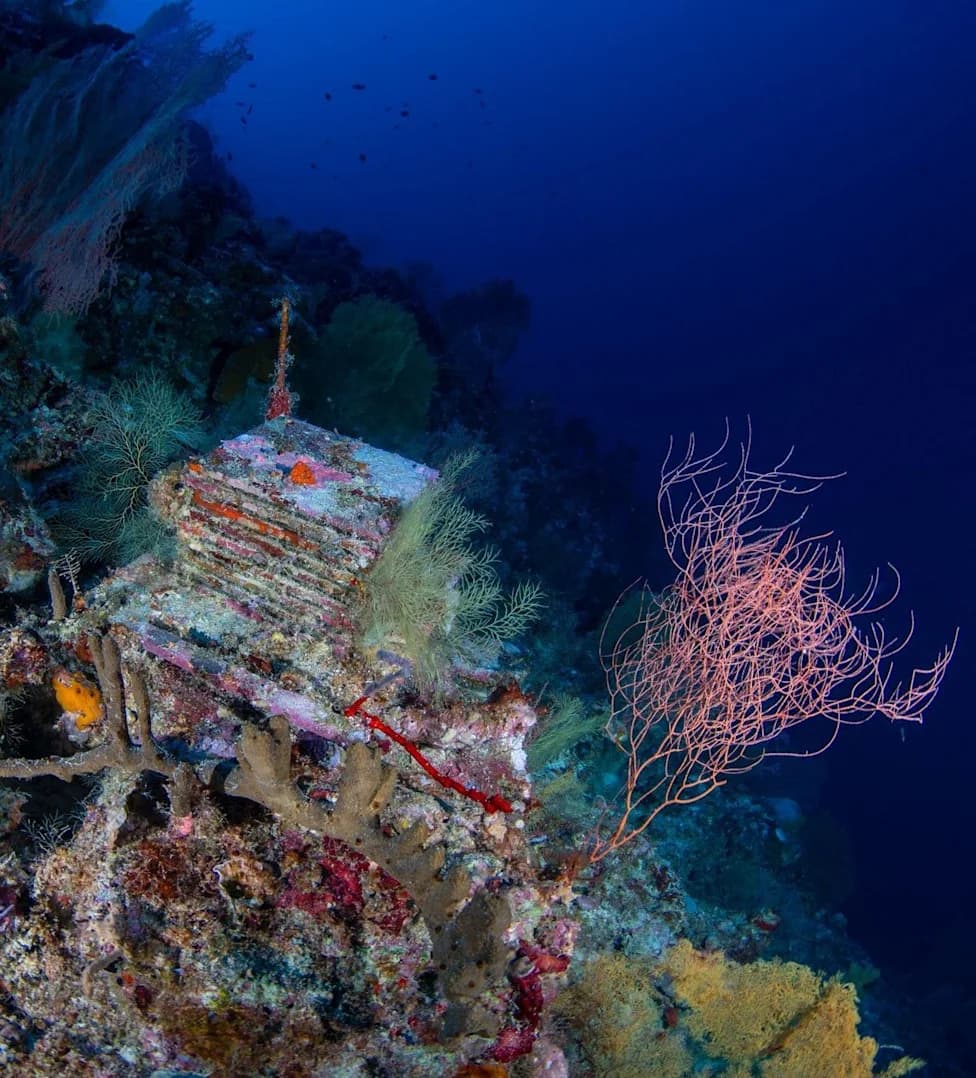
An autonomous reef monitoring structure (ARMS) in the mesophotic zone. | © Luiz Rocha
PALAU, Micronesia — On a bright, sunny day in May, I stood on a research boat in the turquoise waters of Palau, watching a team of divers prepare to bring up nearly a decade of hidden life from a dim, little-known layer of the ocean.
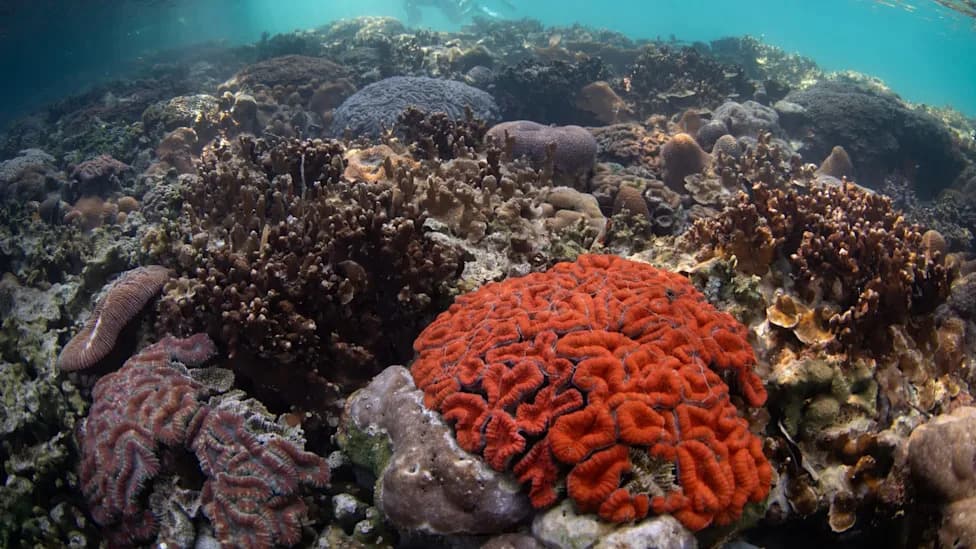
Palau is celebrated for its shallow, sunlit coral reefs. But the scientists I followed were heading beyond those familiar habitats into the mesophotic zone — the ocean’s twilight band, typically between about 30 and 150 meters deep, often called the “deep reefs.” These communities exist in reduced light, where photosynthesis is limited and ecological dynamics can differ substantially from shallow reefs.
What Makes Deep Reefs So Mysterious?
Researchers acknowledge how little we know about mesophotic coral ecosystems. As Luiz Rocha, curator of ichthyology at the California Academy of Sciences, put it:
Anything between 30 meters and 150 meters is really, really unknown.
Key unknowns include the main energy sources when photosynthesis is reduced, the structure of food webs, the evolutionary adaptations of residents, and how resilient these communities will be to climate change. Scientists have found that mesophotic reefs often harbor species that are rare or absent in shallow water, and they appear across many tropical and subtropical regions — from Micronesia and the Caribbean to parts of the Gulf of Mexico.
Sampling a Place You Can Barely Visit
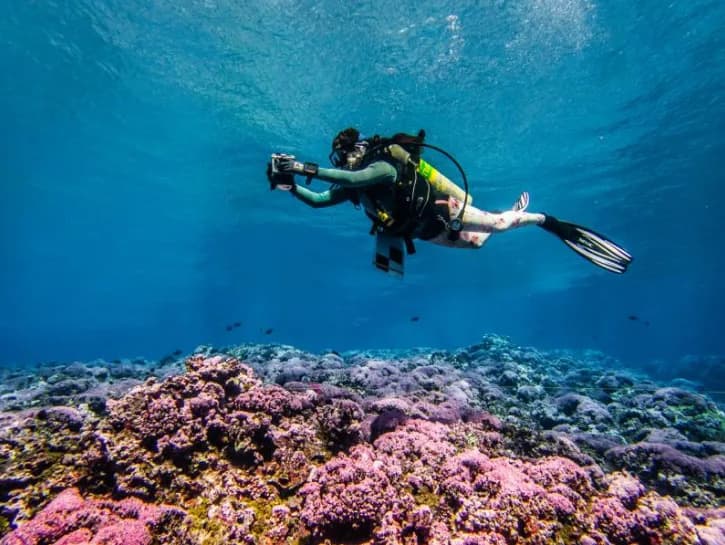
Exploring this twilight zone is difficult. Technical dives to ~100 meters give scientists only minutes of safe bottom time because gases dissolve into tissues more rapidly at depth and staged decompression is required on ascent. Rocha described typical deep dives as allowing "five minutes, six, seven minutes" on the bottom — long enough for a few photos or small collections, but not for comprehensive study.
Remotely operated vehicles and submersibles help, but cameras struggle to capture tiny, cryptic or behaviorally evasive organisms. To build richer, standardized datasets, Rocha and collaborators turned to a low-tech but powerful approach: autonomous reef monitoring structures (ARMS).
How ARMS Work
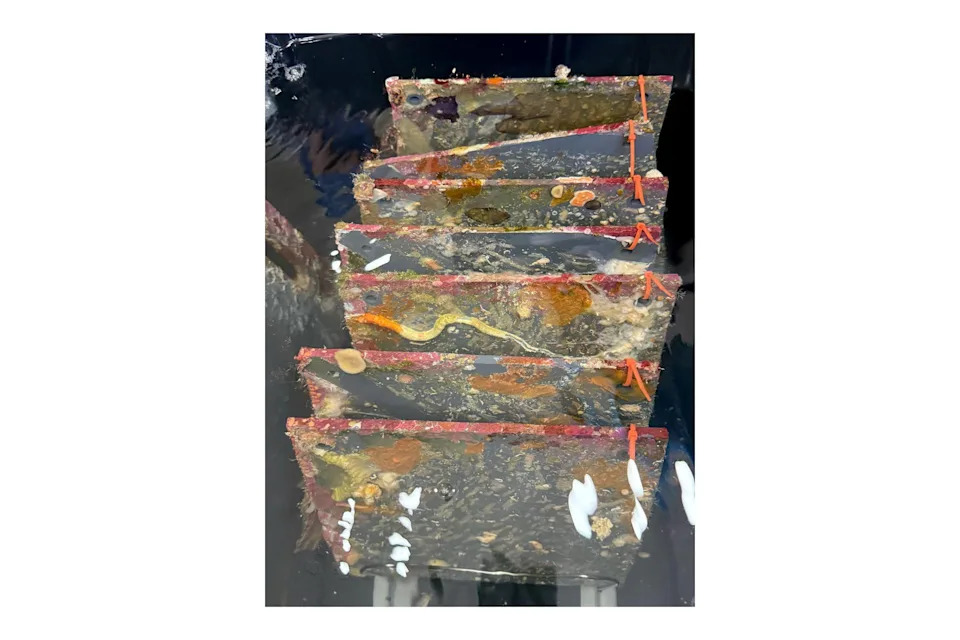
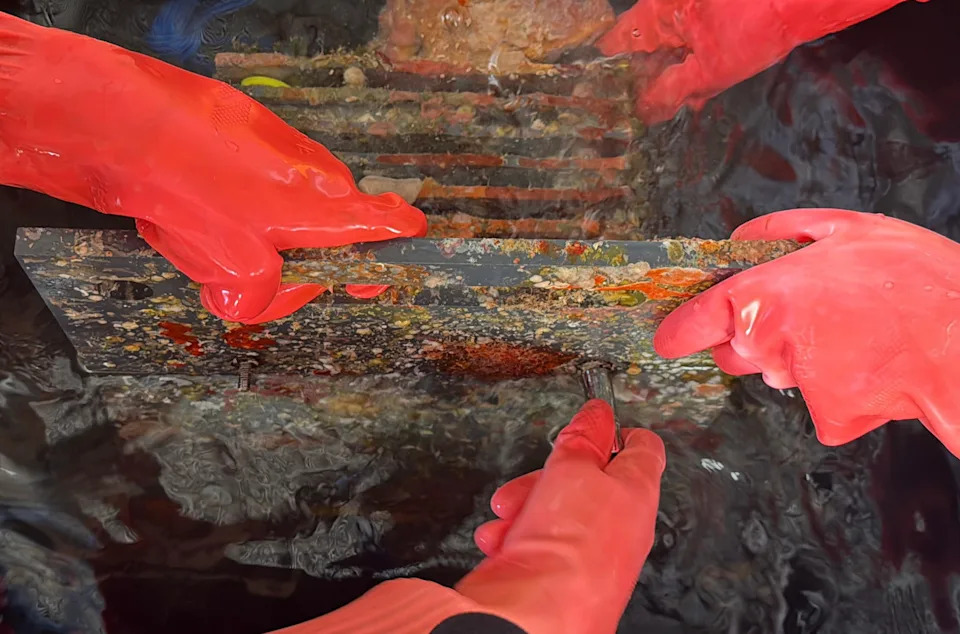
An ARMS unit is essentially a stack of evenly spaced PVC plates attached to a base — imagine a small, prefabricated hotel for marine life. When deployed on a reef and left for years, larvae and small organisms settle in the crevices. Over time, each ARMS becomes a miniature, stable, and extremely biodiverse microhabitat.
Because every ARMS is built the same, researchers can compare communities across sites and depths in a standardized way — an advantage over random rock or rubble sampling, which varies in shape and history.
Palau Retrievals: What the ARMS Revealed
From 2016 to 2018, Rocha and colleagues deployed ARMS at roughly 10, 50, and 100 meters across Palau, Guam, the Marshall Islands, and French Polynesia. Funding delays meant retrievals waited several years, but when divers finally brought the plates to the surface in Palau, the results were striking.
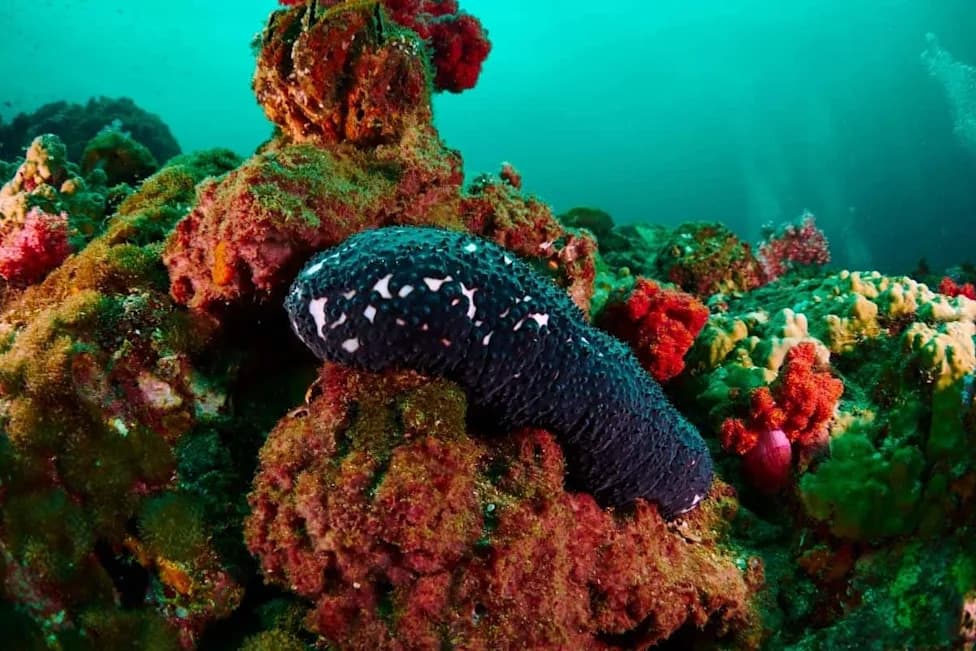
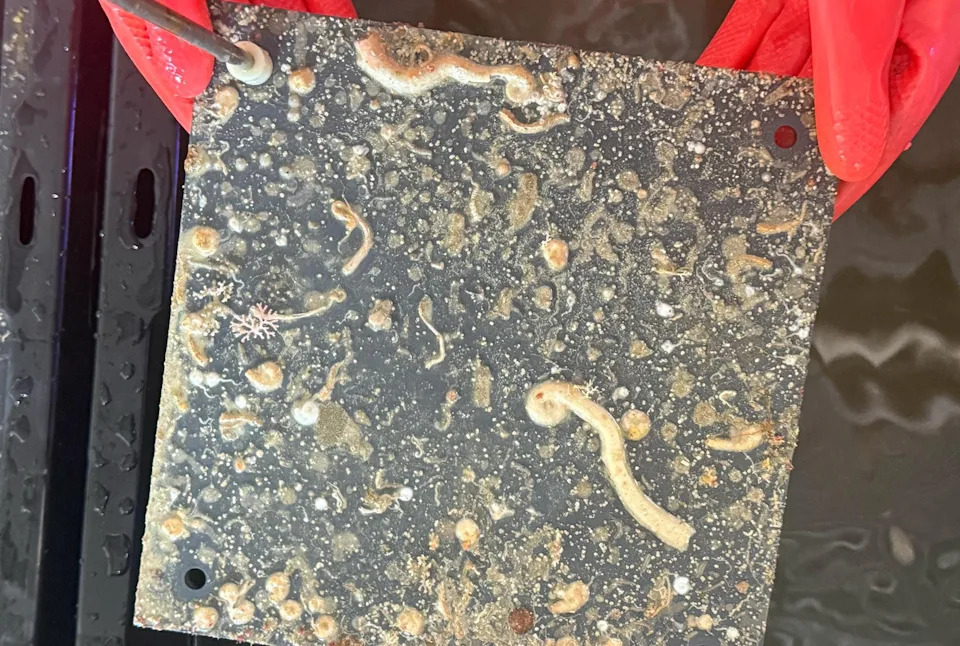
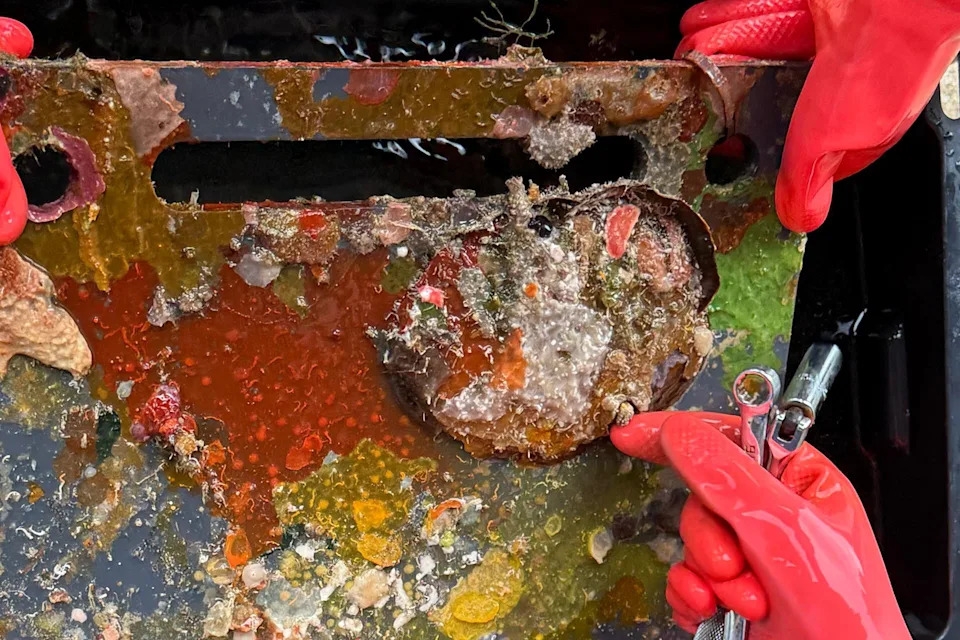
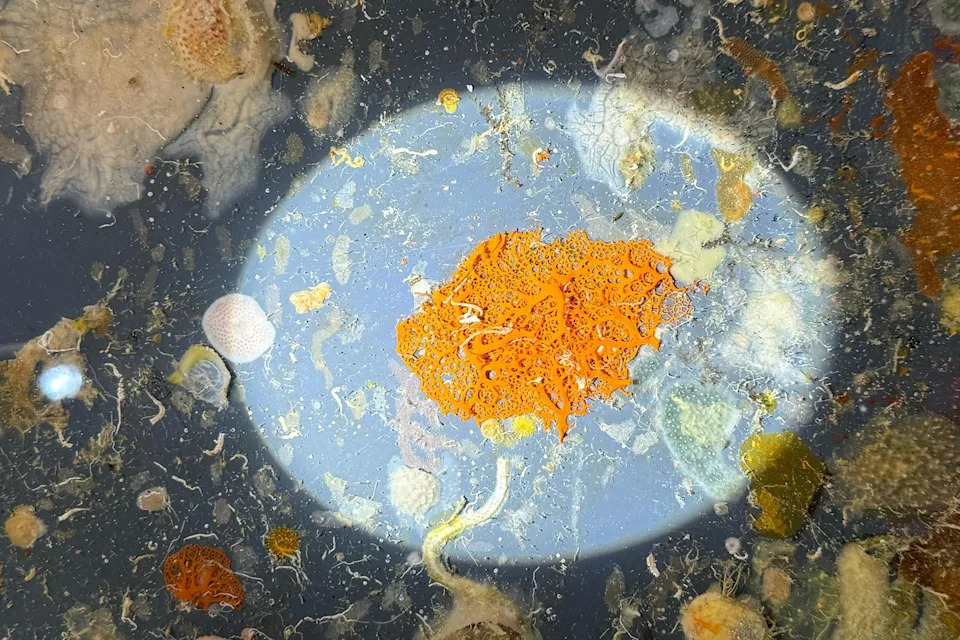
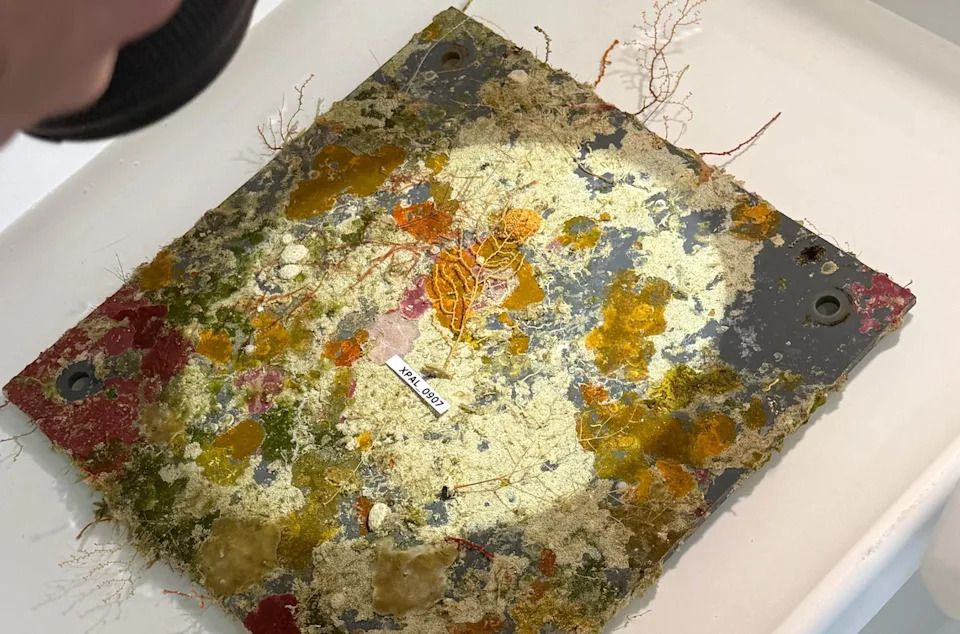
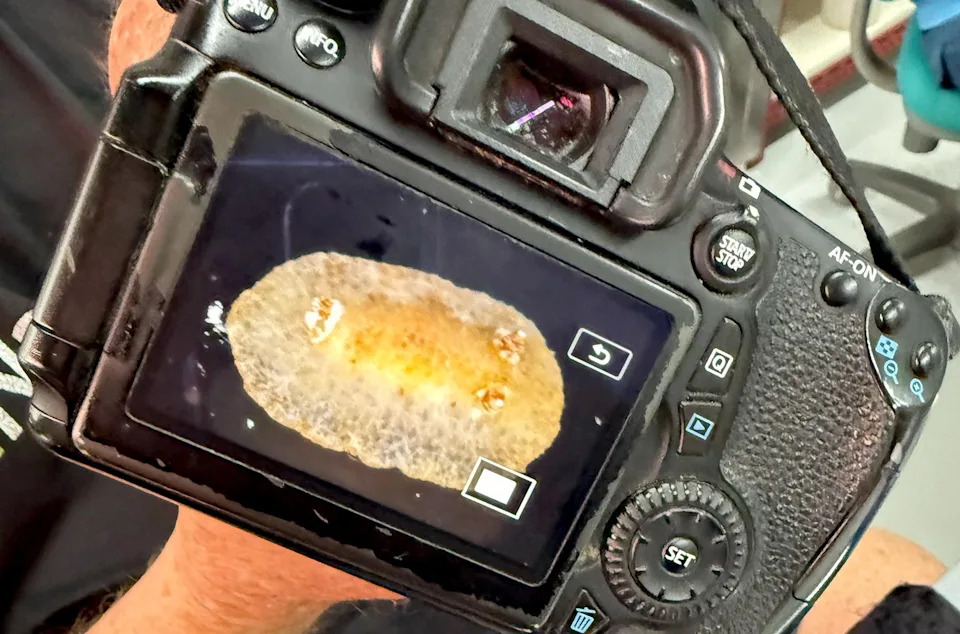
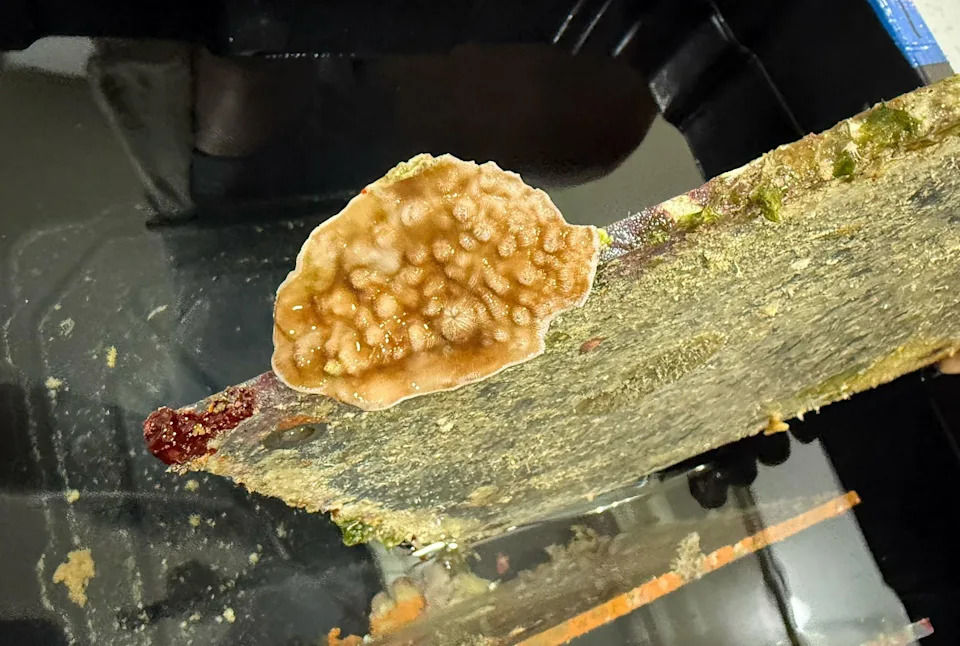
Some structures were sparsely colonized, but others were thick with life: sponges of different textures and sizes; delicate octocoral fronds; bright patches of red, orange, green, and pink; nudibranchs (colorful sea slugs); tiny crabs; bryozoans that formed honeycomb-like sheets; and tunicates (sea squirts), among many other organisms. The recovered ARMS from Palau yielded close to 3,000 specimens.
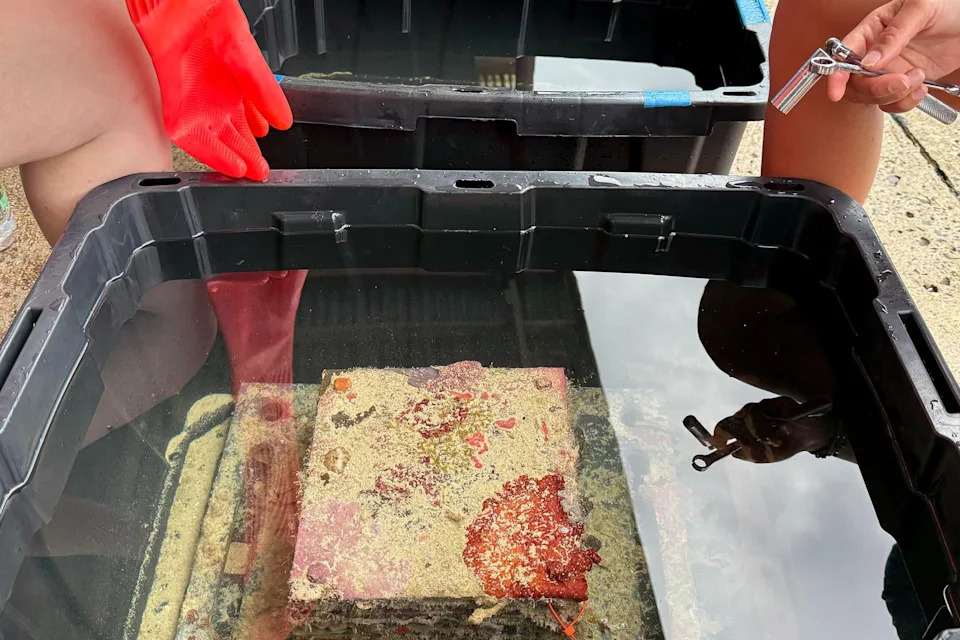
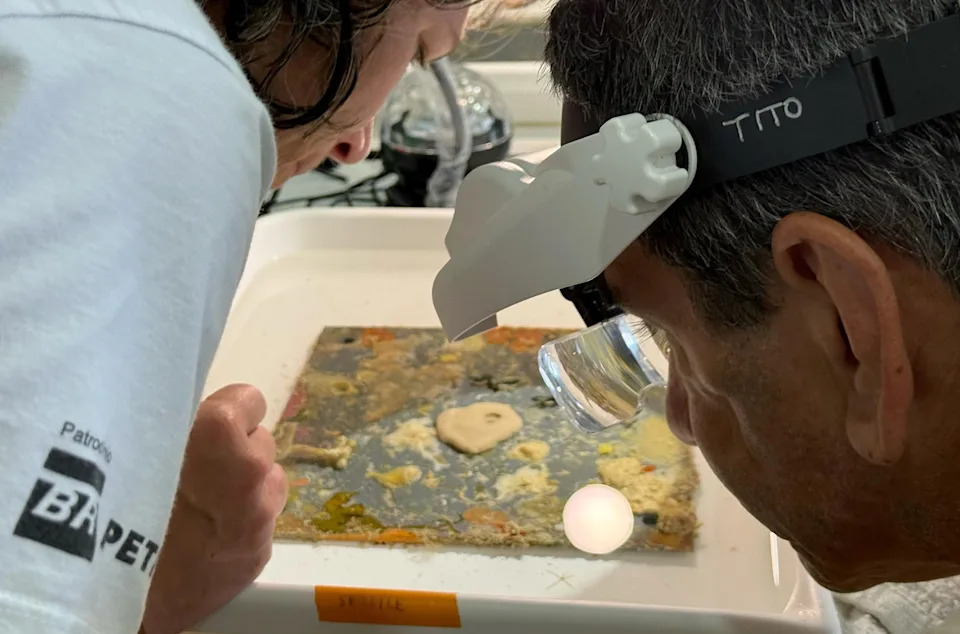
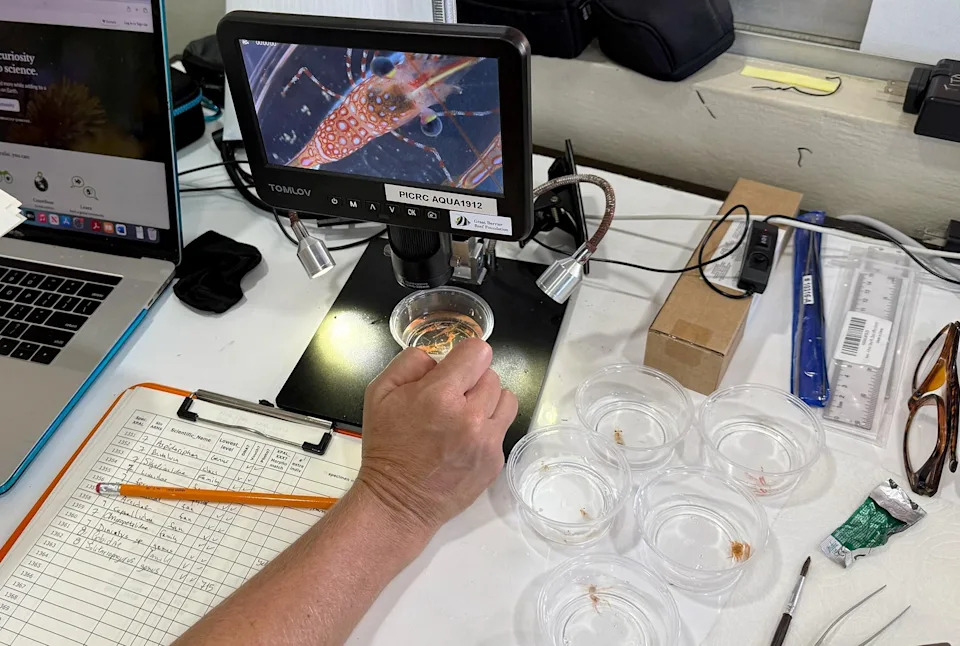
Onboard and at the Palau International Coral Reef Center, teams dismantled plates, photographed each plate as a time capsule, and sorted organisms into trays. Specialists like nudibranch expert Terry Goslinger could flag probable new species by eye; other specimens required genetic sequencing and deeper taxonomic work. As of mid-project reporting, only about 3% of samples had definitive species-level identifications and fewer than 20 samples had a genus-level assignment — a reminder of how much work remains.
At the end of physical sorting, residual material was scraped, blended, and processed in a method researchers wryly called "milking the turd" — a homogenized residue that is also sampled for DNA to detect organisms not visible or collected directly.
Why This Matters
ARMS do more than inventory species. Because they capture who lives next to whom and preserve small-scale associations, they reveal ecological relationships — symbioses, predator-prey links, and affinity between species — that are central to understanding ecosystem function. Scientists found intimate interactions such as a pompom crab holding tiny anemones, a sticklike skeleton shrimp hiding on a hydroid, and bright red snails associated with red octocorals.
These detailed, standardized datasets will help answer larger questions: How much overlap exists between shallow and deep reef species? What powers deep-reef food webs when light is scarce? How vulnerable are these communities to warming oceans and other human impacts? Rocha compares the current state of mesophotic research to early mountain-ecology studies that mapped species distributions by elevation — foundational work that later generations would build upon.
Next Steps
Researchers will continue genetic sequencing, taxonomic description, and ecological analysis. The ARMS deployments provide a set of repeatable windows into the twilight zone that can inform conservation and management of reefs across depth gradients.
As Rocha put it: "No, we will not assemble the puzzle in our lifetimes, but we'll generate some good pieces for the next generation to assemble."
Photo credits: Byrd Pinkerton/Vox, Susanne Bähr, Steve Lindfield, and the California Academy of Sciences.
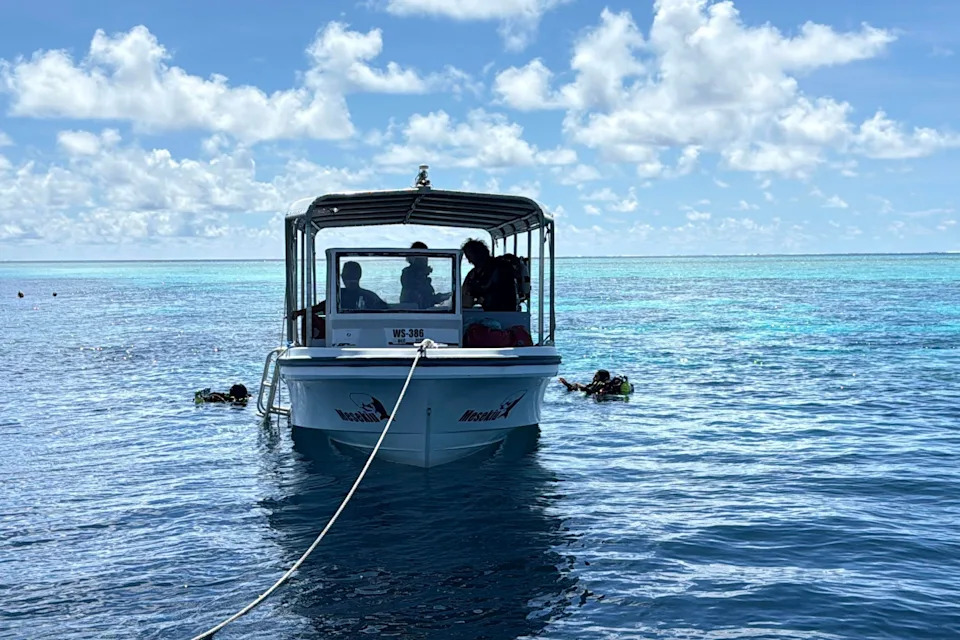
A boat full of divers prepares to retrieve research structures from down in the "deep reefs." | Byrd Pinkerton/Vox
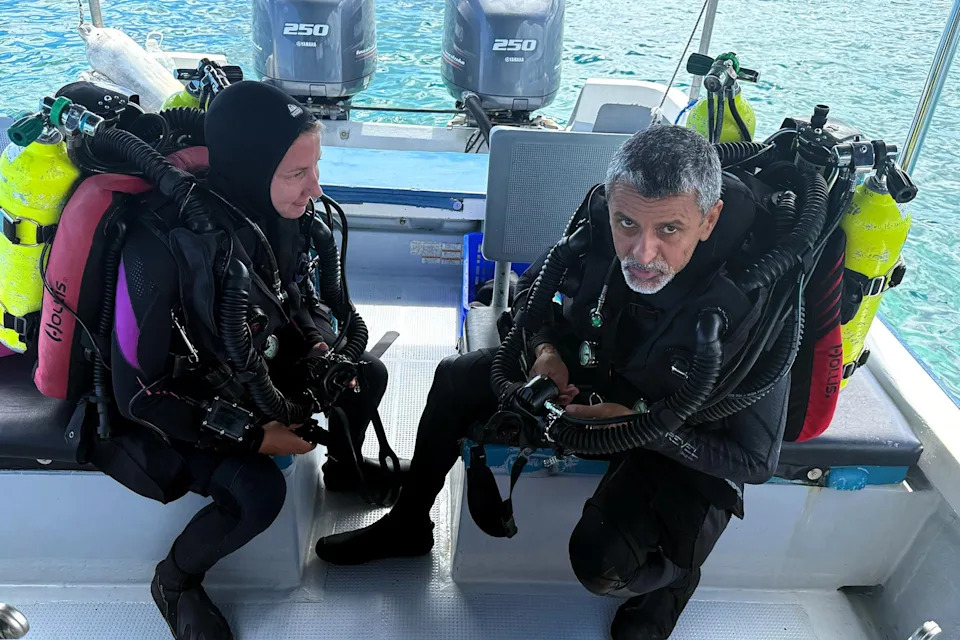
Susanne Bähr, postdoc at the California Academy of Sciences, and Luiz Rocha, curator of Ichthyology at the California Academy, prepare their diving gear. | Byrd Pinkerton/Vox
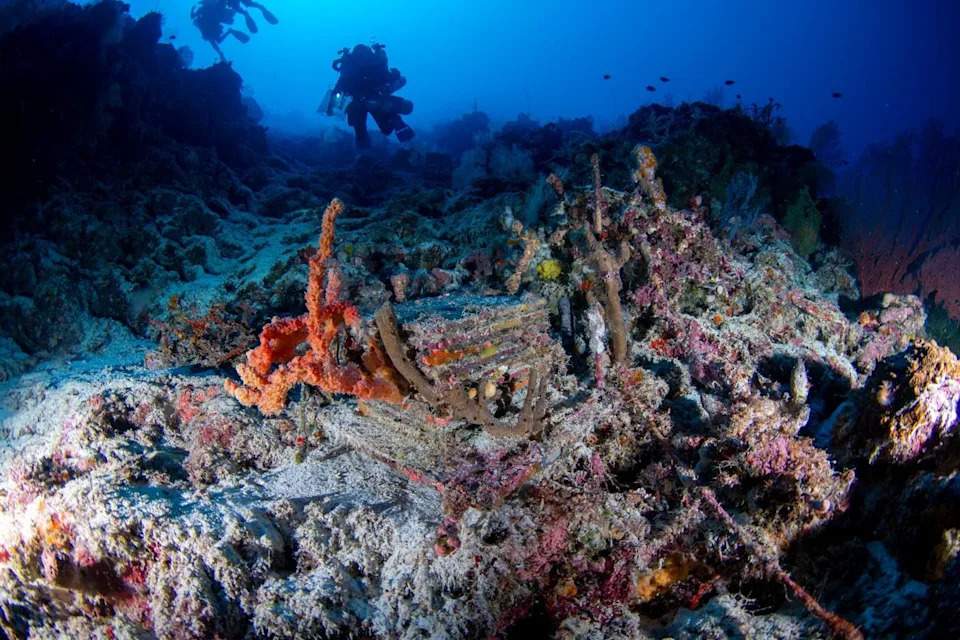
In his work, Luiz Rocha wants to answer seemingly fundamental questions, among them: What is the main energy source for everything down here in the dimmer light? What does the food chain look like? How have things evolved to live down at these depths? | © Luiz Rocha
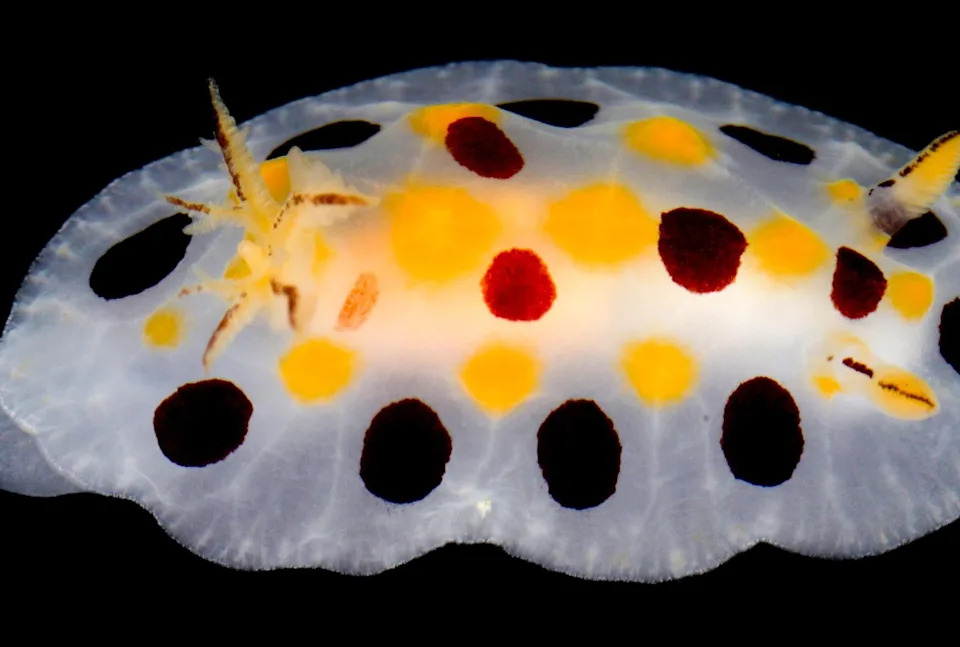
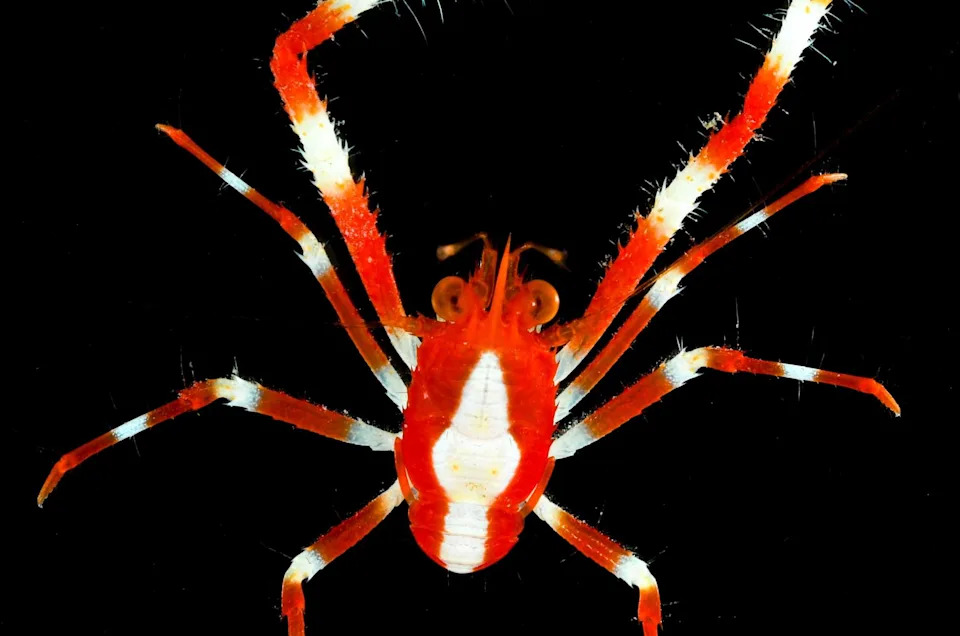
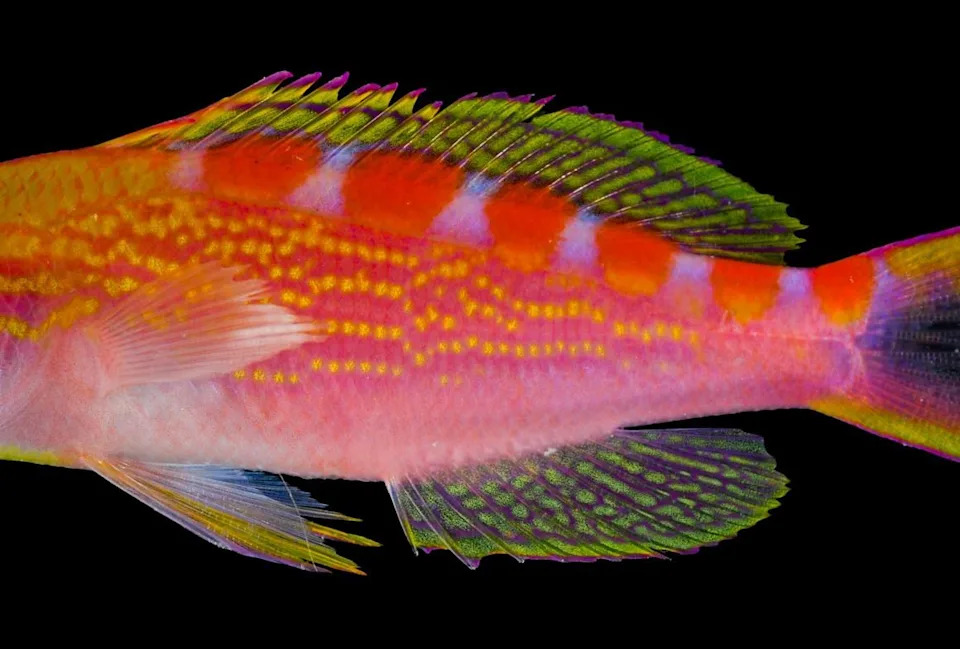
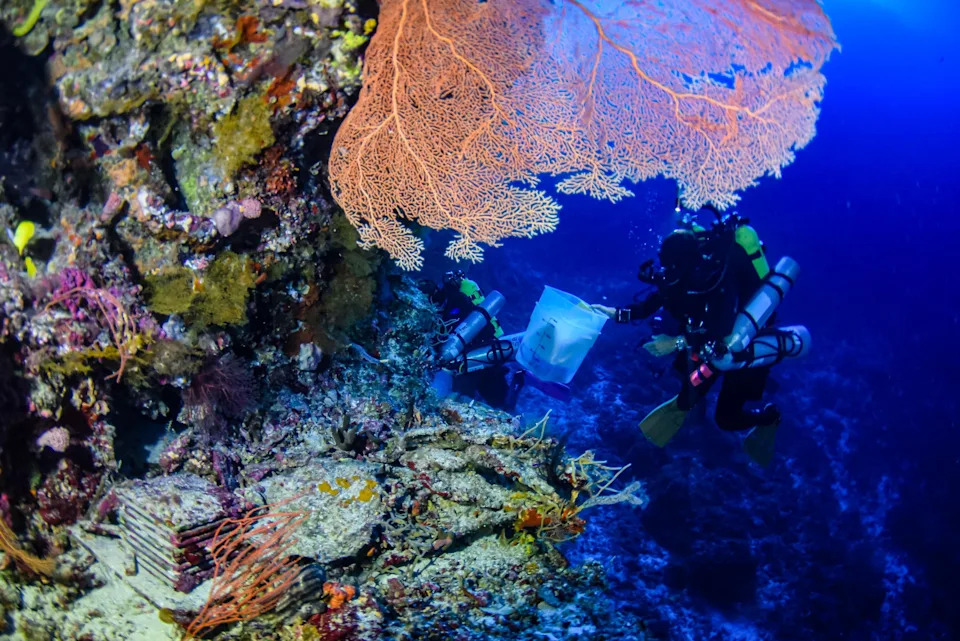
In the bottom left corner, there is an ARMS encrusted with life. | © Steve Lindfield
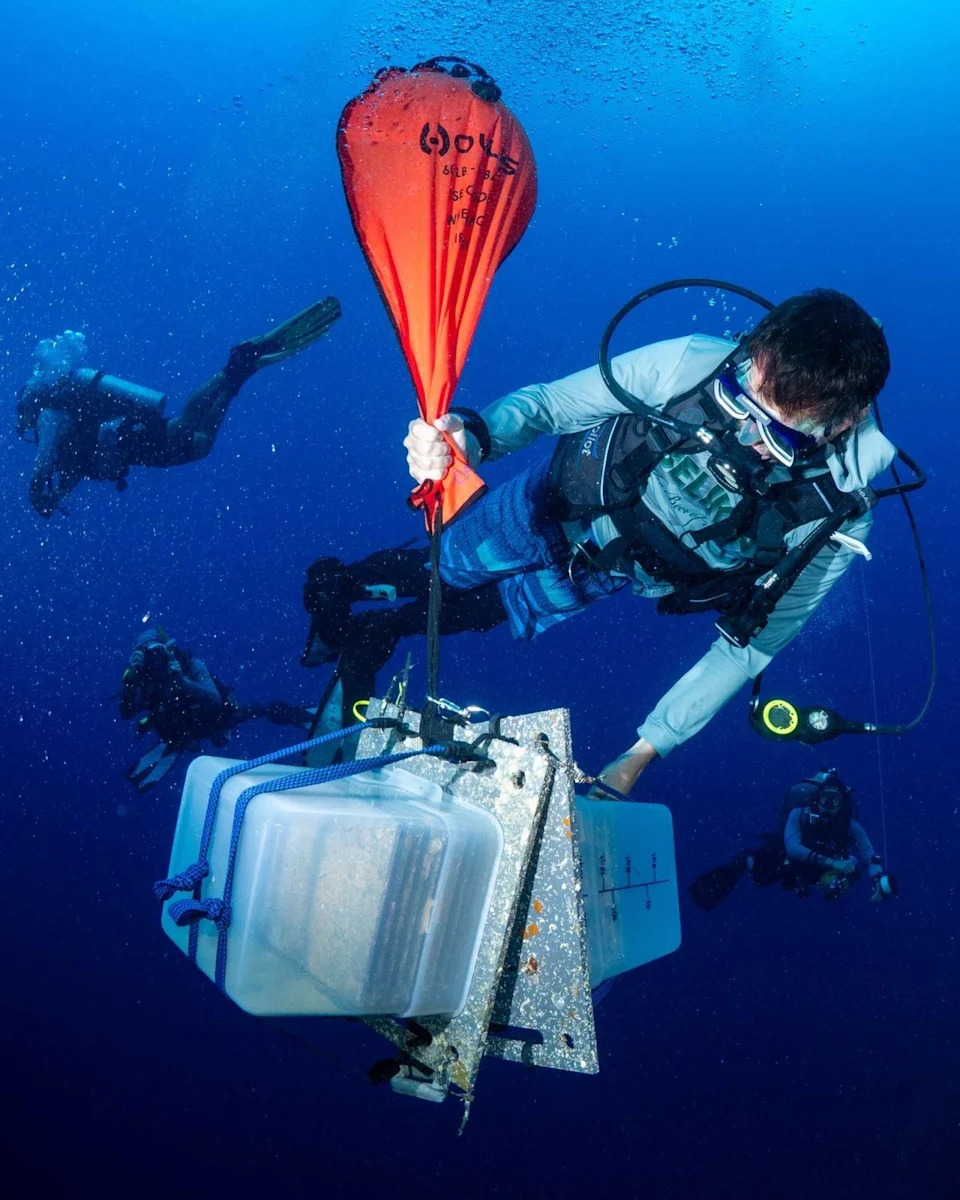
Deep divers would descend down to find and retrieve the ARMS. They'd put the structures in a clear tub to keep organisms from being lost or washed away. The ARMS would be passed up, relay style, to shallower divers, and brought up to a boat full of scientists who were ready to receive them. | © Susanne Bähr
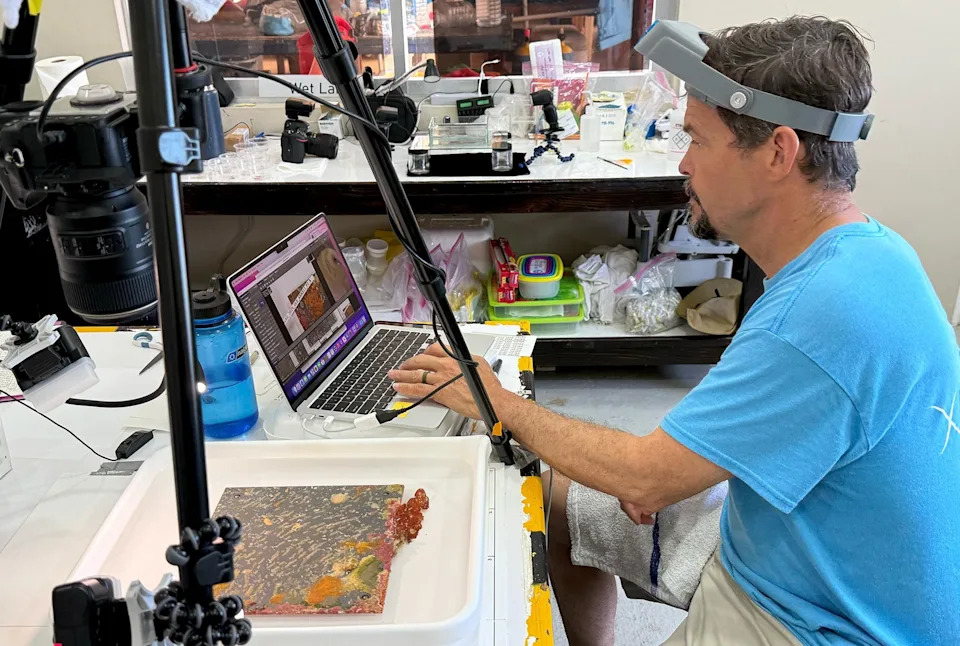
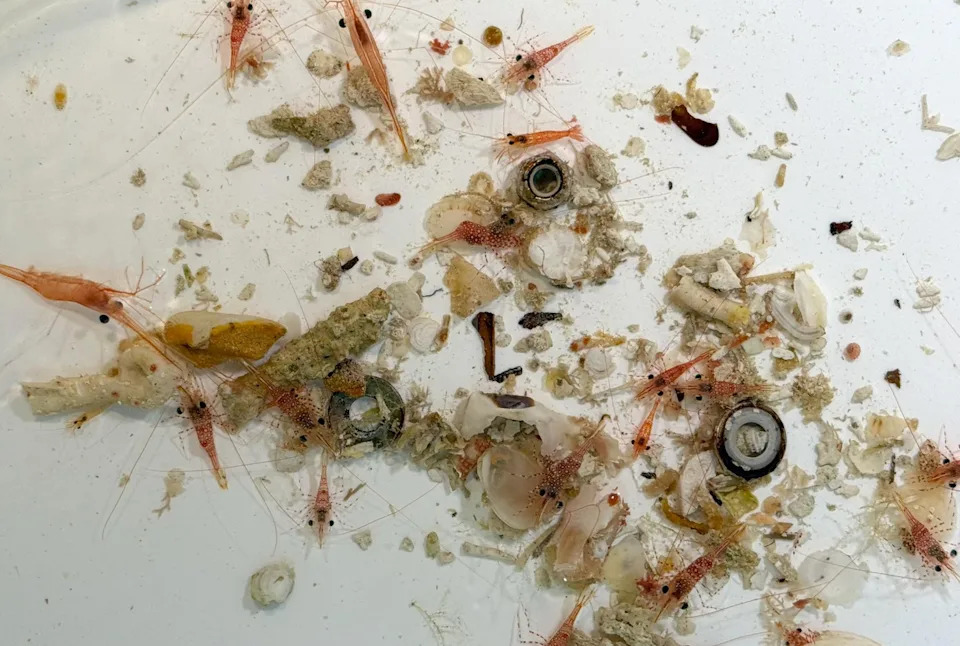
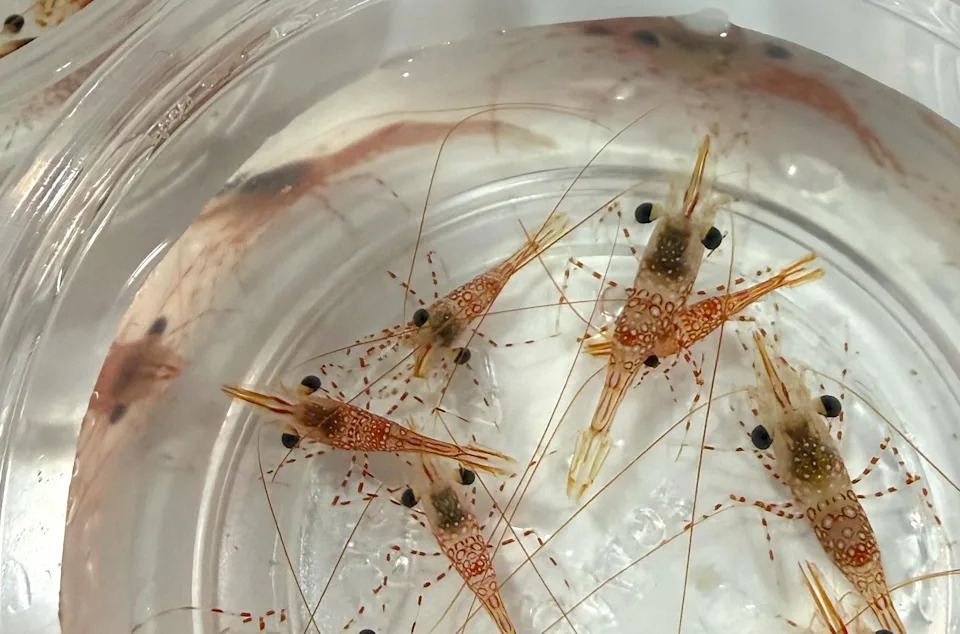
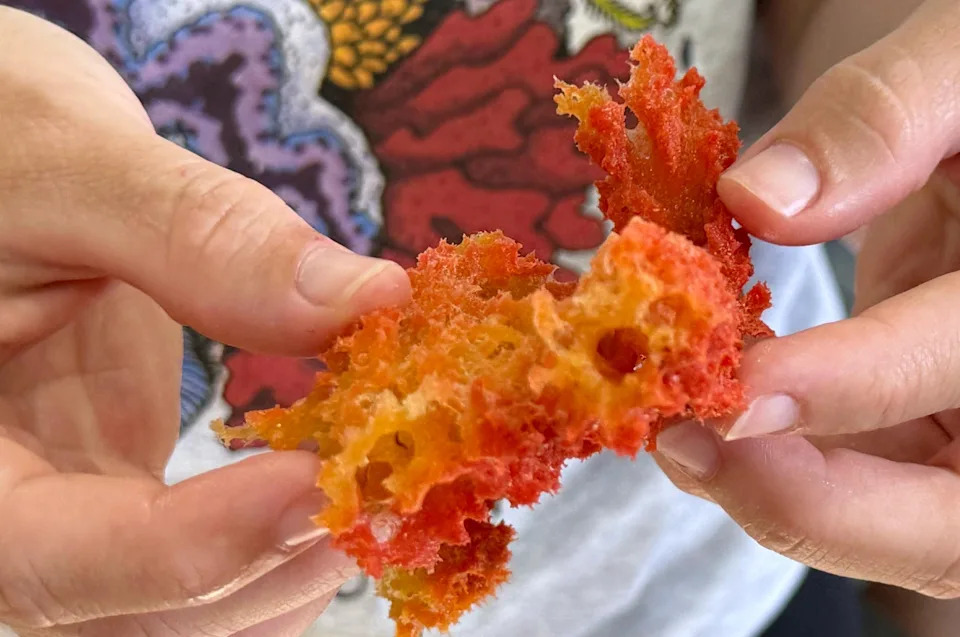
a nudibranch seen on a camera screen
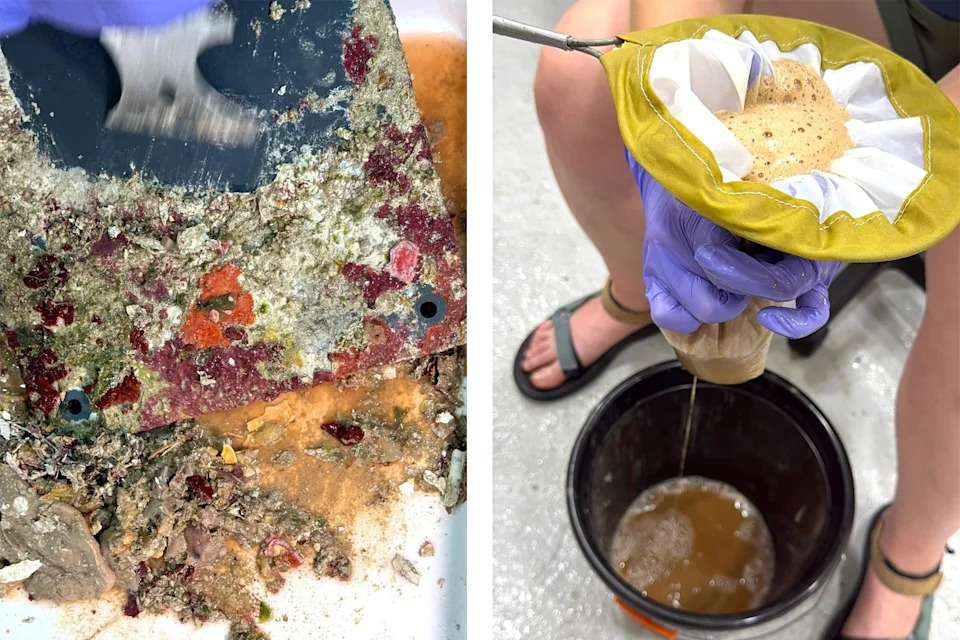
At the end of the identification process, the material left on the plates was scraped off with a paint scraper, ground up in a blender, and squeezed dry in a process one researcher called "milking the turd." The "turd" of material can then also be sampled for DNA, to work out what else might have been down there in the deep. | Byrd Pinkerton/Vox
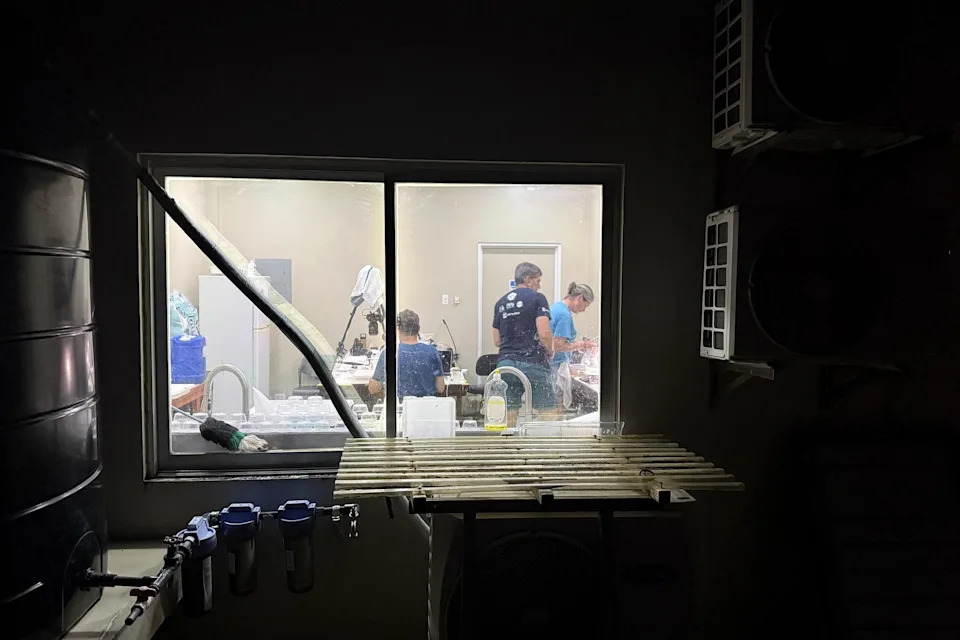
The researchers working late into the night. | Byrd Pinkerton/Vox
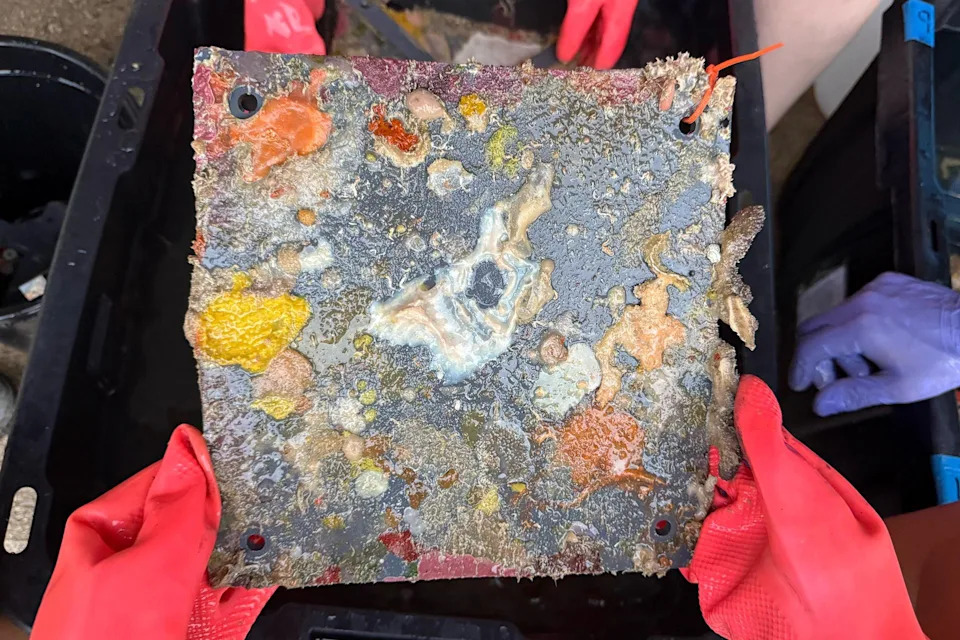
One last plate before we go. | Byrd Pinkerton/Vox
Help us improve.