Key Takeaway: A May 2023 UK cohort study found a statistical association between some routine adult vaccines and dementia diagnoses but did not prove vaccines cause dementia. Authors say the observed effect is likely due to unmeasured confounding and detection bias, especially for recurring vaccines (influenza, pneumococcus) that lead to more medical visits. Experts warn against sharing alarmist clips that omit this context.
Study Does Not Prove Vaccines Increase Dementia Risk — Social Clips Misleadingly Amplify Results
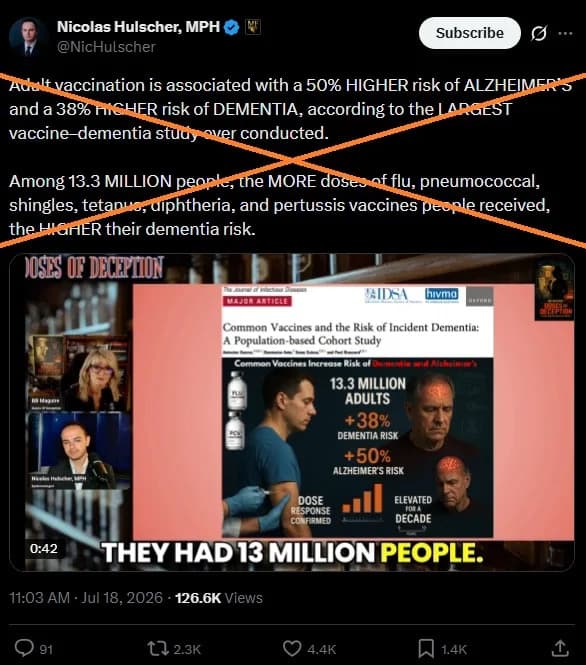
Screenshot from X taken July 23, 2026
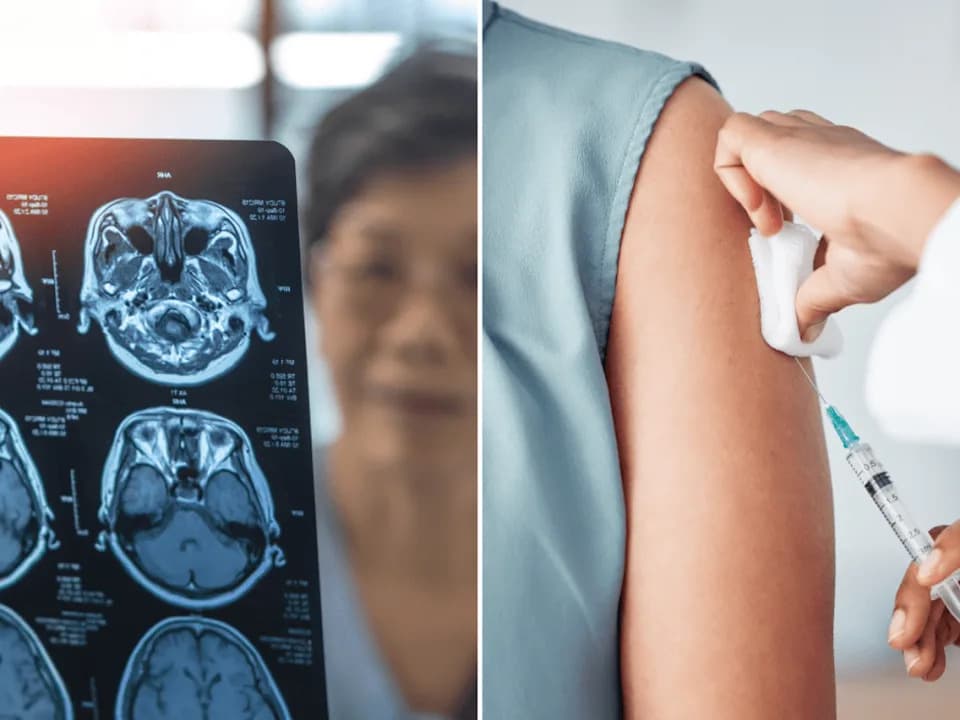
A May 2023 United Kingdom cohort study reported a statistical association between several common adult vaccines and subsequent diagnoses of dementia, but the paper's authors and independent experts emphasize it does not prove that vaccines cause dementia.
The study, published in the Journal of Infectious Diseases and led by pharmacoepidemiologist Antonios Douros, found that recipients of regularly recurring vaccines — notably seasonal influenza and pneumococcal shots given to higher-risk groups — showed a higher recorded incidence of dementia in the dataset. However, the authors concluded the association was likely explained by unmeasured confounding and detection (surveillance) bias, not by a direct harmful effect of vaccination.
On social media, clips and captions have amplified the finding into blunt claims such as “Adult vaccination is associated with a 50% higher risk of Alzheimer’s and a 38% higher risk of dementia.” These interpretations omit important caveats and context from the peer-reviewed paper. Epidemiologist Nicolas Hulscher shared such summaries in short videos that spread across platforms including X, Facebook, Instagram, Threads, Bluesky and TikTok.
Why The Study Does Not Prove Causation
Unmeasured Confounding: Observational studies can show statistical associations without capturing every important factor. Douros warned that characteristics not measured in the dataset — for example, frailty, underlying illnesses, or health-seeking behavior — could make some people both more likely to get recurring vaccines and more likely to develop or be diagnosed with dementia.
Detection (Surveillance) Bias: People who receive regular vaccinations, or who visit health-care providers more often, have more opportunities for cognitive problems to be noticed and formally diagnosed. The authors found the apparent increase in risk was driven mainly by vaccines administered repeatedly (influenza and pneumococcal), consistent with more frequent clinical contact rather than a biological effect of the vaccines themselves.
“The study identified statistical associations, but it did not—and could not—establish that vaccines cause neurodegenerative disease,” Douros told AFP. He described social-media extrapolations of the results as misleading.
What Other Research Shows
Previous observational and experimental studies have suggested some vaccines may be associated with reduced dementia risk. Researchers proposed the infectious disease hypothesis — that infections and immune responses might contribute to neurodegeneration — as a rationale for studying whether immunization could help lower dementia risk. Laboratory work and some population studies have supported a possible protective effect, but findings have not been uniform across all studies or vaccines.
Guillaume Dorothée, head of neuroimmunology, inflammation and therapeutics at the Saint-Antoine Research Center in Paris, noted that infections can plausibly accelerate neurodegenerative processes. That biological plausibility is part of why this question remains of scientific interest, but it does not validate claims that routine vaccines increase dementia risk.
Bottom Line
The May 2023 UK cohort study did not demonstrate a causal link between adult vaccination and dementia. Its authors and independent experts caution that the observed association likely reflects confounding and detection bias. Short, alarmist social-media clips that report percentage increases without context misrepresent the evidence and contribute to vaccine misinformation. Decisions about vaccination should rely on the full body of evidence and guidance from public-health authorities.
Help us improve.