The majority of U.S. adults aged 50+ (72%) said they would likely or definitely accept a low-cost, multi-dose vaccine that halves dementia risk for high-risk individuals, according to a USC Schaeffer Center survey of more than 1,500 people. Acceptance varied by age, sex and race—older adults and men were generally more willing, while Black respondents and women expressed more hesitancy. Observational studies have linked some existing adult vaccines (for example, shingles) with lower dementia risk, but experts emphasize those associations do not prove causation. Dementia-specific vaccines are in clinical testing; key scientific hurdles include safely boosting aged immune responses and targeting toxic forms of amyloid beta.
Most Older Americans Would Consider a Dementia-Preventing Vaccine, Survey Finds

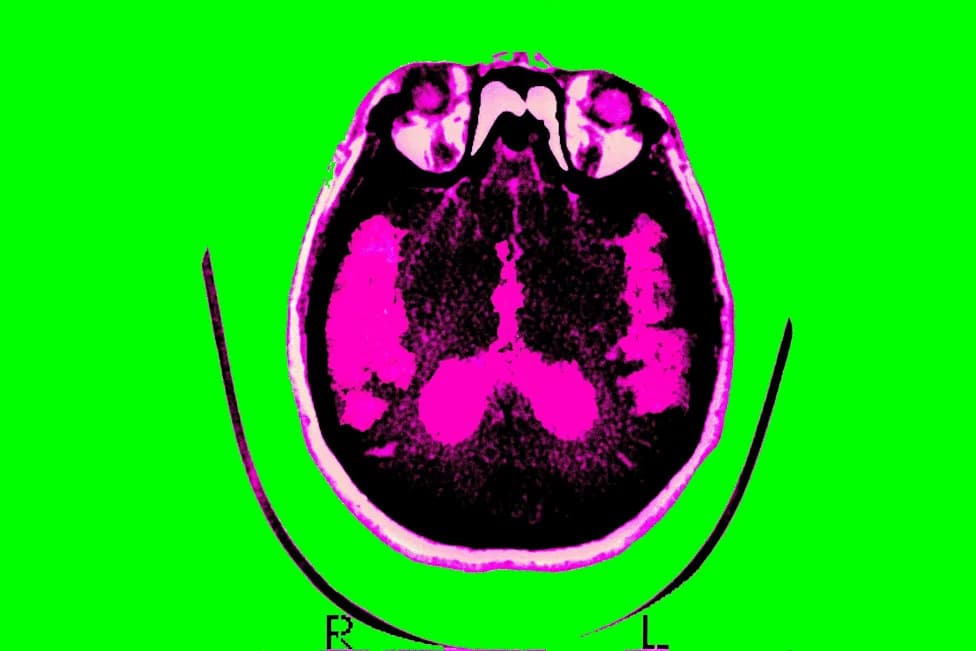
An elderly patient looks at her brain scans in a hospital (left) and a doctor gives a patient a vaccine (right).
A large majority of adults aged 50 and older say they would be willing to receive a low-cost, multi-dose vaccine that could cut the risk of dementia in half for people at high risk, according to new survey research.
Survey Results
Researchers at the University of Southern California Schaeffer Center for Health Policy and Economics surveyed more than 1,500 U.S. adults aged 50 and older about a hypothetical preventive dementia vaccine. Published in JAMA Network Open, the study found that 72% of respondents said they would likely or definitely receive a vaccine that reduced dementia risk by 50% for those at high risk, 21% were unsure, and 7% said they likely or definitely would not.
Who Was More or Less Willing?
Acceptance varied across demographic groups. Respondents aged 70 and older were somewhat more likely to say they would accept the vaccine (35%) than those in their 50s (31%). Women reported greater hesitancy than men: 29% of women said they would get the vaccine versus 39% of men, and 23% of women said they would not compared with 19% of men. Black respondents showed the highest levels of reluctance among racial and ethnic groups, with 26% unwilling to take the vaccine and only 20% saying they would definitely get it compared with 36% of White respondents.
"Uncertainty may be more important than opposition," said study lead J. Felipe Montano-Campos, a postdoctoral researcher at USC, noting that many respondents were undecided rather than firmly opposed.
Why Interest Is Growing
Interest in a dementia vaccine reflects both the devastation of Alzheimer's disease and emerging observational research suggesting some adult vaccines may be linked with lower dementia risk. For example, researchers analyzing health records in Wales reported that shingles vaccination was associated with about a 20% lower incidence of dementia over seven years. Additional 2025 studies from teams in Italy and Canada have reported associations between lower dementia risk and adult vaccines such as influenza, pneumococcal, Tdap and herpes zoster immunizations.
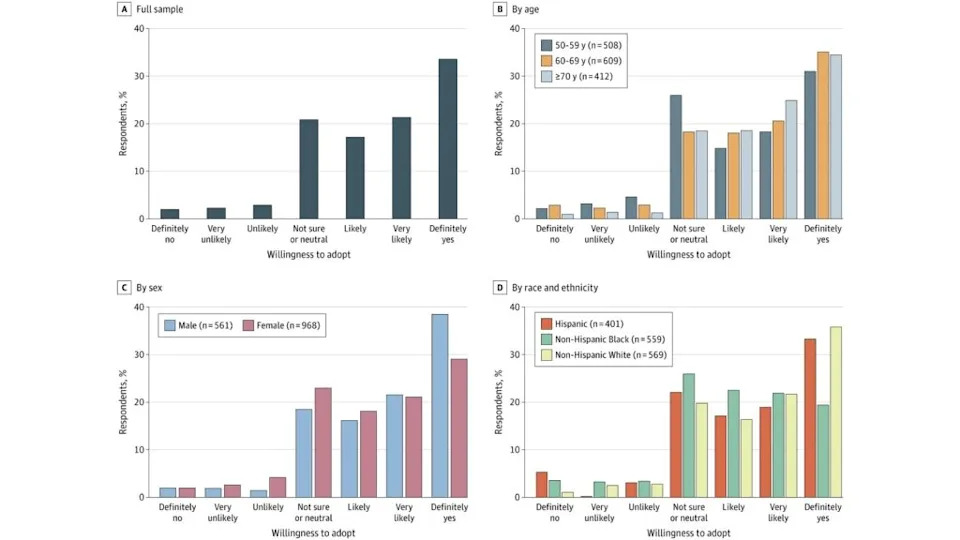
Bar graphs of willingness to adopt a preventive dementia vaccine overall and by age, sex, and race and ethnicity.
Experts caution these findings are observational and do not prove vaccination causes reduced dementia risk. "It is not yet clear whether the relationship is causal and what biological mechanisms may account for this," said Jonathan Lovell, a professor of biomedical engineering at the University at Buffalo.
Where Vaccine Science Stands
Dedicated dementia vaccines are under investigation, and several strategies have reached clinical-stage testing, but none are approved for prevention to date. Researchers say a successful preventive vaccine must do two things: safely boost the aging immune system, and target the specific pathological drivers of the disease, especially oligomeric forms of amyloid beta, which are thought to be particularly toxic to neurons.
"Reactivating the immune system without triggering an excessive immune response is a key consideration," said Chuanhai Cao of the University of South Florida's Byrd Alzheimer's Center and Research Institute. He highlighted approaches such as dendritic-cell–based vaccines loaded with engineered oligomeric amyloid beta as promising ways to generate a controlled, targeted immune response.
Other experts stress the clinical challenges that remain: demonstrating that vaccine-induced immune responses alter underlying disease pathology and showing that vaccination delays onset, slows progression or prevents dementia driven by specific pathologies.
Implications
The USC findings suggest that if an effective, affordable preventive dementia vaccine becomes available, many older Americans—especially those at elevated risk—may be willing to receive it. However, the sizable share of respondents who are uncertain indicates a need for clear public education, outreach, and equitable access strategies to address questions about safety, effectiveness and trust across diverse communities.
Reference: Montano-Campos JF, Joyce GF, Zissimopoulos JM. (2026) Public Attitudes About Preventive Dementia Vaccine Among US Adults. JAMA Network Open. doi:10.1001/jamanetworkopen.2026.34777
Help us improve.