More than half of the world’s migratory bird species are declining, according to a global assessment of over 3,380 species. Primary threats include habitat loss, invasive species, collisions, hunting, the pet trade, pesticides and fishing bycatch. Advances in tracking, genetics and citizen science now let researchers follow individual birds across continents and pinpoint where conservation will have the greatest impact. A full annual‑cycle strategy — protecting and restoring habitats and reducing threats across breeding, migration and nonbreeding periods, backed by international cooperation and early action — can reverse declines.
More Than Half of Migratory Bird Species Are Declining — How Full‑Cycle Conservation Can Save Them
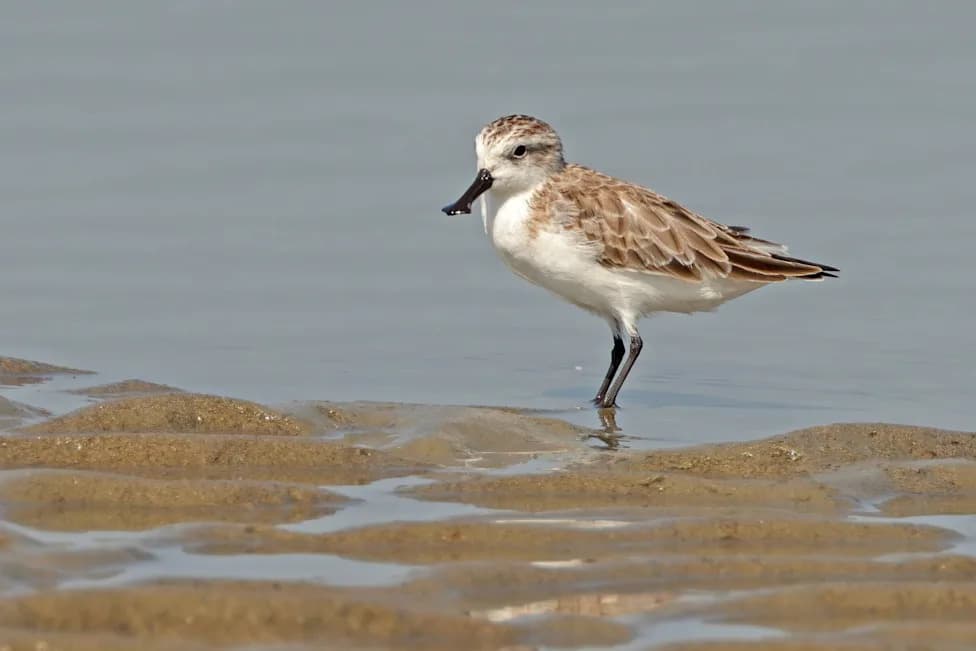
The spoon-billed sandpiper, a small wading bird, flies nearly 5,000 miles (8,000 km) on its annual migration.Tareq's Photography/Wikimedia,CC BY-SA
Every year billions of migratory birds link continents, oceans and ecosystems as they travel between feeding areas and breeding sites on astonishing, often intercontinental journeys.
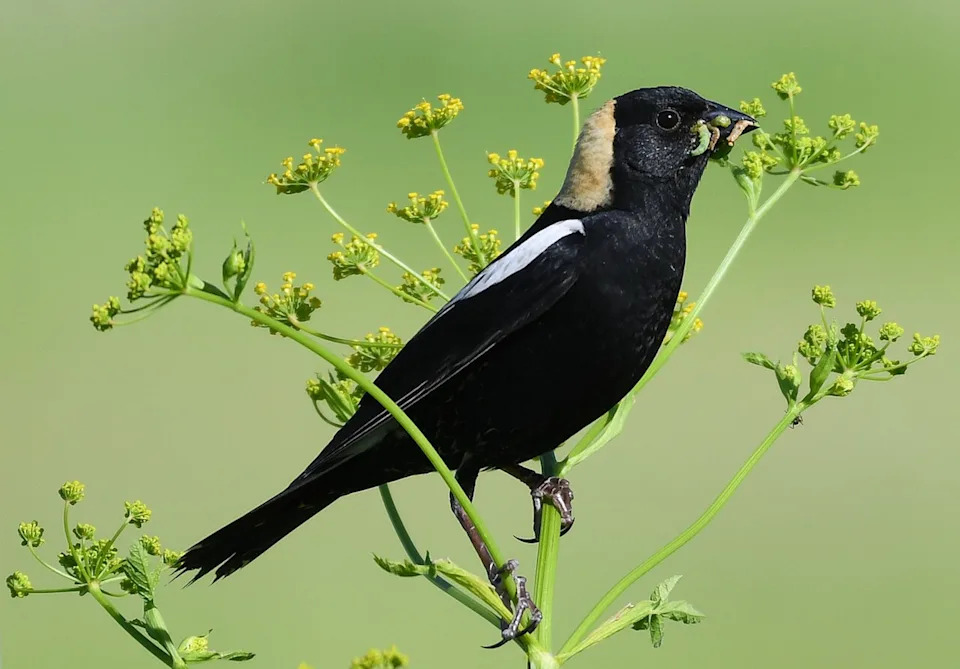
The bobolink breeds in the grasslands of North America, but it makes an epic migration journey to South America each year.Grayson Smith/USFWS.
Consider three very different travelers: the bobolink (Dolichonyx oryzivorus), which leaves North American grasslands to winter on the Pampas of South America; Newell's shearwater (Puffinus newelli), which glides across the North Pacific before returning to Hawaii to breed; and the spoon‑billed sandpiper (Calidris pygmaea), which migrates from Arctic Russia to dwindling tidal mudflats in Southeast Asia.
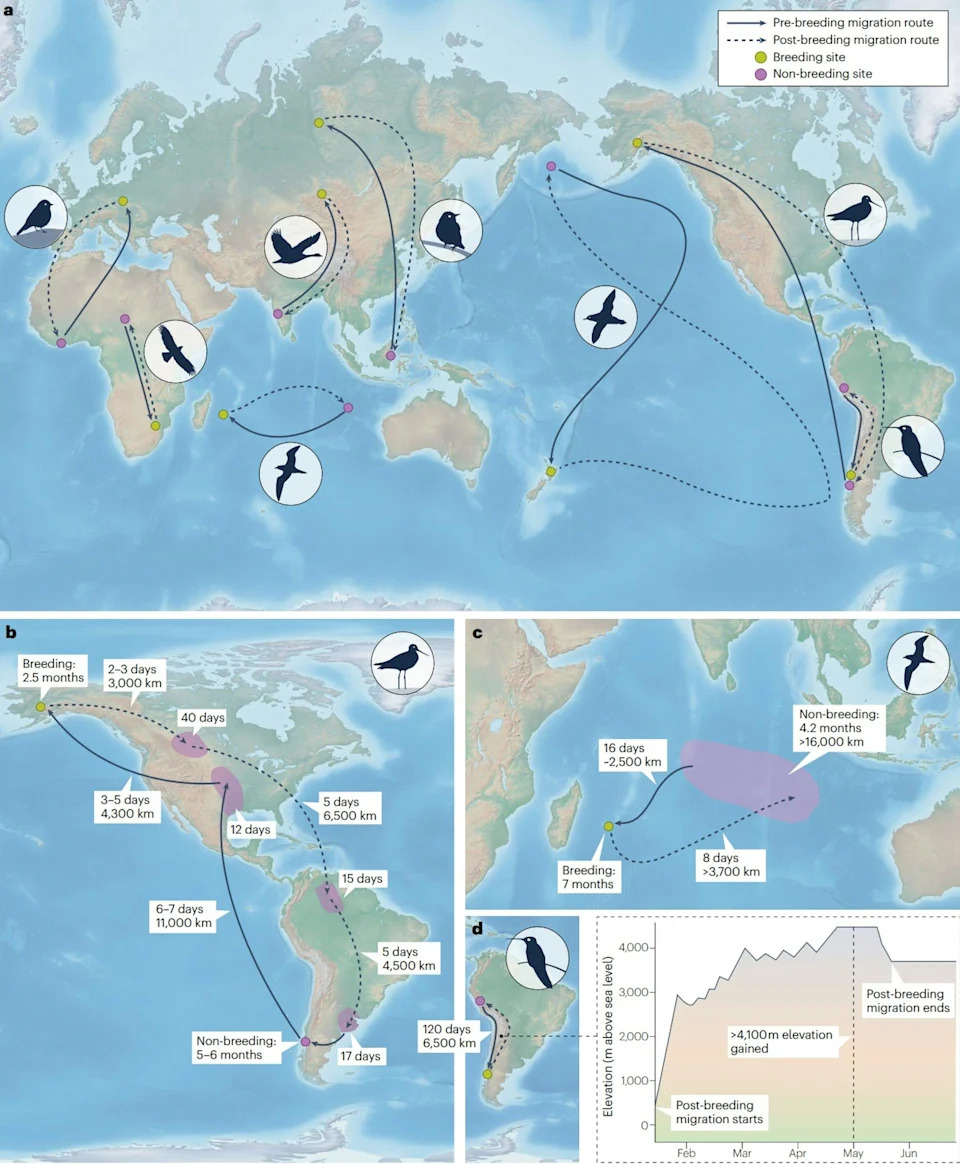
Some of the amazing migrations that take place around the world. (a) The lines reflect prebreeding (solid) and postbreeding (dashed) migration routes of several birds. (b) Some birds, like the Hudsonian godwit (Limosa haemastica), a member of the sandpiper family whose annual cycle is shown here, travel thousands of miles. (c) The Barau's petrel (Pterodroma baraui) spends much of its nonbreeding time over islands and open water. (d) Other species, like the giant hummingbird (P. gigas) found in the Andes mountains, travel to higher elevations after breeding.Nature Reviews Biodiversity/Peter P. Marra, et al., 2026
What the New Assessment Found
An international team of scientists assessed the status, threats and conservation actions for more than 3,380 migratory bird species worldwide. The findings are stark: more than half of Earth's migratory bird species are declining. Threats often act together and include habitat loss and degradation, invasive species, collisions with buildings and power lines, hunting and the pet trade, toxic pesticides and, in some regions, bycatch in commercial fisheries.
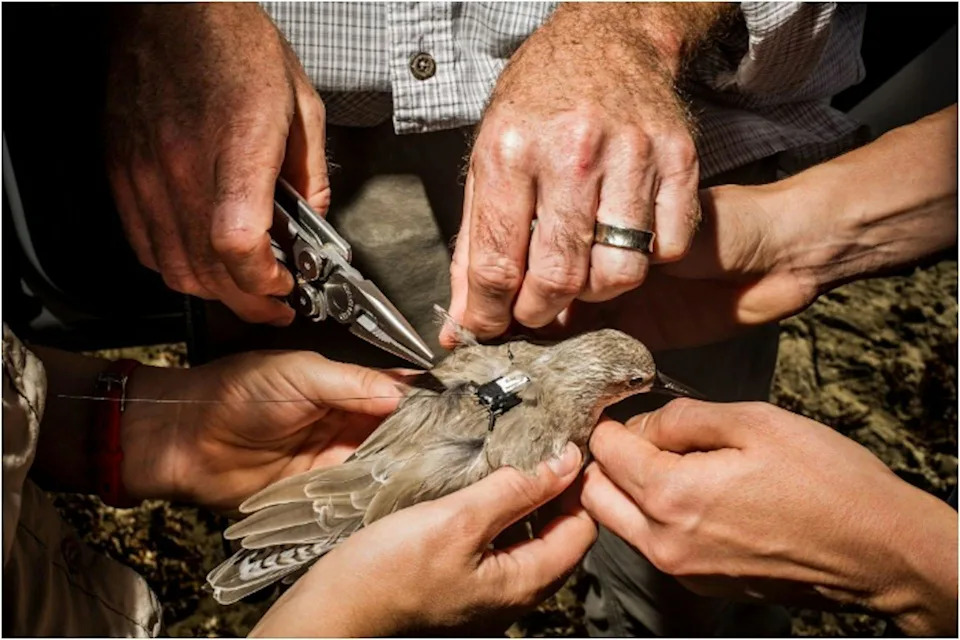
Researchers attach a satellite transmitter to the back of a red knot, a rapidly declining migratory species. Tiny trackers like these show migration routes and help locate the potential harms and ways to help these species. Tim Romano, courtesy of the Smithsonian Institution
Why These Birds Matter
Migratory birds do more than amaze us with their journeys. They pollinate plants, disperse seeds, control agricultural pests, move nutrients between ecosystems and support local economies through birdwatching and ecotourism. Declines in migratory birds signal broader ecosystem breakdowns that affect both wildlife and people.

Trackers on birds are like tiny backpacks. Smaller than a penny, birds can carry them hundreds of miles, giving scientists insight into their patterns and habitats and ways to help them survive. Tim Romano, courtesy of the Smithsonian Institution
New Tools Give Hope
Advances in miniature tracking devices, genetics, automated radio‑telemetry, long‑term monitoring and citizen science platforms such as eBird have revolutionized our understanding of migration. Tiny transmitters, sometimes smaller than a penny, let researchers follow individuals across continents and identify the specific places and times when birds face the greatest risks.
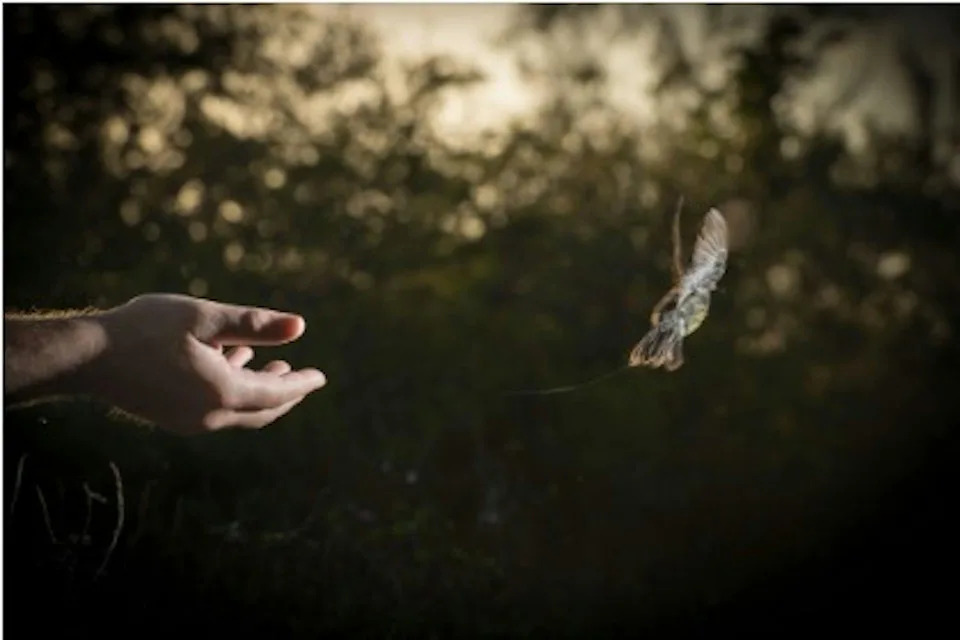
A scientist releases a Kirtland's warbler with its tracker attached. Tim Romano, courtesy of the Smithsonian Institution
A Full Annual‑Cycle Approach
Conservation historically focused on protecting key places — breeding grounds, wetlands, nonbreeding habitats and stopover sites — and that approach remains essential. But for species that span continents, protecting single sites is often not enough. A full annual‑cycle strategy identifies when and where populations are most constrained and targets actions across breeding, migration and nonbreeding periods.
Examples: Bobolinks need North American breeding grasslands and safe wintering habitat in South America; Newell's shearwaters face ocean threats and hazards at Hawaiian breeding colonies; spoon‑billed sandpipers depend on a network of tidal mudflats for stopovers — losing a few sites can jeopardize the species.
Successful Models and Policy Needs
Initiatives such as Road to Recovery illustrate the full‑cycle approach in practice. By forming international species working groups that include scientists, governments, landowners and communities, the initiative targets limited resources where they can do the most good. More than 50 working groups are now developing strategies for species from bobolinks to yellow‑billed cuckoos.
International frameworks — including the Convention on the Conservation of Migratory Species of Wild Animals and regional flyway partnerships — provide mechanisms for cross‑border cooperation. Their impact is limited, however, when many major countries remain non‑parties. Broader international participation and sustained government investment are crucial to scale effective actions.
What Works: Lessons From The Past
History shows declines can be reversed when threats are removed. The ban on DDT and targeted conservation helped recover species such as the bald eagle, peregrine falcon and osprey. Identifying threats, acting early and coordinating across borders offer a roadmap for saving many migratory species today.
How Individuals And Organizations Can Help
- Support habitat protection and restoration locally and internationally.
- Reduce threats such as free‑roaming cats, glass collisions and harmful pesticides.
- Participate in or support citizen‑science monitoring (e.g., eBird).
- Encourage policymakers to fund full‑cycle, international conservation efforts.
Conclusion
Next spring, bobolinks will return to North American grasslands, Newell's shearwaters will cross thousands of miles back to Hawaiian colonies, and spoon‑billed sandpipers will attempt one of the world's most extraordinary migrations. Whether future generations can witness these journeys depends on decisions made today: applying new science at scale, protecting habitats across the full annual cycle and strengthening international cooperation.
Authors: Peter Marra, Georgetown University; Nathan W. Cooper, Smithsonian Institution. This article is republished from The Conversation.
Help us improve.