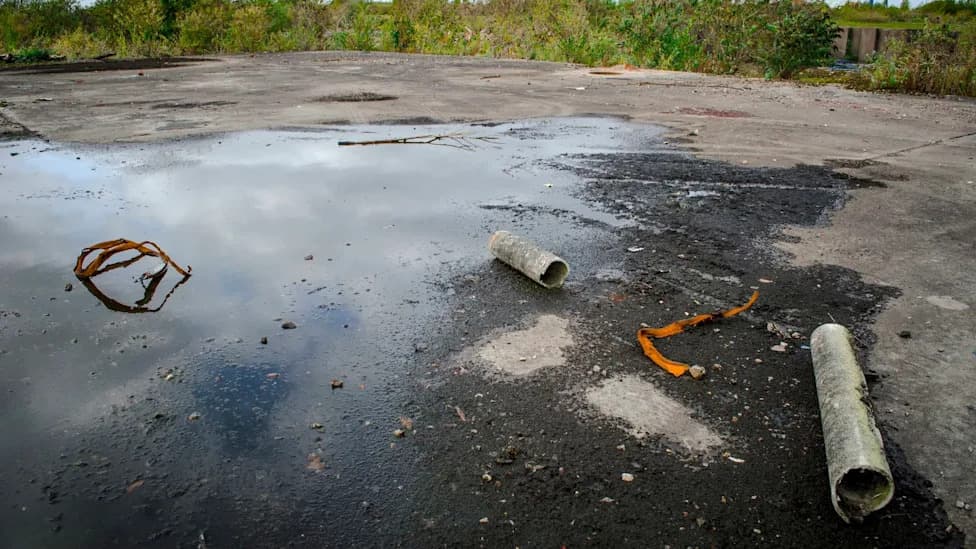
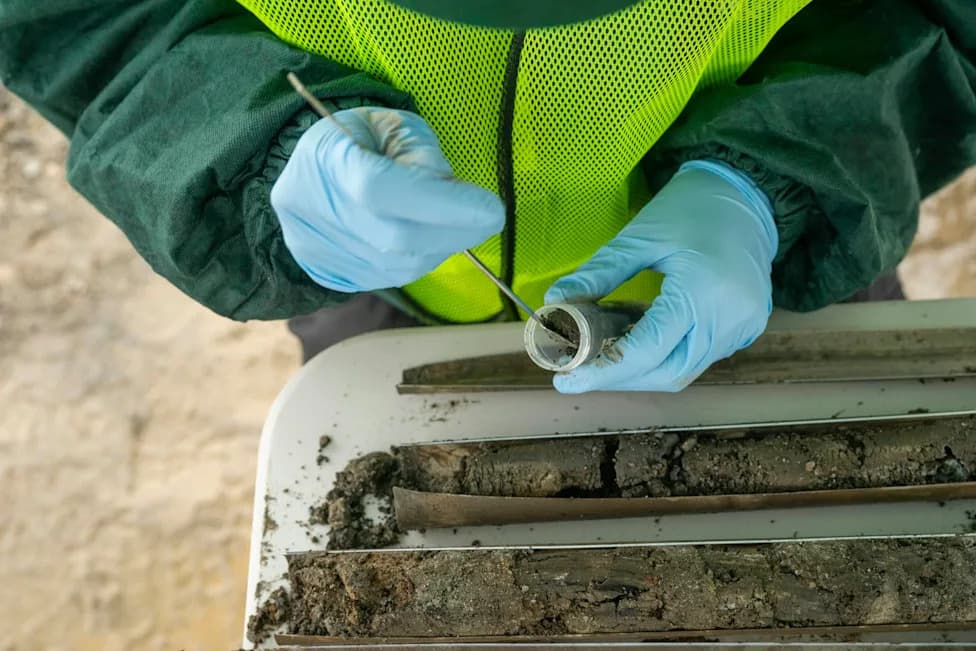
Uranium contamination can persist in soils and aquifers for decades after mining stops, remaining dissolved in groundwater and posing long‑term risks to ecosystems and human health. A new laboratory study shows that microbes native to contaminated subsurface sites can transform soluble uranium into a chemically stable mineral phase that may remain immobilized for years.
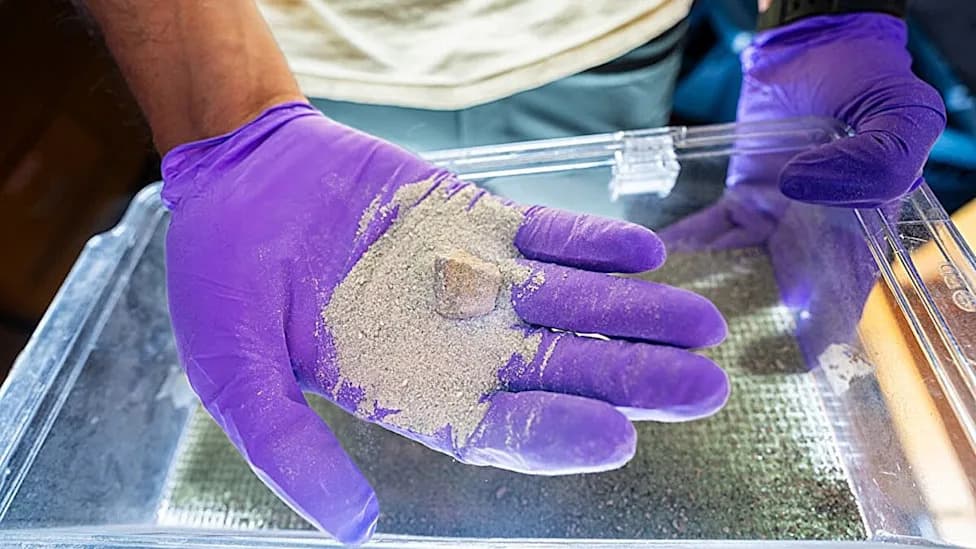
Who Did the Study? Researchers from Helmholtz‑Zentrum Dresden‑Rossendorf, in collaboration with Wismut GmbH and the University of Granada, collected anoxic groundwater from a flooded uranium mine in the Ore Mountains to investigate whether indigenous bacteria could immobilize uranium under realistic subsurface conditions.
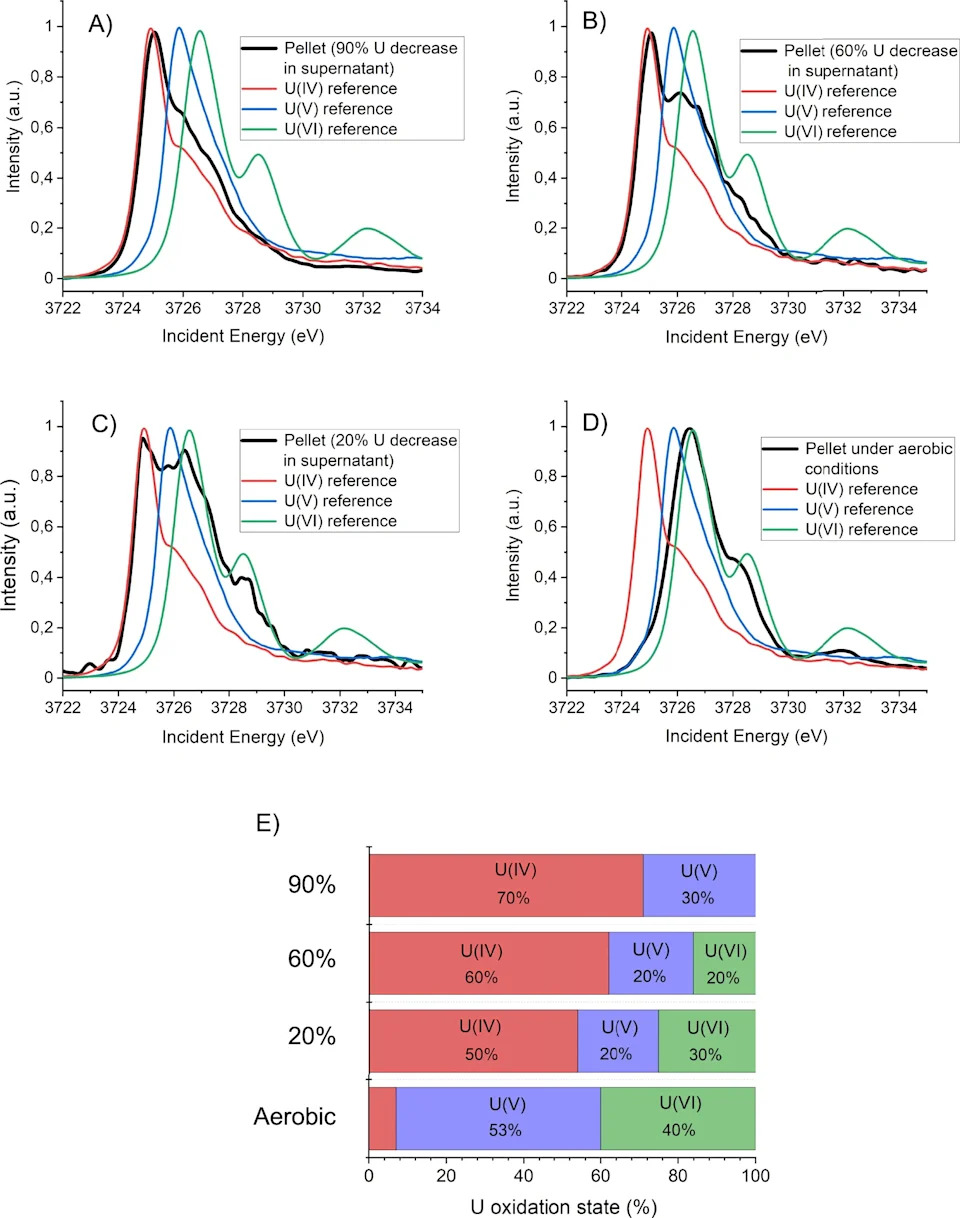
HERFD-XANES identification of uranium oxidation states during U reduction. (CREDIT: Nature Communications)
What They Did In controlled incubations, the team added glycerol — a simple, inexpensive carbon source — to stimulate microbial metabolism. As microbes consumed the glycerol and grew, the concentration of dissolved uranium in the water dropped dramatically.
Key Results
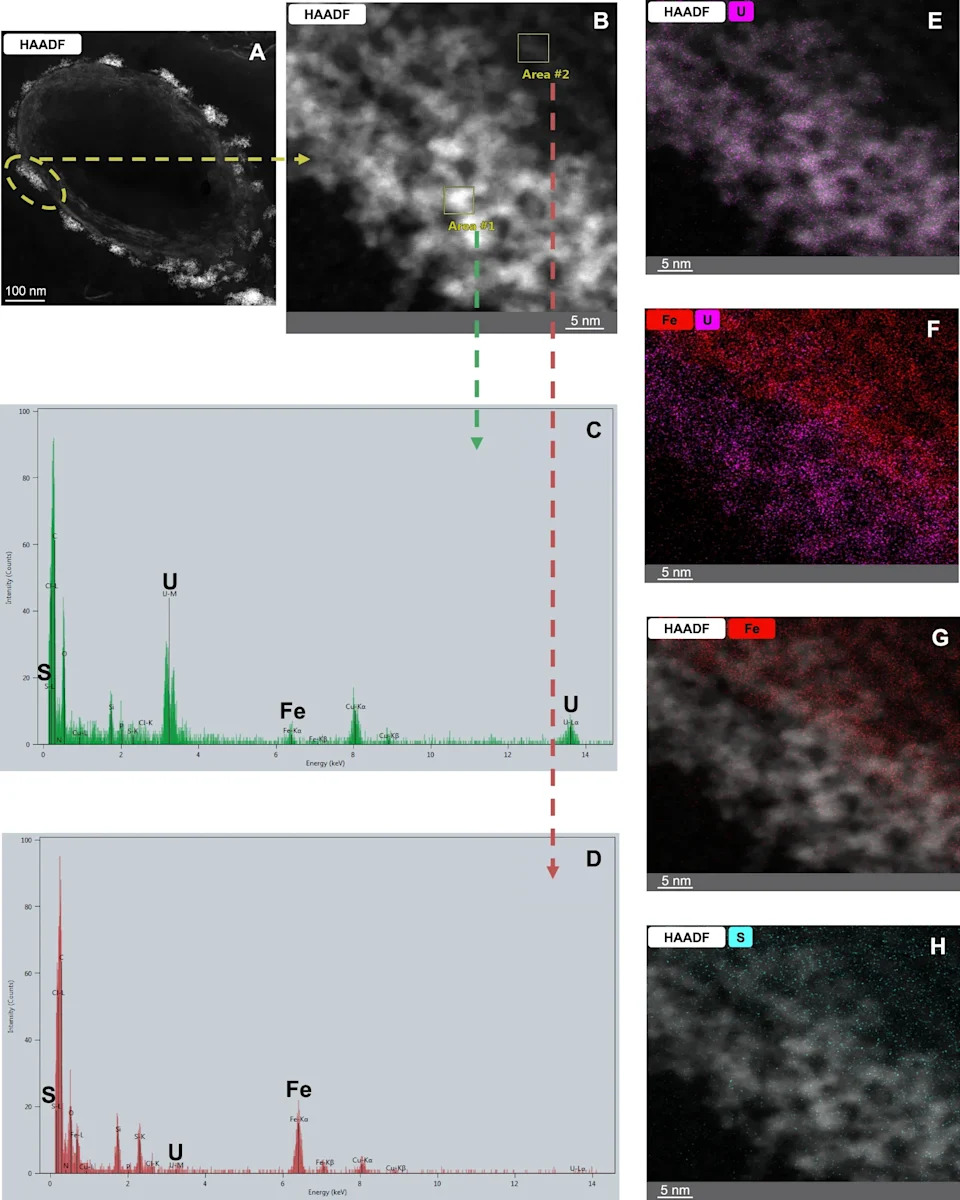
After about 130 days of incubation, dissolved uranium had fallen to roughly five percent of the original concentration. Microscopic imaging and spectroscopy showed most of the uranium concentrated inside or on microbial biomass rather than merely precipitating as a bulk mineral in the water.
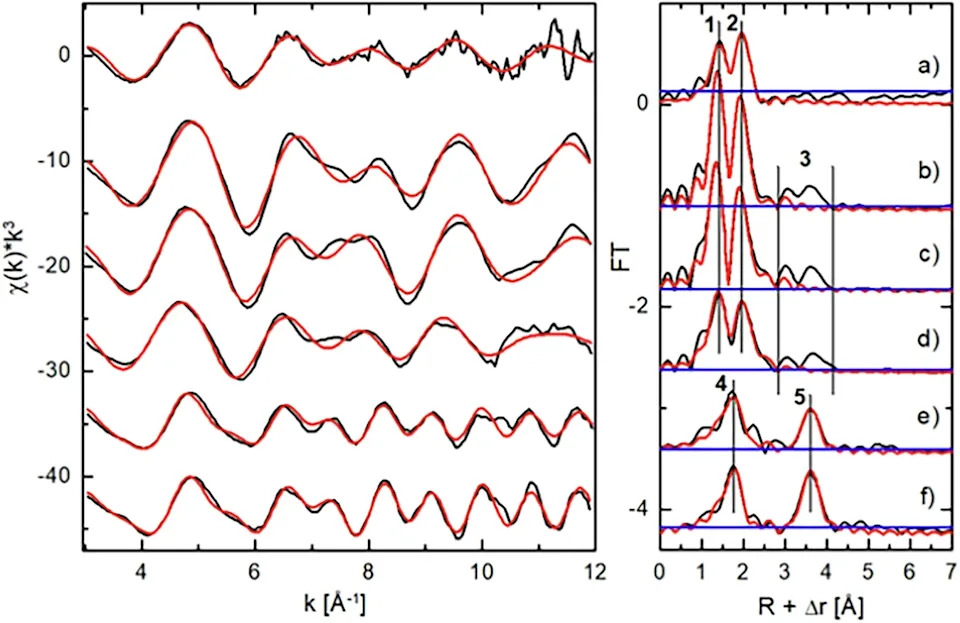
U L₃-edge EXAFS spectra and Fourier transforms of isolated uranium species. (CREDIT: Nature Communications)
Unexpected Chemistry: Stable Pentavalent Uranium
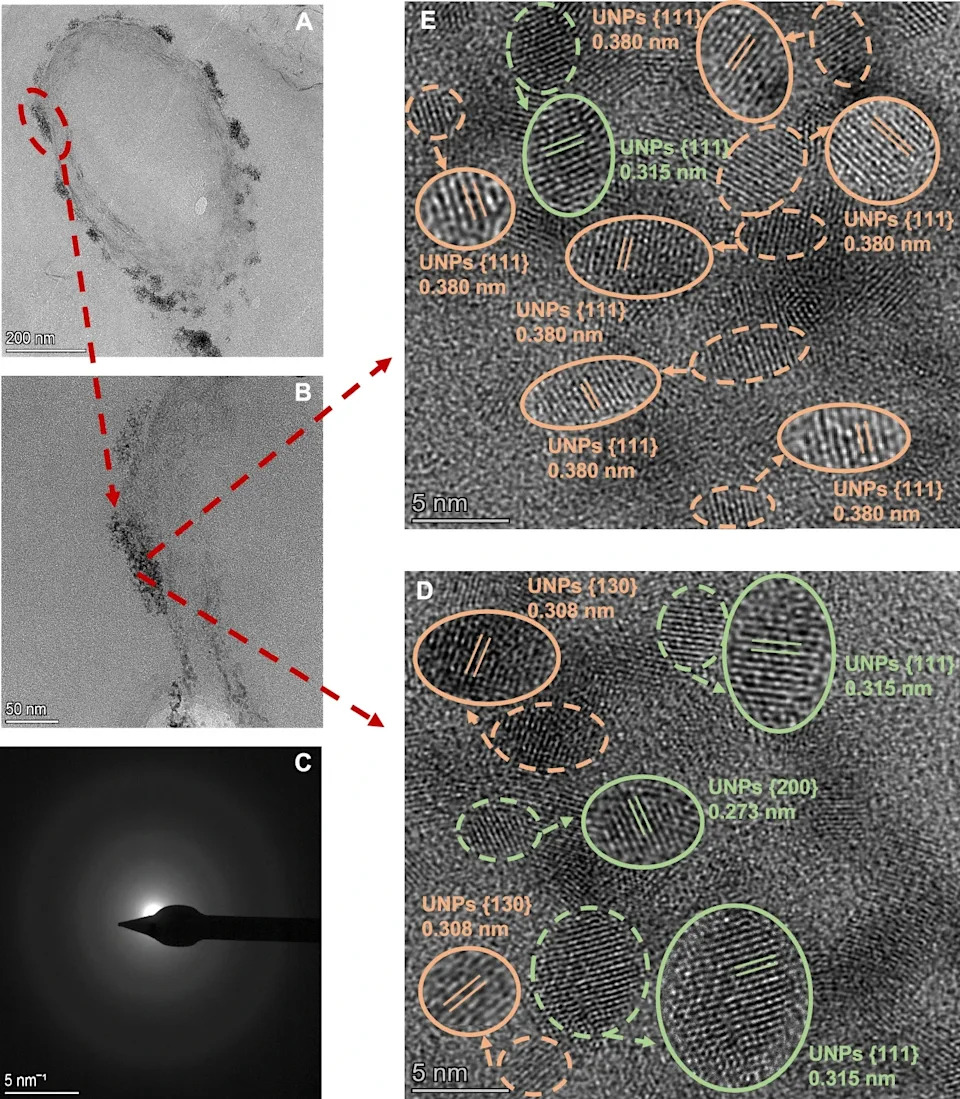
Detailed chemical analysis revealed a large fraction of uranium in the pentavalent oxidation state U(V), which is generally considered rare or transient in natural environments. The uranium was incorporated into a mixed iron‑uranium oxide identified as FeU(V)O4 — a phase recently reported in contaminated soils but not previously observed to form or persist in association with microbes in groundwater.
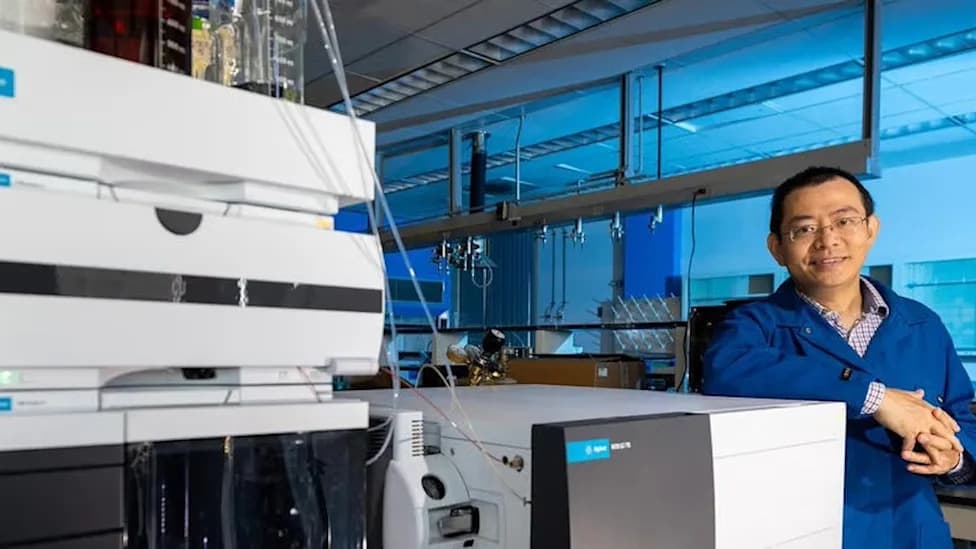
'The bacteria, when supplied with glycerol as a carbon source, convert dissolved uranium into a stable chemical compound,' said Evelyn Krawczyk‑Bärsch, a coauthor of the study.
Notably, the FeU(V)O4 phase proved resistant to air exposure and drying in laboratory tests: it remained intact and in some cases became more apparent after samples were exposed to oxygen. This suggests that once formed, the phase could survive changing environmental conditions that typically re‑oxidize and mobilize uranium.
HAADF-STEM imaging and elemental mapping of U precipitates. (CREDIT: Nature Communications)
How It Works
When bacteria metabolize glycerol, they create more reducing microenvironments that shift uranium chemistry away from the highly soluble U(VI) form. Iron and oxygen available in the water can then react under these microbially influenced redox conditions to produce the FeU(V)O4 phase, while microbes simultaneously bind or entrap uranium in cell walls and biomass. The combined biological and geochemical interactions immobilize uranium at microscopic scales.
Implications and Caveats
This study highlights a potentially lower‑cost, in‑situ remediation strategy that leverages native microbes and inexpensive organic substrates to lock dissolved uranium into a stable mineral. Such an approach could reduce reliance on extensive chemical treatments and secondary wastes, and might be particularly useful in remote or hard‑to‑access groundwater systems.
HAADF-STEM and HRTEM imaging of U nanoparticles. (CREDIT: Nature Communications)
However, the authors caution that field conditions vary widely. Key unknowns include how broadly the process operates across different sites, which carbon sources and environmental conditions best promote stable FeU(V)O4 formation, how long immobilized uranium remains secure under real‑world fluctuations, and whether microbial biomass‑bound uranium could be remobilized over longer timescales.
The research is published online in Nature Communications.