The Edith Cowan University study shows magnetite reacting with hot water can generate hydrogen under simulated subsurface conditions. Experiments at 200 °C and elevated pressure for 60 days produced H₂, with powdered magnetite yielding about five times more hydrogen per gram than slab samples. The findings highlight that rock porosity and water access are critical to hydrogen generation, though transformation of magnetite to hematite could limit long‑term production. The results inform exploration targets and modelling for natural hydrogen beneath Western Australia.
Researchers Find Potential ‘Green Hydrogen Goldmine’ Beneath Western Australia
(1361468201/Moment/Getty Images)
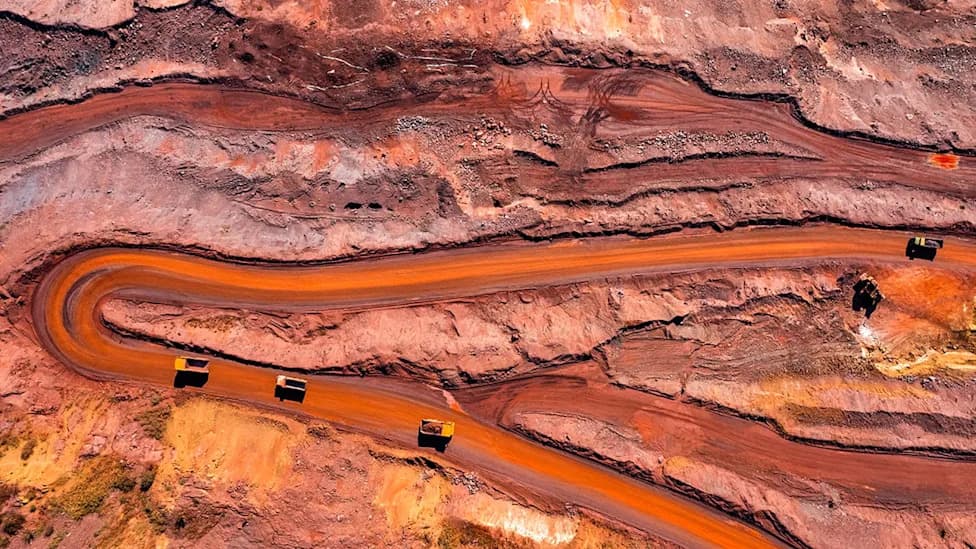
Scientists report that common iron‑ore mineral magnetite can generate hydrogen when it reacts with hot water under subsurface‑like conditions — a finding that could help guide the search for natural, low‑carbon hydrogen resources beneath Western Australia.
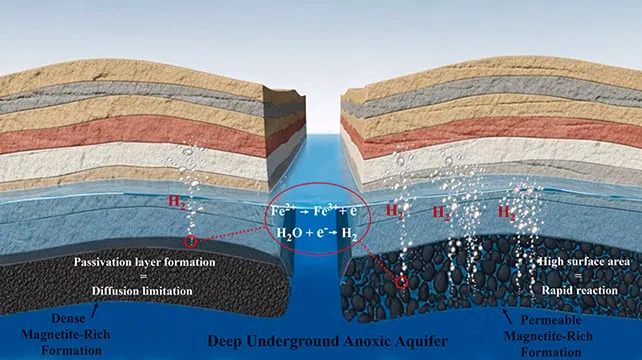
Fluid access to magnetite through fractures and permeable rock is key to hydrogen formation, the researchers found. (Moghanirahimi et al.,Int. J. Hydrog. Energy, 2026)
Study Design
A team led by researchers at Edith Cowan University simulated underground reactions in the lab by exposing magnetite samples to water at elevated pressure and 200 °C (392 °F) for 60 days (Moghanirahimi et al., Int. J. Hydrogen Energy, 2026). The experiments compared powdered magnetite with slab‑like, field‑representative samples to better mimic real geological settings.
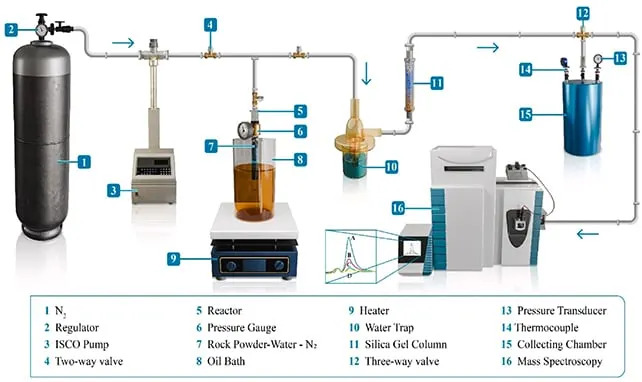
The researchers tested magnetite in both powder and slab form. (Moghanirahimi et al.,Int. J. Hydrog. Energy, 2026)
Key Findings
- Hydrogen Production: Hydrogen gas was produced in the experiments, confirming that magnetite + hot water can generate H₂ under the tested conditions.
- Surface Area Matters: Powdered magnetite yielded roughly five times more hydrogen per gram than slab samples, indicating that greater mineral surface area and rock porosity substantially increase hydrogen generation.
- Mineral Transformation: The reaction converted much of the magnetite to hematite. At larger scales this transformation could form a relatively impermeable layer that limits further water access and slows additional hydrogen production.
- Hydrogeological Control: The results show that water access via fractures, pores and permeable pathways is critical — not just the amount of magnetite present — which helps bridge laboratory experiments and real geological systems.
"Australia could be sitting on a massive, untapped energy reserve - and the potential is enormous,"
said Alireza Keshavarz, chemical engineer, Edith Cowan University.
Implications And Caveats
The study suggests fractured, porous iron‑oxide rocks are the most promising targets for natural hydrogen exploration and that increasing accessible mineral surface could enhance yields. However, the experiments were laboratory simulations, not field drill tests; scaling up will require detailed hydrogeological surveys, pilot drilling, and careful assessment of how hematite formation, permeability changes and extraction logistics affect long‑term viability.

Subscribe to ScienceAlert's free fact-checked newsletter
Researchers and energy planners see potential for domestic energy resilience and eventual export opportunities if large, accessible natural hydrogen accumulations can be confirmed and sustainably produced. Still, technical, economic and environmental challenges remain before such resources can contribute at scale.
Publication: The work is published in the International Journal of Hydrogen Energy (2026).
Help us improve.