Researchers at Carnegie Mellon investigated soils from Hazelwood Green, a 178‑acre former steel site in Pittsburgh, to see how microbial communities adapted to decades of industrial contamination. Using soil cores, metagenomic sequencing and robotic high‑throughput screens, the team identified microbes and genes linked to degradation of BTEX compounds (benzene, toluene, ethylbenzene, xylene). Laboratory isolation confirmed some strains can use these pollutants as sole carbon sources, suggesting locally adapted microbes could enhance bioremediation strategies for brownfields. March 2026 sampling reached depths up to 50 feet.
Beneath Pittsburgh’s Redevelopment: Bacteria That Evolved to Eat Industrial Pollution
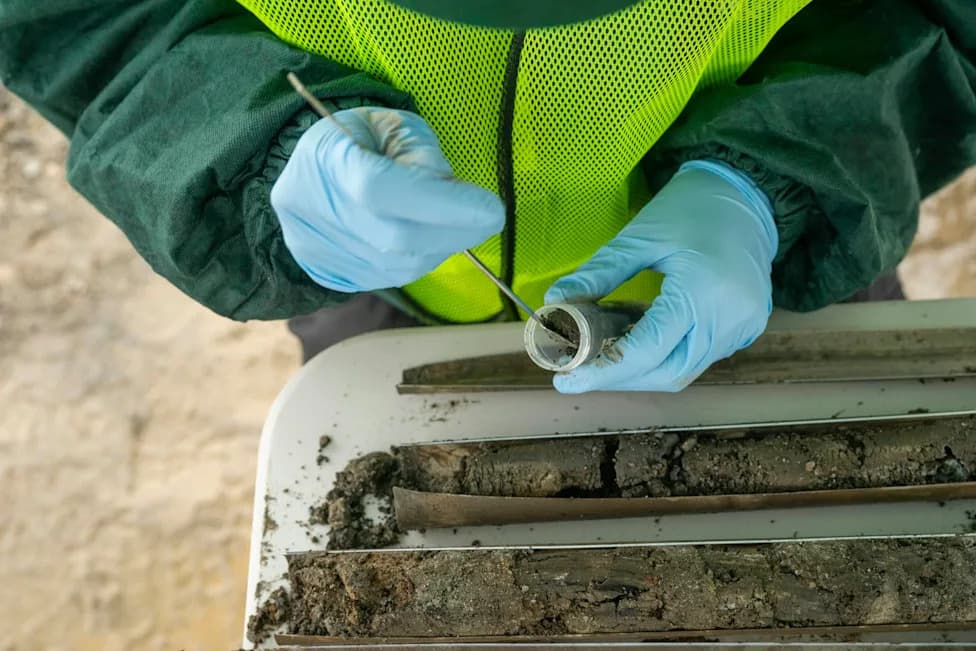
The author works on gathering soil samples in a field near Mill 19 in Hazelwood.Kevin Lorenzi/Mellon College of Science via Carnegie Mellon University
Across Appalachia and the Rust Belt, former industrial properties are being remade as neighborhoods, research campuses and technology hubs. Beneath those rebuilt landscapes, a quieter transformation has been unfolding for decades: microbial communities adapting to long-standing industrial contamination.
I am Catherine Armbruster, a microbiologist in Carnegie Mellon University's Department of Biological Sciences. My lab sits about two miles from Hazelwood Green, a 178-acre former steelmaking site on the Monongahela River. For more than a century that riverside area hosted steel production and related operations, leaving a legacy of soil and groundwater contamination.
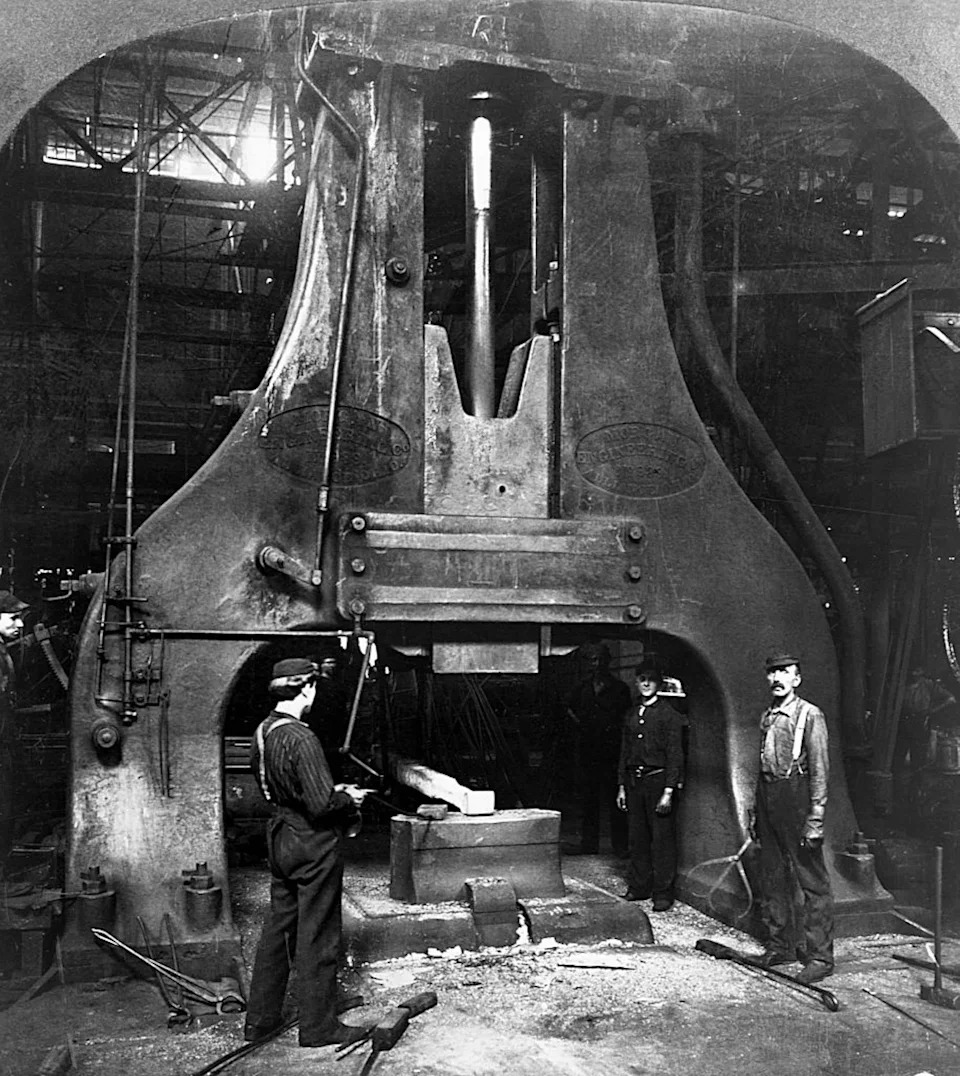
Pittsburgh's steel mills and coal-fired furnaces powered the U.S. through the 19th and 20th centuries, creating air and water pollution that remains part of the region's environmental legacy today.Corbis Historical via Getty Images
What the Soils Carry
Like many brownfields, Hazelwood Green's soils contained petroleum hydrocarbons, heavy metals and other persistent pollutants. A particularly important class of contaminants there is BTEX—benzene, toluene, ethylbenzene and xylene—petroleum-derived compounds that can be toxic and, in some cases, carcinogenic.
Microbes in a Polluted World
Soil is an extraordinarily diverse habitat: a single gram can host billions of bacterial cells representing thousands of species. When contaminants such as BTEX enter that environment, they create new selective pressures. Many organisms are harmed by these chemicals, but some microbes possess metabolic pathways that allow them to tolerate or even use those compounds as food. Those microbes gain an ecological advantage and can become more abundant. Bacteria can also spread useful genes laterally across unrelated strains, accelerating community-level adaptation.
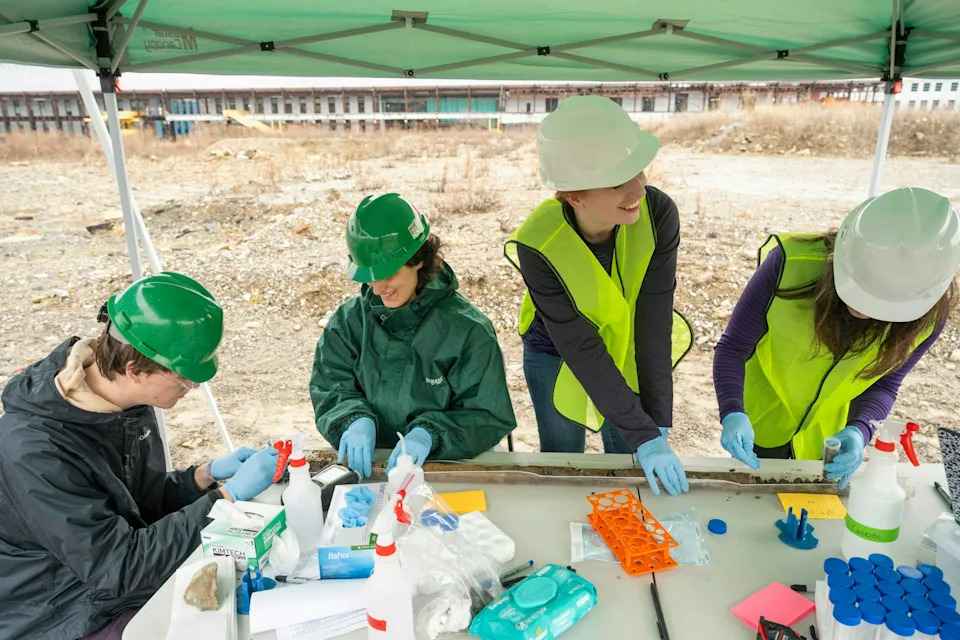
From left, first-year student Charlie Stanczek, lab manager Mara Kessler, professor Catherine Armbruster and second-year Ph.D. student Betsy Lewis work on soil samples.Kevin Lorenzi/Mellon College of Science, Carnegie Mellon University
Reading an Unintentional Evolution Experiment
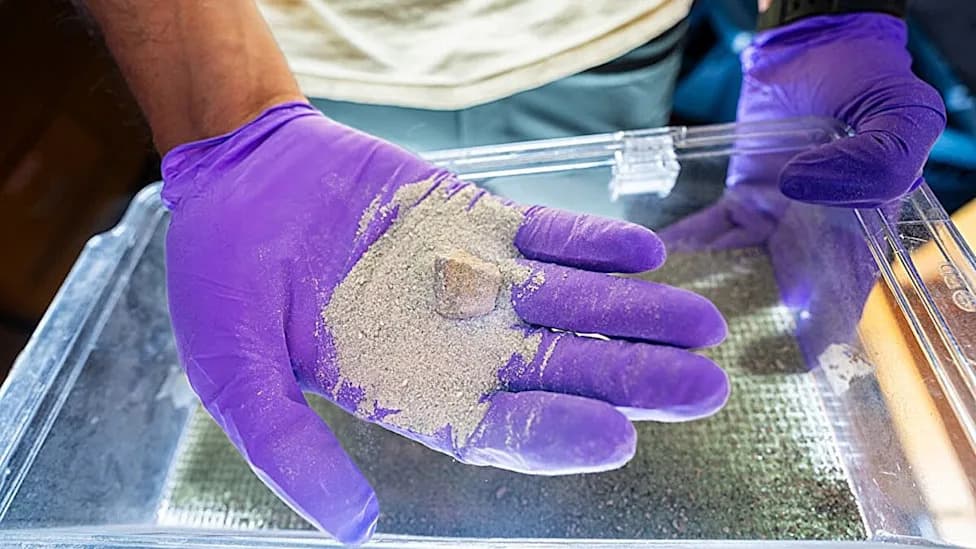
Decades of industrial pollution at Hazelwood Green effectively ran a large, unintentional evolution experiment. My team set out to read its results by collecting soil cores from locations across the site and at multiple depths. Soil cores preserve vertical layers of soil, letting us compare microbial communities from the surface down through deeper strata.
We extract DNA from those cores and use metagenomic sequencing to identify the organisms present and the genes they carry. Metagenomics lets us infer metabolic potential across the whole community without relying solely on culturing individual species.
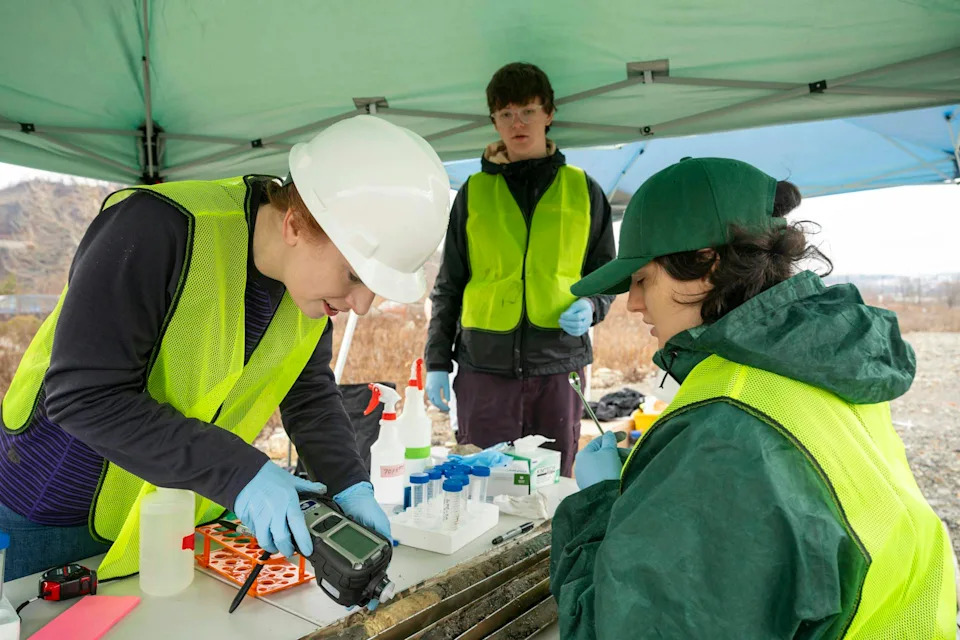
Catherine Armbruster, left, measures the levels of gases released by the soil's chemical pollutants.Kevin Lorenzi/Mellon College of Science via Carnegie Mellon University
From Genomes to Function
Genomic predictions are powerful, but we validate them experimentally. We isolate bacteria from Hazelwood Green and other local sites and test whether individual strains can grow using a BTEX compound as the sole carbon source. In a minimal medium that lacks typical organic carbon, only organisms able to metabolize the supplied pollutant will grow—evidence they can remove that contaminant from the environment.
To scale up these tests, we partnered with CMU's AI Science Foundry, a robotic, automated lab at Bakery Square. Robotics allow us to screen thousands of isolates in parallel and quantify their degradation of BTEX and related compounds. At the same time, we are developing open-source bioinformatics tools, such as BTEXgenie, to scan genomes for genes likely to confer pollutant-degrading activity. The workflow inverts the traditional order of discovery—scan genomes first, then validate promising candidates experimentally—so each round of testing sharpens our predictive power.
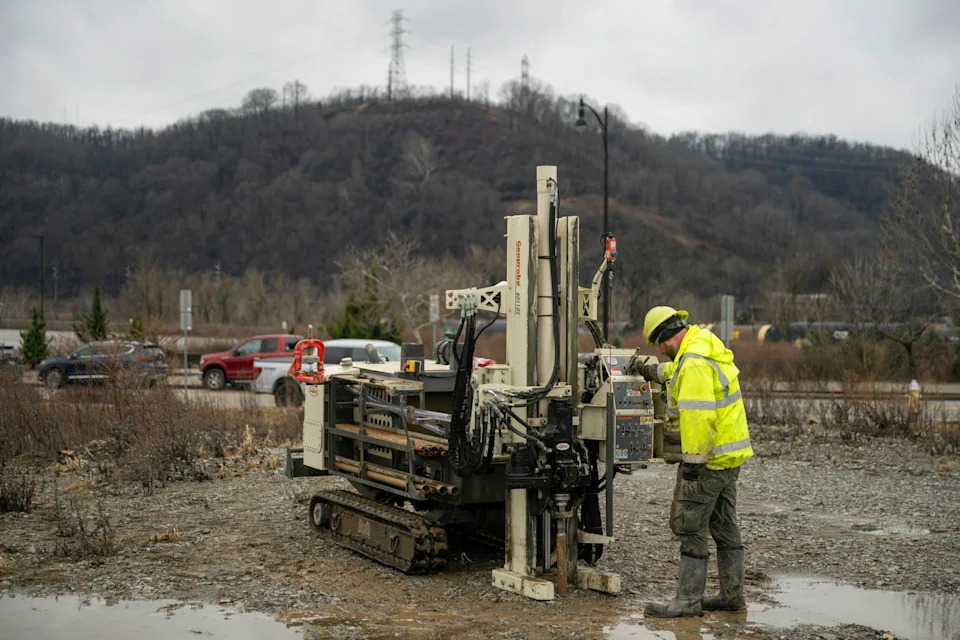
A technician pulls soil samples.Kevin Lorenzi/Mellon College of Science via Carnegie Mellon University
Practical Implications
Remediating contaminated soils is expensive and technically challenging. Common approaches—excavation or capping with clean fill—can enable safe redevelopment but may leave pollutants in place, requiring long-term monitoring. Bioremediation, which harnesses microbes to transform contaminants into less harmful compounds, is already used for oil spills and wastewater treatment. However, its success depends on finding organisms that both degrade the contaminant and thrive under local site conditions. Studying microbes that evolved in polluted soils gives us a head start in identifying those resilient, effective strains.
In March 2026 our team used a GeoProbe to collect cores as deep as 50 feet at Hazelwood Green. Combining field sampling, metagenomics, culturing and high-throughput robotic screening, we are identifying organisms and pathways that naturally break down hydrocarbon pollutants. Understanding these microbes and their biochemical tools may help improve bioremediation strategies across Pittsburgh and the wider Rust Belt as brownfields are returned to active use.
Funding: This work is supported by The Richard King Mellon Foundation. Author: Catherine Armbruster, Carnegie Mellon University.
Help us improve.