UC Riverside researchers mapped the UV-driven chemical pathways that break down PFAS, the persistent "forever chemicals," and identified intermediates and byproducts that indicate true destruction. Published in Nature Water, the study shows UV treatment can convert PFAS into fluoride—a measurable marker for mineralization. These findings give engineers concrete targets to optimize UV systems, compare remediation methods, and better protect water quality and public health.
California Researchers Map How UV Light Dismantles 'Forever Chemicals' in Water
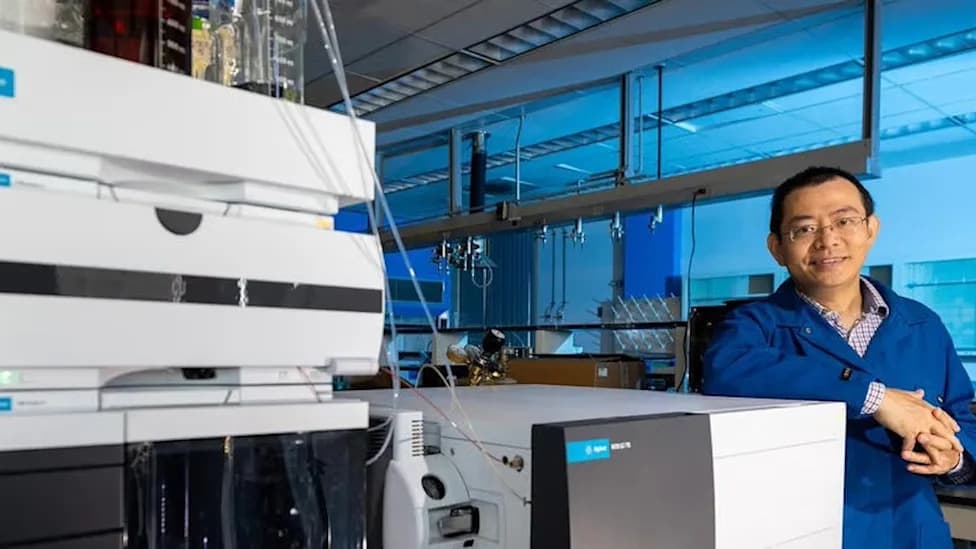
Photo Credit: Stan Lim / UCR
Scientists at the University of California, Riverside, have traced the chemical reactions by which ultraviolet (UV) light can break down per- and polyfluoroalkyl substances (PFAS), the persistent "forever chemicals" that have vexed water systems for years. Published in Nature Water and summarized by Phys.org, the study identifies specific reaction pathways and byproducts, giving researchers concrete markers to determine whether PFAS are truly being destroyed.
What the Study Shows
PFAS are notoriously durable because of their strong carbon–fluorine bonds. Instead of stopping at the observation that UV treatment affects PFAS, the UC Riverside team—led by associate professor Jinyong Liu—mapped the step-by-step chemistry that occurs when intense UV light begins cleaving those bonds. The researchers catalogued intermediate compounds and final byproducts so other scientists and engineers can monitor and optimize treatment processes.
Jinyong Liu, UC Riverside associate professor of chemical and environmental engineering and corresponding author, says the analysis "reveals what happens when those unusually tough bonds are severed," providing practical guidance for designing improved remediation technologies.
Why Conversion to Fluoride Matters
One notable finding is that UV-driven treatment can convert PFAS molecules into fluoride. Measuring the amount of fluoride produced gives a practical, quantitative indicator that the original PFAS molecules have been mineralized rather than merely transformed into other potentially harmful substances. This distinction is critical for utilities and regulators evaluating whether a given treatment is effective and safe.
Implications For Water Systems
Partial breakdown of PFAS can create uncertainty about residual toxicity and which byproducts remain in treated water. By spelling out expected intermediates and end products, the UC Riverside study helps operators refine UV operating conditions, set monitoring targets, and compare UV with alternative remediation approaches. That transparency makes it easier to validate processes, meet regulatory expectations, and protect public health.
The U.S. Environmental Protection Agency has linked PFAS exposure to reproductive and developmental effects and an elevated risk of some cancers. Because PFAS have been widely used in consumer products and industrial processes, their persistence in water supplies is a pressing public-health and engineering problem.
Related Work and Next Steps
Related trials have shown that intense UV can reduce PFAS concentrations in drinking-water tests—reportedly destroying roughly 95% of target compounds in about 45 minutes under specific conditions. Other research teams, including engineers at Purdue University, are developing complementary technologies to remove or destroy hazardous substances in water systems. Combined, these efforts point toward more measurable, comparable, and improvable PFAS treatment strategies.
Ultimately, the UC Riverside study moves PFAS remediation out of the realm of "black-box" approaches and toward mechanistic, evidence-based engineering—enabling more reliable, safe, and effective cleanup of contaminated water supplies.
Help us improve.