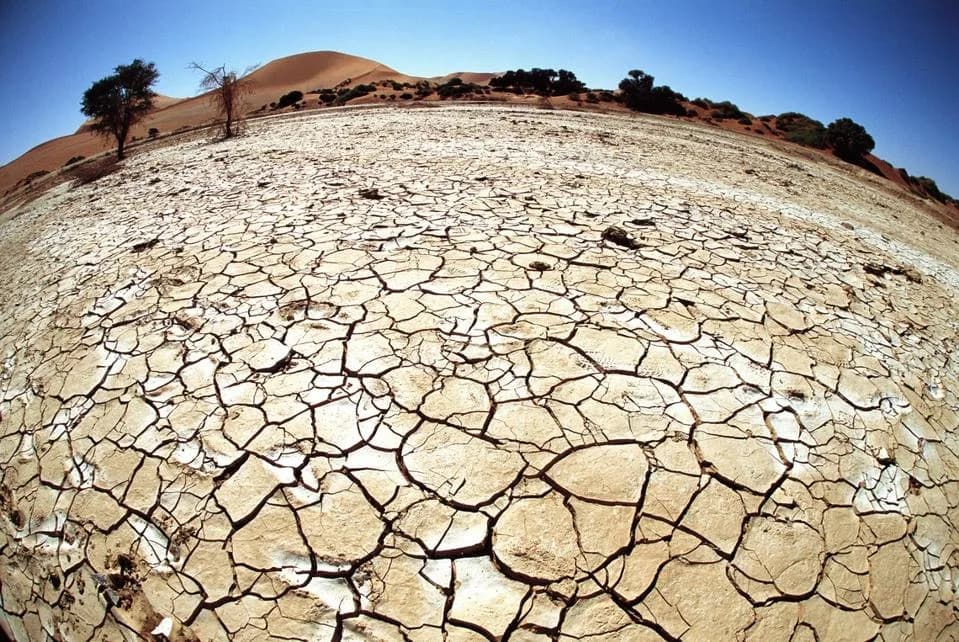
The Three‑North Protective Forest Program (the Green Great Wall) has used techniques like "straw checkerboards" and large‑scale tree planting since 1978 to halt desert expansion in northern China. Official monitoring shows desertified land peaked around 2000 and has since fallen by roughly 1,000 km² per year, with forests now covering about 500,000 km². Experts praise the scale and community labor behind the gains but warn that continued funding, long‑term management and links to local livelihoods are essential to sustain progress.
China’s 'Green Great Wall' Slows Desert Spread — But Scientists Warn The Work Isn’t Finished
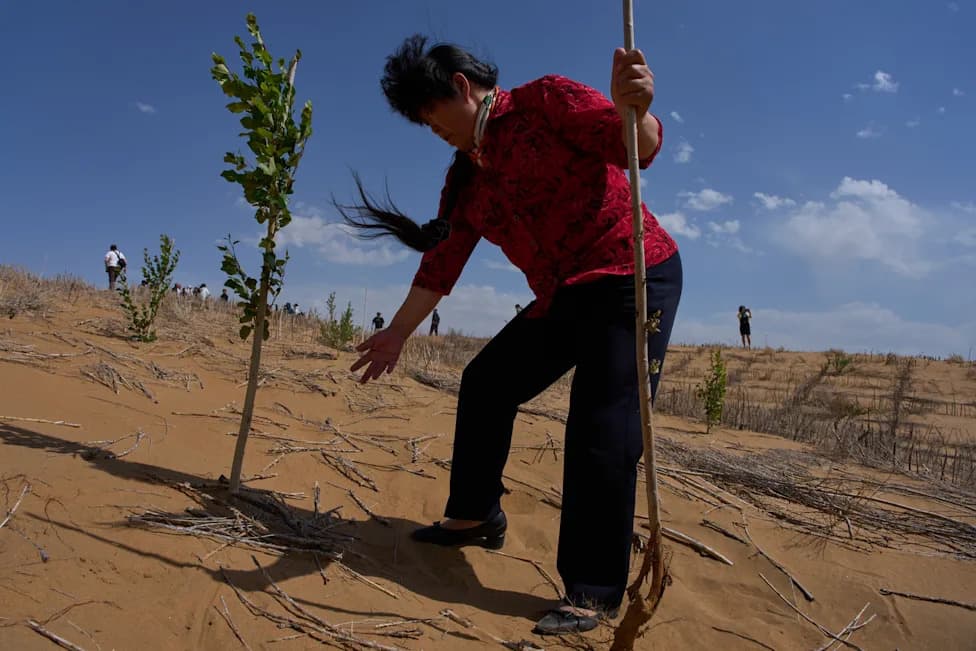
Desert control worker Yin Yuzhen visits a desertification control site of the Engebei Ecological Area near Ordos in northern China's Inner Mongolia province on Friday, June 12, 2026. (AP Photo/Ng Han Guan)(AP Photo/Ng Han Guan)
For nearly half a century, millions of workers across northern China have used a low-tech but effective method to hold back shifting sand: driving forearm‑length stakes into dunes to form intersecting grids, then planting saplings in the centers. Known as "straw checkerboards," the technique stabilizes sand, reduces wind erosion and helps young trees take root alongside irrigation.
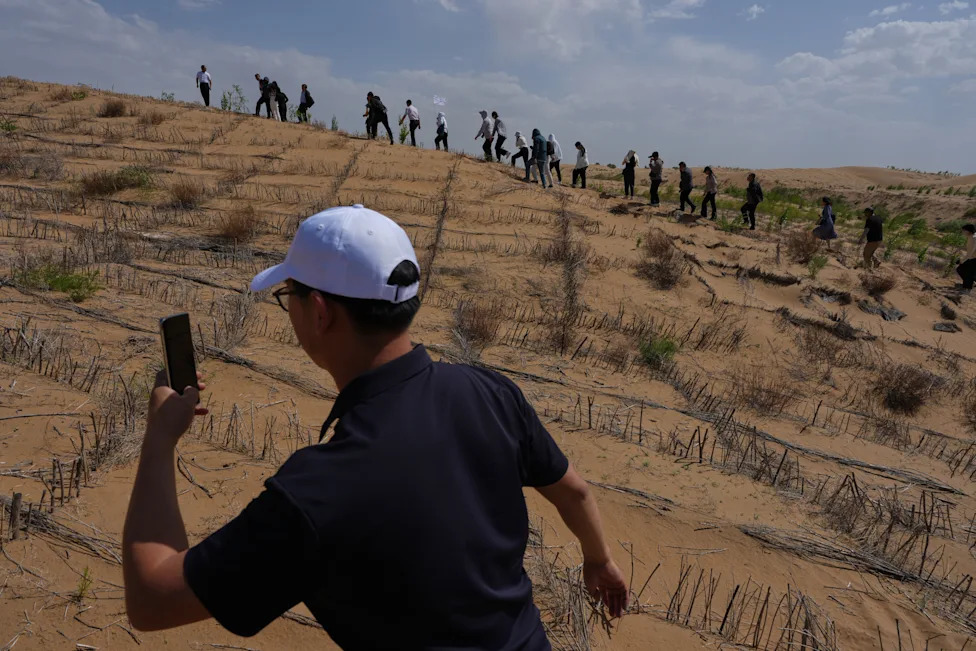
Visitors walk past a grass checkerboard on a sand dune that is part of desertification control efforts at the Engebei Ecological Area near Ordos in northern China's Inner Mongolia province on Friday, June 12, 2026. (AP Photo/Ng Han Guan)(AP Photo/Ng Han Guan)
Progress From the Three‑North Program
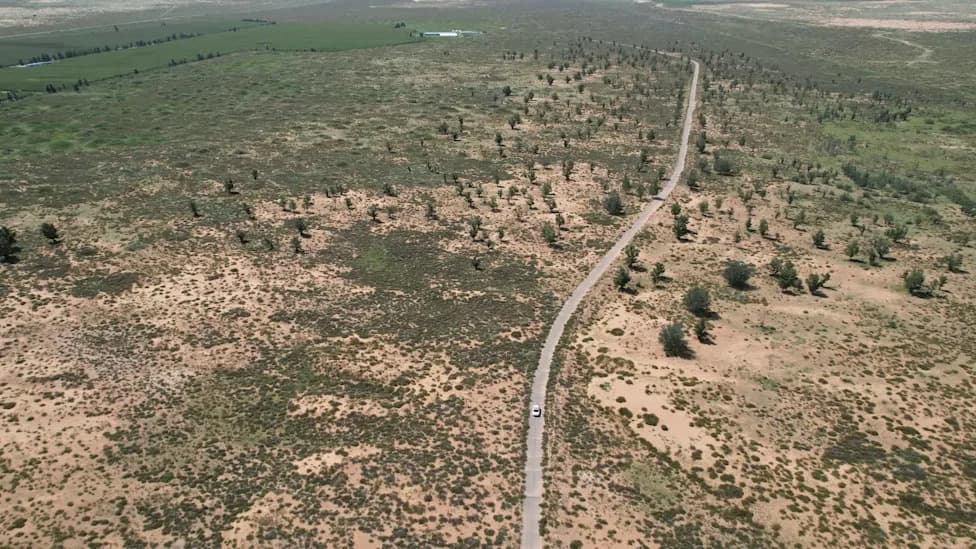
The checkerboards are one visible element of the Three‑North Protective Forest Program — often called the Green Great Wall — launched in 1978. According to official data, desertified land in northern China peaked around 2000 and has since declined by roughly 1,000 square kilometers (400 square miles) per year. Forests planted under the program now cover a cumulative 500,000 square kilometers (200,000 square miles).
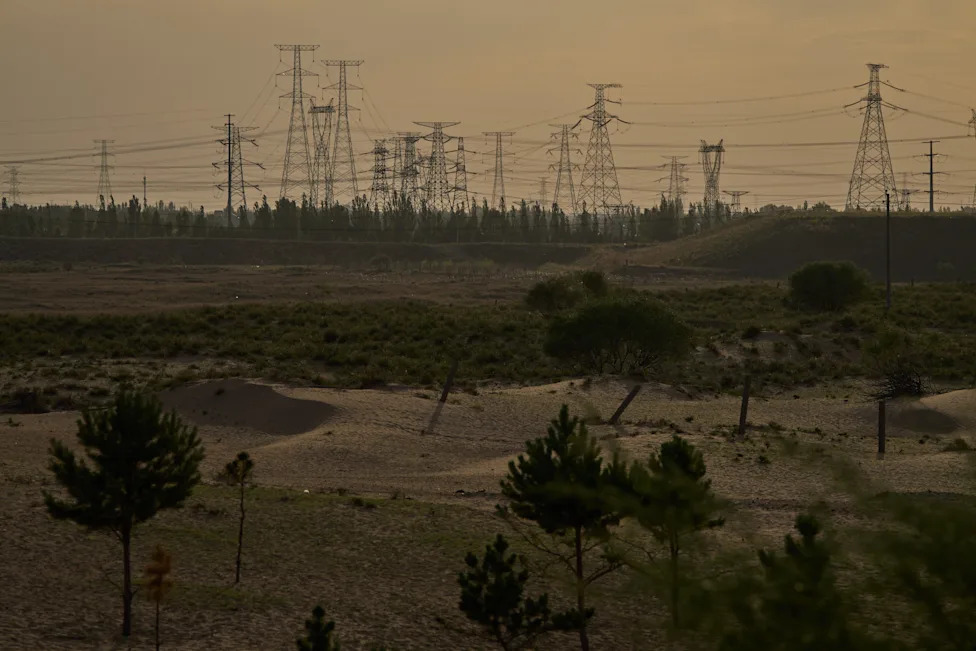
Electric pylons are seen in the horizon along sand dunes near Ordos in northern China's Inner Mongolia province on Thursday, June 11, 2026. (AP Photo/Ng Han Guan)(AP Photo/Ng Han Guan)
Long‑term monitoring by scientists working with the program reports that total desertified land has fallen by about 10% since 2000, while areas classified as severely or extremely desertified have declined by more than 40%. In the program area, forest cover rose from about 5% in 1978 to 14% in 2022.
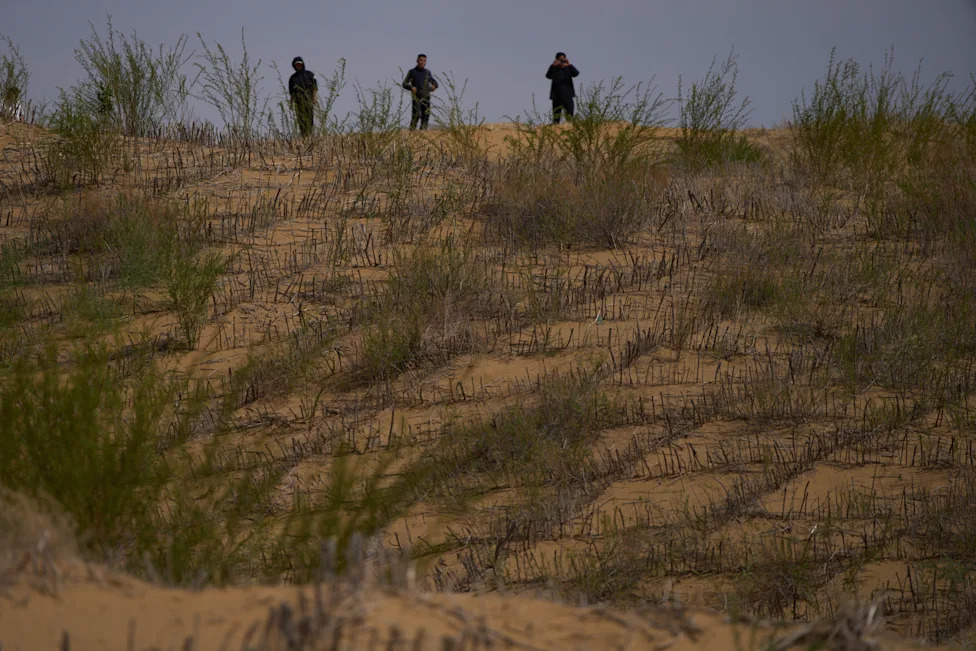
Men stand on top of a sand dune covered by a grass checkerboard that is part of desertification control efforts at the Engebei Ecological Area near Ordos in northern China's Inner Mongolia province on Friday, June 12, 2026. (AP Photo/Ng Han Guan)(AP Photo/Ng Han Guan)
Voices From The Front Line
On a government‑arranged media visit to the Kubuqi Desert — roughly 800 kilometers (500 miles) west of Beijing — 60‑year‑old sand‑control worker Yin Yuzhen recalled lonely early days when sandstorms reduced visibility to a few steps. "But now we can see the sun. We can see the green in the distance. We can see the road," she said. Yin and her husband now tend trees, maintain checkerboards and are helped by their children and occasional volunteers.
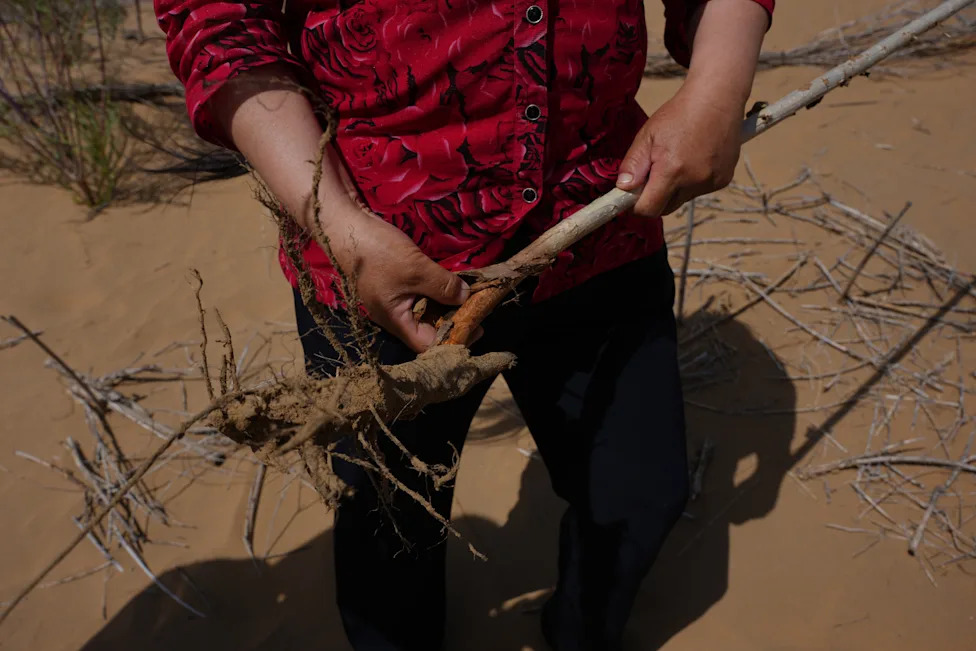
Yin Yuzhen, a sand-control worker, holds up a plant that did not survive because it was not planted deep enough while at a desertification control site at the Engebei Ecological Area near Ordos in northern China's Inner Mongolia province on Friday, June 12, 2026. (AP Photo/Ng Han Guan)(AP Photo/Ng Han Guan)
"The achievement of desertification combat is due to people's hard work and a bit of luck with climate," said Zhu Jiaojun of the Institute of Applied Ecology, Chinese Academy of Sciences.
Why Continued Effort Matters
Experts including Barron Joseph Orr, chief scientist for the U.N. Convention to Combat Desertification, emphasize that restored drylands can become more self‑sustaining over time but still require ongoing management, monitoring and water resources. The program’s success reflects large state investment, long‑term political commitment and the labor of rural workers — Zhu estimates more than 300 million rural laborers have taken part, mainly in paid, part‑time roles.
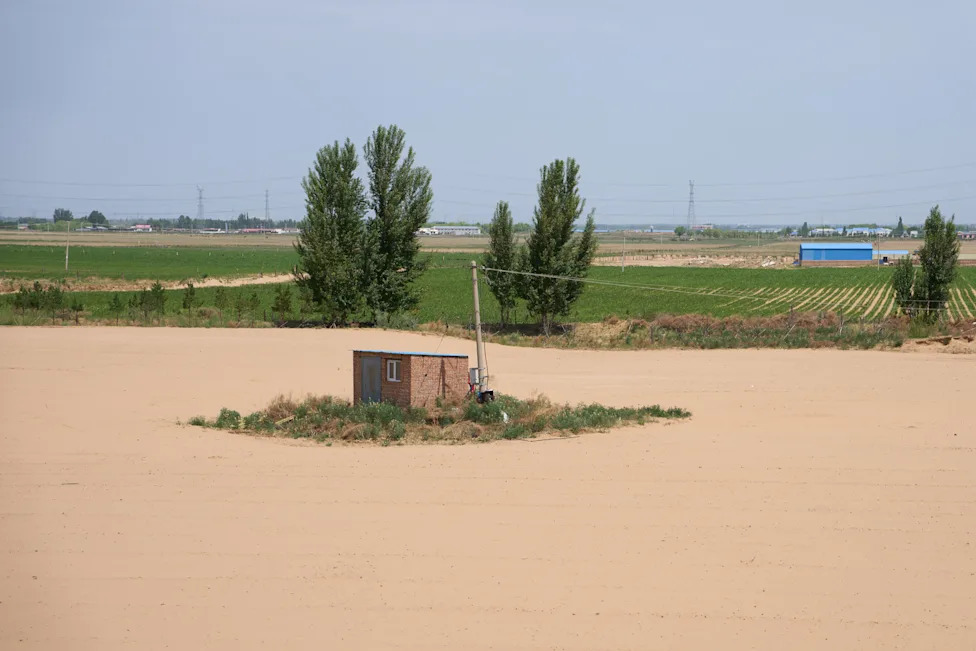
A shed is surrounded by a sandy plain near Ordos in northern China's Inner Mongolia province on Friday, June 12, 2026. (AP Photo/Ng Han Guan)(AP Photo/Ng Han Guan)
Environmental groups such as Green Camel Bell in Gansu work with farmers and herders to align restoration with local livelihoods, an approach advocates say is essential for lasting success. Zhao Zhong, the group's founder, urged linking ecological protection to economic benefits so communities do not view them as mutually exclusive.
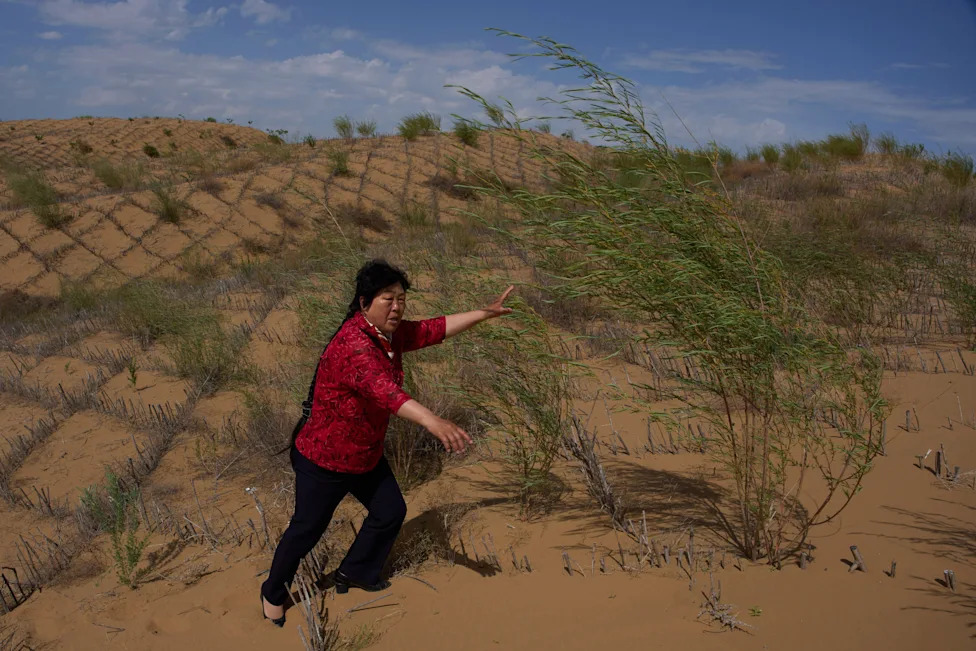
Desert control worker Yin Yuzhen walks along sand dunes covered by grass checkerboard that's part of desertification control efforts at the Engebei Ecological Area near Ordos in northern China's Inner Mongolia province on Friday, June 12, 2026. (AP Photo/Ng Han Guan)(AP Photo/Ng Han Guan)
Key Challenges
- Maintaining gains if state investment and human intervention are reduced.
- Ensuring sufficient water availability and healthy soils for planted forests to persist.
- Adapting to climate variability that can both help (more rainfall) and hinder restoration.
Scientists and activists agree: the Green Great Wall has produced measurable benefits, but preserving and expanding those gains will require decades more of careful management, stable funding and stronger links to local economic opportunities.
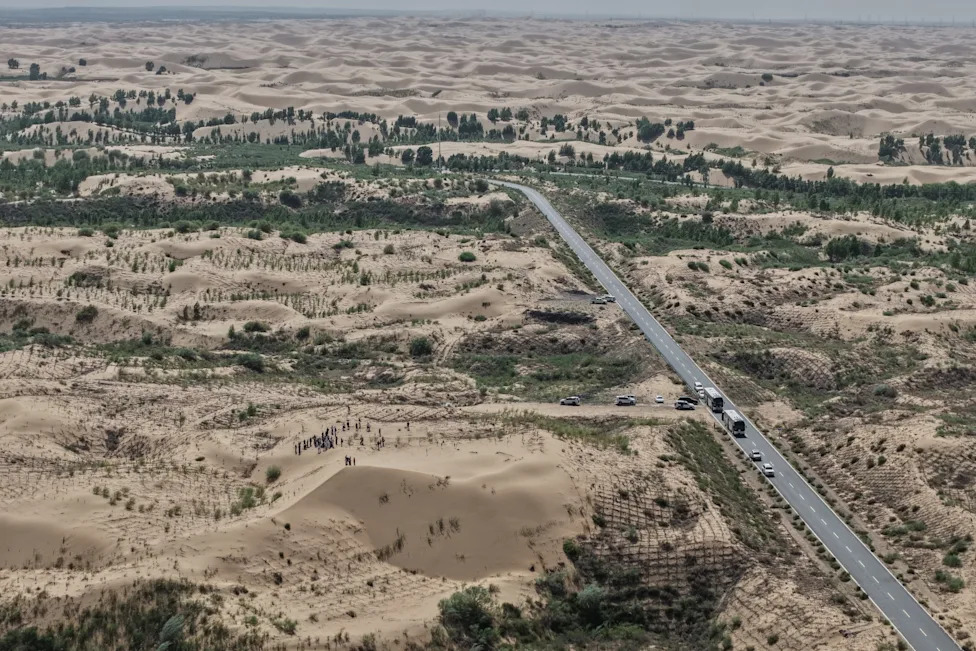
A highway cuts through a desertification control site of the Engebei Ecological Area near Ordos in northern China's Inner Mongolia province on Friday, June 12, 2026. (AP Photo/Ng Han Guan)(AP Photo/Ng Han Guan)
Video producer Olivia Zhang contributed to this reporting. The Associated Press’ climate and environmental coverage receives support from multiple private foundations; AP is solely responsible for the content.
Help us improve.