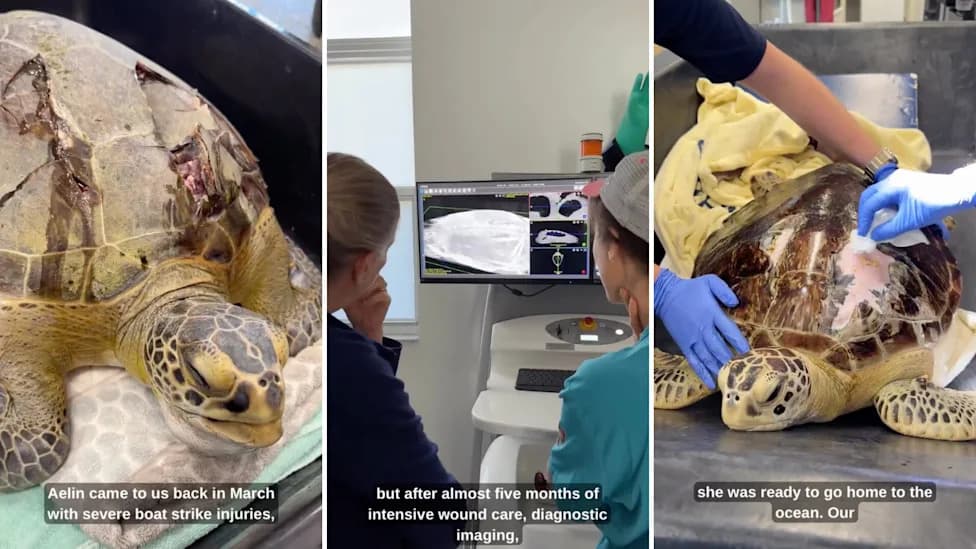
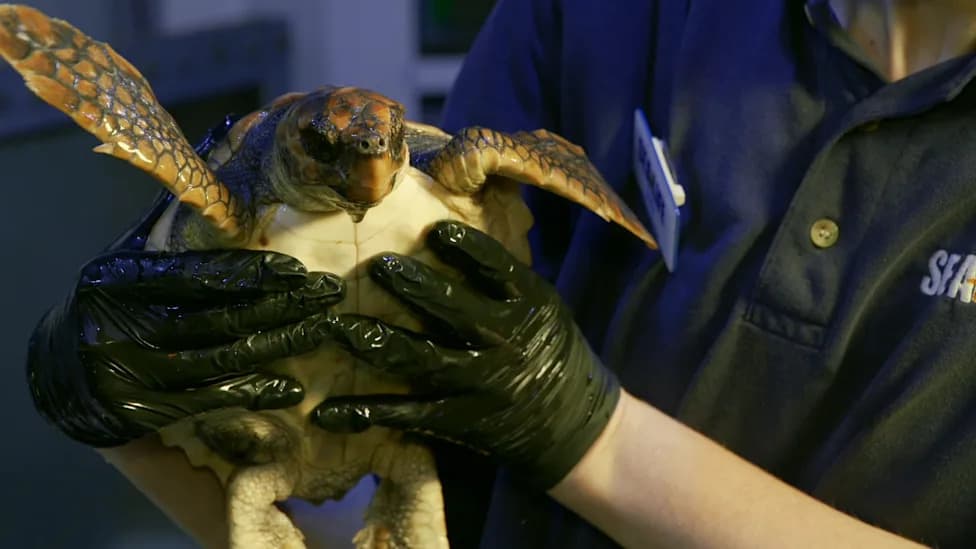
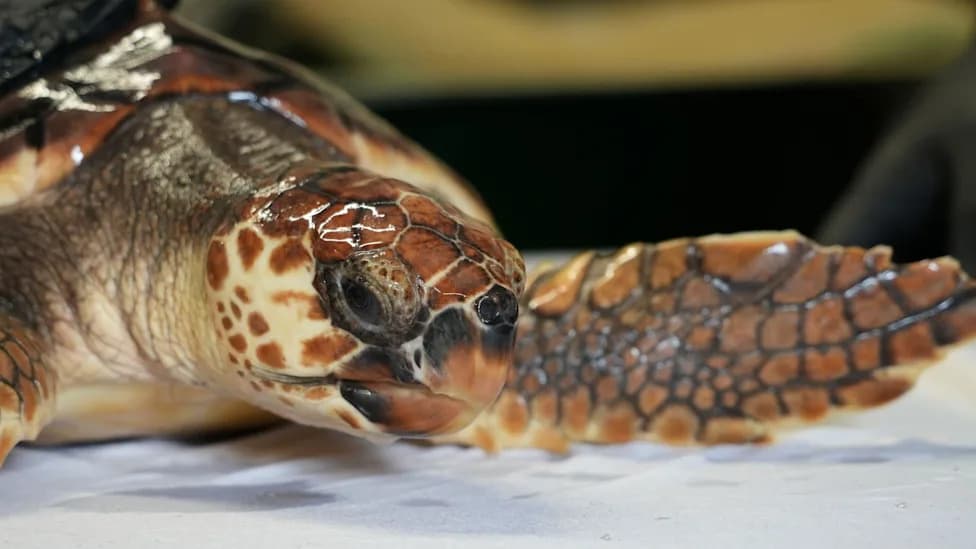
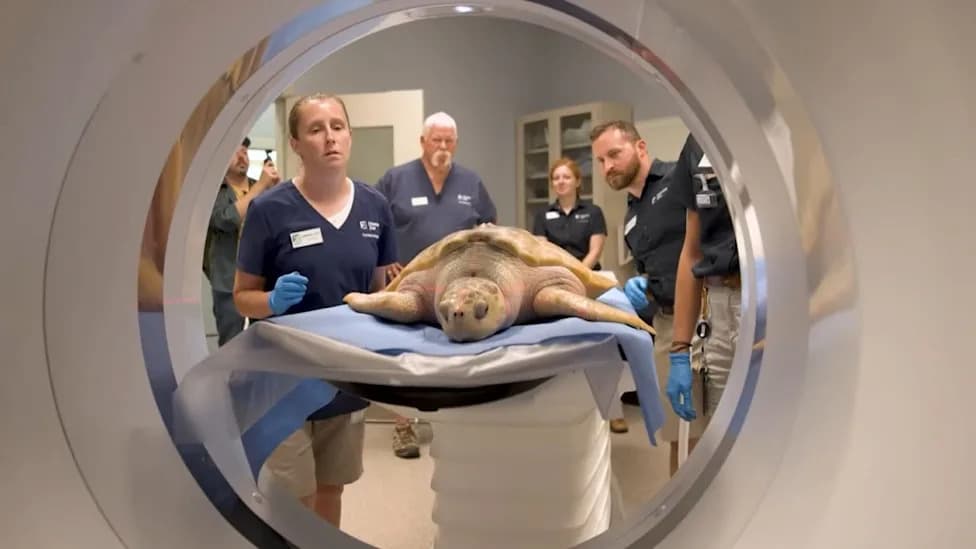
Three Haifa lifeguards freed a large loggerhead sea turtle tangled in fishing line and, with help from Prof. Roee Diamant and marine inspector Ilya Baskin, transported it to the National Sea Turtle Center in Mikhmoret for treatment. The turtle — named Halil — has an injured limb in a state of necrosis, although X-rays show no broken bones, so release will be delayed while it recovers. The incident highlights the broader danger of abandoned "ghost gear" to marine life and coastal recreation.
Giant Loggerhead 'Halil' Rescued Off Haifa — Abandoned Fishing Gear Leaves Limb in Necrosis
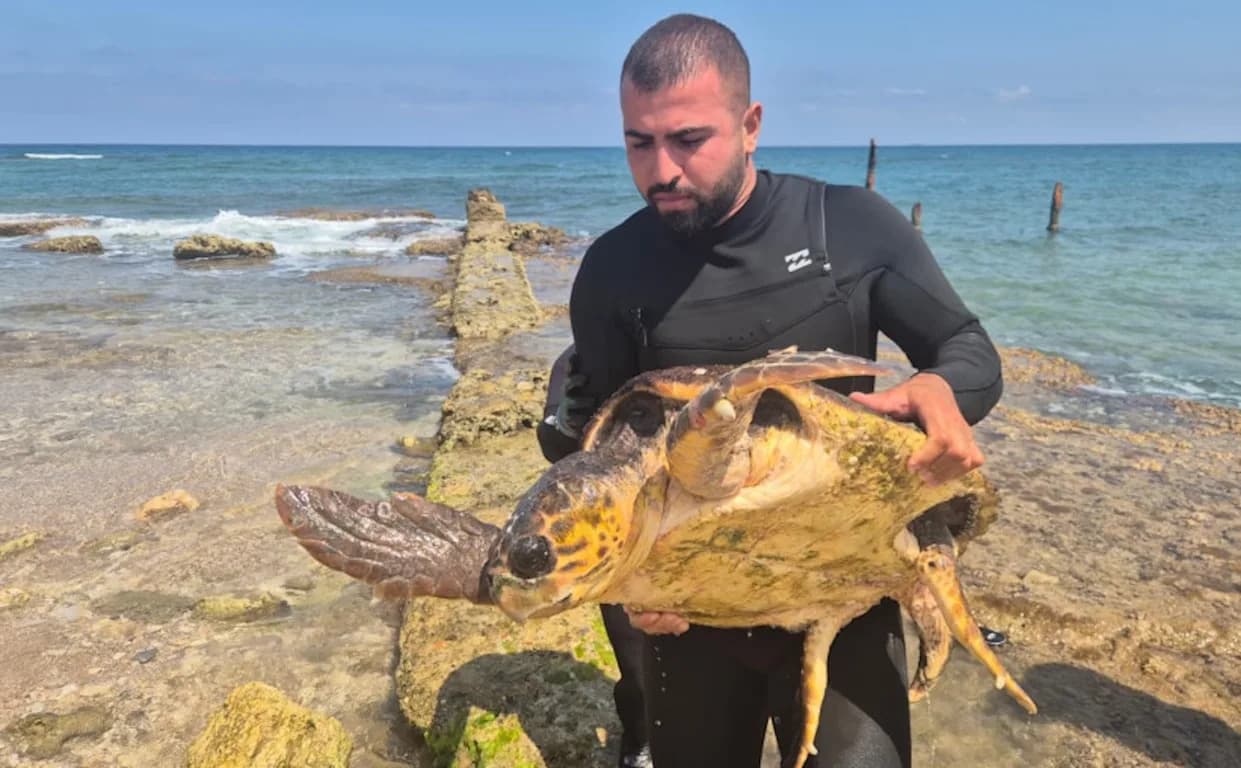
Photo Credit: Ilya Baskin / Israel Nature and Parks Authority
A large loggerhead sea turtle was given a second chance after lifeguards off Haifa, Israel, found the animal entangled in fishing line and intervened to free it.
Rescue And Response
The rescue began when three members of the Haifa Municipality Coastal Department spotted the turtle struggling in the water with fishing line wrapped around its body. Professor Roee Diamant, who leads a marine-science laboratory at the University of Haifa, joined the effort while the team contacted the Israel Nature and Parks Authority hotline to coordinate further assistance.
About 30 minutes later, marine unit inspector Ilya Baskin arrived at the beach and transported the animal to the National Sea Turtle Center in Mikhmoret for medical care. Rescuers later named the turtle Halil in honor of one of those involved and admitted it to the center for rehabilitation.
Injury Assessment And Recovery
The rescue centre reported that Halil's injured limb is in a state of necrosis, although X-rays indicate the bone itself is not broken. Because of the severity of the tissue damage, any return to the wild will be delayed while the turtle receives treatment and rehabilitation.
The Bigger Problem: Ghost Gear
The case draws attention to the wider hazard of abandoned fishing equipment—commonly called "ghost gear"—which includes nets, hooks and loose lines left in the sea or on shore. For sea turtles and other marine animals, that debris can cut into flesh, restrict movement, impede swimming and feeding, and ultimately cause severe injury or death. Ghost gear also damages coastlines used for recreation and tourism.
"There is a very large amount of ghost nets, fishing lines, and hooks that people leave behind," said Prof. Roee Diamant. "This is a very problematic and dangerous hazard."
Authorities and rescuers urge beachgoers, anglers and boaters to remove discarded fishing gear when it is safe to do so, dispose of equipment responsibly, and report entangled animals or hazardous debris to local wildlife or parks hotlines.
Help us improve.