Digitizing herbarium specimens and applying A.I. to those records is giving conservationists a clearer, faster view of plant and fungal biodiversity, the Royal Botanic Gardens, Kew reports. Studies using millions of digital specimens reveal shifts in flowering times and expose gaps in conservation planning—for example, 33% of Honduran fern species in protected areas were missing from management plans. Fewer than 16% of global specimens are digitized, with many "silent herbaria" concentrated in lower-income countries such as Nigeria (about 7% digitized). Kew calls for investment to unlock these collections and prevent avoidable extinctions.
Digitized Specimens and A.I. Are Transforming Plant Conservation
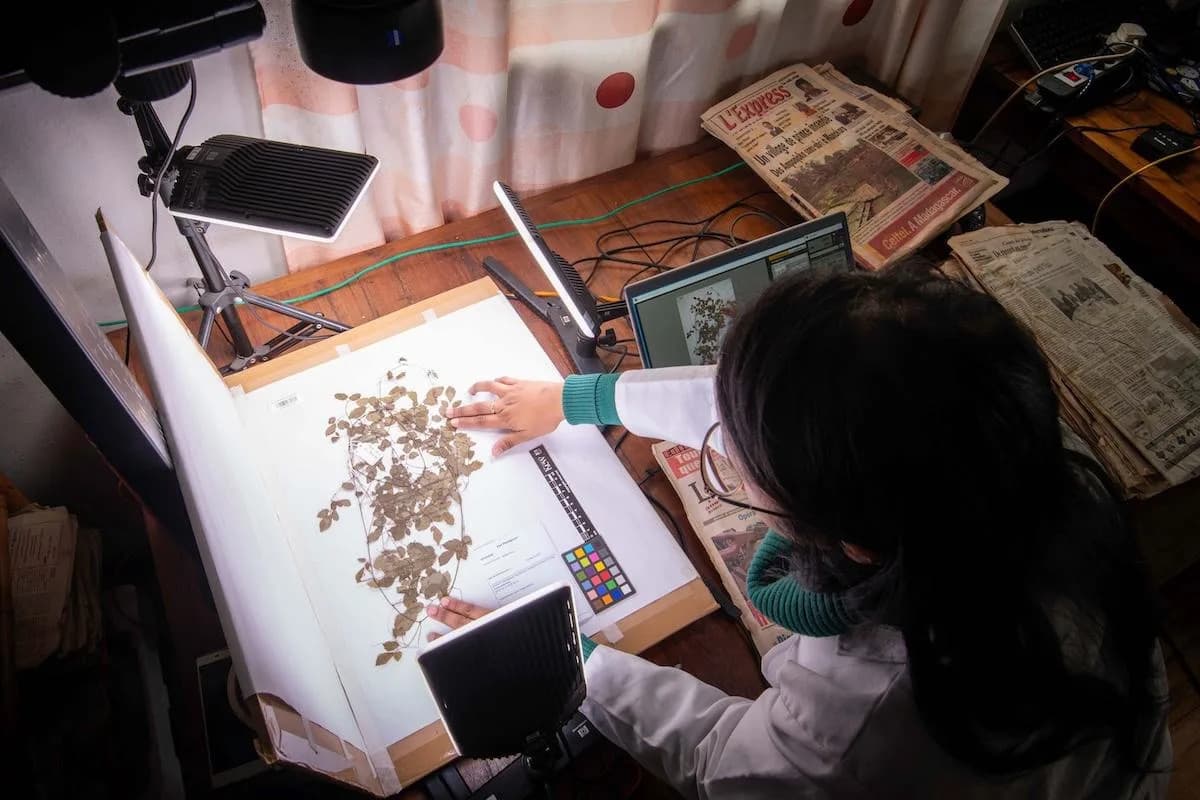
A researcher scans a plant specimen. Jeff Eden / Royal Botanic Gardens, Kew
The Royal Botanic Gardens, Kew, reports that digitizing herbarium specimens and pairing those records with artificial intelligence is rapidly reshaping how scientists assess and protect the world's plant and fungal biodiversity.
From Pressed Specimens to Global Data
For centuries, botanists and mycologists preserved new species by pressing, drying and labeling samples for storage in herbaria. Those specimens often recorded where a plant grew, when it flowered and other vital field notes. Today, millions of these specimens are being photographed, transcribed and shared online, giving researchers a far clearer view of distribution, phenology and conservation status.
Concrete Conservation Gains
Digitization is already producing actionable results. In Honduras, researchers assembled digital records of native ferns from collections held at home and abroad and discovered that 33% of species occurring in protected areas were missing from local management plans—information that can help managers prioritize limited conservation resources, said Johan David Reyes Chávez of University College Cork.
A.I. Scales Discovery
The Kew report, based on work by more than 400 scientists, highlights how A.I. accelerates analysis. One study used machine learning to examine 8 million digitized specimens and found that flowering times have shifted by more than two days per decade on average over the past century—evidence of widespread phenological change linked to warming.
Uneven Progress: Silent Herbaria
Major gaps remain. Globally, fewer than 16% of herbarium specimens have been digitized and made publicly accessible, and most digitization to date has taken place in wealthier countries. Kew itself has completed digitizing all 7.4 million specimens in its collection, but many institutions elsewhere lag behind.
Undigitized collections—often called "silent herbaria"—are concentrated in lower-income countries. In Nigeria, for example, only about 7% of plant and fungal specimens have been uploaded to global databases. Even so, newly digitized Nigerian specimens revealed that the medicinal plant Cnestis ferruginea occurs across an area roughly five times larger than previously understood from overseas-held records.
"We must empower silent collections," Alexandre Antonelli, Kew's executive director of science, warned. "Without sufficient resources, we risk losing many species that we could have safeguarded."
What Comes Next
Closing the digital divide—through funding, training and international collaboration—will expand the value of herbaria for research, conservation planning and climate-change monitoring. Unlocking the data in silent herbaria could reveal overlooked species ranges, improve management plans, and help prevent extinctions that are still avoidable.
Help us improve.