Argentina's Esperanza Base recorded an unprecedented 15.4°C on June 6, far above its long-term June average of -6.2°C and the old June record of 13.3°C from 1998. Nearby Marambio and San Martín also posted new June highs. Scientists say the event "confirms a trend," pointing to complex interactions with climate change and noting rising impacts such as rain instead of snow, three weeks of above-freezing days, and stress on wildlife and base operations.
Antarctic Peninsula Shatters June Record — Esperanza Reaches 15.4°C
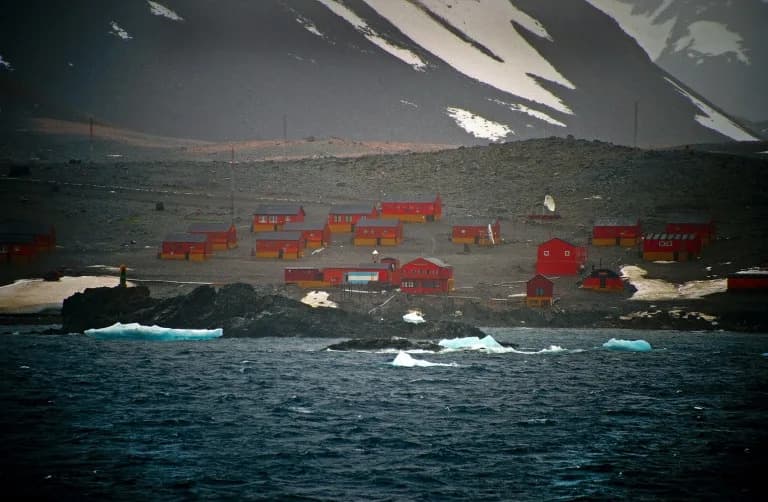
Experts said record-high June temperatures on the Antarctic Peninsula were 'very unusual' (VANDERLEI ALMEIDA)(VANDERLEI ALMEIDA/AFP/AFP)
Temperatures across the northern Antarctic Peninsula hit an unprecedented 15.4°C on June 6 at Argentina's Esperanza Base, climate scientists told AFP — a striking anomaly in the middle of the Antarctic winter.
Esperanza Base, located on the peninsula's northern tip, logged the 15.4°C reading, far above its long-term June average of -6.2°C and eclipsing the previous June record of 13.3°C set in 1998. Nearby Argentine stations also reported exceptional warmth between June 5 and 6: Marambio reached 11.8°C (previous June high 9.2°C; June average -10.7°C) and San Martín recorded 9.4°C (previous June high 7.8°C; June average -5.6°C).
Scientists Sound the Alarm
University of Groningen professor Raul Cordero said the episode "confirms a trend," warning that such events may become more frequent unless global warming is slowed. Thomas Caton Harrison, a polar climate scientist at the British Antarctic Survey, added that multiple factors likely combined to produce the spike and that "there is credible evidence that climate change is playing a role, but the effect is complex in this region." Both experts emphasized the need for long-term observations because Antarctica naturally experiences large temperature swings.
Observed Impacts
Officials report Esperanza has seen above-freezing temperatures daily for three consecutive weeks, leaving large areas in the far north largely free of snow during winter. Scientists say a notable share of precipitation has been falling as rain rather than snow — a shift with tangible consequences for wildlife and operations on the ice.
"This is very unusual for this time of year," said Jose Luis Stella, climatologist at Argentina's National Meteorological Service.
Rain-on-snow and increased runoff can damage penguin colonies, alter habitat conditions and create logistical challenges for researchers and infrastructure at Antarctic bases.
Looking Ahead
Researchers stress that while single events are not proof of long-term change, the recent records align with a broader pattern of regional warming. Continued monitoring and research are needed to understand the drivers and anticipate ecological and operational impacts in Antarctica.
Help us improve.