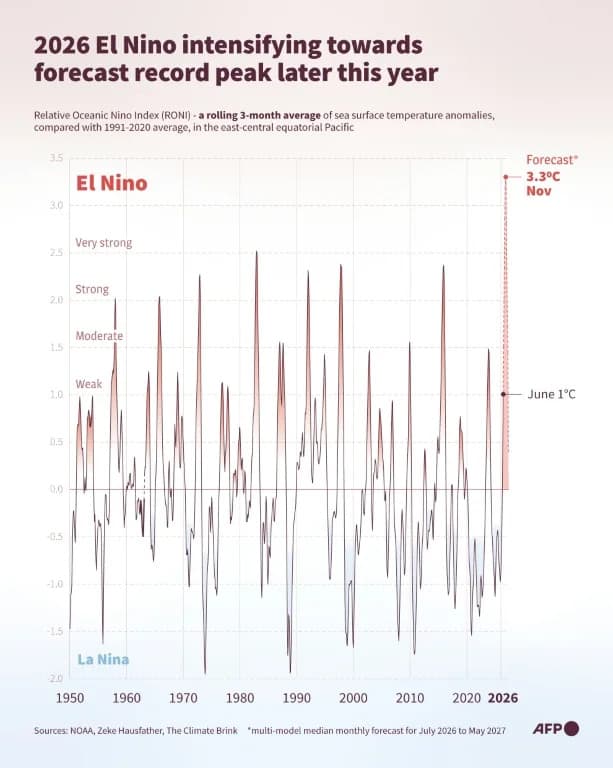
August 2026 was the hottest month on record, with Copernicus reporting a global average of 16.96°C (62.53°F), about 2.97°F above preindustrial levels and above the 1.5°C Paris benchmark. Scientists attribute most of the rise to continued burning of fossil fuels, while El Niño added a modest boost (~0.2–0.4°F). Experts warn of growing health, economic and infrastructure impacts and call for rapid emissions cuts alongside local adaptation measures.
August 2026: Hottest Month On Record — Global Average Tops 1.5°C as El Niño Adds a Boost

Photo Credit: iStock
August 2026 became the warmest month ever recorded, with Copernicus reporting a global average temperature of 16.96°C (62.53°F). That reading is roughly 2.97°F above the preindustrial baseline, pushing the month past the 1.5°C (≈2.7°F) threshold central to the Paris Agreement.
Why This Matters
Scientists say the long-term rise in global temperatures is driven primarily by the burning of coal, oil and gas. A developing El Niño added a smaller, temporary boost to global averages — Copernicus and other experts estimate El Niño contributed only about 0.2–0.4°F to the monthly anomaly — meaning most of the increase is the result of accumulating greenhouse gases.
Samantha Burgess, Copernicus’s strategic climate lead, said El Niño typically contributes only around 0.2–0.4°F to global averages, underlining that the bulk of the warming comes from fossil-fuel emissions.
"It is now time to stop acting surprised that our warming planet keeps getting warmer. This is occurring exactly as forecast by scientists literally decades ago," said Texas A&M climate scientist Andrew Dessler.
Global Trend And Local Impacts
Copernicus also reported that the eight hottest months on record have all occurred since July 2023, highlighting a sustained upward trend. The global record manifested as extreme local heat in many regions:
- Across parts of the United States, record humidity pushed conditions close to the limits of human survivability.
- In New England, intense heat waves produced historic highs and sharpened public-health risks.
- In Sweihan, United Arab Emirates, authorities again recorded exceptional heat with rising exposure risks for outdoor workers and residents.
What Experts Recommend
U.N. climate chief Simon Stiell warned that continued large-scale burning of fossil fuels will bring more broken records, greater health impacts, economic costs and infrastructure stress. Experts emphasize two parallel responses:
- Mitigation: Rapid, deep cuts to coal, oil and gas emissions and accelerated deployment of clean energy to limit long-term warming.
- Adaptation: Investments in heat-resilient infrastructure — upgraded power grids, energy-efficient buildings, cooling centers, shaded public spaces and resilient transport systems.
Practical Steps For Individuals And Communities
Near-term measures include following heat alerts, checking on vulnerable neighbors, using available cooling resources, and preparing for smoke events, power outages or evacuations during extreme weather. At the community level, prioritizing grid upgrades, building improvements and public cooling strategies can reduce harm as temperatures rise.
August’s record underscores a clear message from climate science: El Niño can amplify short-term extremes, but the underlying, persistent warming is driven by human emissions — and it will require systemic action to reverse.
Help us improve.