Scientists at a Milan conference warned that carbon dioxide removal (CDR) is progressing too slowly and lacks adequate funding. Current removal represents roughly 5% of annual global CO2 emissions, with 99.9% coming from natural sinks like trees. Engineered approaches such as biochar and Direct Air Capture are tiny in scale — around 2 million tonnes removed last year versus over 40 billion tonnes emitted — and most techniques cost over $200 per tonne. Experts say scaling CDR will require billions of euros and long-term public investment.
Carbon Removal Struggling To Scale Up As Research And Funding Fall Short
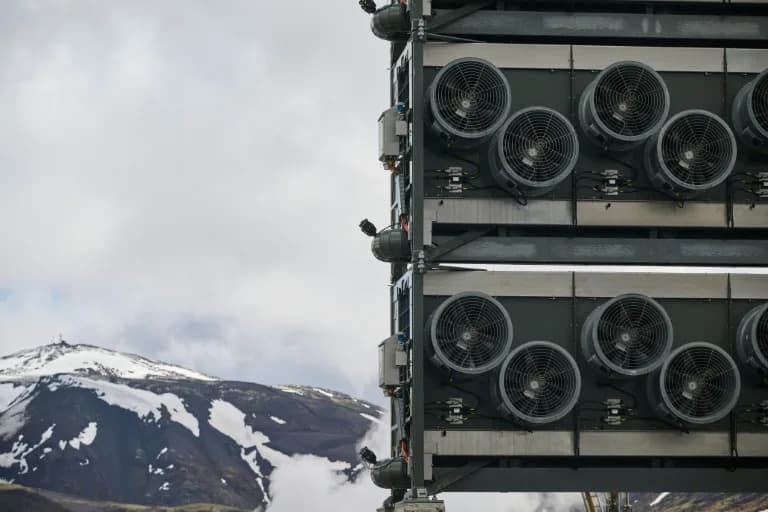
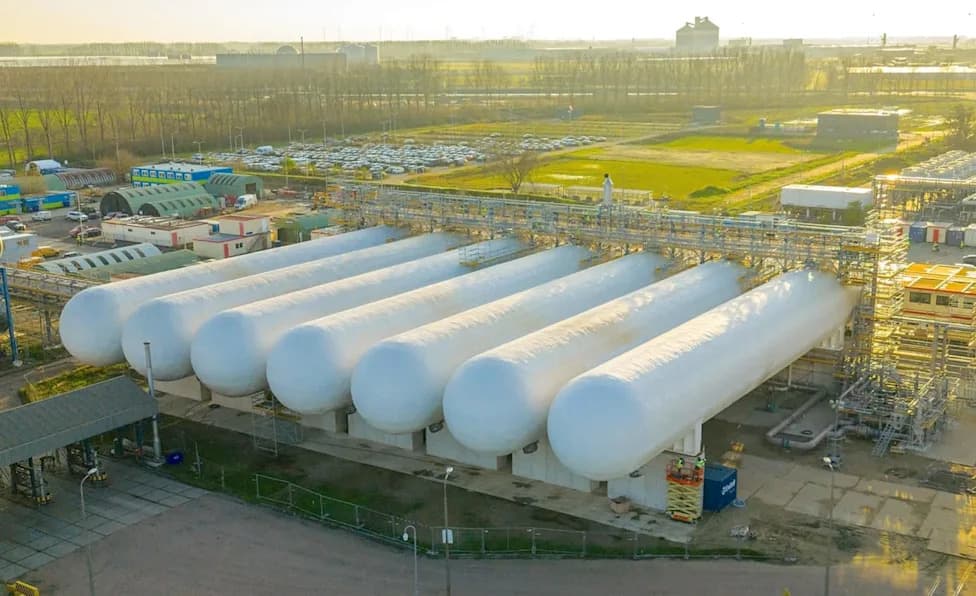
Iceland is using direct air capture of carbon dioxide from the air (Halldor KOLBEINS)(Halldor KOLBEINS/AFP/AFP)
Scientists and policy experts gathered in Milan this week to warn that carbon dioxide removal (CDR) — methods that extract CO2 from the atmosphere and store it durably — is not scaling fast enough to help meet climate goals. Researchers said progress is limited, investment is insufficient and novel removal technologies remain a tiny fraction of global emissions reductions.
Why CDR Matters
CDR is considered a necessary complement to deep emissions cuts: it tackles residual CO2 already in the air that cannot be eliminated quickly by reducing fossil fuel use. As experts stressed in Milan, however, CDR should never be treated as a license to pollute — cutting current emissions remains the priority.
Current Scale And Methods
According to the third edition of the report "The State of Carbon Dioxide Removal" presented in Milan, current removal activities account for roughly 5% of annual global CO2 emissions. About 99.9% of that removal is natural, primarily through tree planting and restored ecosystems. Innovative techniques — such as converting plant residues to biochar, capturing CO2 after biomass combustion, and Direct Air Capture (DAC) — remain tiny in scale. The report estimated around 2 million tonnes of CO2 were removed last year by these methods compared with more than 40 billion tonnes emitted by human activity.
"When Donald Trump returned to power, things changed a lot, and then with the wars, the situation got even worse," said Massimo Tavoni, professor of climate-change economics at the Polytechnic University of Milan, describing how geopolitical and policy shifts have affected investment and interest.
Key Barriers: Cost, Land And Scale
Cost is a major constraint: most removal techniques currently exceed $200 per tonne of CO2, well above prevailing carbon prices. Reforestation, while cheap per tonne in some contexts, is constrained by competition for agricultural land and is seeing stagnating growth in newly planted areas. DAC and other engineered approaches operate at only a handful of demonstration sites (notably in Iceland), and the volumes they capture today are negligible relative to global emissions.
Policy And Finance
Experts agreed scaling CDR will require large public and private investment running into the billions of euros. Morgan Edwards of the University of Wisconsin–Madison, who led the evaluation report, described CDR as a public good that will likely require long-term government procurement alongside private-sector innovation:
"We can have companies playing an important early role, but in the long term we're going to need governments to buy this public good," Edwards said.
Outlook
Research continues into other approaches, including enhancing ocean uptake of CO2, though scientists caution about unintended impacts on ocean chemistry. In the near term, experts say the coming years are crucial: scaling effective, safe and affordable removal methods will take time, coordinated policy, and sustained funding.
Help us improve.