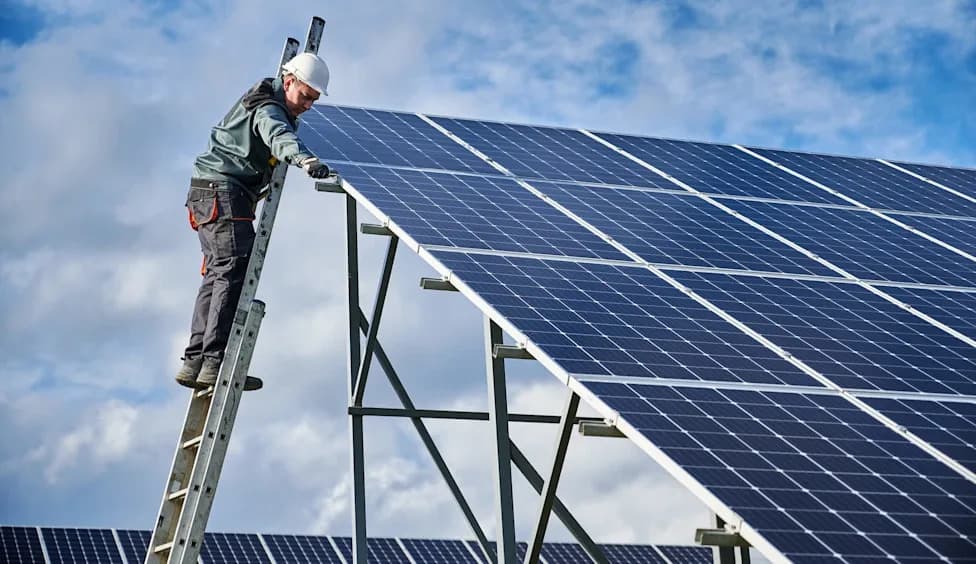
The House-passed farm bill would bar federal funding for converting prime farmland to ground-mounted solar and could disqualify projects that use components from "foreign entities of concern," notably China — a major supplier of solar panels. Advocates warn the language could block agrivoltaics and small-scale on-farm solar that many producers rely on to reduce energy costs and stay afloat. The bill also mandates a study of agrivoltaics, but funding restrictions may still limit farmer access to REAP and other grants while the Senate considers changes.
Republican Farm Bill Could Cut Off Solar Aid That Has Helped U.S. Farmers Survive
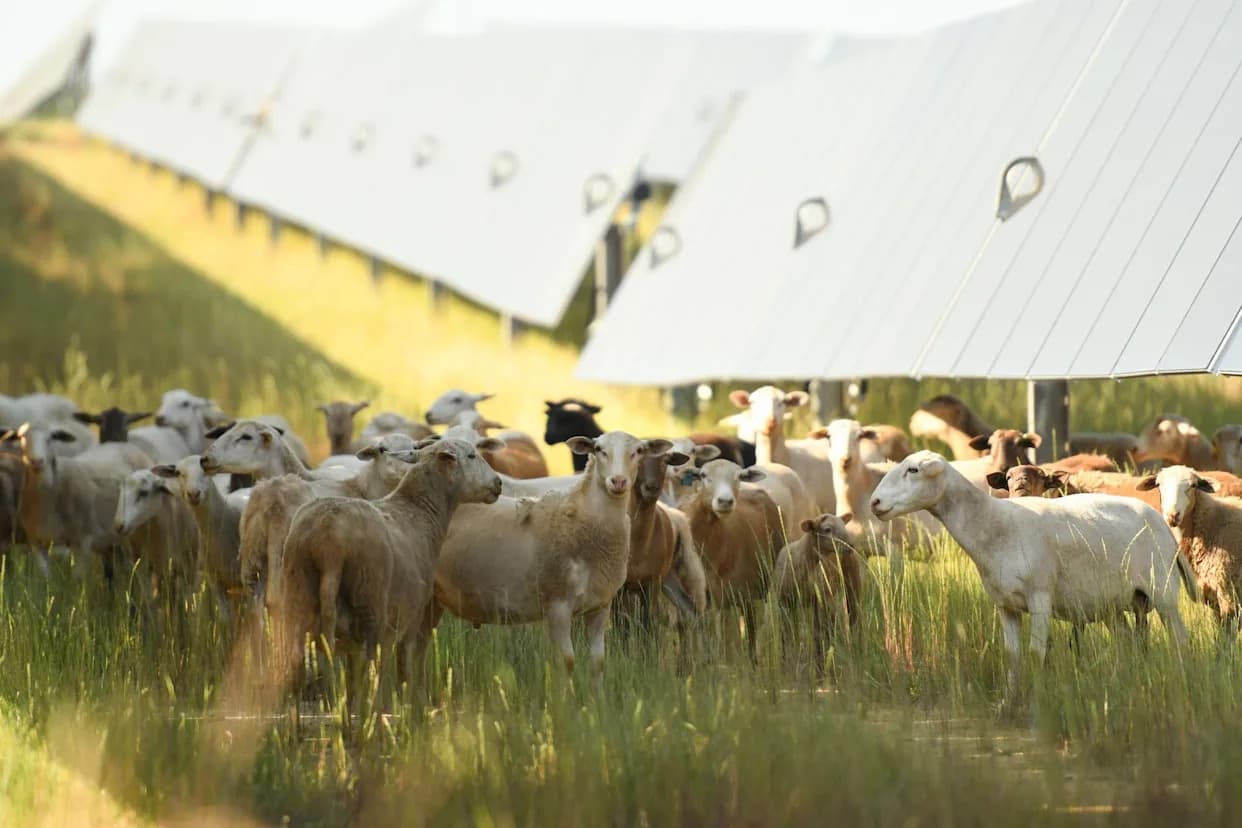
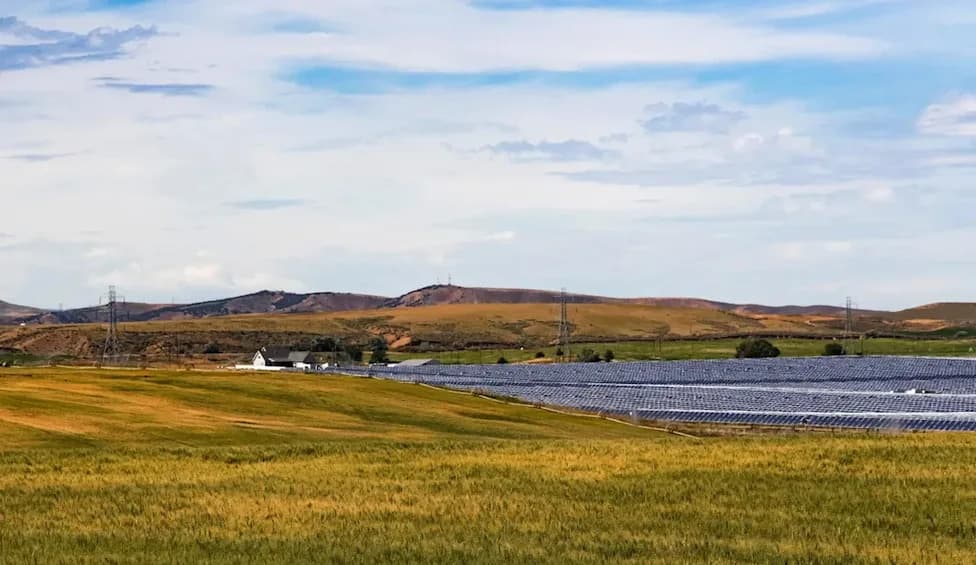
‘Solar is one of those farm-saving opportunities that have allowed producers to keep farming on their operations during times of bad financial strain.’Photograph: Silicon Ranch(Photograph: Silicon Ranch)
Twelve years ago, when George Hunt needed a new roof for his cow barn in Orange, Massachusetts, he found solar panels to be an affordable, farm-saving option thanks to federal and state support for renewable energy. A USDA Rural Energy for America Program (REAP) grant covered roughly one-third of the installation; state incentives and modest financing covered the rest. “We didn’t have an electric bill for a decade,” Hunt recalled.
But access to that kind of assistance may be changing. The House-passed farm bill would prohibit federal funding for converting prime farmland to ground-mounted solar installations. Rooftop systems would be exempt, as would tiny sites under five acres; parcels smaller than 50 acres could qualify only with county or municipal approval. Trade group Solar Energy Industries Association (SEIA) warns many local governments are already considering or adopting restrictions that make approvals harder to secure.
Agrivoltaics: A Middle Ground
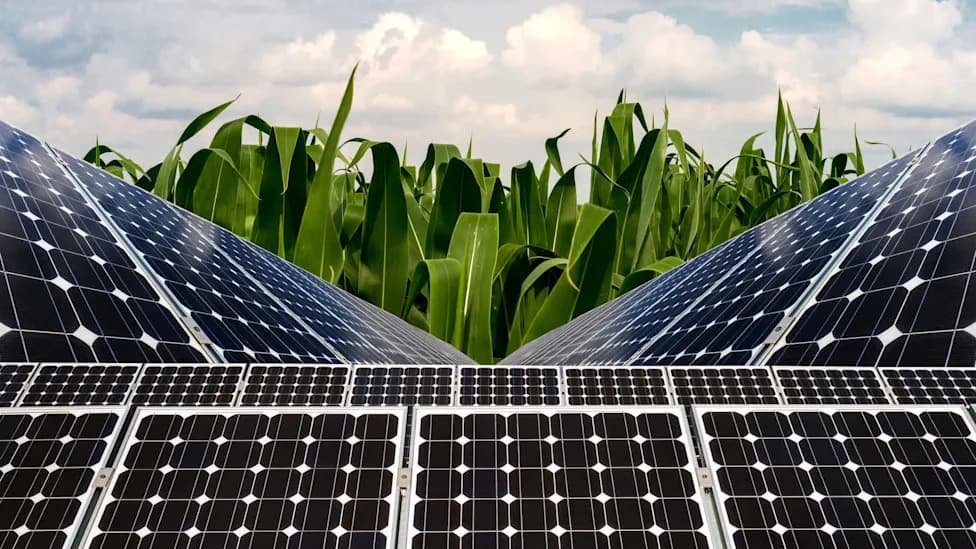
Advocates say agrivoltaics — solar arrays designed to produce electricity while allowing crops, forage or grazing to continue beneath or between panels — can help farmers stay solvent while keeping land productive. Richa Patel, a policy specialist at the National Sustainable Agriculture Coalition (NSAC), described distributed solar as a "farm-saving opportunity" that allows producers to weather financial strain.
Hunt applied for another REAP grant to install agrivoltaics on a 19-acre hayfield that feeds his dairy herd, expecting steady revenue from power sales while continuing hay production. In 2025, however, REAP stopped accepting grants and his application was denied as the federal program was scaled back under a new administration.
Federal Rollbacks and Legal Pushback
The second Trump administration in 2025 enacted a strongly anti-renewables agenda, rolling back tax credits and slowing permitting for solar projects while promoting oil and coal. It canceled $7 billion in Biden-era funding aimed at affordable solar programs; more than a dozen state attorneys general responded with a lawsuit. Washington Attorney General Nick Brown said the administration was "ignoring the law" designed to make electricity more affordable.
Foreign-Sourcing Clause Could Be A De Facto Ban
The House bill also bars federal funds for projects that use components made or assembled in a “foreign entity of concern.” Because China accounts for roughly 80% of global solar-panel manufacturing, Samantha Levy, senior policy manager for conservation and energy at American Farmland Trust (AFT), warned the restriction could operate as a de facto ban. Patel added that even a strengthened domestic supply chain would likely raise costs and price out small farmers.
Why Some Communities Push Back
Levy and others say the provision appears aimed at a real problem: the conversion of farmland to large utility-scale solar farms, which can offer landowners higher payments than traditional agricultural leases. Those conversions can reduce local land availability and affordability, with ripple effects across farming communities. However, critics argue the farm bill’s broad language entangles small-scale, on-farm solar with large utility projects and uses the wrong policy tool to address land-use concerns.
Ann Mesnikoff, federal legislative director for the Environmental Law & Policy Center (ELPC), noted the bill does not restrict other types of development — such as datacenters or sprawl — yet singles out solar even where it demonstrably lowers farm operating costs.
Confusion Over Definitions
The bill’s wording is ambiguous enough that farmers and lenders may not know whether an agrivoltaic system counts as a farmland conversion. Traditional utility arrays often remove soil and crop production from the land permanently; many agrivoltaic designs are explicitly intended to coexist with hay, pollinator habitat, grazing livestock or fruit and vegetable production. AFT, NSAC and other farm groups support agrivoltaics as a way to strengthen rural economies while advancing climate goals.
Research, But Not Relief
The House measure also calls for a federal study on the effects of adding solar to farmland, including impacts on rural economic opportunity, biodiversity, and agricultural resilience. Developers such as Silicon Ranch — which reports building 1,380 megawatts of agrivoltaics across five states — say a rigorous, impartial study could clarify definitions and standards. Yet research alone would not remove the funding restrictions currently written into the bill.
What Comes Next
How the Senate will modify the bill is uncertain. Senator John Boozman (R-Ark.), chair of the Senate Agriculture, Nutrition and Forestry Committee, indicated the chamber would likely begin its markup in June. Advocates urge clearer protections for REAP so grants resume on regular cycles; Levy said the USDA’s abrupt halting of REAP commitments in 2025 harmed farmers and rural small businesses that had prepared to apply.
On-the-Ground Impact
New York sheep farmer Rebekah Pierce supplements income by grazing sheep under community agrivoltaic arrays across four counties — a growing model of shared land use. Yet she still cannot afford a typical farm-scale solar installation, which runs about $60,000 even after state incentives. “Without any federal assistance, we can’t afford it,” Pierce said. Advocates say smaller producers should retain the option to choose cleaner, cheaper energy without shouldering crippling up-front costs.
Bottom Line: The House farm bill aims to curb large conversions of prime farmland to solar, but its broad prohibitions and foreign-sourcing rule risk blocking the very on-farm and community-scale solar projects that many farmers rely on to reduce costs and remain viable. Senators will now decide whether to refine those restrictions, clarify definitions for agrivoltaics, and restore predictable funding pathways for programs like REAP.
Help us improve.