Researchers from Cornell identified an estimated 5.6 million regular mining bees (Andrena regularis) nesting in about 1.5 acres (0.61 ha) of an Ithaca cemetery, a discovery that likely explains heavy pollination of a nearby apple orchard. A 2023 census using mesh tents and alcohol traps and modeling published in Apidologie produced the estimate and a biomass near 10,000 pounds (≈4,536 kg). The site also hosts parasites such as cuckoo bees, blister beetles and conopid flies, and has prompted a statewide cemetery survey and an iNaturalist citizen‑science effort.
Ithaca Cemetery Swarms: 5.6 Million Ground‑Nesting Bees Power Nearby Apple Orchard
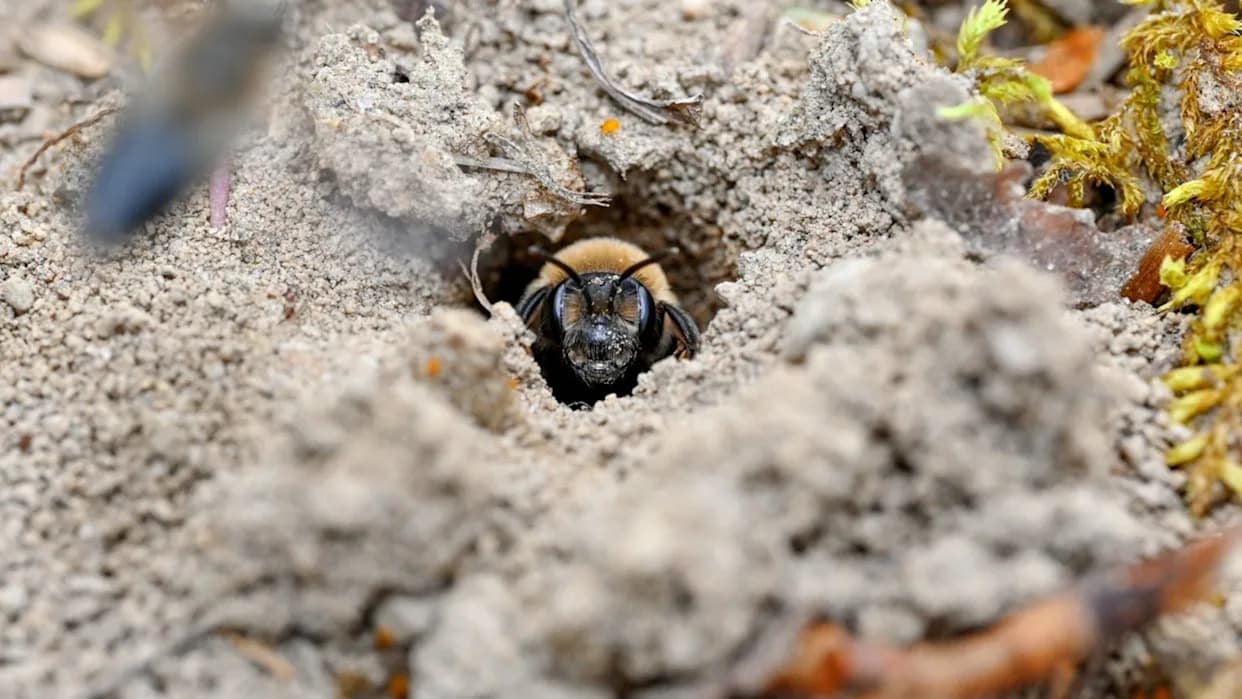
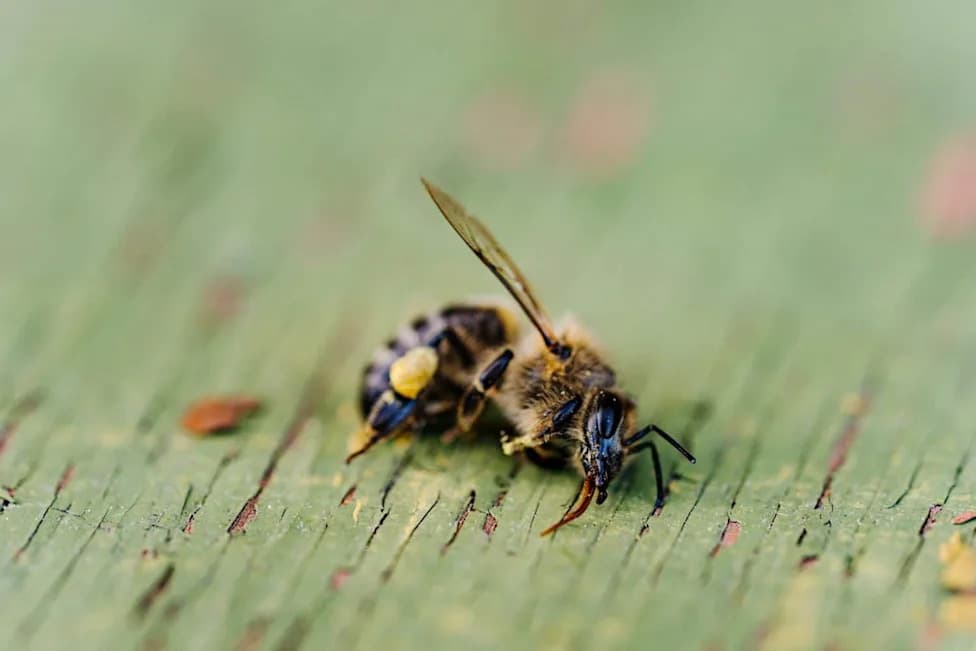
A regular mining bee (Andrena Regularis) at East Lawn Cemetery in Ithaca, New York. Scientists found over 5 million of these bees nesting underground there, representing a new record.Bryan Danforth
The soft ground of an upstate New York cemetery is bursting with life: researchers from Cornell University discovered what appears to be the largest-known aggregation of ground-nesting bees anywhere on the planet. The site — East Lawn Cemetery in Ithaca — hosts an estimated 5.6 million regular mining bees (Andrena regularis) across roughly 1.5 acres (about 0.61 hectares).
How the Discovery Happened
The aggregation was first noticed in spring 2022 when Rachel Fordyce, a technician in Bryan Danforth's entomology lab, walked through the cemetery on her route to work. She found males courting and females disappearing into nest holes laden with pollen. That observation prompted the team to map the site and return the following spring for a formal census.
Counting the Bees
In spring 2023 the team deployed small mesh tents at random locations across the 1.5-acre nesting area. Each tent held a jar of alcohol that collected visiting bees. The researchers recorded counts, sex, and species in the traps and used statistical models described in a recent Apidologie paper to extrapolate population size. Their estimate: roughly 5.6 million mining bees, with a combined biomass approaching 10,000 pounds (about 4,536 kg) — roughly the weight of two adult giraffes. The estimated number of individuals would be comparable to about 140–180 typical honeybee colonies.
Natural History: How Regular Mining Bees Nest
Unlike social honeybees, Andrena regularis are solitary ground‑nesters. Each female excavates a vertical shaft about 6–10 inches deep (15–25 cm), digs side tunnels, and builds small brood cells lined with waterproof secretions. Each cell receives a ball of pollen and nectar and a single egg. A female typically provisions 6–8 cells on the same shaft, seals the passages, and leaves the offspring to develop. Larvae feed, molt, pupate, and overwinter underground in a low‑metabolism state called diapause before emerging the next spring when temperatures approach about 70°F (≈21°C).
Enemies In The Soil
The researchers also documented parasites and predators that use the same burial ground. Traps captured cuckoo bees (Nomada imbricata), which lay eggs in mining‑bee brood cells; blister beetles, whose larvae hitch rides on female miners and consume brood; and conopid flies, which parasitize adult bees. While these natural enemies kill individual bees, the team observed that they do not appear to suppress the population at large.
Why Old Cemeteries Make Good Bee Habitat
Danforth and colleagues believe older cemeteries can be prime habitat for ground‑nesting bees because they are often located on sandy soils that are easy to excavate, experience relatively low pesticide use, and can support diverse, lightly managed flora. The cemetery lies about half a mile (≈0.8 km) from Cornell's apple orchard — close enough that the mining bees likely provide substantial pollination services for nearby fruit crops.
From One Discovery to a Broader Search
Following the find, Danforth launched a statewide survey of cemeteries and an iNaturalist project to enlist citizen scientists to locate similar aggregations. The team says it's possible that larger or equally large aggregations remain undocumented elsewhere.
'It's a massive aggregation of bee nests,' says Bryan Danforth. 'No sane beekeeper would put 140–180 honeybee colonies in a 1.5‑acre field.'
Implications: The discovery highlights the importance of overlooked urban and suburban green spaces for native pollinators and suggests that modest changes — less pesticide use and less‑frequent mowing — can create refuges for important wild-bee populations.
Help us improve.