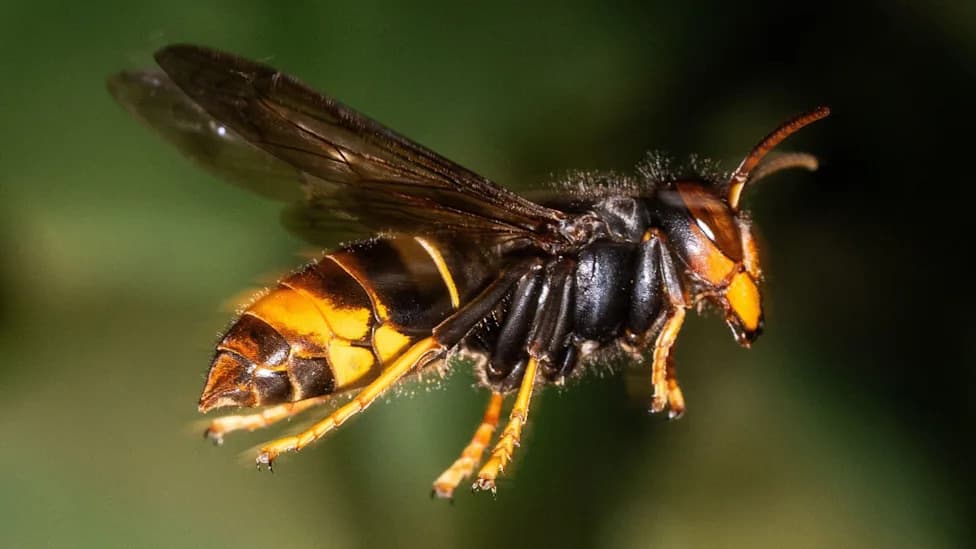
The UK has recorded fewer yellow‑legged (Asian) hornet sightings and nests this year—53 nests and 167 sightings versus 93 nests and 389 sightings last year—but nests have been detected across a wider area, raising concerns about local breeding in the South East, particularly Kent. Experts credit APHA and National Bee Unit eradication efforts and past DNA analysis suggesting limited sustained UK breeding, though repeated nest finds in the same locations point to possible establishment. Isolated nests have also been reported in Somerset, Essex, Derbyshire, Northamptonshire, Norfolk and Yorkshire. Authorities urge the public to report sightings so nests can be found and destroyed.
Asian (Yellow‑Legged) Hornets May Be Establishing In South East As Nests Spread Despite Fewer Sightings
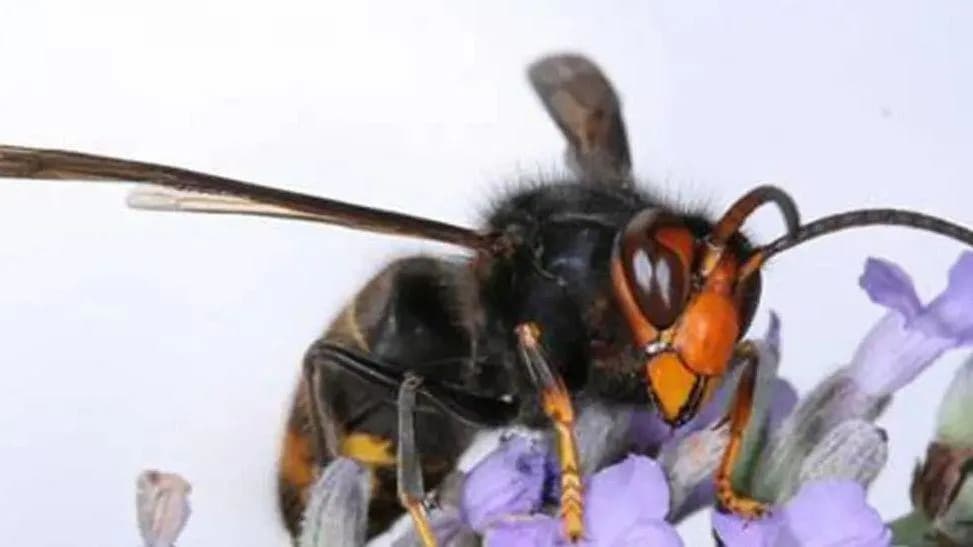
Asian hornets feed on all insects including honey bees [PA Media]
Recorded sightings of yellow‑legged (Asian) hornets in the UK have fallen compared with last year, but the discovery of nests across a wider area—particularly repeated finds in the South East—has prompted concern that local breeding may be occurring.
Numbers And Where They're Appearing
The National Bee Unit reports 53 nests and 167 sightings this year, down from 93 nests and 389 sightings last year. While overall records are lower, nests have been found across a broader geographic area, with multiple reports concentrated in Kent and other parts of the South East.
Why Beekeepers Are Concerned
Also called the Asian hornet, this invasive species preys on insects and poses a particular threat to honey bees. Beekeepers say adult hornets return to nests with bee larvae and the thoraxes of adult bees to feed to their young, which can have serious local impacts on apiaries.
What Experts Say
Tony Warren, co‑founder of the volunteer group Asian Hornet Alert in Gravesend, welcomed the overall drop in records but warned that repeated nest discoveries in the same South East locations suggest local breeding. He said some hornets may also arrive from abroad, creating small, scattered pockets.
Dan Etheridge of the National Bee Unit credited the Animal & Plant Health Agency's (APHA) eradication efforts with helping reduce numbers. He said previous DNA analysis indicates limited sustained breeding in the UK historically, and that many detections remain isolated rather than part of widespread establishment.
Etheridge noted the South East sees the most reports in part because it is closest to the French coast. This year, isolated nests have also been recorded in Somerset, Essex, Derbyshire, Northamptonshire, Norfolk, Yorkshire and along parts of the Hampshire and Dorset coast.
Detection And Response
Authorities say new tools—such as tracking technology and AI‑assisted detection—are improving the ability to find and destroy nests. APHA and the National Bee Unit continue eradication work and urge the public to report sightings promptly to ensure rapid response.
How You Can Help
If you spot a hornet or nest, report it to the National Bee Unit or local volunteer groups such as Asian Hornet Alert through their official reporting channels. Timely reports make eradication possible and protect local pollinators.
Key Figures: 53 nests and 167 sightings this year versus 93 nests and 389 sightings last year.
Help us improve.