Fujairah and Khor Fakkan have become critical gateways for UAE trade after the de facto closure of the Strait of Hormuz. Crude flows through Fujairah have risen about 38% and averaged 1.62 million bpd by late March, while Khor Fakkan’s container throughput jumped roughly 25-fold to about 50,000 containers a week. Iranian drone strikes and an expanded naval map have highlighted security risks, though operations continue amid growing congestion and contingency planning.
Eastern UAE Ports Become Lifeline as Gulf Trade Reroutes Around Strait of Hormuz
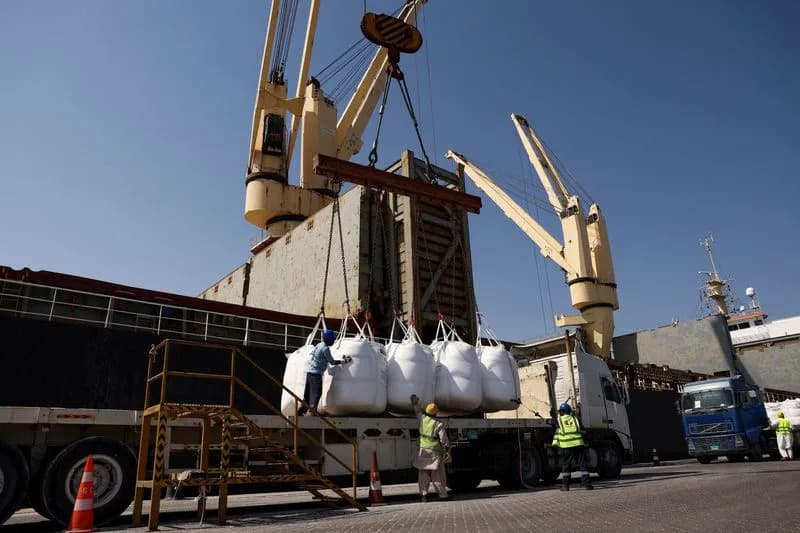
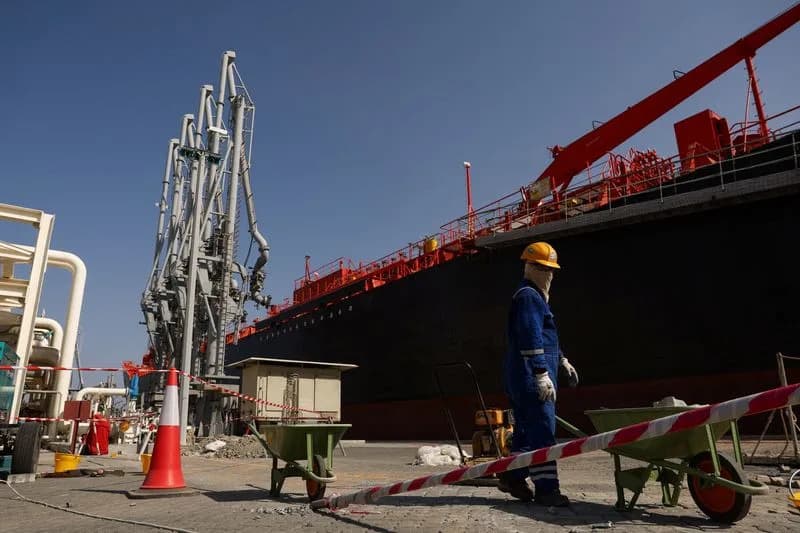
Cargo is loaded at the Port of Fujairah, as the U.S.-Israel conflict with Iran limits marine traffic in the Strait of Hormuz, in Fujairah, United Arab Emirates, May 6, 2026. REUTERS/Amr Alfiky
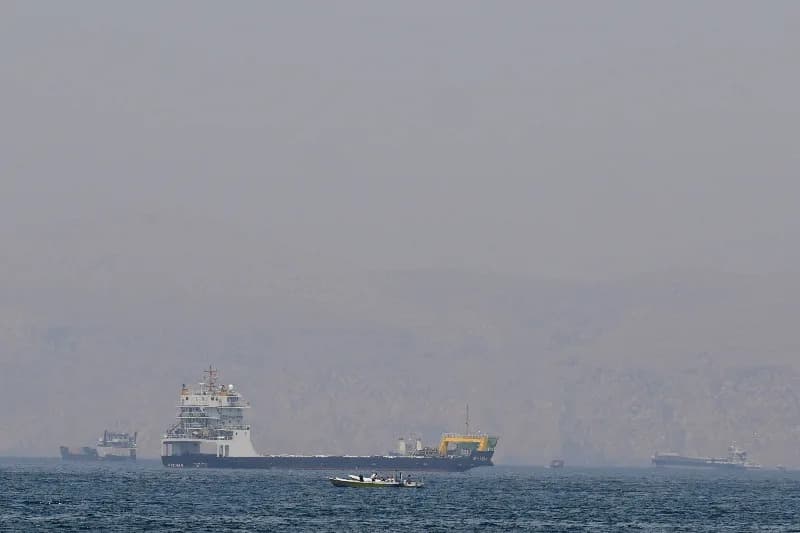
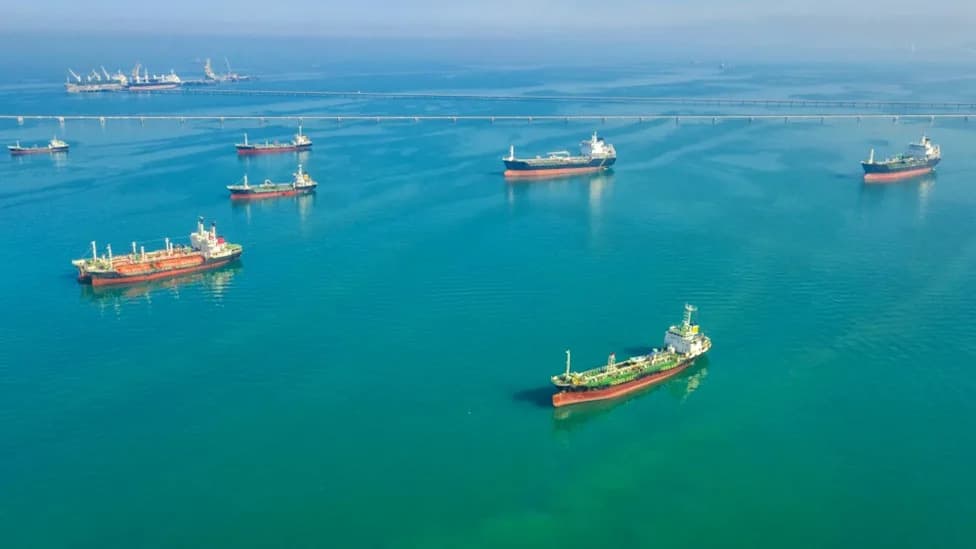
At the UAE port of Fujairah, conveyor belts were unloading grain from bulk carriers while crude oil flowed through pipelines into tankers moored along the quay. Dozens of laden trucks queued near the terminal and many more waited outside, while offshore vessels bearing names such as Cosco and Gardenia lay at anchor with service boats weaving between them.
Ports Pivot to the Indian Ocean
Since the effective closure of the Strait of Hormuz, the eastern UAE ports of Fujairah and Khor Fakkan — both with direct access to the Indian Ocean — have evolved into the country’s economic lifeline. They now handle much of the UAE’s seaborne trade that previously passed through larger western Gulf terminals, where ships have been stranded.
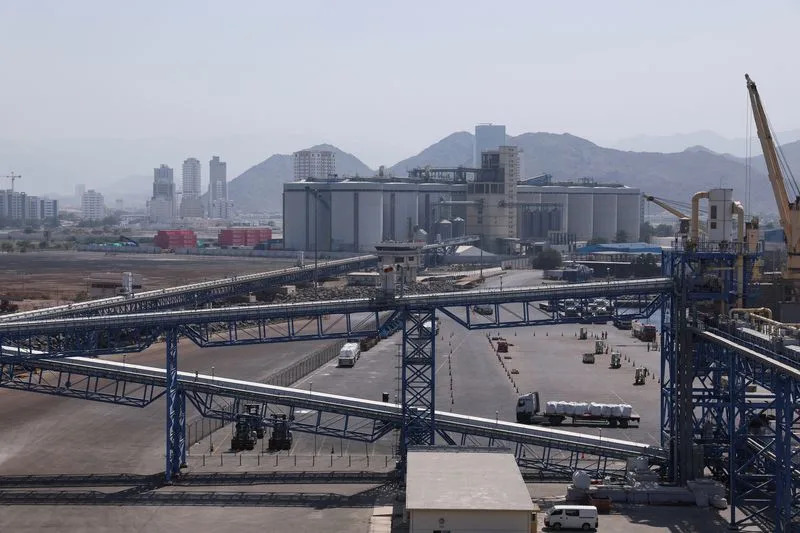
A view of the Port of Fujairah, as the U.S.-Israel conflict with Iran limits marine traffic in the Strait of Hormuz, in Fujairah, United Arab Emirates, May 6, 2026. REUTERS/Amr Alfiky
Rapid Growth in Throughput
Crude shipments through Fujairah have surged about 38% since the start of the Iran war, pushing volumes toward the upper limit of the Abu Dhabi Crude Oil Pipeline, which can carry roughly 1.5–1.8 million barrels per day (bpd). Kpler data show Fujairah’s crude exports averaged about 1.62 million bpd by late March, up from 1.17 million bpd in February. The port has also begun regularly accepting container vessels for the first time, according to Kpler.
Khor Fakkan’s transformation has been even more dramatic. Gulftainer, the terminal operator, reports weekly import and export container volumes climbed to about 50,000 from roughly 2,000 — a roughly 25-fold increase. Truck movements to Khor Fakkan jumped from about 100 per day before the conflict to roughly 7,000 per day, and Gulftainer hired some 900 staff within two weeks at the outset of the war.
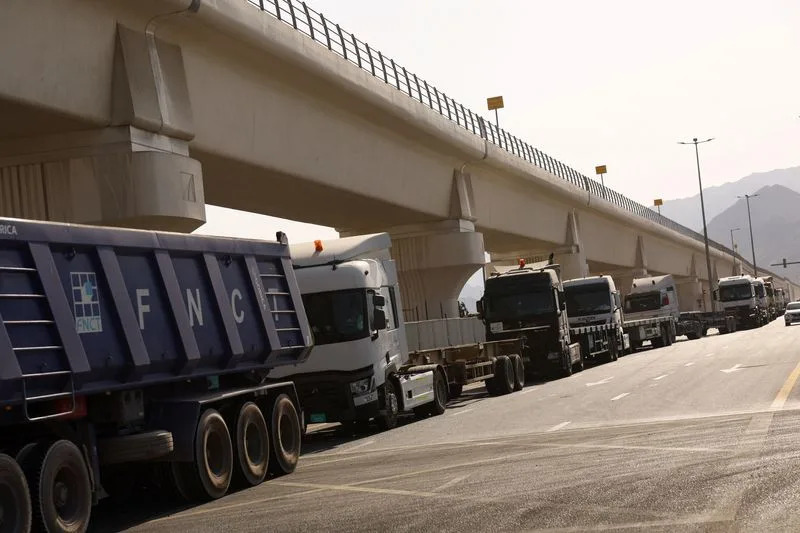
Trucks make their way into the Port of Fujairah, as the U.S.-Israel conflict with Iran limits marine traffic in the Strait of Hormuz, in Fujairah, United Arab Emirates, May 6, 2026. REUTERS/Amr Alfiky
Security Risks and Regional Tensions
Those gains exposed a new vulnerability when Iranian drones struck the Fujairah Oil Industry Zone, igniting a fire at a key energy facility and injuring three workers. Earlier the same day, Iran’s Revolutionary Guards Navy published a map that appeared to extend its claimed zone of control along the UAE’s eastern coast, encompassing both ports. Shipping sources said neither port had been directly affected by that map or the strikes, but the incidents underscored growing security risks.
"No country has the right to disrupt international trade flows or threaten supply routes," Energy Minister Suhail Al Mazrouei said at a logistics forum in St. Petersburg.
Operations Hold but Strain Is Rising
Logistics firms report that operations continue at both ports despite congestion. GEODIS said it has seen no major disruption apart from delays caused by heavy traffic. Vessel-tracking analysts have observed robust traffic: multiple container ships berthed and several waiting at Khor Fakkan, while Fujairah — with smaller berthing capacity — also showed ships at berth and awaiting service.
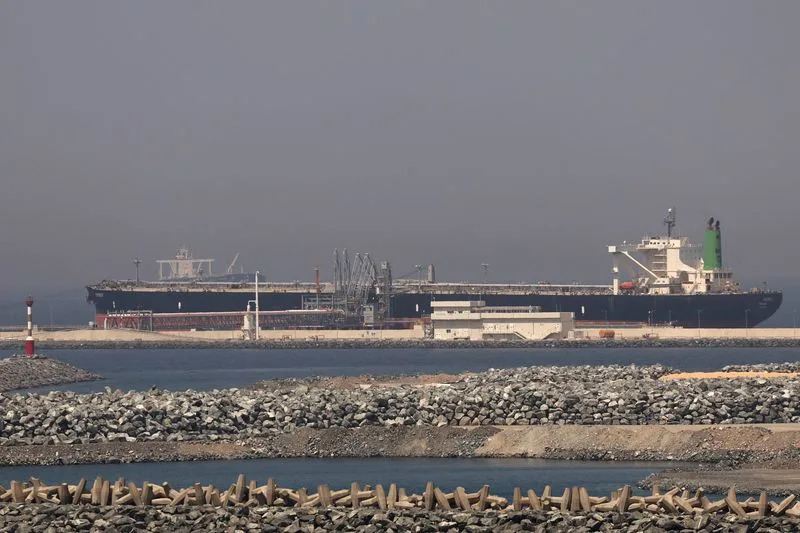
A cargo ship docked at the Port of Fujairah, as the U.S.-Israel conflict with Iran limits marine traffic in the Strait of Hormuz, in Fujairah, United Arab Emirates, May 6, 2026. REUTERS/Amr Alfiky
Wider Regional Impact and Contingencies
Saudi Arabia’s East-West Pipeline — which routes crude to the Red Sea port of Yanbu — has likewise helped keep exports flowing without transiting Hormuz, but it too was targeted earlier this spring, demonstrating no infrastructure is invulnerable. For Qatar, Kuwait and Bahrain, which lack direct Indian Ocean access, options are more constrained and often rely on transshipment via eastern UAE ports or costly overland routes through Saudi Arabia and Oman.
Gulftainer is preparing longer-term capacity with plans for a dry port and inland logistics hub at Al Dhaid, about 50 km from Khor Fakkan. The first phase exceeds 100 hectares and carries an initial price tag of more than $100 million, aiming to link road and rail with container transshipment and general cargo storage.
Outlook
Monday’s strikes were a reminder of the fragility of reconfigured Gulf trade routes. Executives and analysts say the eastern ports provide a critical, if exposed, alternative while regional cooperation and contingency routes across Saudi Arabia and Oman could offer fallbacks. The timing of any reopening of the Strait of Hormuz, and the long-term structural impacts on Gulf trade, remain uncertain.
(Reporting by Sarah El Safty, Federico Maccioni and Amr Alfiky; additional reporting by Yousef Saba; writing by Andrew Mills; editing by Alexander Smith)
Help us improve.