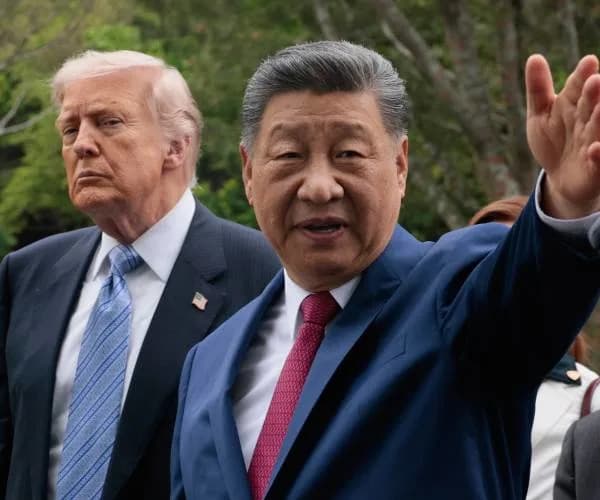
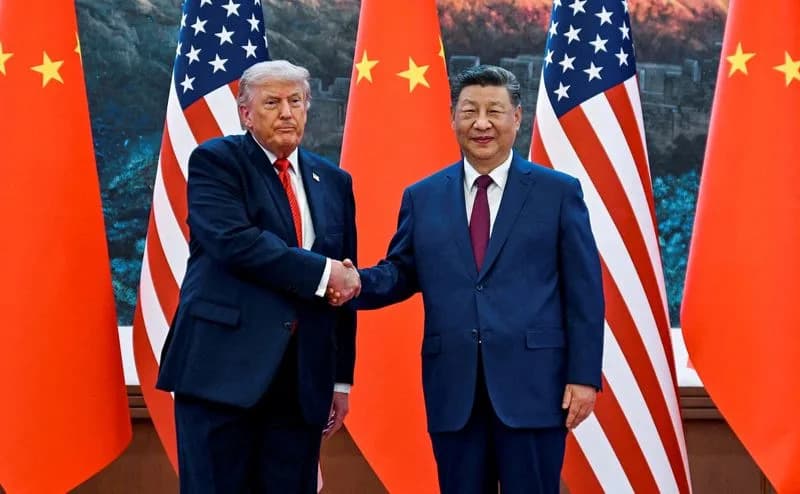
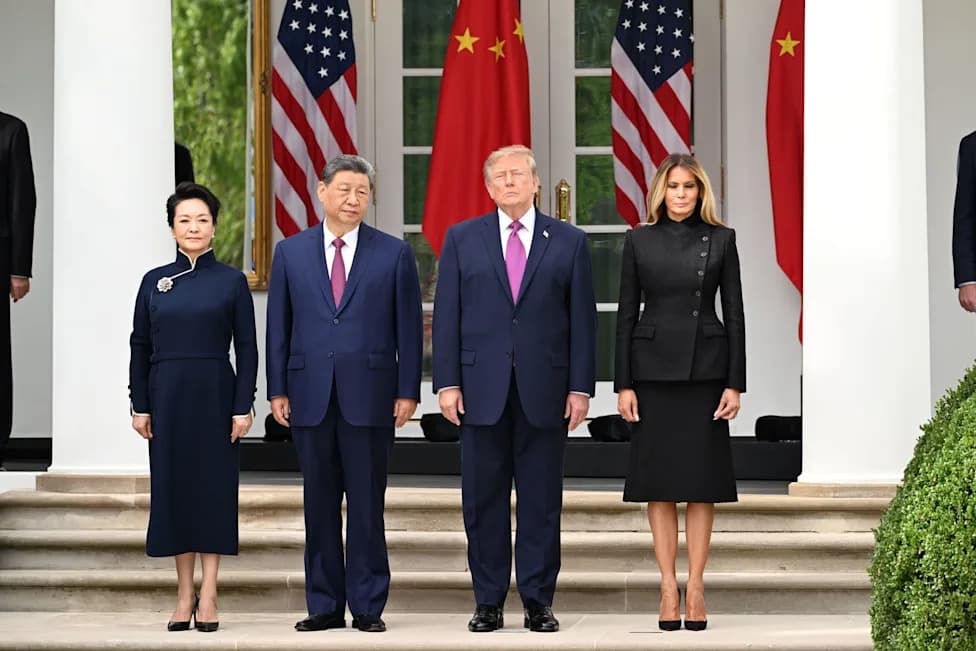
Taiwan criticised Xi Jinping after a Chinese readout said Xi told President Trump he hoped the U.S. would adhere to the "correct position" of opposing Taiwan independence — language Taipei says is stronger than Washington's long-standing phrasing that it does not "support" independence. Taipei's foreign ministry called the remarks a distortion and reiterated that Taiwan's future must be decided democratically by its people. Analysts warn such a wording change could erode U.S. strategic ambiguity and weaken deterrence, while concerns persist that Taiwan could be used as leverage in broader U.S.-China negotiations.
Taiwan Protests After Xi Urges Trump To Adopt Firmer U.S. Position On Island

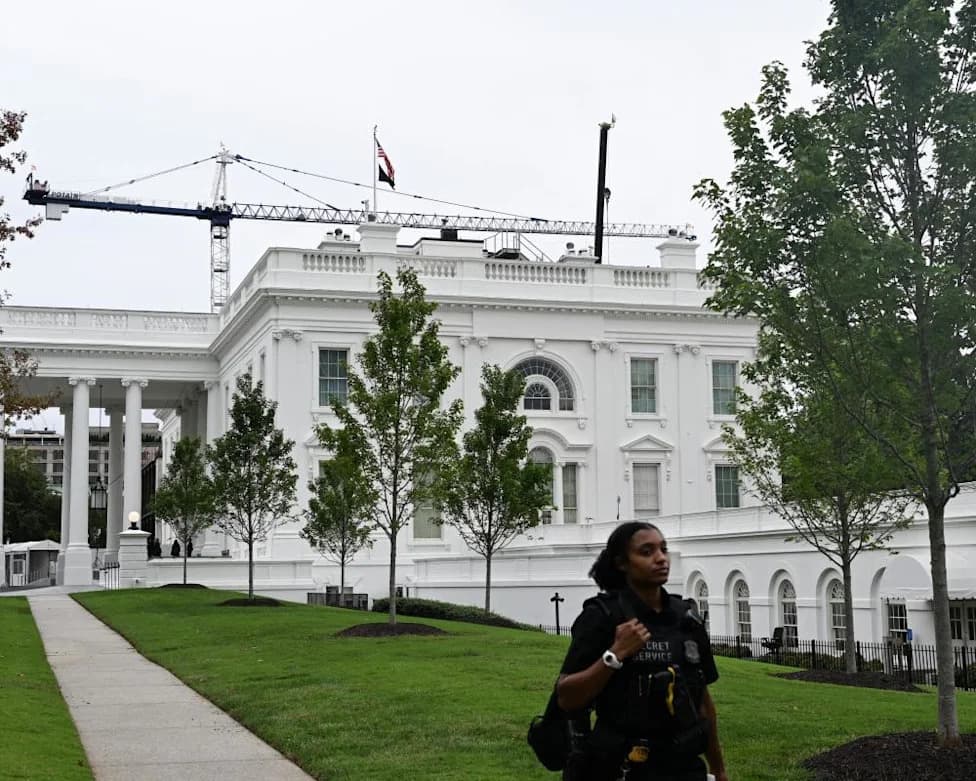
A demonstrator holds a Taiwanese flag during a protest near the White House, on the day of a meeting between Chinese President Xi Jinping and U.S. President Donald Trump in Washington, D.C., U.S., September 24, 2026. REUTERS/Kevin Lamarque
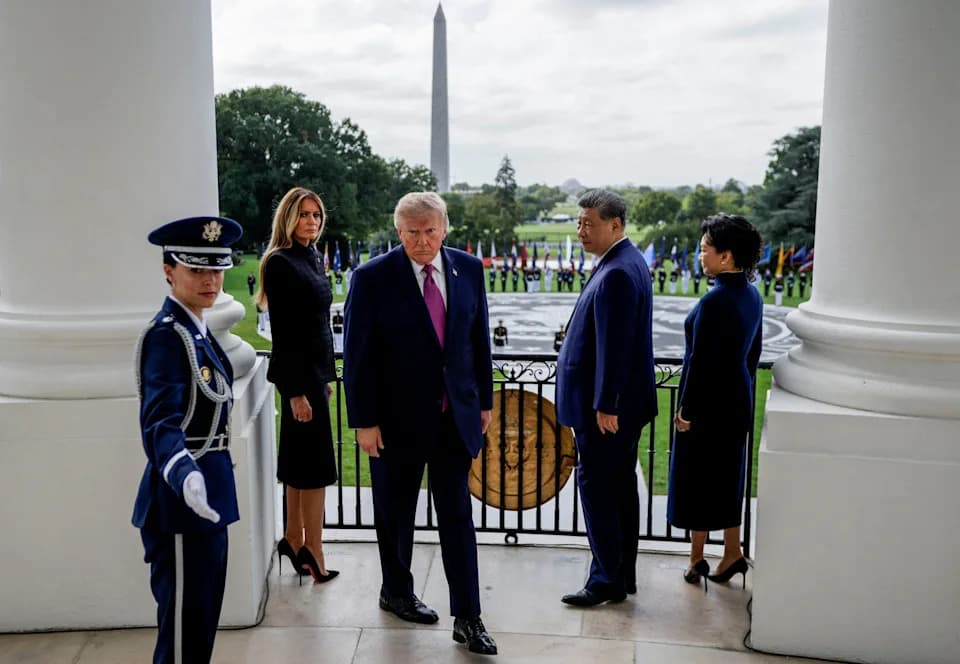
Taipei on Friday sharply criticised Chinese President Xi Jinping after a Chinese readout said Xi told U.S. President Donald Trump he hoped the United States would adhere to the "correct position" of opposing Taiwan independence. Taiwan’s government warned the phrasing sought by Beijing would be stronger than Washington’s long-standing formulation that it does not "support" independence and could undermine U.S. deterrence.
According to the Chinese account of the Washington meeting, Xi used the phrase "correct position," a change that Taipei says would amount to an attempt to shift Washington’s language and policy stance. There was no immediate White House account of that specific exchange.
Taiwan’s Foreign Ministry denounced Xi’s comments as "the consistent Chinese approach of distorting facts and unilaterally conveying its position and claims." The ministry added: "Taiwan's sovereignty belongs to all the people of Taiwan. The Chinese Communist Party has no right to represent the Taiwanese people, and Taiwan's future can only be determined by the Taiwanese people through democratic means."
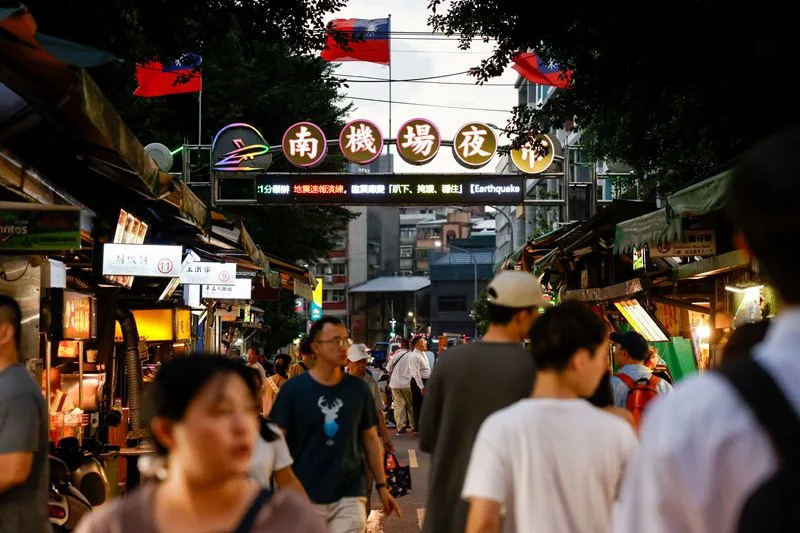
People walk through Nanjichang Night Market beneath Taiwan flags in Taipei, Taiwan, September 24, 2026. REUTERS/Ann Wang
Nuanced Wording And Strategic Implications
Analysts say even a subtle wording change could have wide-ranging implications. Jeremy Chan, senior China analyst at Eurasia Group and a former U.S. diplomat in China, warned the shift "would erode a lot of the... strategic ambiguity of whether the U.S. would come to Taiwan's aid in that context." That ambiguity has long been central to U.S. policy, deterring coercion while avoiding a formal security pledge.
The United States remains Taiwan’s most important international backer and principal supplier of defensive arms despite the lack of formal diplomatic ties. Beijing claims Taiwan as its territory — a claim rejected by Taipei — and has stepped up military activity around the island in recent years.
Diplomatic Context And Trade Concerns
Allies such as Japan have expressed concern that President Trump might be willing to soften U.S. language or actions on Taiwan in exchange for economic or geopolitical concessions from China. After meeting Xi in Beijing in May, Trump said he had placed a package of arms sales to Taiwan in abeyance, calling it a "negotiating chip." Washington has sought Chinese purchases of Boeing aircraft and agricultural goods and has also looked to Beijing for influence over regional issues such as pressure on Iran.
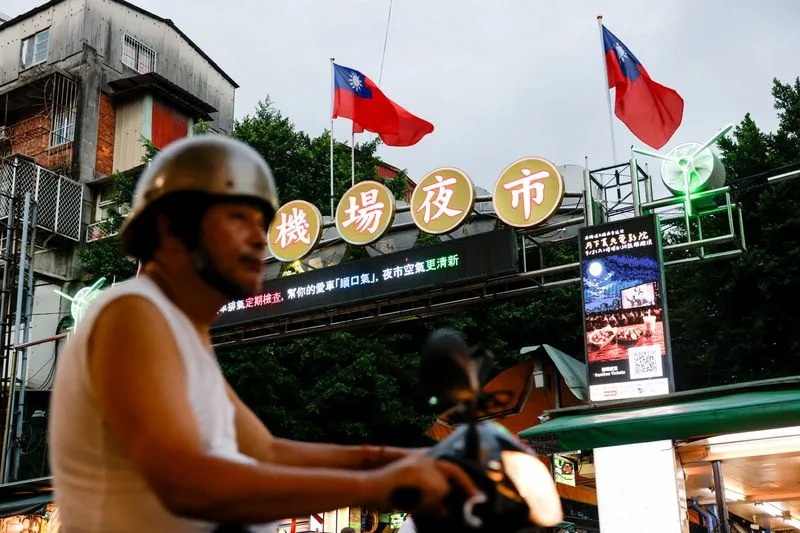
A person rides a scooter past Taiwan flags, above the entrance to Nanjichang Night Market, in Taipei, Taiwan, September 24, 2026. REUTERS/Ann Wang
James Chen, assistant professor of diplomacy and international relations at Tamkang University in Taiwan, said Trump would likely want to avoid Taipei becoming an obstacle to a broader deal with Beijing but noted that "Trump has not yet shown any intention to trade Taiwan for a major strategic gain."
Taiwan’s Position And Next Steps
President Lai Ching-te has said Taiwan is already an independent country under its formal name, the Republic of China. That government relocated to Taiwan in 1949 after losing a civil war on the mainland, where the People’s Republic of China was established.
In its statement rebuking Xi’s remarks, Taiwan’s foreign ministry called China the "true disruptor" of regional peace and stability, citing Beijing’s military activities around the island and in the East and South China Seas. The ministry said Taiwan will continue to work closely with the United States and like-minded partners to safeguard peace and stability in the Taiwan Strait.
(Reporting by Ben Blanchard in Taipei and John Geddie in Tokyo; Editing by Jacqueline Wong and Michael Perry)
Help us improve.