Oleshky, occupied by Russian forces since 2022, is facing a severe humanitarian crisis: the prewar population of about 40,000 has fallen to roughly 6,000, with some 2,000 still inside the city. Residents report extreme food shortages, medicine scarcities and constant drone attacks, while a Sept. 1 aid convoy was attacked and drivers were forced to walk long distances. Evacuation routes to Radensk are dangerous and mined; Oleshky’s hospital is on the brink, and Ukrainian officials are calling for demining and a humanitarian corridor.
“Like a Horror Movie”: Oleshky’s Humanitarian Catastrophe Under Russian Occupation

'Like a horror movie': Ukraine's Oleshky faces 'catastrophe' under Russian occupation
Editor's note: This article contains graphic descriptions of wartime injuries and fatalities.
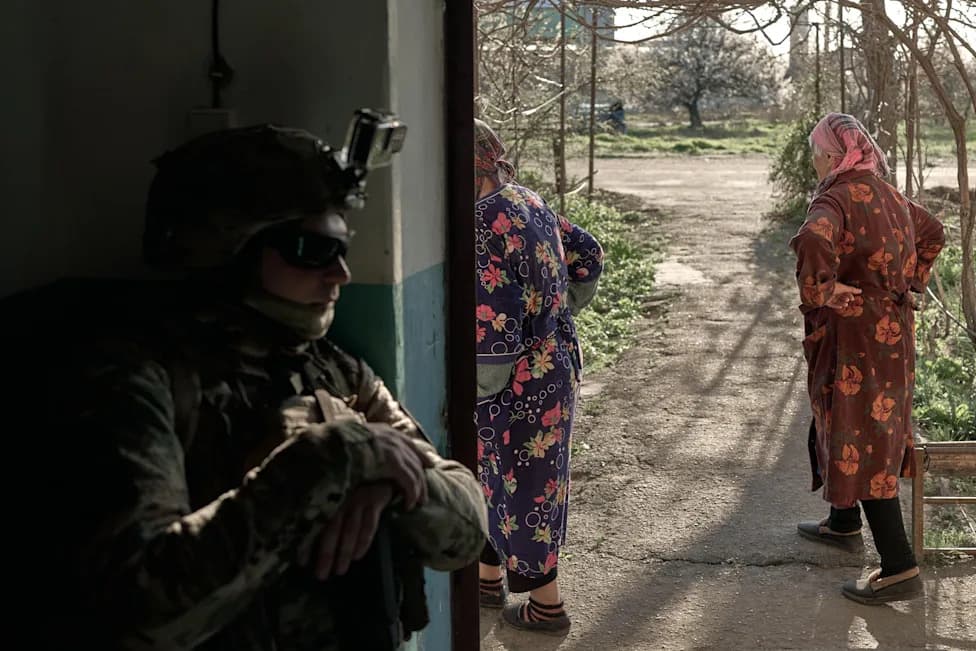
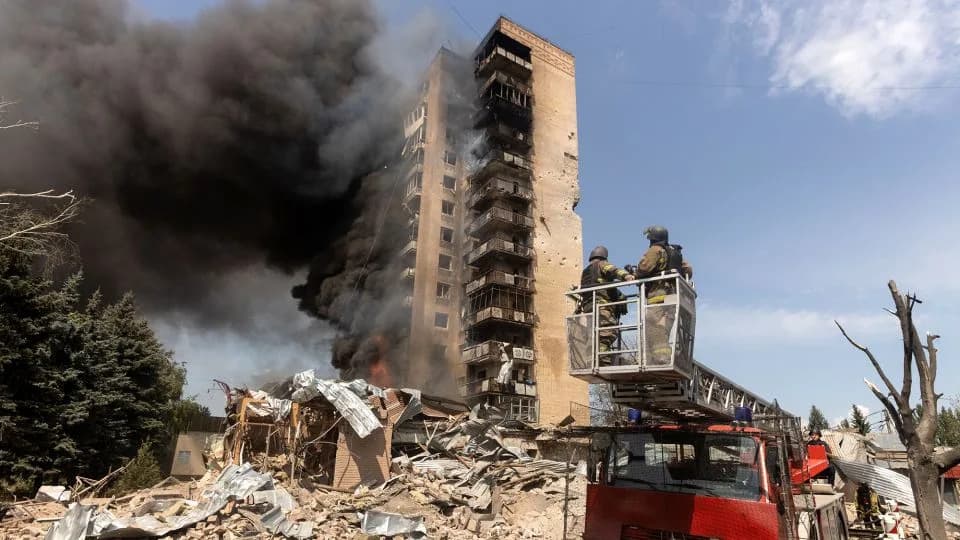
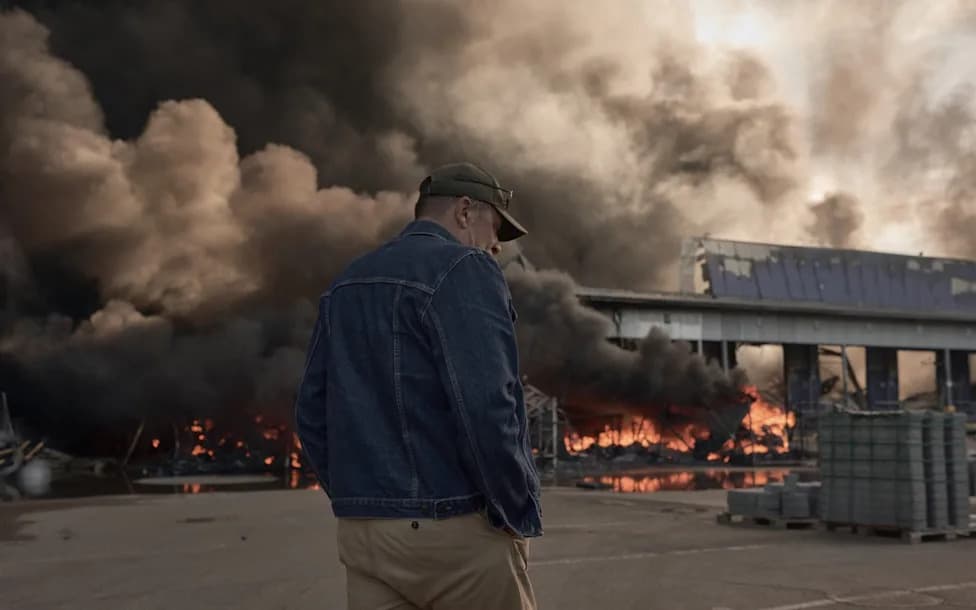
The southern city of Oleshky, occupied by Russian forces since 2022, has been described by Ukrainian officials, volunteers and humanitarian workers as "hell on earth," with thousands of residents facing starvation and hundreds attempting perilous escapes through territory littered with mines, corpses and drone strikes.
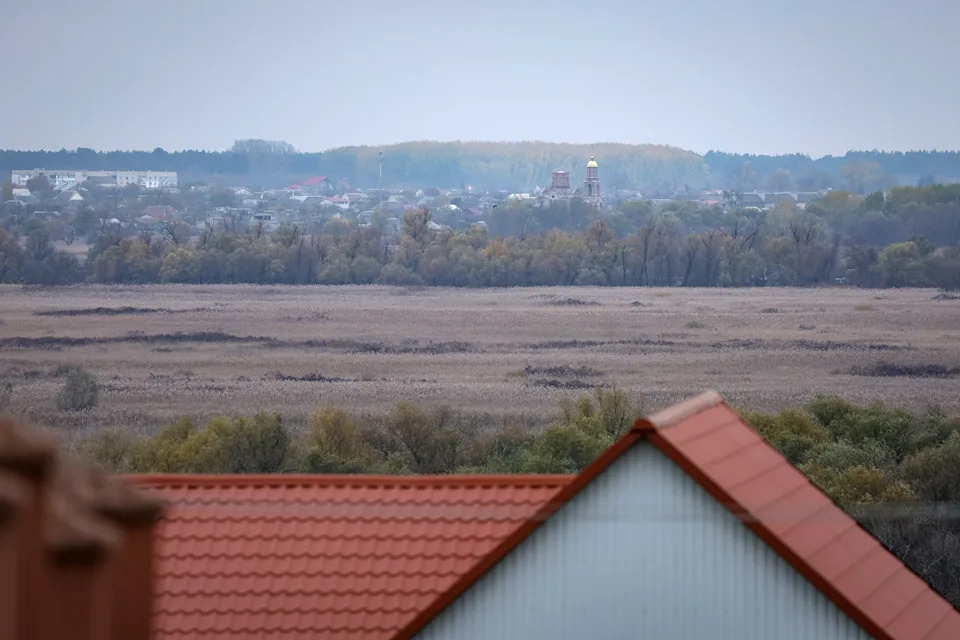
Global Images Ukraine via Getty - PHOTO: A damaged church can be seen in occupied Oleshky on the eastern side of the Dnipro River, on Nov. 13, 2022 from Kherson, Ukraine.
Living Conditions Deteriorate
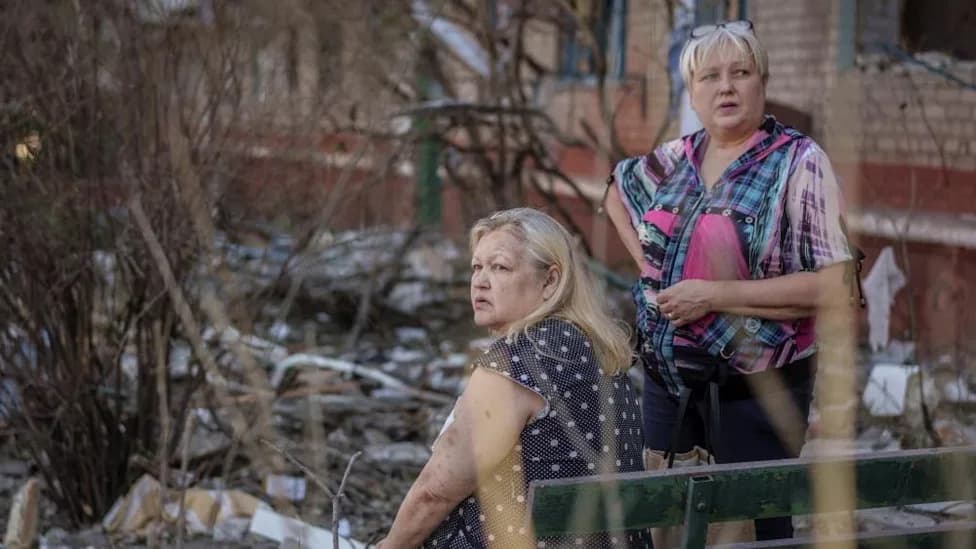
Tetiana Hasanenko, head of the Oleshky Military Administration operating from the western bank of the Dnipro, says the area's prewar population of roughly 40,000 has fallen to as few as 6,000, with only about 2,000 left inside Oleshky city itself. Remaining residents report severe food shortages, critical medicine scarcities and frequent drone attacks that force people to move from house to house to survive. "We are not talking about them surviving the winter," Hasanenko warned.
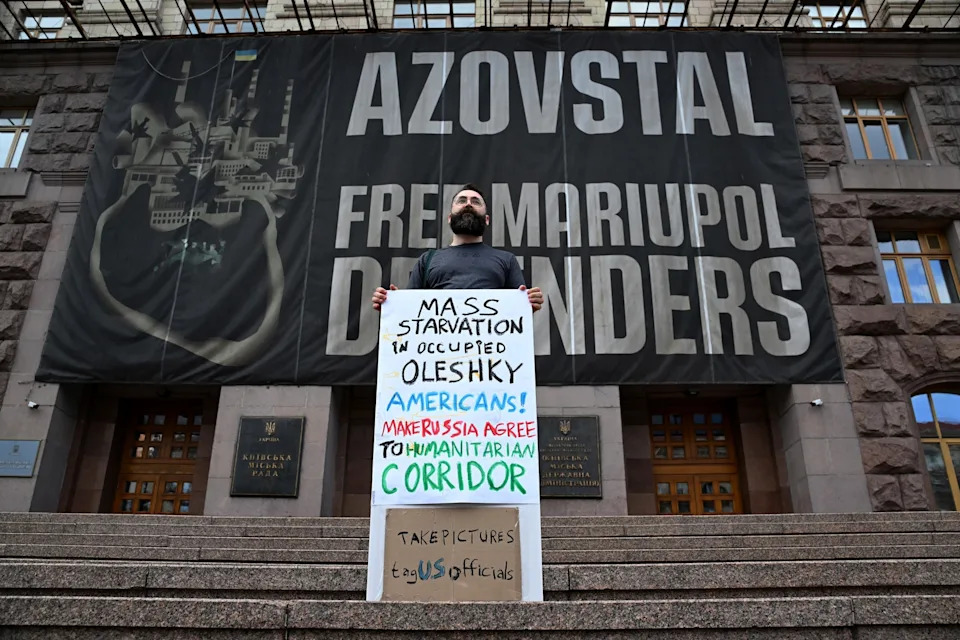
Sergei Supinsky/AFP via Getty Images - PHOTO: A man holds a placard calling for aid to occupied Oleshky outside Kyiv City Hall, on Sept. 20, 2026.
Accounts From Residents and Volunteers
Messages shared with ABC News describe extreme rationing, chronic medicine shortages and constant fear. One resident summarized life there: "The blockade is complete. Endless drones, fires. Like a horror movie." Volunteer coordinator Kseniia Arkhipova, who helps people flee from the Ukrainian-controlled side of the river, said a collapse in food supplies triggered a new wave of departures after a convoy sending aid to Oleshky was attacked on Sept. 1. She recounted that some convoy vehicles were blown up and disabled, and drivers later walked back toward Ukrainian lines—some reportedly covering as much as 100 kilometers on foot.

Maxar/DigitalGlobe/Getty Images - PHOTO: Maxar satellite imagery shows flooded homes in Oleshky, Ukraine, on June 7, 2023.
Perilous Escape Routes
Those attempting to leave must first reach the village of Radensk, about 14 miles (roughly 22 km) east of Oleshky and deeper into occupied territory. Arkhipova and local officials describe the route as the "road of death," marked by mines, FPV drones and Russian checkpoints. Escape can cost as much as $500 per person to cover food, shelter and transport, and some evacuees have been helped by Russian volunteers purchasing tickets or offering rides. Many fleeing have lost identity documents in fighting or floods caused by the Kakhovka dam breach in June 2023, increasing the risk of detention and interrogation at checkpoints.
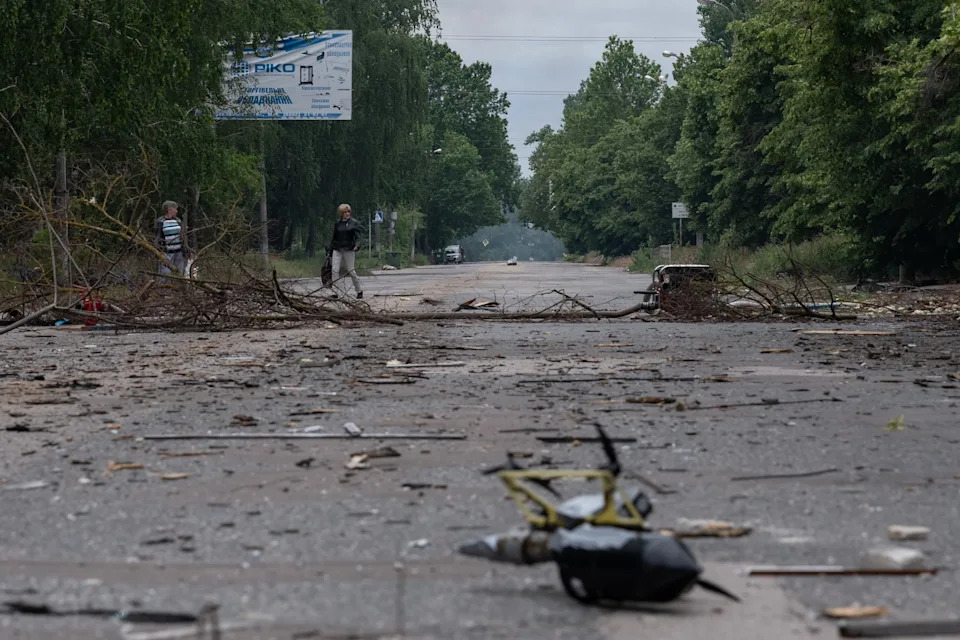
Global Images Ukraine via Getty - PHOTO: Women walk along a street while a Russian drone lies on the ground in the foreground on June 3, 2026 in Kherson, Ukraine.
Health System on the Brink
Oleshky’s hospital is described as "on its last breath" — with little fuel, few medicines and unreliable electricity after years of disruption. Medical staff continue to treat patients under dire conditions, but officials warn that closure of the hospital would likely mean rapid, widespread loss of life. Hasanenko said more than 100 bodies are currently unburied in the hospital basement, creating a dire public-health and humanitarian situation.
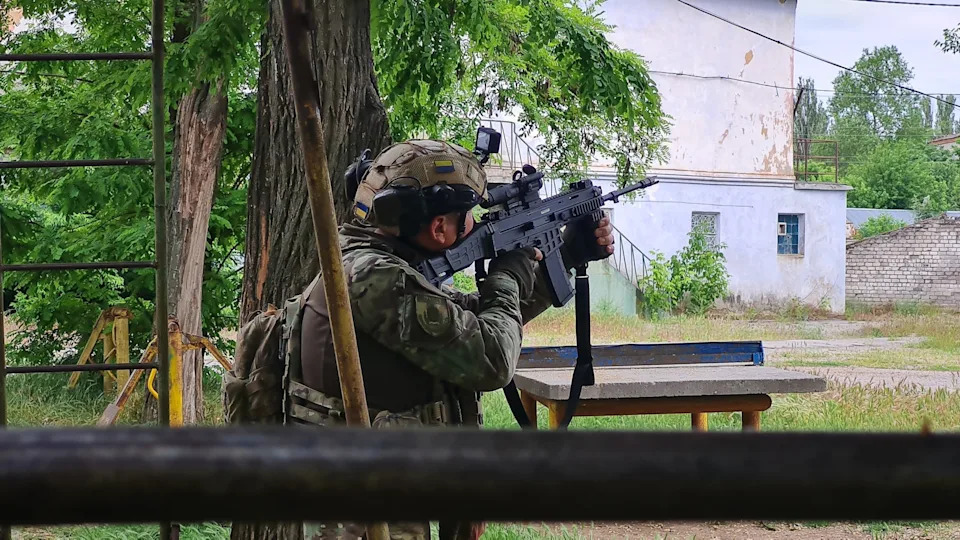
Global Images Ukraine via Getty - PHOTO: A Ukrainian law enforcement officer from a mobile fire group in camouflage holds a weapon during a drone interception operation on June 3, 2026 in Kherson, Ukraine.
Military Observations and Humanitarian Access
The Ukrainian 30th Marine Corps monitors the left bank with drones and reports seeing shortages of drinking water, food and power. Ukrainian officials say they do not remotely mine evacuation routes, asserting that mines are laid by occupying forces. Ukrainian and international requests for demining, pauses in shelling and safe humanitarian corridors have so far produced limited results. At the UN General Assembly, Ukrainian Foreign Minister Andrii Sybiha called Oleshky a site of "humanitarian catastrophe" and urged immediate evacuation; the Kremlin has acknowledged the "critical situation" but blamed Ukraine for obstructing aid.

Stefan Jeremiah/AP Photo - PHOTO: Ukrainian Foreign Minister Andrii Sybiha (C) speaks during a Security Council meeting at the 81st session of the United Nations General Assembly at UN headquarters in New York City, on Sept. 23, 2026.
What Residents Want
Local volunteers and officials say a credible relief operation would require coordinated demining, a ceasefire or pause in shelling and a large humanitarian convoy or bus evacuation to move hundreds at once. Yet many residents say they will not leave their homes even if offered assistance: "This is my home. Why should I leave my home?" Arkhipova said.
Key verified facts: Prewar population ~40,000; estimated 6,000 remain in the area, about 2,000 inside Oleshky city. A Sept. 1 aid convoy was attacked, triggering new departures. The hospital lacks fuel, medicines and reliable electricity; local officials report more than 100 unburied corpses in the facility’s basement. Evacuation routes to Radensk are roughly 14 miles and heavily mined.
Help us improve.