The article explains how Gulf states are using "dark fleets"—small shuttle boats that turn off tracking systems and transfer cargo to larger vessels—to bypass Iran’s asserted control of the Strait of Hormuz. These covert operations, which began in earnest in May, have increased fuel flows despite drone and missile attacks and only limited US protection. Analysts call the tactic a temporary coping mechanism, noting flows remain volatile and threats persist.
How Secret 'Dark Fleets' Are Eroding Iran’s Grip On The Strait Of Hormuz
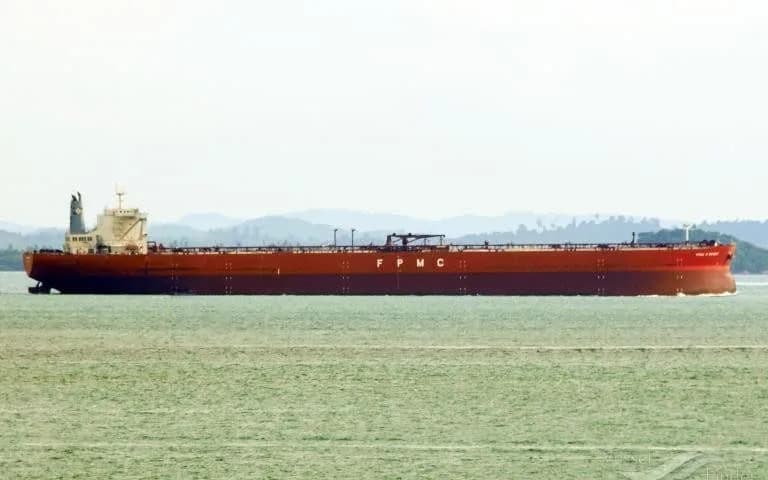
The Singapore Prosperity secretly transported oil through the Strait of Hormuz last month
The tanker Singapore Prosperity called at several Saudi ports in mid-August while carrying roughly two million barrels of crude on a course toward the Strait of Hormuz. Public trackers showed the ship as it approached the critical waterway — and then it vanished. Two days later it reappeared near Fujairah after its transponder appears to have been switched back on.
Formally asserting control over the strait since the outbreak of war with the US on Feb. 28, Iran has tried to choke off routes and intimidate commercial shipping. In practice, several Gulf states have quietly mounted a campaign to blunt that control by using so-called "dark fleets": smaller vessels that evade detection by turning off tracking systems and adopting tactics Tehran once used to bypass sanctions.
How The Operations Work
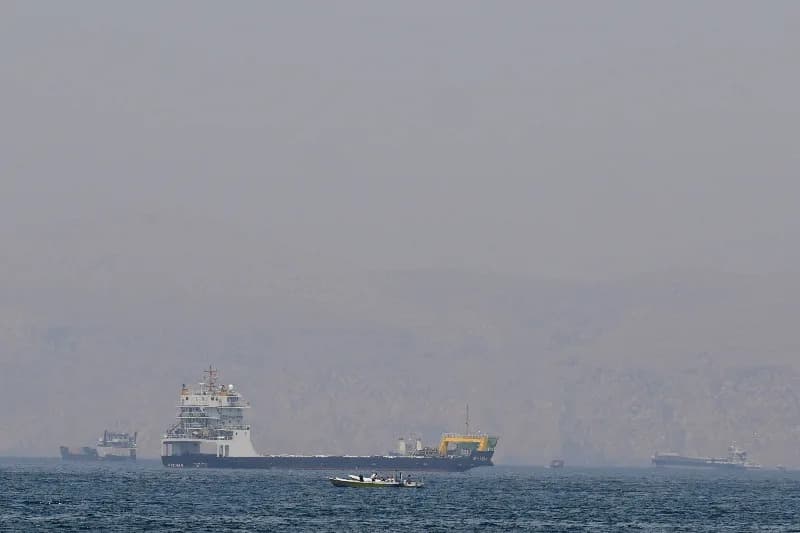
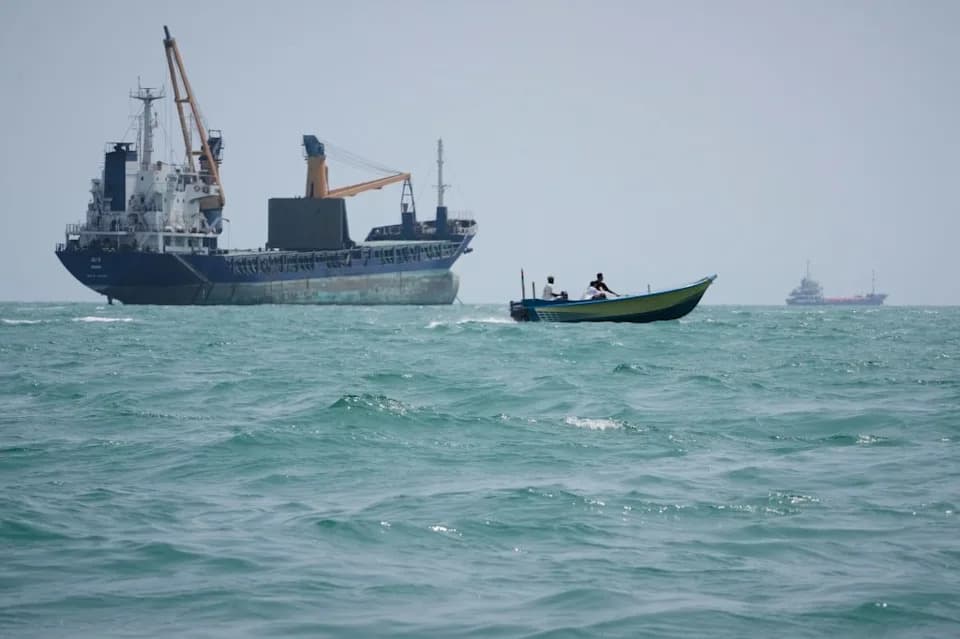
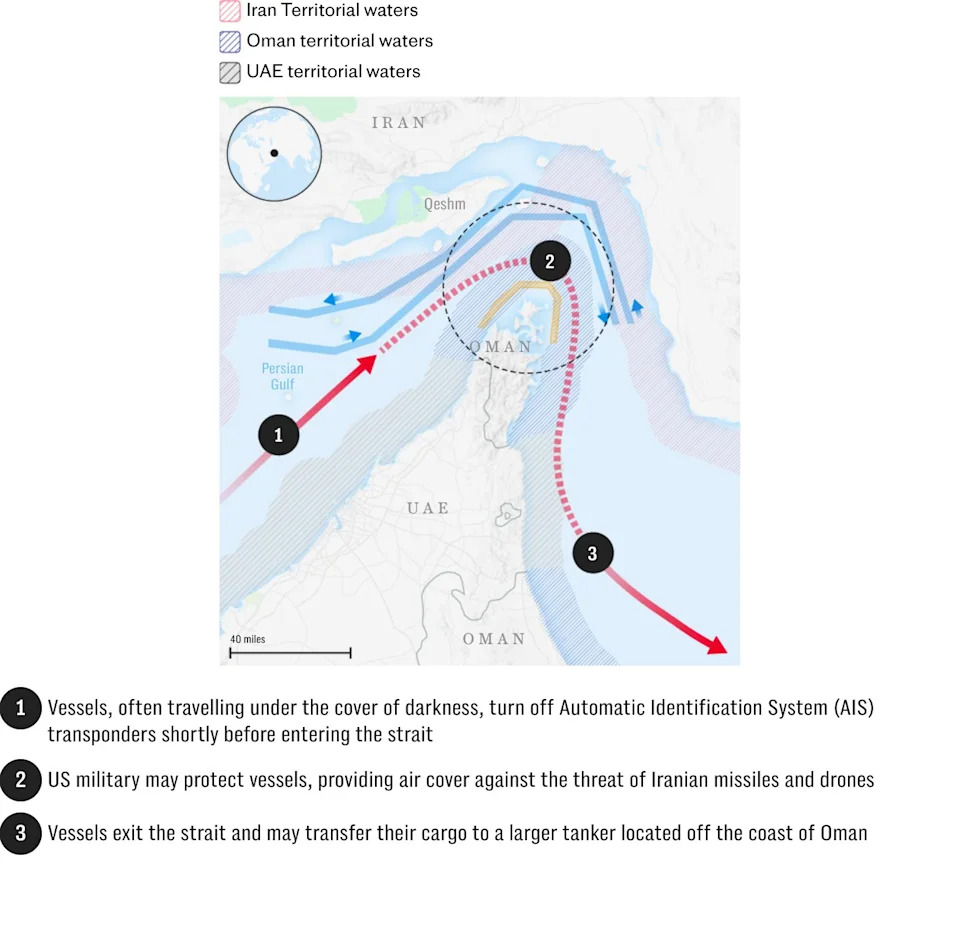
Large supertankers are considered too vulnerable to pass the narrowest part of the strait, which is only about 21 miles wide. Instead, smaller "shuttle" boats take the hazardous initial leg. These vessels typically switch off their Automatic Identification System (AIS) transponders and often travel at night to reduce the risk of detection.
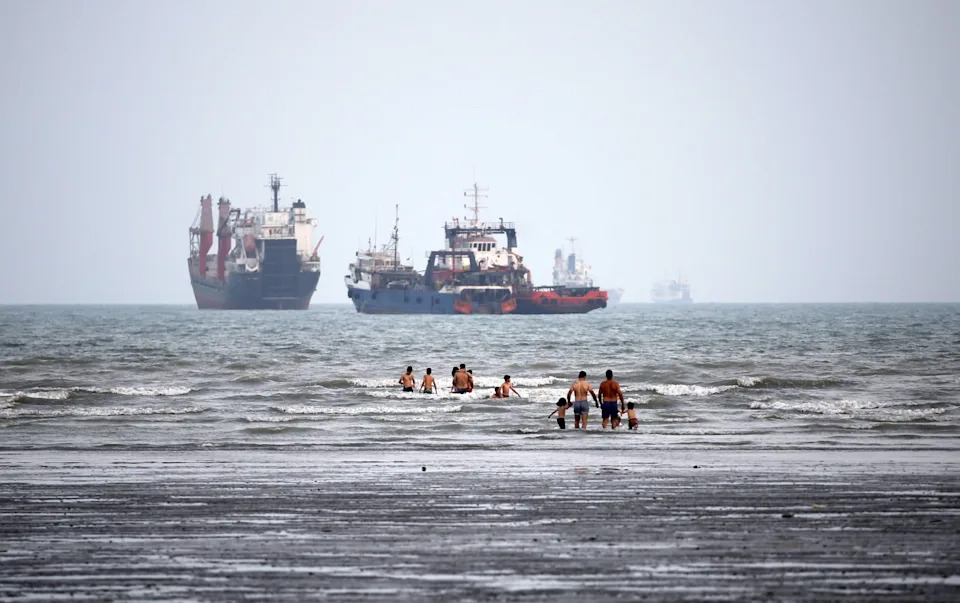
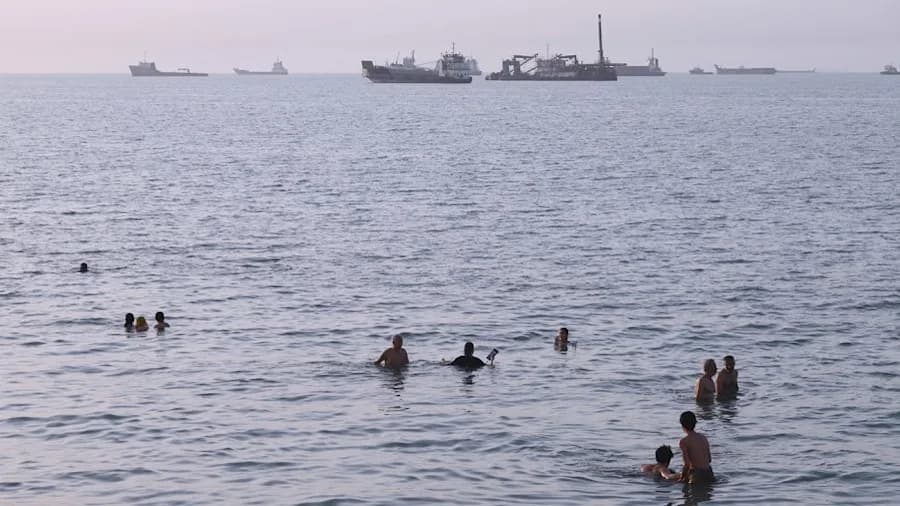
Ships off the coast of Iran in the Strait of Hormuz can be seen in the distance while people swim - Fatemeh Bahrami/Anadolu via Getty Images
After clearing the danger zone, shuttle boats transfer crude, refined oil or—less commonly—liquefied natural gas (LNG) to larger vessels that complete the final leg of the journey. As transit frequency has risen since early May, some operators have relaxed the strict night-only rule simply because there are not enough nighttime hours to handle growing volumes.
"There's a bit of irony… it's the sort of sanctions-busting apparatus the Iranians were using to get their fuel to market," said Rachel Ziemba, senior fellow at the Center for a New American Security. "Some of these same tactics are now being used by the Emiratis and other Gulf countries."
Risks, Retaliation And Protections
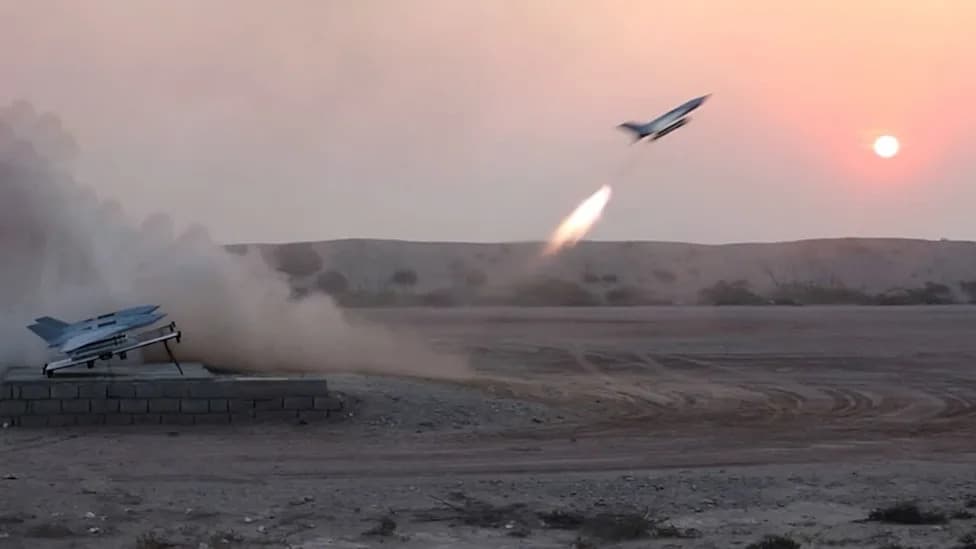
Tehran has not ignored the challenge. The UAE reported in August that 15 of its vessels had been attacked by drones and missiles, causing 20 injuries and one death. In July, at least two LNG carriers were struck but managed to transfer cargo after clearing the strait. The US military has provided limited protection—deploying assets such as fighter jets to deter or respond to drone and missile threats—but such support reduces risk only; it cannot eliminate it.
To offset soaring insurance premiums and make the voyages economically viable, producers such as Iraq and Qatar have been selling crude at steep discounts. Market analysts estimate that operators accept a modest probability of attack—"one ship in 12 or 15"—because the profits on successful trips outweigh losses on the few hit vessels.
Flows, Data And Strategic Impact
Analytics firm Kpler estimates roughly 10–12 million barrels a day now transit the strait—about half pre-war volumes—but flows are volatile. On Sept. 7, reported flows briefly hit about 20 million barrels, then fell to roughly 3 million by Sept. 10. At the same time, the UAE’s state oil company ADNOC reports exports in the order of two million barrels per day, and Kpler data show fuel volumes at their highest since the conflict began.
Analysts caution these covert operations are a short- to medium-term "coping mechanism," not a long-term substitute for stable sea lines of communication. Iran’s uneven ability to halt shuttle-boat traffic has fueled rumors that some officials may be turning a blind eye in exchange for payments, and observers link Tehran’s inability to fully interdict shipments to proxy attacks on alternative infrastructure, such as the East-West pipeline strike on Sept. 10.
What began as an open confrontation nearly seven months ago has increasingly become a contest of logistics and economics: volumes, route management, discounts and a calculation of acceptable losses. So long as the balance of risk and reward favors shippers, clandestine passages through the Strait of Hormuz are likely to continue.
Help us improve.